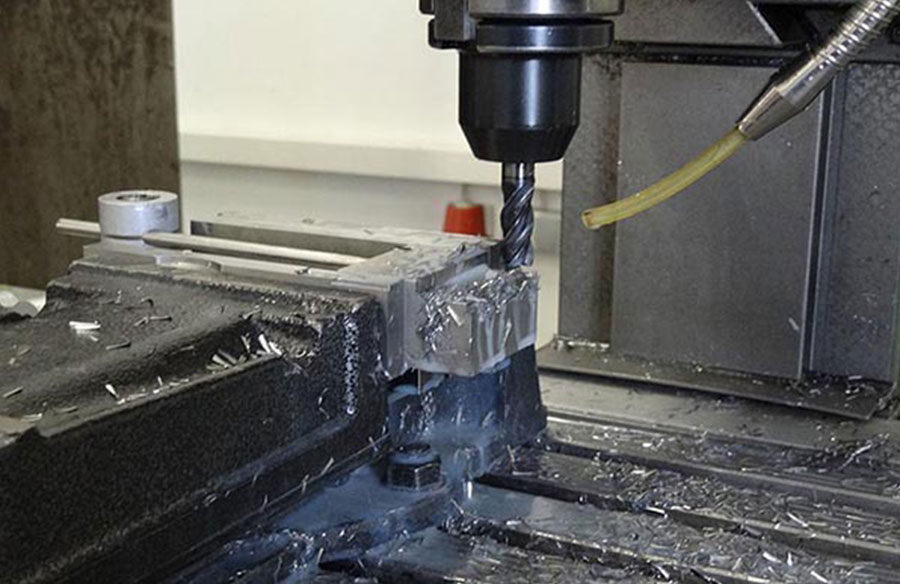
Ceramic CNC machining refers to the process of precisely shaping advanced ceramic materials using Computer Numerical Control (CNC) machines.
As a form of precision CNC machining, it is specifically adapted to handle the unique challenges posed by ceramics—materials that are both extremely hard and brittle. Unlike metals or plastics, ceramics cannot be easily shaped using conventional tools. Instead, ceramic machining relies on diamond-coated tools and specialized techniques to grind, mill, or turn ceramic parts into complex geometries with exceptional accuracy and surface quality.
What materials are generally used in ceramic CNC machining?
Common ceramic materials used in CNC machining include:
Alumina (Al₂O₃)
Zirconia (ZrO₂)
Silicon Nitride (Si₃N₄)
Silicon Carbide (SiC)
Macor and other machinable glass ceramics
These materials are chosen for their excellent mechanical, thermal, and electrical properties, making them ideal for high-performance applications in the aerospace, medical, semiconductor, and industrial equipment sectors.
Advantages of CNC Ceramic Machining
1. High Dimensional Accuracy
CNC machines offer micron-level tolerances, essential for complex ceramic components used in tight-fitting assemblies or critical functions like insulation, wear resistance, or precision measurement.
2. Complex Geometries
With 3-, 4-, or even 5-axis machining capabilities, CNC allows the creation of intricate features such as channels, tapers, contours, and fine holes that would be extremely difficult to achieve using other ceramic processing methods like injection molding or pressing.
3. Low-to-Medium Volume Flexibility
Unlike ceramic injection molding or die pressing, CNC machining is well-suited for prototyping and small-batch production runs, avoiding the high cost of mold tooling and long lead times.
4. Material Integrity
Since CNC machining is a subtractive, non-contact (in grinding) or low-impact (in diamond cutting) process, it maintains the material’s inherent properties, including strength and purity. There’s no sintering deformation or binder contamination.
5. Post-Sintered Machining
In some cases, ceramics can be machined after sintering (fully dense state), enabling tighter tolerances and improved final part consistency.
Disadvantages of CNC Ceramic Machining
1. Tool Wear and High Cost
Ceramics are extremely abrasive, especially sintered types. Diamond-coated tools wear out quickly, leading to high tooling costs and slower machining speeds compared to metals or plastics.
2. Long Machining Time
Due to their hardness and brittleness, ceramics require slow feed rates and shallow cuts to avoid cracking, which significantly increases production time and cost.
3. Risk of Cracking or Chipping
Without proper machining strategies, ceramic parts can chip or crack easily. This makes it crucial to have expertise in both material behavior and toolpath optimization.
4. Limited Design Iteration After Sintering
For sintered ceramics, post-process machining is limited. Any major design changes typically require re-fabrication of the green body or new sintering.
Tips When Designing and CNC Machining Ceramic
1. Use Rounded Internal Corners
Sharp corners act as stress concentrators in ceramics, increasing the risk of cracking. Always designed with generous radii in internal features.
2. Avoid Thin Walls
Thin ceramic walls are prone to warping, cracking, or breakage during machining. Maintain a minimum wall thickness of at least 1–2 mm, depending on the part size and material.
3. Design for Grinding
If high-precision post-sintering machining is expected, consider designing features that are accessible with flat, cylindrical, or ball-end grinding tools.
4. Choose the Right Ceramic
Different ceramics excel in different properties—zirconia for toughness, alumina for insulation, and silicon carbide for wear resistance. Align material selection with the application and machinability.
5. Account for Shrinkage (if Machining Green Bodies)
If CNC machining is done before sintering (on green bodies), remember to scale up features to accommodate material shrinkage during sintering, typically 15–25%. Partner with Specialized Machinists
Ceramic machining requires advanced equipment and skilled operators. Work with suppliers experienced in CNC machining to reduce trial-and-error and minimize risk.HLC Metal Parts is a good choice.
As technology continues to evolve, so do the capabilities of ceramic machining. Whether you’re developing cutting-edge electronics, aerospace components, or medical devices, understanding the nuances of CNC machining will help you unlock the full potential of ceramic materials in your designs.