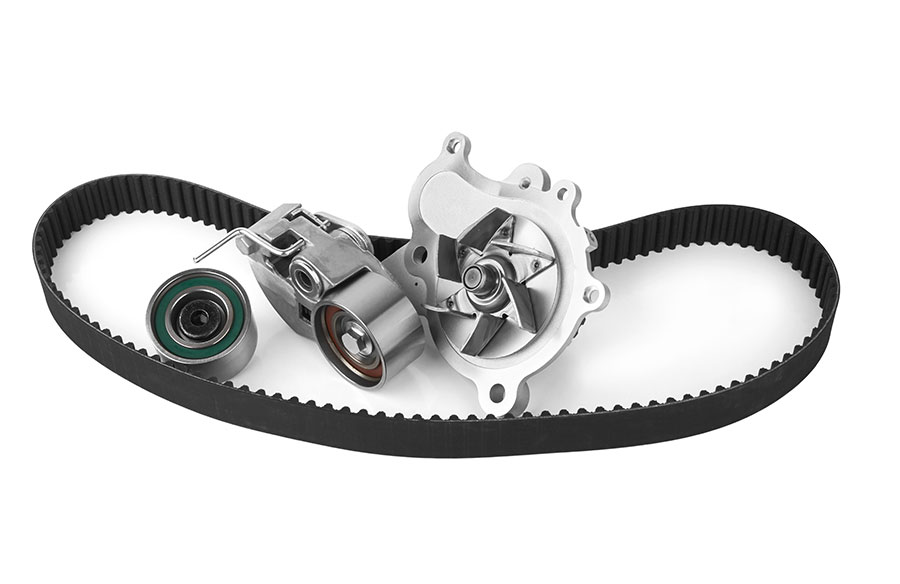
Every engine has its limits, but some failures are entirely preventable. One part that often gets ignored until it’s too late is the timing belt. This unassuming rubber belt keeps your engine’s pistons and valves working in perfect sync. When it fails, the damage is often sudden and expensive. Keep reading to find out how to avoid a repair bill that could wipe out your savings.
Timing Belts Don’t Last Forever
Timing belts wear out. They’re made of rubber and reinforced materials, but they’re still vulnerable to age, heat, and mileage. Most manufacturers recommend changing the timing belt between 60,000 and 100,000 miles, depending on your make and model. Yet many drivers push those limits, assuming the belt will last longer.
Ignoring a timing belt replacement might seem like a way to save money now, but it often leads to massive engine damage. When a belt breaks, the engine’s moving parts crash into each other, pistons bend valves, and cylinder heads crack. What starts as a cheap fix quickly turns into a full engine rebuild or worse, a complete replacement.
Warning Signs Aren’t Always Obvious
You won’t always get clear signs before a timing belt fails. It can wear silently, without the squealing or grinding sounds you’d hear from a worn fan belt. In some cases, the engine might misfire, idle roughly, or refuse to start. But often, it just snaps without warning.
That’s what makes this part so dangerous. You’re not just risking poor performance, you’re risking total engine failure. A failed timing belt can leave you stranded and facing a repair bill that runs into the thousands.
Prevention Costs Less Than Repairs
Replacing your timing belt is far cheaper than fixing an engine that’s been wrecked by one. Labour and parts for a timing belt job usually cost between £300 and £600, depending on the vehicle. Compare that with the £2,000 to £5,000 you might pay to fix a damaged engine.
Some cars also use timing belts to drive the water pump, and it’s smart to replace both together. That way, you save on future labour costs and reduce the chance of one part wearing out shortly after the other.
Engine Design Plays a Role
Not every engine reacts the same way to a failed timing belt. Some are non-interference engines, where a snapped belt won’t destroy internal parts. Others, called interference engines, will suffer serious internal damage. Unfortunately, many vehicles use interference engines. Putting off a belt replacement could be a gamble you can’t afford to take.
Your Engine Deserves Better
It’s easy to forget about the parts you can’t see, but timing belts don’t forgive neglect. They give no second chances. Waiting too long to act could mean losing your engine entirely and footing the bill for something you could’ve avoided with one timely service. Don’t risk it. If your timing belt’s due, replace it.