

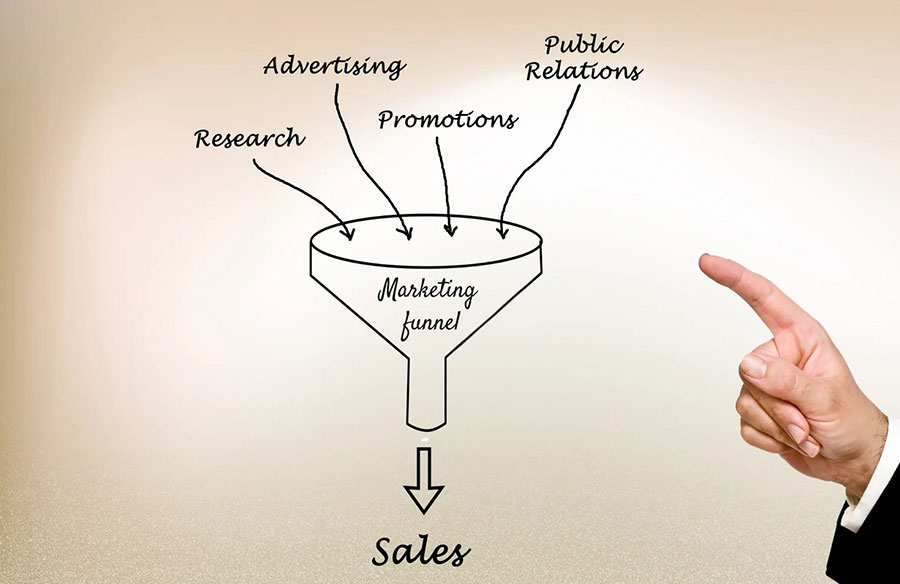
The conventional marketing funnels are gradually changing rapidly in today’s world with the expanded competition in the digital world. AI makes it possible for businesses of all sizes to have effective tools to comprehend the audience and vice versa. If AI funnels can be described as an extension or improvement, then it can be talked about as an evolution of how funnels for acquiring customers are designed and run. From identifying qualified sales leads to real-time and highly individualized interactions, all these systems are revolutionizing marketing.
The Rise of AI-Driven Marketing Funnels
Marketing has always been about communicating the right message to the right audience at the right time. But with the massive growth of different channels, customer interactions, and data circulating on the internet, it has become more challenging. Marketing funnels powered by AI provide this solution because the process is fully automated and optimized from the point of awareness to conversion.
These smart systems use such approaches as machine learning, predictive analytics and behavioral data in making each interaction, hence better than the conventional sales funnels. AI in funnels offers companies significantly better capabilities to scale and achieve better satisfaction ratings from customers, and, as an end-result, overall higher ROI.
Understanding AI-Powered Funnels
Roughly speaking, an AI funnel can be defined as a customer path concept solution that leverages AI techniques to automate its workflows and interactions with end-user. It applies changes in an instant concerning the data collected and the level of engagement made by the users in comparison to regular funnels which exclusively have a fixed approach.
They typically include the following features:
- Behavioral tracking: With webometrics, interest levels and buyer journey stages based on the user clickstreams, scrolls, time, and other interactions with a Web page, or a form are gauged.
- Automated decision-making: This type of recommendation system uses various AI techniques to predict what content, or offer would make sense to show the user next based on the patterns in data.
- Predictive analytics: It can identify the possible prospects that are most likely to make a purchase and accordingly targets them for follow-up.
By implementing Artificial Intelligence, companies can make intelligent funnels that are able to make sensible changes with little to no human intervention.
Benefits of Personalization and Automation
One of the key changes that AI funnels bring are the ways in which they allow a business to change and personalize the experience for the user(s). This begs the question of how personalization and automation come into the strategy of customer acquisition:
1. Deeper Personalization
It is also notable that AI segregates the audience not only by demographics but also by the behavior, preferences, and all the intents. This makes it possible for businesspeople to provide more customized information, products, and services.
For instance, a user who visits a pricing page may be served a pop-up discount or access to the pricing page with a time-limited price, or a user who downloads an eBook, may receive relevant content related to his industry. Many of these levels of personalization help to keep the attention of the buyer engaged and help to speed up the buying process.
2. Automated Lead Qualification
Some of the aspects include job title, company size, past engagement history, and the corresponding online activity. This means sales teams have more time-classing deals and less time getting caught up with unqualified leads.
Recent advancements in NLP and machine learning have enabled even the analysis of the quality of the conversation, be it in a chatbot or in an email to determine the buyer’s intent thus allowing teams to interact at the correct time.
3. Enhanced Engagement
This is because using AI systems such as the chatbot, recommendation systems, and dynamic content, a business can communicate with the users in real life, round the clock. This enhances the usability of the application and does not only make the response faster but also provides the opportunity to have more conversion.
Tools Spotlight: involve.me’s AI-Powered Funnel Creation
An example of accessible funnel technology enhanced by AI is involve.me, a no-code funnel builder designed to help businesses create personalized, multi-step funnels that drive engagement and capture qualified leads.
Through AI integration, involve.me enables:
- Creation of multi-step funnels that combine form, quizzes, survey, and calculator elements
- Real-time personalization of funnels based on user inputs and engagement
- Lead scoring and custom outcomes for better lead qualification and conversion
- Seamless integration with CRM and email tools to streamline data flow and automation
Businesses of all sizes can benefit from involve.me. With 300+ professionally designed templates, AI tools, 60+ native integrations, and advanced customization features, involve.me is a perfect funnel builder tool for modern marketers who seek to build branded, high-converting funnels—without relying on developers.
Tips for Getting Started Quickly and Effectively
It is not everyone’s idea to handle conversational funnels with AI integration and opting for the right option can be tricky where you come in. Below, you will find five guidelines to help you get started:
1. Start with Clear Goals
Determine when your funnel will be considered successful – if you are collecting leads, scheduling consultations or selling a product. This will determine the general modality and the plan of your AI funnel.
2. Choose the Right Platform
Choose the tool that would suit your business, and your level of technicality is appropriate. Platforms like involve.me seem to be easier and more suitable for individual or small-scale user experiences, whereas more complex tools could be more powerful for team-oriented work.
3. Collect and Analyze Data
Any good funnel should ideally be started after you gather as much data about your customers and their needs as possible. AI ravenously feeds on data – the more inputs the better predictions, personalization’s, and optimization.
4. Create Dynamic Content
In this case, it is evident that AI must be employed to experiment with different types of contents to the users. Don’t just stick to plain emails, adopt complexity and go with features such as interactive feedback, video greetings, or product suggestions.
5. Monitor and Iterate
AI funnels are capable of learning and getting better but there should always be someone monitoring them in a company. Analyze and use tools for A/B testing to monitor your content and make sure the funnel is optimized.
Conclusion: A Smarter Future for Customer Acquisition
Machine learning and artificial intelligence technology are changing the way prospects get drawn in and then converted through funnels. They are useful as they offer personalized experiences and make some tasks automatic, and enhance lead qualifying process, hence offer a scalable way to grow.
Regardless of whether the company is a budding entrepreneurship endeavoring to gain an ever-increasing momentum or it is well-proven and yearning for increasing efficiency, the application of AI in the quest for customers is not simply advisable; it is indispensable. Tools like involve.me are here to help people not only use this technology but also to remain relevant in the future.
With the advancement of Artificial Intelligence, I believe that these funnels will also get smarter, stronger, and remain a necessity to the marketing strategies.







