The construction industry is evolving rapidly, and digital tools are playing a pivotal role in shaping its future. As the sector faces rising demands, tighter deadlines, and increasing operational costs, the need for innovation has never been more pressing.
Construction equipment management software is one of the key technological advancements transforming the way companies manage their fleets and optimize operations.
In this blog, we’ll explore how digital tools are reshaping the management of construction equipment, highlighting their immediate benefits and how emerging trends are set to revolutionize the industry in the years to come.
The Current Landscape of Construction Equipment Management
Traditionally, managing construction equipment was a challenging and often inefficient task. Companies had to rely on manual processes to track equipment usage, maintenance schedules, and repair needs.
This approach often led to errors, missed maintenance deadlines, and increased downtime issues that directly impacted project timelines and budgets.
According to McKinsey, construction businesses lose approximately $1.6 trillion annually due to inefficiencies, and a significant portion of these losses is linked to poorly managed equipment.
As the industry embraces digital solutions, these outdated practices are being replaced with more efficient, data-driven approaches that offer real-time insights into equipment health, usage, and performance.
How Digital Tools Are Streamlining Operations
1. Centralized Fleet Management
One of the most significant advancements in equipment management is the shift from fragmented systems to centralized platforms. Construction equipment management software consolidates all fleet-related data, including usage, maintenance schedules, and fuel consumption, into a single dashboard.
This centralized approach allows project managers to monitor fleet performance in real time and make informed decisions on equipment allocation.
Real-time GPS tracking and telematics also enable better fleet coordination, ensuring that equipment is used efficiently and that downtime is minimized.
With this data at their fingertips, construction managers can quickly identify underutilized equipment, optimize scheduling, and prevent unnecessary rentals, which ultimately reduces operational costs.
2. Predictive Maintenance and Reduced Downtime
One of the most powerful features of equipment management software is its ability to predict when maintenance is required, rather than reacting to breakdowns. By monitoring real-time data from sensors embedded in the equipment, the software can forecast when a piece of machinery is likely to require servicing.
This proactive approach ensures that maintenance is performed before a breakdown occurs, reducing unplanned downtime and extending the lifespan of the equipment.
A study by Deloitte shows that predictive maintenance can reduce maintenance costs by 25% and improve equipment uptime by 30%.
By preventing costly repairs and keeping equipment operational, digital tools contribute significantly to a more efficient construction process, which ultimately saves money and enhances productivity.
3. Data-Driven Decision Making
Data is king. Equipment management software provides managers with actionable insights into equipment performance, fuel usage, and maintenance history, allowing them to make data-driven decisions that improve efficiency and reduce costs.
For example, analytics can help identify patterns in equipment usage, allowing managers to optimize scheduling and resource allocation.
Data can also be used to assess the health of each machine, predicting when it might be time for an upgrade or replacement.
According to PwC, companies that use data-driven solutions for equipment management see a 10-15% increase in operational efficiency, which directly impacts their bottom line.
Future Trends in Construction Equipment Management
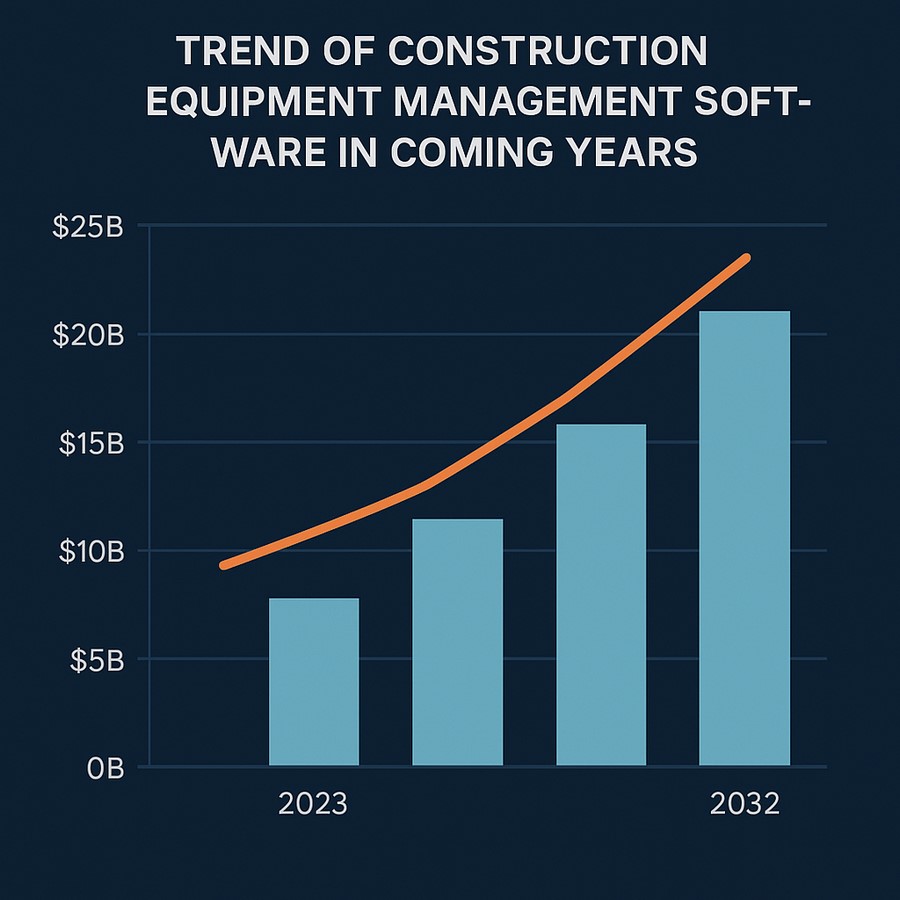
As the construction industry continues to adopt digital technologies, construction equipment management software is expected to experience significant growth in the coming years.
According to a recent trend, the market for these software solutions is projected to reach nearly $25 billion by 2032, up from approximately $10 billion in 2023.
This sharp increase reflects the growing demand for smarter, more efficient tools to manage construction fleets and operations.
 1. Expansion of AI and Machine Learning Capabilities
As equipment management software evolves, one key trend will be the integration of advanced AI and machine learning technologies.
These innovations will allow for more precise predictive maintenance, real-time adjustments based on data, and better decision-making tools.
With an increasing number of AI-driven features, the software will be able to predict equipment failures with even greater accuracy, offering a more efficient approach to fleet management.
2. Integration with Internet of Things (IoT)
Another significant trend in the future of construction equipment management is the growth of IoT-enabled devices.
By 2032, we can expect to see a broader implementation of IoT technology, where sensors embedded in equipment will provide real-time data not only about equipment performance but also environmental factors that may affect its operation.
The connection between these devices and equipment management software will provide seamless, instant updates to equipment operators, ensuring better coordination and faster response times to issues.
3. Autonomous and Remote-Controlled Equipment
The trend toward autonomous construction equipment is expected to grow as advancements in remote-controlled and autonomous machinery continue to develop.
Construction equipment management software will integrate seamlessly with autonomous machines, allowing operators to monitor performance remotely, schedule maintenance, and track usage all from a centralized platform.
This technological shift will not only enhance safety but will also help companies achieve higher productivity levels while reducing labor costs.
4. Sustainability and Fuel Efficiency Optimization
With the construction industry increasingly focusing on sustainability, the role of equipment management software in reducing fuel consumption and optimizing energy use will be crucial.
Future software will incorporate advanced analytics to track and improve fuel efficiency, providing real-time suggestions to reduce environmental impact and operating costs.
This growth aligns with broader trends in environmental sustainability, where every operational decision is scrutinized for its carbon footprint.
Conclusion
The future of construction equipment management is digital. With the continued rise of construction softwares, companies will be able to manage their fleets more efficiently, reduce downtime, and improve overall productivity.
As emerging technologies like AI, IoT, and autonomous equipment become mainstream, the construction industry will see even greater advancements in how equipment is tracked, maintained, and utilized.