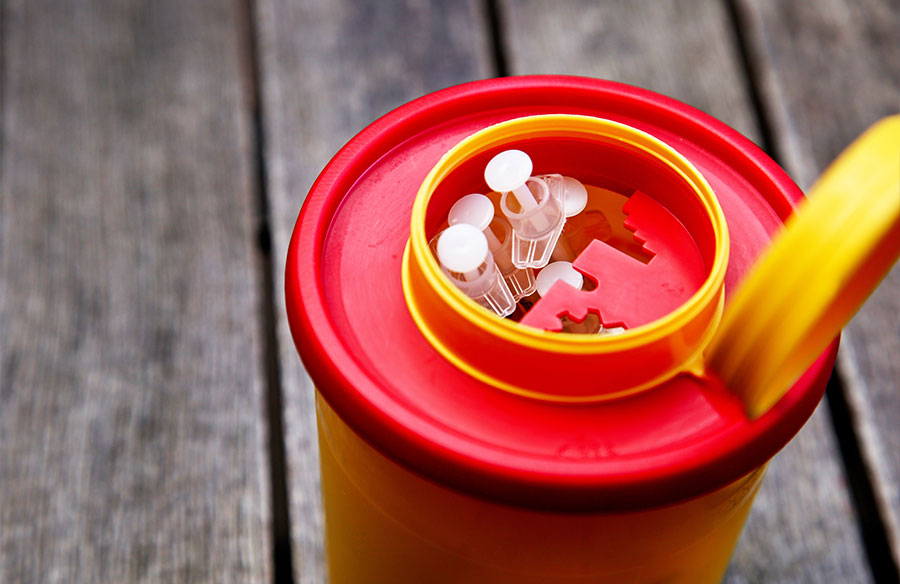
Proper disposal of medical sharps is crucial for ensuring safety and preventing injury in both healthcare settings and at home. Understanding which items should and should not be placed in a sharps container is essential for compliance with sharps container regulations and for maintaining a safe environment.
What Should Go in a Sharps Container?
Sharps containers are specifically designed to safely hold items that can puncture or cut the skin and may be contaminated with biohazardous materials. Items that should be disposed of in a sharps container include:
- Needles: Hypodermic needles used for injections.
- Syringes: With or without attached needles.
- Lancets: Devices used to prick the skin, commonly by individuals with diabetes.
- Scalpel Blades: Used in medical procedures.
- Auto-Injectors: Devices like epinephrine pens.
- Infusion Sets: Used in insulin pumps and other infusion therapies.
- Connection Needles/Sets: Used in medical tubing.
- Contaminated Glass: Such as broken laboratory slides or vials that have been in contact with infectious agents.
These items are considered Sharps waste because they can puncture or lacerate the skin, posing a risk of injury and potential infection. Proper disposal in designated sharps containers helps mitigate these risks.
What Should Not Go in a Sharps Container?
It’s equally important to know what items should not be placed in a sharps container. Non-sharp items, even if they are contaminated, should be disposed of according to other biohazard waste protocols. Items that should not be placed in a sharps container include:
- Gloves: Used examination or surgical gloves.
- Bandages and Dressings: Even if they contain small amounts of blood.
- Unbroken Vials: Such as those containing medications or solutions.
- Swabs and Gauze: Used for cleaning or dressing wounds.
- Personal Protective Equipment (PPE): Such as masks and gowns.
- Paper Products: Including patient charts or paper towels.
These items do not pose the same risk of puncture or laceration and should be disposed of in regular biohazard waste containers, not in sharps containers.
Alternative Disposal Containers
In situations where an FDA-cleared sharps disposal container is not available, certain household containers can serve as temporary alternatives. Acceptable options include:
- Heavy-Duty Plastic Containers: Such as empty laundry detergent or bleach bottles with screw-on lids.
These containers should be:
- Leak-Resistant: To prevent any spillage.
- Puncture-Resistant: To ensure that sharps cannot pierce through.
- Properly Labeled: Clearly marked to indicate that they contain sharps and should not be recycled.
It’s important to note that not all household containers are suitable. Unacceptable options include:
- Glass Containers: Due to the risk of breaking.
- Thin Plastic Containers: Such as soda bottles, which may be punctured easily.
- Milk Jugs: Often made of thin plastic that can be pierced.
Always ensure that any alternative container used meets the necessary safety criteria to prevent accidents.
Sharps Container Regulations and Best Practices
Adhering to sharps container regulations is vital for safety and compliance. Key guidelines include:
- Immediate Disposal: Place used sharps in a disposal container immediately after use to reduce the risk of needle sticks, cuts, or punctures from loose sharps.
- Proper Labeling: Ensure containers are clearly labeled to warn of hazardous waste inside.
- Accessibility: Containers should be easily accessible and placed close to where sharps are used.
- Disposal When Full: Do not overfill sharps containers. Dispose of them when they are about three-quarters full to prevent injuries.
By following these regulations and best practices, individuals and healthcare professionals can ensure the safe and effective disposal of sharps, thereby protecting themselves and others from potential harm.
Understanding what items should and should not go into a sharps container is fundamental to maintaining safety and compliance with health regulations. Proper disposal of sharps protects not only healthcare workers but also patients and the broader community from potential injuries and infections.