Property development and real estate are undergoing profound transformations driven by technological innovation, changing societal needs, and urgent environmental imperatives. The traditional notions of buildings as static assets are giving way to more dynamic, adaptive, and sustainable approaches that reimagine how we live, work, and interact with our built environment.
This evolution reflects broader shifts in how we understand the relationship between humans, technology, and the natural world—creating both significant challenges and extraordinary opportunities for architects, developers, urban planners, and property owners alike.
The Technology Revolution in Property
Digital Twins and Smart Buildings
The integration of IoT (Internet of Things) sensors, AI systems, and advanced data analytics has given rise to buildings that can monitor, adapt, and respond to their environments in real-time. Digital twins—virtual replicas of physical buildings—are revolutionising how properties are designed, constructed, and managed:
- Advanced building management systems can now optimise energy usage, air quality, and spatial utilisation automatically
- Predictive maintenance identifies potential issues before they cause disruption, reducing downtime and operational costs
- Occupancy analytics help property managers understand usage patterns to enhance user experience and space efficiency
Smart building technology is transitioning from luxury to necessity, with research indicating that buildings equipped with comprehensive smart systems command 15-20% higher rental values while reducing operational costs by up to 30%.
Construction Technology Advancements
The construction phase of property development is experiencing its own technological revolution:
- Modular and prefabricated construction has matured significantly, offering 20-50% faster construction timelines with enhanced quality control
- 3D printing has moved beyond prototype stage, with entire buildings now being printed on-site using sustainable materials
- Robotics and automation are addressing labour shortages while improving precision in tasks ranging from bricklaying to facade installation
- Augmented reality enables stakeholders to visualise design decisions before implementation, reducing costly changes and improvements
These technologies are converging to create construction processes that are faster, more efficient, less wasteful, and increasingly capable of delivering complex architectural visions that would have been prohibitively difficult or expensive using traditional methods.
Blockchain and Property Transactions
The financial and legal aspects of property are also being reimagined through technology:
- Blockchain-based property registries are enhancing transparency and reducing fraud in markets with historically complicated ownership records
- Smart contracts are streamlining transactions by automating processes that traditionally required multiple intermediaries
- Fractional ownership platforms are democratising access to property investment, allowing smaller investors to participate in high-value developments
- Tokenisation of property assets is creating more liquid markets for real estate, potentially transforming how property is bought, sold, and valued
These innovations have the potential to reduce transaction costs by 50-80% while significantly shortening the time required to complete property transactions.
Sustainability: The New Imperative
Beyond Net Zero
Environmental considerations have moved from peripheral concerns to central design principles in forward-thinking property development:
- Net positive buildings aim to not only minimise harm but actively contribute to ecological regeneration and energy production
- Circular economy principles are being applied to reduce waste throughout building lifecycles, with some developments achieving 90% materials recycling or reuse
- Biodiversity integration is creating buildings that support local ecosystems rather than replacing them
- Regenerative design approaches seek to restore environmental and social systems through thoughtful development
The World Green Building Council reports that sustainable buildings deliver approximately 7% higher asset values while significantly reducing operational costs and improving occupant wellbeing and productivity.
Embodied Carbon Focus
While operational carbon emissions have long been a focus, attention is increasingly turning to embodied carbon—the emissions associated with materials and construction processes:
- Mass timber construction is gaining popularity as a lower-carbon alternative to concrete and steel
- Low-carbon concrete formulations are being developed and deployed at scale
- Adaptive reuse of existing buildings is being prioritised to avoid the substantial carbon costs of demolition and new construction
- Material passports are tracking the full lifecycle of building components to facilitate future reuse
Current research suggests embodied carbon can represent 40-50% of a building’s total carbon footprint over its lifetime, making these initiatives crucial for achieving meaningful climate impact.
Climate Resilience
Property development is adapting to both mitigate and adapt to climate change impacts:
- Designs now routinely incorporate features to manage extreme weather events, including enhanced flood protection and passive cooling systems
- Microgrids and on-site energy generation increase resilience against grid disruptions
- Water management systems capture, treat, and reuse water on-site to address both drought and flooding concerns
- Adaptable designs allow buildings to evolve as climate conditions change over decades
The economic case for resilience is compelling—research indicates that every £1 invested in resilience measures saves approximately £4-7 in disaster recovery costs.
Changing Spatial Needs and Functions
Hybrid Work Environments
The pandemic-accelerated shift toward flexible work arrangements is fundamentally reshaping office properties:
- Traditional office spaces are being reconfigured to prioritise collaboration spaces over individual workstations
- Technology integration enables seamless transitions between in-person and remote collaboration
- Workplace analytics help organisations optimise space utilisation in hybrid models
- Amenity-rich environments aim to make offices destinations that enhance work experience rather than merely house employees
These changes are reflected in market dynamics, with prime collaborative office spaces maintaining value while conventional office stock faces significant repricing pressure.
Flexible and Adaptive Spaces
The concept of fixed-function spaces is giving way to more flexible, adaptable environments across property types:
- Flexible housing designs incorporate movable walls and modular systems that can be reconfigured as household needs change
- Mixed-use developments blend residential, commercial, leisure, and cultural spaces to create vibrant, 24-hour environments
- Adaptive reuse transforms obsolete property types into new functions, preserving embodied carbon and heritage value
- Programmable spaces can be rapidly reconfigured through technology and flexible design elements
This flexibility creates buildings with longer functional lifespans and higher utilisation rates, improving both sustainability metrics and financial returns.
The 15-Minute City Concept
Urban property development is increasingly influenced by proximity planning principles:
- Developments prioritise walkable access to essential services, work opportunities, and leisure amenities
- Micromobility infrastructure and car-free designs are becoming standard features in progressive developments
- Mixed-use approaches ensure diverse amenities within compact geographic areas
- Digital services complement physical proximity to enhance convenience while reducing unnecessary travel
These principles are reshaping property values, with connectivity metrics becoming increasingly important valuation factors alongside traditional location considerations.
Health and Wellbeing Focus
Biophilic Design Integration
The incorporation of nature into built environments has moved from aesthetic choice to evidence-based design approach:
- Natural light optimisation through advanced facade design and smart glazing improves occupant wellbeing and reduces energy demands
- Indoor air quality management through advanced filtration and bioremediation enhances cognitive function and health outcomes
- Natural materials and views of nature demonstrably reduce stress and improve concentration
- Green spaces integrated throughout buildings provide both environmental benefits and mental health advantages
Research consistently demonstrates that biophilic elements in buildings contribute to 8-12% productivity improvements, reduced absenteeism, and enhanced occupant satisfaction.
Post-Pandemic Health Considerations
The pandemic has accelerated the adoption of health-focused building features:
- Touchless technologies eliminate high-contact surfaces throughout buildings
- Advanced ventilation systems provide higher air change rates with minimal energy penalties
- Antimicrobial materials in high-touch areas reduce disease transmission risk
- Flexible spaces allow for rapid reconfiguration during health emergencies
These features are increasingly viewed not as temporary responses but as permanent enhancements to building resilience and occupant protection.
Mental Health Design
Property design now explicitly addresses psychological wellbeing:
- Acoustic design mitigates noise pollution that contributes to stress and cognitive fatigue
- Lighting systems that support circadian rhythms improve sleep quality and mental health
- Communal spaces foster social connection while preserving privacy options
- Sensory considerations address the needs of neurodivergent occupants
The ROI of these considerations extends beyond occupant satisfaction to measurable improvements in retention rates, reduced healthcare costs, and enhanced productivity.
The Social Dimension of Future Property
Community Integration
Forward-thinking property development recognises buildings as components of social ecosystems:
- Developments increasingly incorporate community facilities and public spaces that serve broader neighbourhoods
- Participatory design processes engage communities in development decisions that affect them
- Social impact assessments are becoming standard elements of planning processes
- Cultural and historical context informs design approaches to enhance community connection
These approaches help address the “social license to operate” challenges that have traditionally complicated development processes in established communities.
Addressing Housing Affordability
Innovative property approaches are responding to global housing affordability challenges:
- Modular and prefabricated construction reduces costs while maintaining quality
- Co-living models create more affordable entry points while fostering community
- Intergenerational housing designs address the needs of multiple age groups simultaneously
- Public-private partnerships create mixed-income developments that avoid segregation
These innovations are essential as traditional housing models increasingly fail to meet the needs of changing demographics and economic realities.
Digital Community Building
Technology is enhancing how buildings support community formation:
- Building apps and digital platforms connect residents and facilitate resource sharing
- Community management systems help coordinate shared spaces and amenities
- Local exchange systems foster neighbourhood connections and resilience
- Digital twins enable community participation in ongoing property management
These digital layers complement physical design to create more vibrant, connected communities within developments.
Economic Models and Investment Trends
Property-as-a-Service Models
The traditional ownership model is being complemented by service-oriented approaches:
- Flexible leasing structures are replacing traditional long-term commitments
- Bundled service offerings incorporate operations, maintenance, and amenities into unified packages
- Usage-based pricing models align costs more closely with actual space utilisation
- Performance guarantees shift risk from occupiers to developers/operators
These models create more agile property solutions that better align with the dynamic needs of modern organisations and individuals.
ESG Investment Drivers
Environmental, Social, and Governance factors are reshaping property investment:
- Green building certifications like BREEAM and WELL now command significant valuation premiums
- Stranded asset risk is creating urgency around upgrading underperforming buildings
- Impact investment funds are directing capital toward projects with measurable social benefits
- Regulatory requirements around sustainability disclosure are creating transparency that rewards leading practices
The integration of ESG considerations into property valuation is accelerating, with sustainability metrics becoming core rather than supplementary factors in investment decisions.
Total Value Assessment
Property economics are expanding beyond traditional metrics:
- Productivity impacts of building design are being quantified in valuation models
- Health outcomes are translated into economic terms through reduced absenteeism and healthcare costs
- Environmental externalities both positive and negative are increasingly priced into developments
- Community and social value creation is recognised as enhancing long-term returns and reducing operational risks
This broader view of value creation is enabling more sophisticated decision-making around property investment and development.
Case Studies: Exemplary Future-Focused Developments
The Edge, Amsterdam
This office building demonstrates how technology integration can transform workplace experience:
- 28,000 sensors monitor and optimise everything from energy use to coffee preparation
- Personalised workspaces adjust automatically to individual preferences
- Solar panels and aquifer thermal energy storage create a near-energy-neutral building
- Data analytics continuously improve building performance and user experience
The Edge achieved the highest BREEAM sustainability score ever recorded while delivering exceptional occupant satisfaction and operational efficiency.
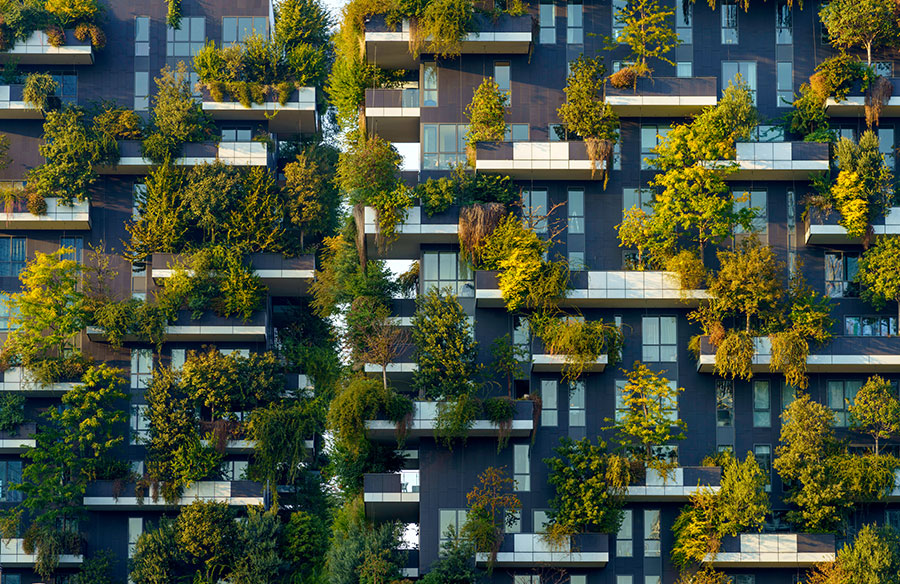
Bosco Verticale, Milan
This residential development shows how biodiversity can be integrated into urban high-density housing:
- 900 trees and over 20,000 plants are incorporated into the building facades
- The vegetation provides natural cooling, improves air quality, and supports biodiversity
- Irrigation systems use filtered greywater from the buildings
- The project demonstrates how density and nature can be complementary rather than contradictory
The development has inspired similar approaches worldwide while providing valuable data on the performance of vertical forests in urban environments.
Sidewalk Labs Toronto (Concepts)
While the full project wasn’t implemented, the concepts developed provided valuable insights:
- Modular pavement systems allow for rapid infrastructure updates with minimal disruption
- Mass timber construction demonstrated carbon sequestration potential at scale
- Privacy-preserving urban data systems showed how to balance innovation with rights protection
- Dynamic curb management illustrated how public space can adapt to changing needs throughout the day
These concepts continue to influence urban development globally despite the original project’s limitations.
Challenges and Barriers to Implementation
Regulatory Adaptation
Existing regulatory frameworks often impede innovation:
- Building codes typically evolve slowly and may not accommodate novel construction techniques or materials
- Zoning restrictions frequently prevent the mixed-use, flexible approaches that future properties require
- Energy regulations may inadvertently incentivise specific technologies rather than outcomes
- Heritage protection sometimes conflicts with adaptation needs
Progressive jurisdictions are exploring performance-based regulations and regulatory sandboxes to address these challenges while maintaining safety and quality standards.
Skills and Capacity Building
The workforce requires significant upskilling to deliver future property visions:
- Digital construction skills are in critically short supply across markets
- Interdisciplinary collaboration capabilities are essential but underdeveloped
- Operations teams need enhanced technical capabilities to manage advanced buildings
- Design professionals require expanded knowledge of environmental science and technology
Investment in education, apprenticeships, and professional development is crucial to address these gaps.
Financial Models and Valuation
Traditional approaches to property finance and valuation struggle with innovation:
- Conventional appraisal methods may undervalue sustainability and wellness features
- Risk assessment models often penalise novel approaches despite their potential benefits
- Split incentives between developers, owners, and occupiers complicate investment cases
- Longer-term value considerations are difficult to incorporate into transaction-focused markets
Leading organisations are developing new valuation methodologies that better capture the full value of forward-thinking property approaches.
Conclusion: The Integrated Future of Property
The future of property lies not in isolated technological or sustainability innovations but in their thoughtful integration into coherent, human-centred environments. The most successful developments will combine:
- Technical performance that minimises environmental impact while maximising adaptability
- Human experience design that enhances wellbeing, productivity, and social connection
- Economic models that accurately value both immediate and long-term benefits
- Community integration that positions buildings as positive contributors to their contexts
The property sector stands at an inflection point where the convergence of environmental imperatives, technological capabilities, and evolving human needs demands fundamental rethinking of how we conceptualise, deliver, and manage our built environment.
For business leaders, investors, and property professionals, this transformation presents both significant challenges and extraordinary opportunities—the chance to create buildings and places that are not merely less harmful but actively regenerative for people, communities, and the planet.
The future of property will belong to those who embrace this integrated vision and develop the capabilities to bring it to life.