Who doesn’t want a gorgeous smile? But as soon as someone speaks about braces, most patients accept their crooked teeth rather than getting treatment.
Then how to proceed? Is there any other option?
Clear Aligners!
Yes, clear aligners or invisible aligners, one of the most talked about treatment in Orthodontics. Gone are the days of braces, this world is owned by clear aligners.
In this blog we will discuss all the aspects of clear aligners, their advantages, disadvantages and after care. Theres been a lot of discussions about this latest and most desired treatment option and people feel that nothing new has been written about clear aligners lately. So, let’s also discuss all the undesired things that come with aligners along with a beautiful smile.
Are you a candidate?
How to check if you need aligners or not? This is an easy task to access if you have malocclusion and you need to straighten your teeth; the following are the conditions when you need to see your dentist.
Misaligned teeth
Crowded teeth
Gaps between teeth
Rotated teeth
Forwardly placed teeth
Crossbite or deep bite
Clear Aligners: Definition to Description
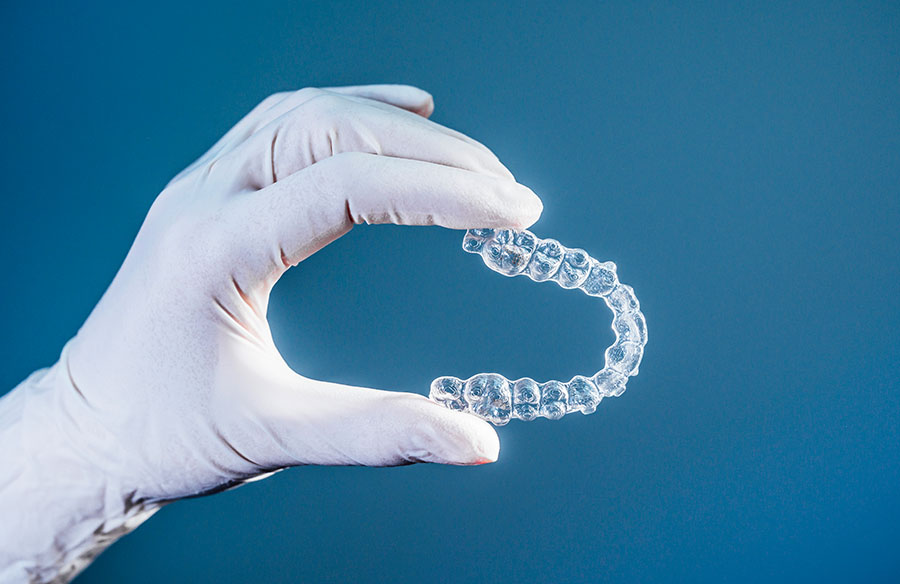
Clear aligners are a plastic tray kind of oral appliance. It is used to gradually straighten your crooked teeth while pushing these teeth in a planned manner. This pushing of teeth is called orthodontic force.
This force is very slow, so it doesn’t create any acute or severe discomfort for the patient. So basically, aligners do the same job as braces, but they use transparent biocompatible plastic materials instead of chunky metal wires and brackets.
What are aligners made of?
Aligners are made of biocompatible, medical grade plastic. This plastic is usually PU or PETG. Some companies may use hybrid material as well. These plastic sheets are shaped according to your teeth and thus, they are able to fit very accurately on your teeth.
Aligners Actions and Reactions
As slowly aligners move the teeth, they tend to create a little bit of discomfort in the teeth and jaws. This discomfort is not very aggressive and fades away with time. Still patients are recommended to take a painkiller sometimes to be very comfortable. Now comes a very important aspect of maintaining the teeth position created by aligners. And then comes in picture the RETAINERS. We will speak about this later in this article.
How are aligners made?
Getting aligners is a simple process. Let’s discuss each step in detail;
Initial appointment: A routine dental checkup is done and once you give your consent to the dentist. The dentist takes digital impressions of your teeth for the fabrication of aligners.
Making of aligners: Your aligners are prepared by a specialized machine according to the planned treatment. So, for example, if your dentist has prepared a plan that needs 20 sets of aligners, you will get aligners numbered from 1-20.
Wearing aligners: Each set of aligners is needed to wear for 20-22 hours a day for 7-14 days religiously before switching to next set. The wearing discipline is a big factor in providing desired smile.
Wearing retainers: After the treatment is over, your dentist will prescribe you retainers. These retainers are also to be worn for 20-22 hours a day.
What are retainers?
Retainers are the same as aligners in look, feel and fit but, they are used to keep the tooth in the same position. So basically, they do not make the teeth move but retain them in their newly acquired position.
Care of aligners
It is very important to take proper care of your aligners to make them more efficient. Here are some checklists to follow while using them;
Wear regularly: 20-22 hours a day
Cleaning regularly with a mild cleanser and soft brush
Storing in an assigned retainer box to avoid damages
Removing aligners while eating anything
Contact your dentist in case of damage.
What to expect to get in your aligners kit?
You can expect the following things to get in your kit:
Aligners numbered according to the wearing chronology
Retainer case to keep your aligners
Aligners chewies: soft rubber-based pellets to seat the aligners properly on your teeth.
Aligners removal tools to remove the aligners without damaging their edges.
Some frequently asked questions
Are aligners effective in every case?
Aligners are effective mostly in mild to moderate cases. However, they are used in combination with braces or surgery in a very complicated case.
Are aligners very expensive?
Aligners cost depends upon treatment time and case severity. The aligners are more costly than braces because of their material and aesthetic look.
Are aligners painful?
Aligners are not painful. Patient feels mild discomfort initially due to teeth shifting which fades away in few days.
Do aligners turn yellow?
No aligners don’t turn yellow due to high quality material. Also, aligners sets are made to be worn for a very short span of time like 7-14 days and thus they are very unlikely to get it stained.
Summary:
Aligners are today’s generation’s treatment alternative and patients should opt for it after knowing all the pros and cons thoroughly. This blog hopefully helped you to know the “not-so-talked about” aspects of aligners.