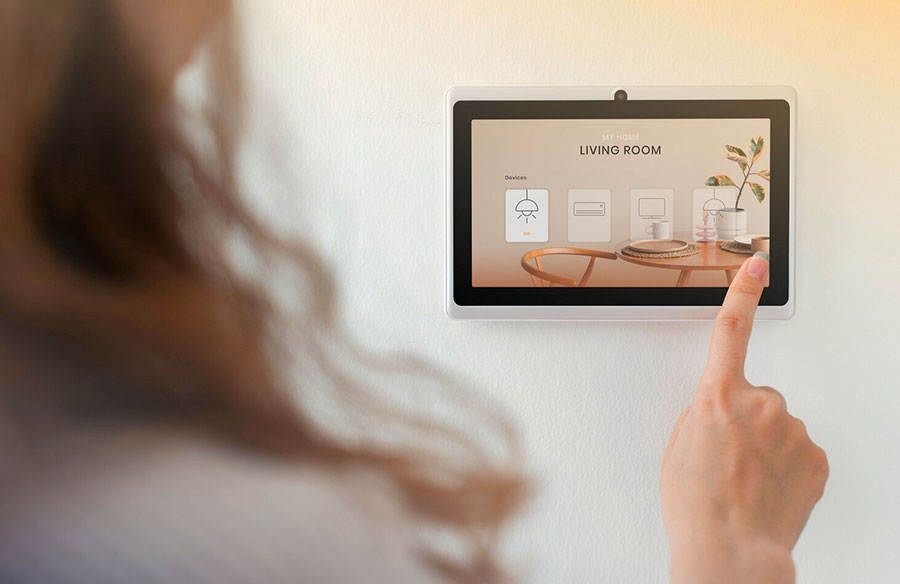
Nowadays, modern homes are no longer just about bricks and mortar. Today, people build intelligent and connected properties that are designed to make their lives easier. The present and future of home living are increasingly digitized with things like smart locks and voice-activated assistants.
Nonetheless, such convenience comes with a new set of threats. Digital intrusions are a thing now, and they can compromise privacy and security. In this regard, smart homeowners should know how to protect their properties.
Let’s find out what measures to take to protect our digital spaces from cyber intrusions.
Common digital threats in modern homes
The smarter homes become, the more digital intrusions happen. Here are some of the most common threats:
Caller ID spoofing and phone scams
Digital phone scams are on the rise. Hackers take advantage of caller ID spoofing more and more. They can impersonate home security providers and ask questions to gain remote access to home devices.
In this regard, you shouldn’t trust every person who claims to be a home security provider right away. Instead, you should use ClarityCheck phone lookup to verify whether this person is who they claim to be. In this way, you’ll be able to protect yourself from potential scams.
Hacking and unauthorized access
Just like public Wi-Fi networks, hackers can also hack private networks. It’s widely known that smart home devices operate through Wi-Fi. And that makes them susceptible to hacking. Here’s what can allow cybercriminals to gain access to your home security cameras, locks, and personal data:
- Weak passwords;
- Outdated software;
- Unencrypted data transmission.
Thus, you should simply make sure that your passwords are strong, the software is updated, and data transmission is encrypted. In this way, you’ll be able to sleep with a peaceful mind.
Data privacy breaches
If you give it some thought, then you might figure out that your smart home devices collect vast amounts of information. All the connected gadgets collect data like voice recordings and video footage.
Imagine what your life would be like if someone had access to it. Hackers can easily blackmail you with your video footage from home. Thus, you need to take care of the storage, as it poses a significant privacy risk if not secured.
 How to protect your smart home from digital intrusions
It’s not enough to just build a smart home. If you want to live peacefully and happily, you need to secure it in every possible way. Otherwise, your life can turn into a nightmare with blackmail, scams, and digital intrusions. Here are some best practices:
1. Strengthen your Wi-Fi network
Wi-Fi is the gateway to all connected devices. You need to do the following:
- Change the default router name and password. However, the combination shouldn’t be your or your loved one’s birthday. It should belong and contain different symbols;
- If you’ve no clue about encryption, you should consult a specialist to set up WPA3 encryption;
- Cross-network access is possible. That’s why you should create a separate network for your gadgets.
2. Update devices regularly
When you update apps on your phone, you get a new version with fixed bugs and security vulnerabilities. The same goes for device updates. Every time, manufacturers release updates to fix all weak spots. That’s why you need to make sure that all devices are updated regularly. Thus, you’ll reduce exposure to cyber risks.
3. Enable 2FA
If a fraudster gets access to your account on a smart home platform, they get access to everything you have. In such a case, you should set up another layer of security in the form of two-factor authentication. It’ll require a second form of verification every time you log in. Remember that you shouldn’t give 2AF codes to anyone.
4. Change passwords regularly
Whenever you connect a new device, there’s a default password. The simplest way to secure it is to change the combination. However, it’s not enough to change the combination once. Over time, combinations might become compromised. You might not even know about it. That’s why you should make a habit of changing combinations regularly. Set a reminder for every couple of months or every half year to change all the passwords.
5. Secure your smart assistants
Alexa helps homeowners in many ways. However, it doesn’t mean that it cannot be exploited to harm your family. You should properly secure it by
- Disabling unnecessary features;
- Setting up voice recognition;
- Regularly reviewing stored recordings.
6. Review privacy settings on all gadgets
Usually, all smart devices come with default settings. They’re more likely to be set up for better functionality rather than security. In this regard, you should check all the settings and customize your privacy settings. In this way, you’ll be able to limit data collection and sharing.
In closing
All connected and smart devices in your house pose certain cybersecurity risks. If you arrogantly approach the security settings of your devices, you are personally opening the way for scammers. That’s why you should be aware of the best practices for securing your smart home.