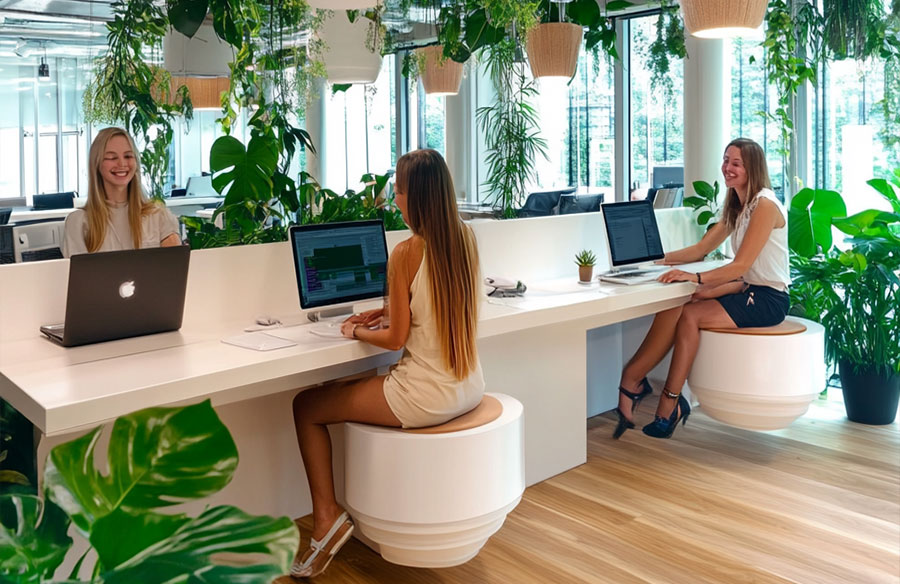
Have you noticed that more architecture and interiors seem to be incorporating nature – think living walls in office lobbies, ceilings lined with organic wood slats, or indoor waterfalls in high-end hotels.
It’s called biophilic design and it’s all about reconnecting with the natural world, even within human-made environments. But does it really go beyond just making spaces look nice? The answer is a resounding yes.
From enhancing your mood to sharpening your memory, biophilic design offers benefits worth looking into. Whether you’re crafting a workspace or trying to make your home feel less sterile, understanding this design philosophy could be a turning point for how you approach interior spaces.
Biophilic Design – The Overview
At its core, biophilic design is about integrating nature into built environments to satisfy humanity’s innate need to connect with the natural world.
The term itself comes from “biophilia,” a concept popularized by Edward O. Wilson, which highlights humanity’s deep biological desire to affiliate with life and life-like processes.
You’ve likely felt it instinctively. Think about how standing near a body of water seems to calm your mind, or how lingering under the dappled sunlight of a tree canopy feels refreshing.
Biophilic design aims to bring that comfort indoors, creating spaces prioritizing natural light, greenery, flowing shapes, and even stone or bamboo.
But here’s where it gets interesting – it’s not only about aesthetics. The effects on the mind aren’t too far off from what you would get from nootropic supplements from Mind Lab Pro. It can change how you work, think, and feel.
The Cognitive Benefits
Biophilic design improves the way spaces look. Sure. It’s pretty. You get it. But. It can also enhance cognitive performance as well. Exposure to natural elements has the power to sharpen focus, increase problem-solving skills, and reduce mental fatigue.
Think about stepping into an office with harsh fluorescent lighting, pale gray carpets, and rows of identical cubicles. It’s a little prison-esque, right?
Now picture the opposite – a space with natural light pouring in, wooden desks surrounded by lush greenery, and perhaps a feature wall made of moss. One of these rooms is more likely to boost creativity and improve your productivity over a full workday. It’s not just in your head; science backs it up.
Environments with biophilic elements trigger positive psychological responses, which then influence performance. They reduce the stressors and distractions that clutter mental clarity while promoting a grounded sense of focus.
Mood Enhancement Through Natural Elements
If you’ve used houseplants to “liven up” your living room or added fairy lights to create ambiance, you’re already dipping your toes into mood enhancement through design. Biophilic principles take those small wins and turn them into a framework for emotional well-being.
Natural materials, green spaces, and flowing water interact with your emotions. Why do you think every electronic sleep aid has a nature and flowing water setting on it?
When greenery is incorporated into a space, it taps into a human instinct known as stress recovery response. Just sitting in a chair surrounded by plants could reduce cortisol – the primary stress hormone – helping you relax during anxious moments.
Memory Improvement with Nature-Inspired Spaces
You might not initially associate your memory with the design of your physical environment, but the link exists. Memory and cognition are closely intertwined with your surroundings, and design choices can either enhance or hinder them.
Biophilic elements like natural light or calming colors stimulate your brain in ways that support attention span and memory retention.
It’s why classrooms and study spaces incorporating biophilic design foster better learning outcomes. Natural textures, earth tones, and even images of landscapes provide subtle visual cues that activate the hippocampus, a part of the brain linked to long-term memory.
Biophilic Designs Is Creating a Better Future
What is biophilic design improving? You.
Prioritizing natural elements like light, living plants, and organic textures, beautifies our environments and improves our cognitive functioning, emotional well-being, and even our memory.
So, whether you’re designing an office, a classroom, or your own home, introducing biophilic principles can transform how you work, feel, and live. It’s a reminder that our connection to nature requires balance that many of us have been missing.
In a world increasingly dominated by urban sprawl and technology, finding ways to bring the outdoors in has never been more important.