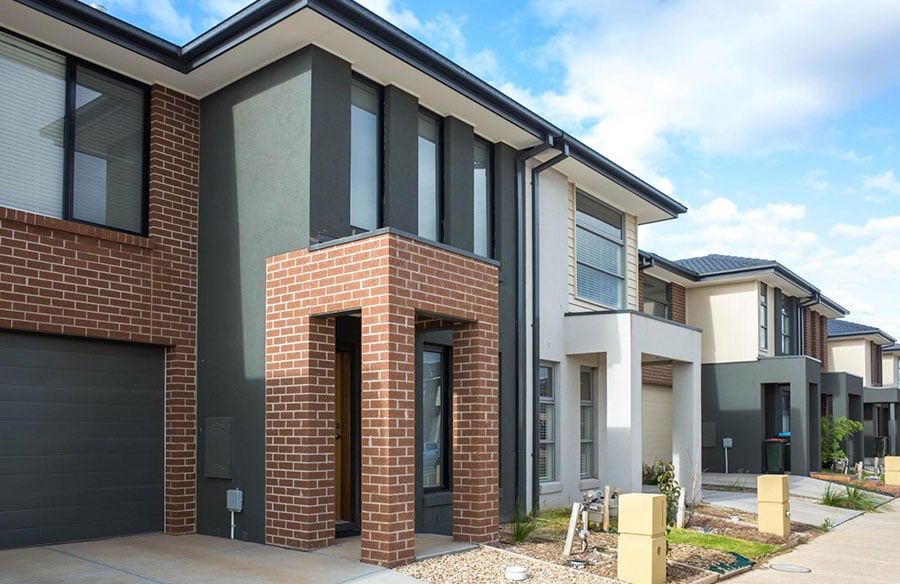
Australian property developers have been finding new ways of maximising the space available in townhouse living as land sizes reduce and the need for housing in urban areas increases. Townhouses are usually built on smaller or subdivided plots of land, which creates a problem for Australian homeowners who have historically had an abundance of space.
This cultural challenge is being met by innovative Aussie builders who are using architectural and interior design strategies that focus on function without sacrificing style. Open-floor living plans that increase the spatial flexibility and cleverly designed European-style laundry rooms that use underutilised space are now features that developers are using to transform the way townhouses can work for today’s homeowners. Furthermore, the integration of functional outdoor areas makes sure that the spirit of Australian suburban life – with its backyards and garden spaces – endures, even in the centre of the city.
Today, we’ll be looking at how Australian property developers are pioneering the concept of the uniquely Australian townhouse.
Reimagining Townhouse Design for Australia’s Climate
The crux of designing comfortable townhouses in Australia is just making sure prospective homeowners don’t have to sacrifice on light and space just to live in more densely populated areas. But as Australia’s major cities continue to experience urban sprawl, we’ve observed that climate-conscious design has played a vital role for not only combating heat build-up in urban centres, but suburban areas as well.
It’s unsurprising that Australia’s climate is an uber important factor that influences the design of modern townhouses. After all, the island continent famously has one of the harshest climates found globally. As a result, a lot of modern Aussie townhouses are designed with glazed facades, organic cladding for thermal regulation, controlled louvres for shading, and other design elements for passive heating and cooling. The material selection is also changing; the focus is on energy efficiency, robustness and environmental friendliness—natural stone, recycled timber and high-performance cladding are selected not only for appearance but also for the ability to regulate temperatures and withstand harsh climatic conditions from coast to coast.
These innovations are already on display in display homes in Australia, and give a taste of what the future of urban living looks like. However, their impact is not limited to the showroom, influencing the way townhouses are developed, constructed and occupied across the country.
Maximising Space in Australian Townhouses
Key Features Seen in Townhouses Across the Country
Small-space living is being redefined by townhouses in Australia with creative solutions that are both functional and stylish. Swapping out traditional laundry rooms for compact Euro laundries is a great example here, as is installing built-in storage solutions that are cleverly tucked beneath stairs, or kitchen and bathroom cabinets.
Similarly, as Australian homeowners also value outdoor entertaining, it’s common to see townhouses designed with courtyards, rooftop terraces, and other private outdoor recreational spaces. Designing seamless indoor-outdoor transitions with retractable glass walls is another key component of developing the ideal Australian townhouse, allowing Aussie homeowners to maintain their affinity for the great outdoors without sacrificing on interior floor space.
To recap, here are the space-saving design elements you’re more likely to find in modern Australian townhouses in particular:
- Euro laundries
- Functional built-in cabinetry
- Floor-to-ceiling shelving
- Retractable walls
- Private outdoor entertaining spaces
The Influence of Design Trends in Australian Townhouses
Eco-Friendly Townhouses
As urban density increases, Australian architects are using passive design, orientation-based planning, cross ventilation, and thermal mass materials to naturally control indoor temperatures without the need of heating or cooling systems. The integration of green spaces is also changing the modern townhouse design. Some new eco features include green roofs and vertical gardens that not only improve the appearance of the building but also help in improving air quality, provide insulation and support biodiversity in the urban areas.
Sustainable material selection is a key driver of this new generation of townhouse designs. Recycled timbers, rammed earth, and high-performance cladding are not only durable but also energy efficient to ensure that homes are comfortable in Australia’s wide-ranging climates. Through sustainable design, architects have been able to design townhouses that are not only relevant to the present time but also contribute to the improvement of the environment in Australian cities.
Smart Townhouses
New technologies are influencing the design of townhouses in Australia, and architects are integrating them into the design of homes. Some of the smart features of modern homes include app-controlled lighting, automated blinds, and energy-saving climate control systems that are regulated according to the user’s routine. The level of safety and security is also enhanced by the advanced security systems that offer real-time monitoring and remote control.
Home builders have been able to incorporate these technologies into the home to create more energy-efficient homes that are also more comfortable and easy to use. This is a revolutionary approach to the design of townhouses and it defines how people should live in the modern world while taking advantage of the technology and architecture.
Luxury Townhouses
Luxury townhouses in Australia are now being designed to combine different architectural styles with high-end build materials to create aesthetic but still functional and sustainably constructed townhouses. These homes gain a sleek, custom finish, with marble countertops and bespoke cabinetry, defining the aesthetic, while expansive floor-to-ceiling glazing creates an open, light-filled environment. Indoor and outdoor living areas are also cleverly integrated into most of the thoughtfully curated layouts, complete with large sliding doors that lead to private courtyards or terraces.
Aside from being visually appealing, the use of premium materials also serves to improve the overall functionality of the space, with an emphasis on design integration, such as minimalistic storage and detailing. Floating vanities, frameless glass showers, and freestanding tubs make bathrooms feel like a spa. This is a refined approach to townhouse design and it raises the bar for what it means to live luxuriously in the urban setting of Australia, where both aesthetic and function are required to meet the needs of active contemporary lives.
Townhouse Communities in Australia
The development of townhouse architecture in Australia is not limited to the design of single houses but affects the design of entire communities to promote social interaction, accessibility, and environmental friendliness. Modern thoughtfully planned townhouse developments now focus on the provision of common green spaces, walking friendly patterns, and facilities that can add value to the lives of the residents.
These communities provide both privacy and togetherness in private courtyards and rooftop terraces, as well as communal gardens, landscaped walkways, and social hubs that promote interaction. The ease of access to public transport, retail centers, and other infrastructure makes the urban townhouse living more useful and easily attainable, with minimal or no need of a car and thus more sustainable. Today, modern townhouse community developments are designed to endure the varying weather conditions of the country with emphasis on energy conservation and the use of sustainable materials. Rainwater tanks, solar power and passive design are gradually becoming normal, thus ensuring that these developments are not only beautiful but also sustainable.
As cities keep on expanding, townhouse communities are changing the manner in which Australians are living, providing a sensible and environmentally friendly option instead of the conventional suburban model, while still fulfilling the requirements of the Australian lifestyle.