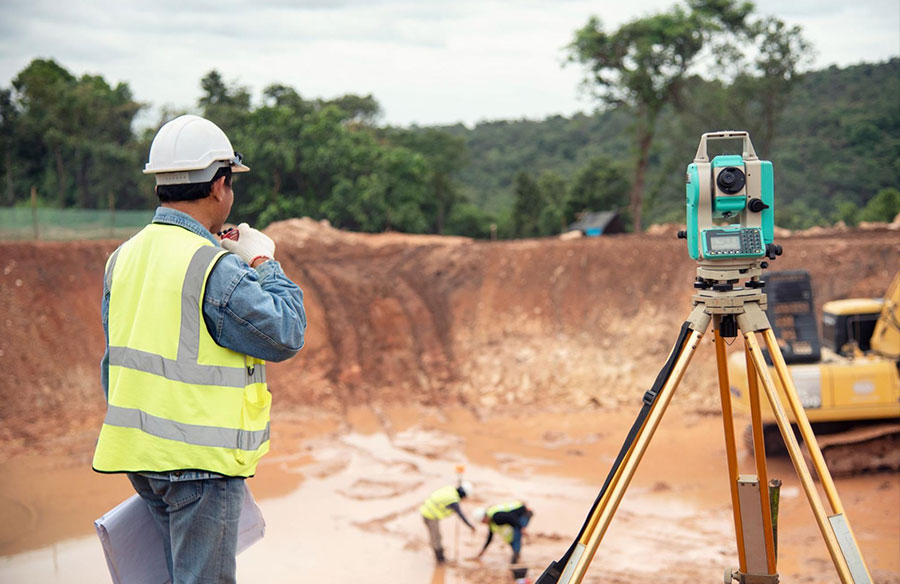
Surveying has always been a field where precision meets discovery, a discipline rooted in the careful measurement of our world. As humanity continues to push boundaries, the tools we rely on have evolved, unlocking perspectives that were once unimaginable. Today, satellite technology stands at the forefront of this transformation, reshaping how we map, measure, and understand the landscapes around us. In this piece, we explore the profound ways satellites are redefining the art and science of surveying, bridging the gap between the vastness of space and the details of the earth beneath our feet.
Using Satellite Imagery For Surveying
Surveying has always been a discipline of exploration and precision, demanding tools that can capture the complexities of the Earth’s surface. Then came satellite imagery, launching this ancient practice into a new frontier that melts technology and innovation into opening up perspectives that could never be attained from the ground. From high above, satellites provide a comprehensive view of our planet, delivering detailed insights into landscapes, terrains, and changes over time. Whether you need the latest satellite imagery of your AOI (area of interest) or a global perspective, this technology is redefining how surveyors map and measure the world.
One of the most transformative applications of satellite images in surveying is in mapping vast, inaccessible areas. Imagine charting the dense Amazon rainforest, the shifting sands of the Sahara Desert, or the icy expanses of Antarctica. These regions, where physical surveying is not only difficult but often dangerous, can now be analyzed with high-resolution satellite images. Surveyors can map terrain, study land use, and even identify subtle shifts in topography — all without setting foot on the ground.
Urban development is another area revolutionized by satellite technology. Rapidly growing cities require detailed planning to manage infrastructure and land use. Satellite imagery provides a bird’s-eye view of sprawling urban landscapes, helping surveyors assess land boundaries, analyze transportation networks, and even monitor green spaces. This level of detail is essential for sustainable development, allowing planners to balance the needs of expansion with environmental preservation.
Satellite imagery has also been a great help in coastal and marine surveying. Rising sea levels and coastal erosion are very serious issues, and through satellites, one can clearly see how these have changed over time. Surveyors can measure shoreline retreats, track sediment deposits, and even monitor the impact of natural disasters such as hurricanes or tsunamis. This data is invaluable for designing resilient coastal infrastructure and planning disaster response strategies.
In agriculture, satellite images of Earth aid in surveying large swaths of farmland to optimize crop production and manage land resources. By analyzing soil types, water availability, and vegetation health, surveyors can create detailed maps that help farmers make informed decisions. This level of precision reduces waste, enhances yields, and promotes sustainable farming practices.
Even underground exploration is taken to the next level. Mining companies use satellite data to identify potential mineral deposits and monitor the environmental impact of their activities. Surveyors can detect subtle changes in land elevation caused by underground mining, helping companies balance economic goals with environmental responsibility.
What makes space data truly remarkable is its ability to provide dynamic insights. Unlike static maps, satellite-derived information is continuously updated, allowing surveyors to monitor changes over time. Whether it’s observing the aftermath of a natural disaster, assessing the impact of deforestation, or tracking urban sprawl, the evolving nature of this data enables a level of responsiveness that traditional surveying methods cannot match.
Furthermore, advancements in technology such as Geographic Information Systems (GIS) and machine learning have amplified the power of satellite imagery. GIS platforms enable surveyors to layer satellite data with other information, such as demographic statistics or climate patterns, creating a multidimensional view of a given area. Meanwhile, machine learning algorithms can analyze satellite images to detect patterns and anomalies, automating tasks like identifying land use changes or predicting flood risks.
Satellite imagery is not just a tool; it’s a gateway to seeing the world in its entirety while diving into its smallest details. From mapping uncharted territories to monitoring urban growth, from safeguarding coastal ecosystems to enabling sustainable agriculture, the applications of satellite imagery in surveying are as vast as the landscapes it captures. As this technology continues to evolve, it will undoubtedly reshape how we measure, understand, and interact with the world around us, empowering surveyors to rise to the challenges of the future.
Satellite Geodetic Surveys
Geodetic satellite surveys have changed our vision of measuring and interpreting the Earth, with unprecedented precision and global coverage. With improved satellites, these missions carry out critical measurements of the Earth’s form, gravity field, and deformations of its surface. This technology is fundamental in monitoring tectonic activity, mapping sea-level rise, and supporting urban planning. For instance, elevation data from open-source satellite imagery can be analyzed to provide surveyors with reliable information that informs infrastructure development in disaster-prone areas.
How Satellite Geodetic Measurements Are Conducted
The methodology of satellite geodetic measurements involves determining the distance between a GPS receiver and a satellite. The data obtained is corrected using specific adjustments. These measurements are performed in two main modes:
- Static methods: The receivers remain stationary at known coordinates or predefined points. These methods are highly accurate but time-consuming.
- Kinematic methods: Faster but less accurate, involving two receivers — one stationary and one mobile. Both receivers are equipped with modems, allowing to use kinematic mode in real time.
As innovations such as AI and better satellite instruments emerge, geodetic surveys will continue to reveal new insights to help us respond to environmental and societal challenges.
Author (photo by the link):
Petro Kogut has a PhD in Physics and Mathematics and is the author of multiple scientific publications. Among other topics, he has a specific focus on satellite imagery processing and application in his academic research. Currently, Prof. Dr. Petro Kogut also works a science advisor