

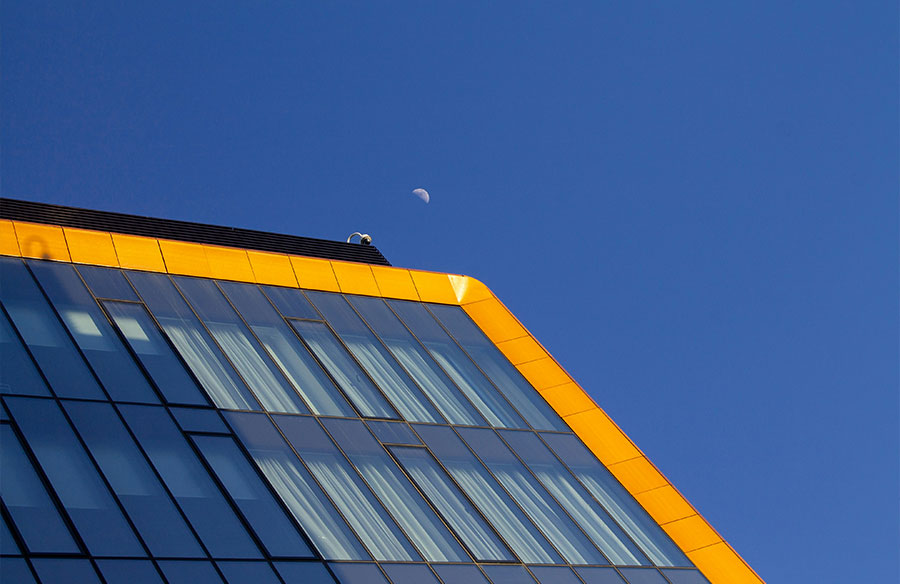
In collaboration with a smart glass company, the Netherlands Organisation for Applied Scientific Research is working on the development of a switchable facade that will optimize energy efficiency in homes and buildings. While the interior design of homes and offices is increasinglyenhanced with integrated, connected and context-aware devices to automate, control, and improve efficiency, the same principles of smart technology can now also be applied to the exterior of a building through the use of energy efficient windows, dynamic shades and self-sensing concrete. In addition to creating a striking first impression, the smart and sustainable design of a building’s exterior can also contribute to its interior comfort and overall efficiency.
Energy-Efficient Windows Improve Thermal Performance
As well as adding architectural interest to a home or office building, high quality windows improve energy efficiency, measured in R values. Even with well insulated walls, the thermal performance of a building can be weakened by poorly fitted single glazed windows. Single glazing only has an R rating of 1 while triple glazed windows can have an R value as high as 13. According to the Pure Energy Window Company, a combination of triple glazing with foam-filled frames for added insulation can further increase a building’s thermal performance.
Smart Building Facades Adapt to Environmental Changes
High quality glass can also be used to create a smart building facade, an exterior covering that reacts to changes in the environment. Electrochromic glass and shading devices use electricity to switch windows from opaque to clear depending on external conditions. This helps to manage the amount of light and heat entering the building and create a comfortable interior environment. Another type of smart facade is composed of layers of textile membranes which through the absorption of rainwater can alleviate a building’s drainage system and prevent flooding. The facade can be moistened with water on warm days and the resulting evaporation has the effect of cooling the building.
Self-Sensing Concrete Detects Structural Flaws
As well as adding energy-saving smart features to a building, architects could soon be turning to a self-sensing and durable building material that has the potential to lower maintenance and repair costs over the long-term. Smart concrete is reinforced with small amounts of carbon fiber which increases the material’s sensibility to stress and strain without compromising on the quality of its mechanical properties. If the concrete becomes deformed, electrical resistivity is increased and, by measuring the degree of electrical resistance, the health of a concrete structure can be easily assessed. While still under development and testing, smart concrete could be a valuable building material as it can sense even very small structural flaws and adjust to outside conditions.
The use of smart technology in architectural design has now spread from the installment of internal appliances and automated systems to use in the very fabric of a building. Smart and self-sensing concrete reacts to external conditions to reduce maintenance costs while energy-efficient windows and reactive facades help to regulate the temperature of a building, creating comfortable homes and pleasant work environments.







