

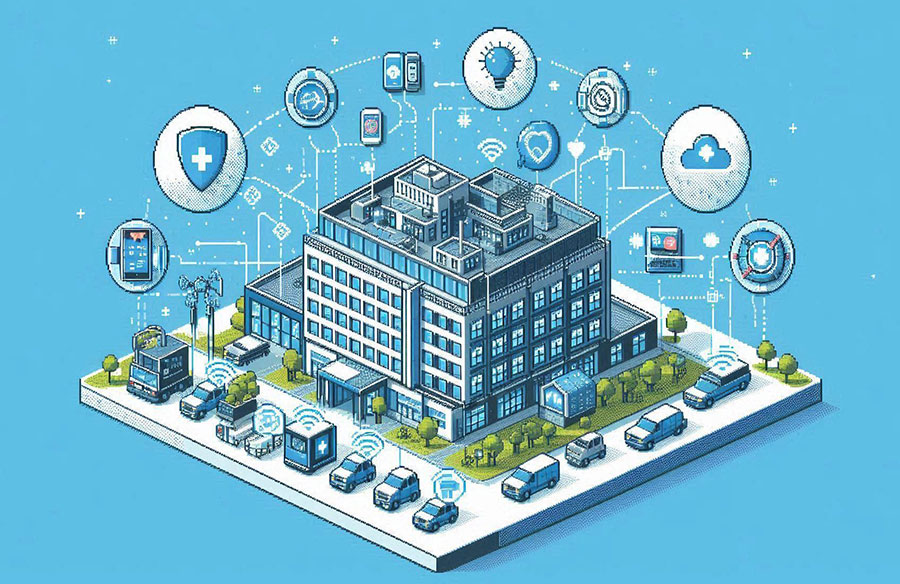
All construction projects and building management processes have to be planned, implemented and overseen with sustainability at the top of the list of priorities today. Smart tech is a stalwart in terms of streamlining this, so here’s a look at how it is being applied to healthcare structures, from small clinics to vast hospitals.
Integrating AI and IoT for Energy Management in Healthcare Facilities
Healthcare facilities consume vast amounts of energy, with hospitals being the most intensive in this regard. Data cited by RZero points out that while hospitals consume 68% of all electricity used in this sector, they account for just 7% of the buildings.
Moreover, spending on energy in healthcare exceeds $8 billion annually, and as much as 8.5% of the entire nation’s harmful emissions are linked to this.
As such, integrating artificial intelligence (AI) and the Internet of Things (IoT) is a means of improving efficiency, reducing costs, and minimizing environmental impact.
Smart Sensors and Data Analytics
The latest tech in this space allows for proactive adjustments to be made, in turn enabling optimal energy use. This includes:
- Real-Time Monitoring: IoT-enabled sensors continuously monitor energy usage across various systems.
- Data Analysis: AI analyzes this data to identify patterns and inefficiencies.
Automated Systems Control
Automation stamps down on waste without sacrificing comfort or safety. Here it comes in the form of:
- Lighting Systems: Intelligent lighting adjusts based on occupancy or natural light availability.
- HVAC Optimization: Smart thermostats adapt to external weather conditions and indoor activities.
Predictive Maintenance
- Equipment Health Monitoring: Predict potential failures before they occur by analyzing operational data.
- Maintenance Scheduling: Efficiently plan maintenance tasks, reducing downtime and extending equipment life.
Basically, preventing unexpected breakdowns via predictive maintenance keeps critical systems running smoothly. It forms part of a wider approach of cost-effectiveness that’s common across the sector, and touches other areas beyond energy management.
For instance, as explained in this Foothold Technology article on EHR price comparison, healthcare facilities are keen to keep hardware and software expenses low – and are getting smart about how they do this.
Enhancing Patient Comfort Through Smart Environmental Controls
Patient comfort directly influences recovery outcomes – and while just 3.1% of people describe themselves as having poor health, doing more to help this group is a responsible step. Integrating smart technology into environmental controls significantly improves patient experiences in light of this.
Adaptive Lighting Solutions
Adaptive lighting conjures up a soothing environment that’s conducive to rest and recuperation. It offers:
- Circadian Rhythm Alignment: Adjust lighting to mimic natural light cycles, promoting better sleep and faster healing.
- Personalized Lighting Control: Patients adjust their room’s lighting to their preferences using simple interfaces.
Temperature Management Systems
These systems ensure a stable and comfortable environment, as well as one which is up to 30% more affordable to run. Features include:
- Individual Room Controls: Allow patients to set their preferred temperature for maximum comfort.
- Smart Thermostats: Use data from IoT sensors to maintain consistent temperatures, avoiding sudden fluctuations that can cause discomfort.
Noise Reduction Technologies
Basically, controlling noise levels means hospitals can create a quieter space that’s ideal for healing and relaxation. This involves:
- Sound Masking Systems: Implement devices that emit white noise or nature sounds, reducing the perception of disruptive noises.
- Smart Building Materials: Utilize materials designed for sound absorption in walls and ceilings.
Utilizing BIM (Building Information Modeling) for Sustainable Hospital Design
Building Information Modeling (BIM) is revamping the way hospitals are designed, ensuring sustainability and efficiency from the ground up. It’s an evolving technology, and one which has relevance in a range of contexts.
Comprehensive Planning
An integrated approach results in more accurate planning and fewer errors during construction, which relies on:
- Detailed Visualization: BIM provides 3D models of building structures, systems, and components.
- Integrated Workflow: Facilitates collaboration among architects, engineers, and construction teams.
Resource Optimization
Effective resource management minimizes environmental impact while reducing costs. Factors to consider are:
- Material Efficiency: Optimize material usage by simulating various design scenarios.
- Waste Reduction: Identify potential waste sources before they occur during actual construction.
Sustainable Design Elements
Sustainability of design decisions means that the facility meets high standards from inception to completion. Considerations here cover:
- Energy-efficient Layouts: Plan building orientation and structure to maximize natural light and ventilation.
- Eco-friendly Materials: Choose sustainable materials that have lower carbon footprints.
Wrapping Up
Energy management, environmental control and sustainable design are all being taken to the next level thanks to an interwoven array of tech tools, materials and specialist know-how. This is not just a revolution in healthcare, but across the construction market; one we all stand to benefit from.







