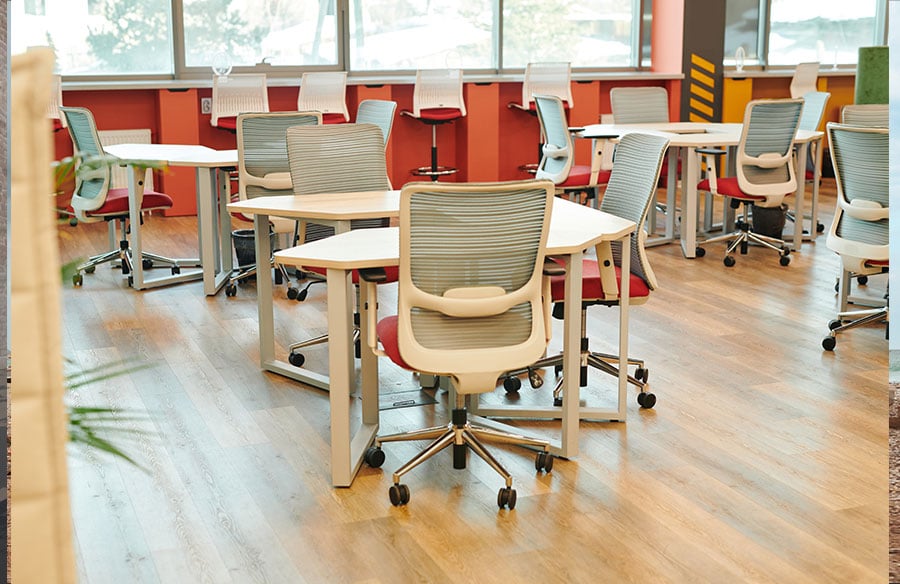
Many people now split their time between home and the office. This means employees spend hours at desks in different places, which can be hard on their bodies if the furniture isn’t comfortable. Chairs that don’t support your back, desks that are too low or high, and cluttered workspaces can lead to pain, fatigue, and trouble focusing.
Ergonomic furniture is designed to fix these problems. The right desks, chairs, and accessories help people sit and move correctly, stay comfortable, and work more efficiently. For HR leaders, knowing the latest trends in ergonomic furniture is important.
In this guide, we’ll look at 7 key ergonomic furniture trends that make life easier for hybrid employees.
1. Adjustable Standing Desks
Adjustable standing desks have become a must for hybrid work. They allow employees to switch between sitting and standing throughout the day. This helps reduce back and neck pain, improves circulation, and can even boost energy levels. Sitting for long hours can make people tired and stiff, and having the option to stand gives the body a break.
Modern standing desks often come with electric controls so users can adjust the height easily, sometimes even saving preferred positions for different tasks. Some desks are designed for two people or can be moved easily to another room, making them versatile for hybrid setups where employees may share spaces or work from home.
Using a standing desk doesn’t mean standing all day. The key is to alternate between sitting and standing. Combining this with a comfortable chair ensures that employees stay comfortable and focused.
For HR leaders, providing adjustable desks shows commitment to employee well-being and productivity. These desks support good posture, reduce fatigue, and can help prevent long-term health problems associated with sitting too much.
2. Ergonomic Office Chairs with Multi-Function Support
A chair is more than just something to sit on — it can make or break comfort and focus. Ergonomic chairs are designed to support the natural curve of the spine, reduce pressure on the lower back, and prevent stiffness in the neck and shoulders. Many modern chairs come with adjustable lumbar support, armrests, and headrests, allowing each employee to tailor the chair to their body.
For hybrid employees who spend time at both home and office desks, having a chair that moves with them is essential. Even a short period in a poorly designed chair can lead to discomfort and fatigue. Chairs with breathable fabrics, cushioned seats, and smooth adjustment mechanisms improve comfort throughout the day.
“Investing in quality ergonomic furniture isn’t just about comfort—it protects long-term health and supports productivity. Just as careful upkeep preserves a home’s value, choosing the right chair ensures employees stay comfortable, focused, and injury-free over time,” adds Jason Lewis, Owner at Sell My House Fast Utah.
HR leaders can also consider chairs that allow employees to adjust the tilt and height easily. This is particularly helpful for shared workspaces where multiple people use the same chair. A good ergonomic chair supports long hours of focused work while protecting employees from posture-related injuries. It’s an investment in comfort, productivity, and long-term health.
3. Modular and Flexible Furniture
Hybrid work often requires adaptable spaces. Modular and flexible furniture makes this possible. Desks, tables, and storage units can be rearranged quickly to create private work areas, collaborative spaces, or meeting spots. This flexibility supports different working styles and team setups without requiring expensive renovations.
Modular furniture is especially helpful in offices where employees don’t have assigned desks. Workstations can be combined or separated based on daily needs. Some desks even come with adjustable dividers or movable surfaces to provide privacy when needed. Tables and chairs that can be folded or moved easily allow teams to create collaborative areas quickly.
Flexibility also matters at home. Compact, modular desks and storage solutions let employees adapt a small space for work without clutter.
For HR leaders, investing in flexible furniture ensures that the workspace can grow and change as employee needs shift.
4. Compact and Space-Saving Home Office Solutions
Many hybrid employees work in small spaces at home. Compact, space-saving furniture helps make the most of limited areas without creating clutter. Foldable desks, wall-mounted tables, and under-desk storage are all popular solutions. They allow employees to work efficiently even in a bedroom corner or living room.
Space-saving furniture also encourages good posture. Desks and chairs designed for small areas are often adjustable, ensuring employees can work comfortably without straining their back, neck, or wrists. Storage solutions keep the workspace organized, which reduces stress and increases focus.
Karen Noryko, Career Content Director at Jobtrees, says, “Optimizing a home workspace goes beyond furniture — it directly impacts focus and productivity. Thoughtful, space-saving setups help employees work efficiently, feel professional, and stay organized, even in the smallest rooms.”
HR leaders can support hybrid teams by providing guidance or stipends for ergonomic home office setups. Even small investments, like a foldable desk or under-desk drawer, can make a big difference in employee comfort and productivity. Making home offices functional and clutter-free helps employees feel more professional and focused during work hours.
5. Ergonomic Accessories and Add-Ons
Sometimes, the smallest items make the biggest difference. Footrests, monitor arms, keyboard trays, and wrist supports can significantly improve comfort and reduce strain. These accessories are easy to install at both office and home setups, making them versatile for hybrid employees.
Monitor arms allow screens to be adjusted to eye level, which reduces neck strain. Keyboard trays and wrist rests support natural hand positions, preventing fatigue during typing. Footrests encourage better posture by keeping feet supported and reducing pressure on the lower back.
These small ergonomic upgrades are often more affordable than full furniture replacements, making them a cost-effective way to improve comfort. HR leaders can provide these tools to employees as part of wellness programs or home office stipends. Even minor adjustments with accessories can lead to big improvements in health, focus, and overall satisfaction.
6. Smart Furniture with Integrated Technology
Smart furniture is an exciting trend for hybrid work. Desks and chairs now come with built-in sensors to monitor posture, remind users to move, or adjust positions automatically. Some desks include wireless charging, USB hubs, and cable management to keep the workspace tidy.
AI-enabled chairs can detect poor posture and suggest adjustments. Smart desks can track sitting and standing times to encourage movement, reducing the health risks associated with sitting too long. These features integrate comfort and technology seamlessly, helping employees stay focused and healthy.
For HR leaders, smart furniture represents an opportunity to support well-being while embracing modern workplace trends. Employees benefit from furniture that adapts to their needs, while organizations benefit from improved productivity and engagement.
7. Sustainable and Eco-Friendly Ergonomic Furniture
Sustainability is becoming a key consideration in office design. Ergonomic furniture made from recycled or eco-friendly materials is durable, safe, and better for the environment. Chairs, desks, and accessories made from bamboo, recycled plastics, or responsibly sourced wood reduce waste and support corporate sustainability goals.
Eco-friendly furniture doesn’t mean compromising on comfort or style. Many sustainable options are designed to meet the same ergonomic standards as traditional furniture, with adjustable heights, lumbar support, and flexible layouts. For employees, this means comfort and health are maintained while the company demonstrates care for the planet.
HR leaders who invest in sustainable ergonomic furniture show commitment to employee well-being and corporate responsibility.
Conclusion
Supporting employees in a hybrid work environment means giving them furniture that keeps them comfortable, healthy, and focused. Adjustable desks, ergonomic chairs, smart accessories, and flexible workspaces all play a role in reducing fatigue and improving posture — whether employees are at home or in the office.
For HR leaders, understanding these trends helps create a workspace that supports productivity, well-being, and long-term health.