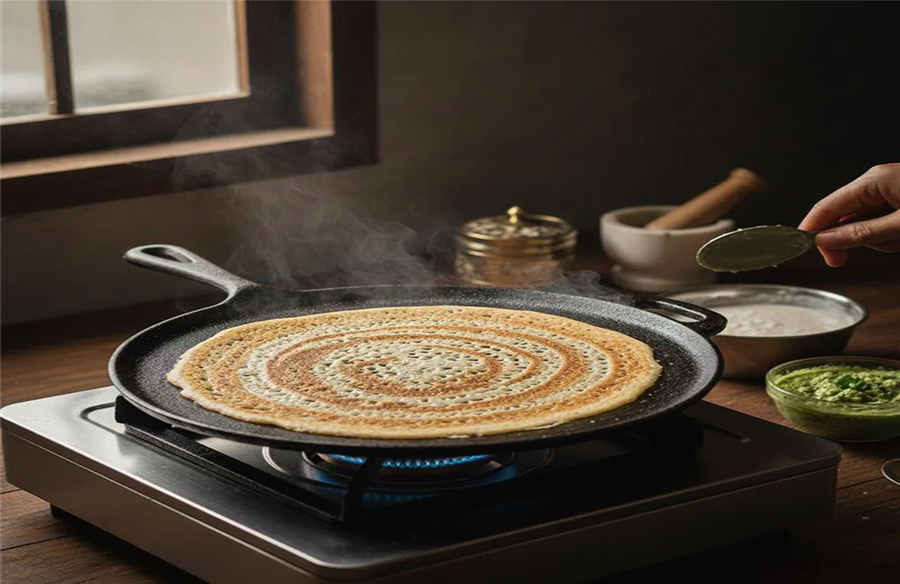
The secret to a perfect, paper-thin dosa does not lie solely in the batter’s fermentation; it is also heavily influenced by the material of the pan you use. For the modern Indian household, choosing between a ceramic dosa tawa and a traditional iron alternative involves careful consideration of heat dynamics, material safety, and daily convenience.
While traditional kitchens relied almost exclusively on iron, contemporary innovations have introduced materials that meet evolving health standards and accommodate busy lifestyles. Understanding the technical and functional differences between these surfaces is essential for any home cook looking to elevate their culinary results.
The Science of Heat: Cast Iron Tawas
Cast iron remains a benchmark in the culinary world due to its unique physical properties. It is often favoured by those who appreciate the technical nuances of heat management and traditional cooking methods.
Thermal Mass and Consistency
The primary differentiator of cast iron is its high thermal mass. Unlike thinner materials, cast iron retains heat exceptionally well. When the cool batter is spread onto the surface, the tawa maintains a steady temperature, ensuring that the dosa cooks evenly from the centre to the edges. This leads to the characteristic golden-brown texture that is difficult to achieve on surfaces that lose heat rapidly.
The Evolution of the Surface
Unlike synthetic coatings, cast iron relies on a seasoned surface. Through a process called polymerisation, fats and oils bond to the iron, creating a natural, slick interface. This makes it a durable, long-term investment for those who do not mind the occasional maintenance required to keep the seasoning intact. It’s a tough material that really stands the test of time if you keep up with the maintenance.
The Utility of Modern Solutions: Non-Stick and Ceramic
As kitchen technology has advanced, the industry has moved towards surfaces that prioritise ease of use and health. However, there are significant differences in how these non-stick options are constructed and how they perform over time.
Standard Non-Stick Surfaces
Most traditional non-stick tawas utilise a synthetic fluoropolymer coating. The main draw here is immediate convenience; the surface is incredibly slick, allowing for low-fat cooking. However, it is important to note that these coatings can be sensitive to high heat and may have a shorter lifespan compared to mineral-based or metal surfaces. If the coating overheats, it can begin to degrade, a common concern for health-conscious cooks.
The Ceramic Innovation
Ceramic cookware represents a significant shift towards cleaner material science. Unlike standard non-stick coatings, ceramic coatings are derived from inorganic minerals, typically silica-based sand.
- Toxin-Free Composition: The major difference with ceramic is its safety profile. It is naturally free from PFOA and PTFE, ensuring that no harmful chemicals or fumes are released during high-heat cooking. This makes the cooking process as clean as the ingredients you use.
- Thermal Efficiency: Ceramic surfaces heat up quickly and provide excellent food release. For a dosa tawa, this means achieving a crisp exterior with significantly less oil, which is a great benefit for those mindful of their daily fat intake.
Comparing Ergonomics and Lifestyle Integration
Beyond the science of heat, the practical difference between these materials lies in how they fit into a daily routine. Cast iron is quite heavy and requires specific cleaning rituals to prevent rust. In contrast, modern materials are designed for the high-paced nature of contemporary life, where ease of cleaning is often a top priority.
When evaluating these differences, many consumers are now looking towards brands like Ember Cookware. Their approach highlights a shift towards products that are healthier by design. By focusing on ceramic technology, a tawa that bridges the old and the new. It provides the non-toxic benefits of traditional materials with the lightweight, always non-stick convenience of modern engineering. This makes it particularly suitable for the modern home, where the kitchen serves as both a functional space and a centre of craftsmanship.
Which Material Suits Your Kitchen?
When selecting your next tawa, the choice comes down to which set of characteristics best supports your cooking style:
- Cast Iron: Choose this for its unmatched heat retention and a traditional, heavy-duty feel that rewards patience and proper maintenance.
- Standard Non-Stick: Choose this for short-term convenience and budget-friendly utility, provided you are careful with heat levels.
- Ceramic: Choose this if you prioritise a toxin-free kitchen, a lightweight, ergonomic design, and a sophisticated, modern aesthetic that looks as good as it performs.
Conclusion
The main differences between these tawas lie in their chemical composition and thermal conductivity. While cast iron offers a link to traditional methods, ceramic cookware provides a forward-thinking solution for those who want their kitchen tools to be as safe as they are efficient.
By understanding these material differences, you can invest in a tawa that is truly healthier by design. Whether you prefer the rugged reliability of iron or the refined, non-toxic convenience of ceramic, your choice will ultimately ensure that every meal prepared at the heart of your home is a blend of safety, quality, and flavour.