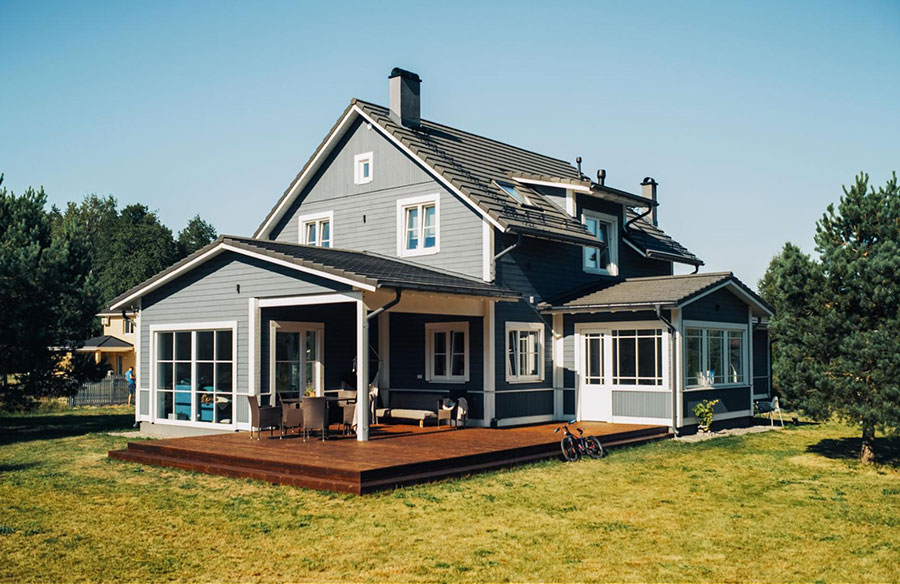
Choosing a true custom home builder means your house is designed from the ground up to match your lifestyle, preferences, and long-term needs – not adapted from a pre-set template. Unlike production or semi-custom options, true custom builders offer complete design freedom, higher-quality materials, and a collaborative process that puts you in control. While prices can vary based on finishes, size, and location, the investment often pays off through superior craftsmanship, energy efficiency, and lasting resale value. Most custom builds in Canada take between 8 to 14 months, depending on complexity and seasonal factors.
Imagine walking into a home that feels like it was made just for you – because it was. Every room flows the way you live, every detail reflects your taste, and nothing feels like a compromise. That’s the promise of working with a true custom builder. In a market filled with “custom” claims, it’s important to distinguish between builders who modify existing plans and those who start with a blank slate. For homeowners seeking authenticity and quality, partnering with experienced local custom home builders can make all the difference. Cook Custom Homes is one such builder known for guiding clients through every phase of creating a home that’s as functional as it is personal.
In the sections ahead, we’ll unpack what truly sets custom builders apart, why the process delivers long-term value, and how to navigate your next steps if you’re considering a build of your own. Whether you’re drawn to the idea of a forever home or simply want more control over your living space, understanding the real benefits can help you make a confident decision.
What Sets a True Custom Builder Apart?
Not all builders who advertise “custom” homes offer the same level of personalization. In fact, the term is often used loosely to describe everything from minor upgrades on a standard plan to fully bespoke designs. Understanding the distinctions can help you avoid mismatched expectations – and ensure you’re working with a builder who truly builds from scratch.
Custom vs. Production vs. Semi-Custom Homes
- Production homes are built in bulk using identical or near-identical plans. They’re cost-effective but offer little room for deviation.
- Semi-custom homes start with a base plan that allows for limited modifications – such as swapping countertops or moving a wall – but structural changes are rare.
- True custom homes, by contrast, begin with no pre-set blueprint. Every dimension, material, and system is chosen in collaboration with the homeowner, resulting in a one-of-a-kind residence.
This distinction matters because it affects everything from architectural integrity to long-term maintenance. A home designed holistically – rather than patched together from options – tends to perform better over time.
The Design Freedom You Actually Get
With a true custom builder, your input isn’t just welcomed – it’s essential. Want a sunroom that doubles as a yoga studio? A hidden pantry behind a bookshelf? A garage angled to maximize backyard space? These aren’t “upgrades”; they’re baseline possibilities. Local custom home builders who specialize in full custom work typically employ or partner with architects, allowing for seamless integration of form and function from day one.
This level of collaboration also means your home can adapt to future needs – aging-in-place features, multi-generational layouts, or smart-home infrastructure can be embedded during construction, not retrofitted later at greater cost.
How Timeline and Budget Are Managed Differently
One common misconception is that custom builds are always slower and more expensive. While it’s true that custom built homes prices reflect higher-quality materials and labour, the process is often more transparent than with other models. Reputable builders provide detailed cost breakdowns upfront and adjust as decisions evolve – rather than tacking on surprise fees for “premium” choices.
As for timing, most true custom homes in Canada take 8 to 14 months to complete. This window accounts for design finalization, permitting, seasonal weather impacts, and meticulous on-site craftsmanship. Though not the fastest route, it’s a deliberate one – prioritizing precision over speed.
Key Benefits of Choosing a True Custom Home Builder
Opting for a true custom build isn’t just about aesthetics – it’s a strategic decision that impacts how you live, maintain, and even finance your home for years to come. Below are the tangible advantages that set this path apart from other building models.
Tailored to Your Lifestyle, Not a Floorplan Catalog
True custom builders don’t start with a binder of pre-approved layouts. Instead, they begin by asking how you live: Do you host large family dinners? Work from home? Need space for mobility aids now or in the future? These conversations shape everything – from room adjacencies to window placement for natural light. The result? A home that supports your daily rhythm, not one that forces you to adapt to someone else’s vision.
Higher-Quality Materials and Craftsmanship
While production builders often prioritize speed and cost-efficiency, luxury home builders and dedicated custom professionals focus on durability and detail. This includes advanced framing techniques, premium insulation, energy-efficient windows, and finishes that stand up to Canadian winters. You’re not selecting from a limited “standard vs. upgrade” menu – you’re choosing materials based on performance, sustainability, and personal preference.
Greater Control Over Timeline and Decision-Making
Unlike semi-custom projects where selections must be locked in early (often before permits are even approved), true custom builds allow phased decision-making. You can finalize flooring after seeing how light hits the space in different seasons or adjust cabinetry depth once furniture dimensions are confirmed. This flexibility reduces buyer’s remorse and ensures every choice feels intentional.
Long-Term Value and Resale Advantage
Homes that are thoughtfully designed and well-built tend to appreciate more steadily. While custom built homes prices may be higher upfront, they often yield better returns because they stand out in a market saturated with cookie-cutter properties. Buyers recognize quality – and are willing to pay for unique features like passive solar orientation, smart storage solutions, or integrated outdoor living spaces.
A Collaborative, Transparent Process
Working with experienced local custom home builders means regular communication, on-site walkthroughs, and clear documentation. You’ll typically have direct access to the project manager or lead builder – not just a sales representative. This transparency builds trust and minimizes surprises, making the journey as rewarding as the finished product.
| Feature | Production Home | Semi-Custom Home | True Custom Home |
| Design Origin | Pre-set plan | Modified base plan | Fully bespoke |
| Material Selection | Limited “standard” options | Tiered upgrades | Unlimited, performance-driven choices |
| Structural Changes | Not allowed | Rarely allowed | Fully permitted |
| Timeline Flexibility | Fixed | Moderate | High (with clear milestones) |
| Long-Term Adaptability | Low | Medium | High |
What to Do Next If You’re Considering a Custom Build
Deciding to build a custom home is just the first step. The real work begins with choosing the right partner and setting realistic expectations. Here’s how to move forward with confidence.
How to Evaluate Potential Builders
Start by identifying local custom home builders with a proven track record in full custom work – not just modified plans. Look beyond glossy websites: visit completed projects if possible, speak with past clients, and review contracts for clarity on change orders, payment schedules, and warranty terms. A builder who’s transparent about challenges (like material delays or permitting hurdles) is often more reliable than one who promises perfection.
Questions to Ask Before Signing a Contract
Don’t hesitate to dig deep. Useful questions include:
- “Can I see examples of projects you’ve built custom homes for with similar scope or style?”
- “How do you handle design changes during construction?”
- “What’s included in your base price, and what typically becomes an extra?”
- “Who will be my main point of contact throughout the build?”
- “Do you work with an in-house designer or external architects?”
These answers will reveal whether the builder operates collaboratively or transactionally – and whether their process aligns with your expectations.
Understanding Realistic Timelines (8–14 Months and Why)
While it’s tempting to hope for a faster build, most true custom homes in Canada take 8 to 14 months from groundbreaking to keys-in-hand. This window accounts for more than just construction – it includes municipal permitting, seasonal constraints (especially foundation work in winter), and the time needed for custom millwork, tiling, or specialty installations. Rushing this timeline often compromises quality or leads to costly rework. A reputable builder will outline a phased schedule with built-in buffers, not an overly optimistic finish date.
Final Thoughts: Building a Home That Truly Fits
At its core, a home is more than walls and a roof – it’s the backdrop to your life’s everyday moments and milestones. That’s why choosing a true custom builder isn’t just a construction decision; it’s a lifestyle one. When you invest in a home designed around how you actually live – rather than what’s easiest to build – you gain comfort, efficiency, and peace of mind that off-the-shelf options rarely deliver.