Architecture is about storytelling and the keeper of our memories, more than just a building. A space transforms into a place when it is tied to the experiences and emotions…
Urban spaces in India are diverse, complex, and constantly changing, with the dynamics of history, culture, and socio-economic factors. Transitional spaces, where people interact, negotiate, and navigate, have immense psychological…
Peter Zumthor, the hermit-like aesthetic-ascetic architect who practices architecture and creates structures with such an immense sensitivity that his buildings become a living testament to their very own Landscape, History,…
Teshima Art Museum, designed by architect Ryue Nishizawa and artist Rei Naito, exemplifies the harmonious fusion of architecture, art, and nature. Built on a hill on Teshima Island in Japan,…
The word “Minimalism” is often misunderstood, even by designers and junior architects, as it is symbiotic with designing little or nothing at all. On the contrary, it holds a world…
Humans’ reliance on their visual sense was always preferred over other senses and is often associated with ‘Seeing is Believing’. This idea of image has pervaded our senses so much…
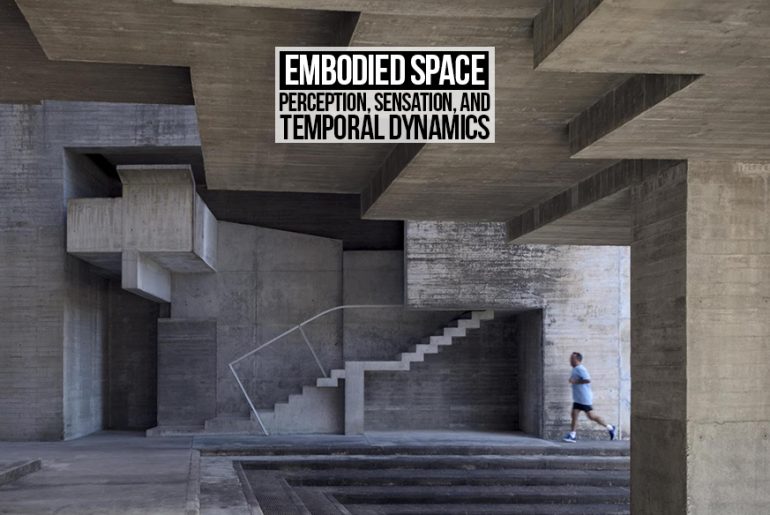
“Embodied Space: Perception, Sensation, and Temporal Dynamics in Architecture” is a concept that explores the relationship between architecture and the human body, emphasising how our perception, sensory experiences, and the…
Autism is a complicated spectrum disorder that involves consistent change of social interaction, verbal and nonverbal communication. Autistic children face difficulty in communication and working with the world outside. The…
What we see, hear and become aware of is perception. It is sensing something through our physical body. Although being as simple as that, the phenomenon or the process of…
Sensory design is the orchestration of spatial stimuli in built environments, regulated to lift the quality of experience for the occupants they serve cumulatively. By taking an occupant-centered approach, therapeutic…