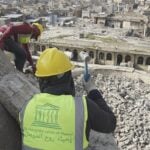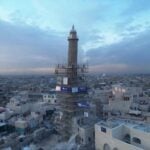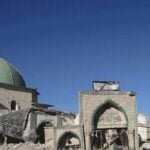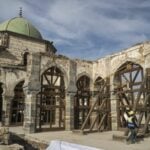
February 2025. A small crowd gathers in the old city of Mosul to watch a tilted stone spire rise once more over the rooftops. Officials, UNESCO’s Director-General and residents who had waited eight years for this moment stood by the al-Nuri mosque as the al-Hadba minaret, rebuilt beam by beam and stone by stone, reappeared on the skyline it had defined for more than eight centuries. The return of a leaning tower was never just about masonry for a city that spent three years under the rule of the group calling itself Islamic State and endured nine brutal months to regain its freedom. It was about resilience, solidarity and hope.
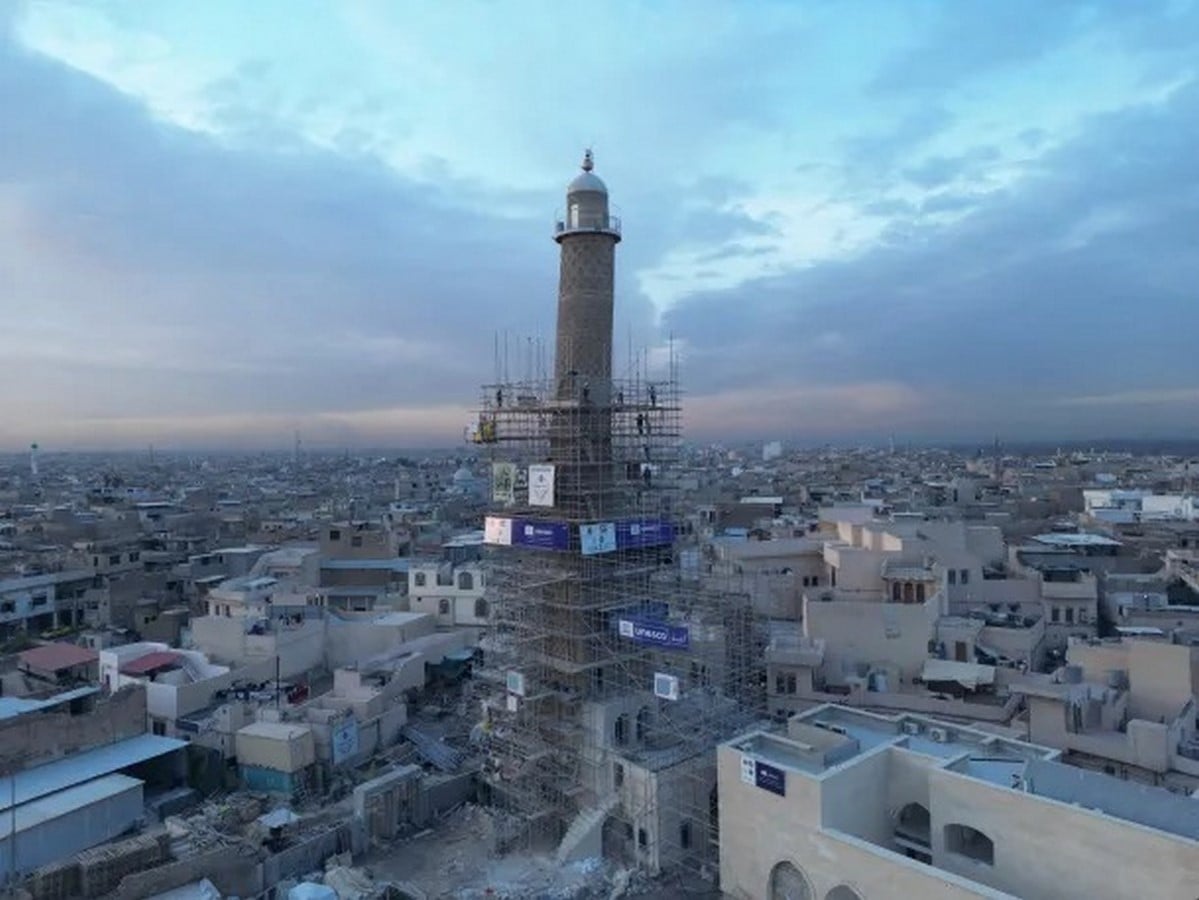
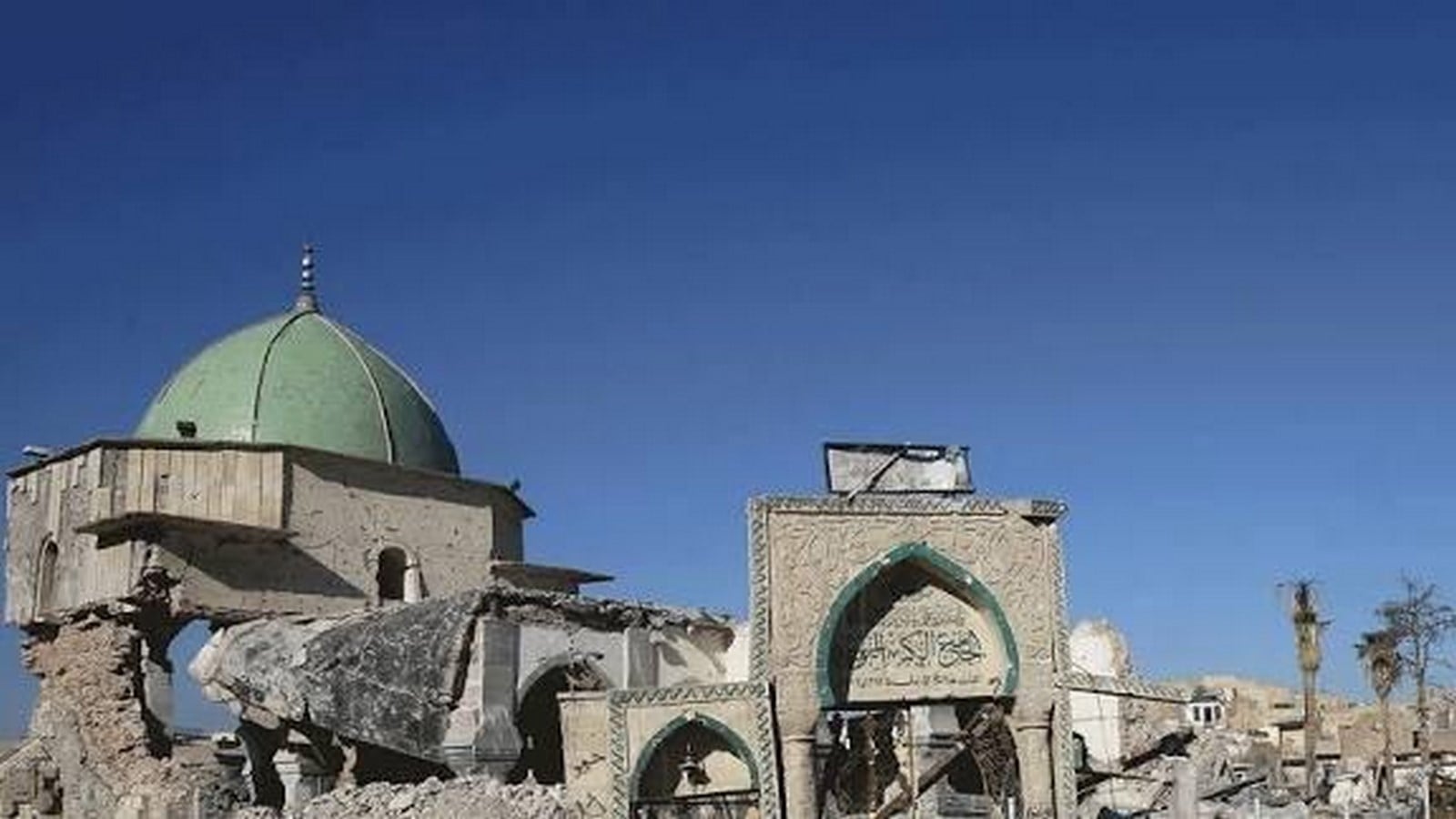
Mosul’s iconic minaret earned its nickname, al-Hadba, or “the hunchback”, sometime in the fourteenth century, when locals noticed it had begun to lean. Built in 1172 under the ruler Nur al-Din, it survived wars, floods and centuries of neglect, and it even found its way onto Iraq’s ten-thousand-dinar banknote. None of that saved it in 2017, when militants blew up the mosque and its minaret rather than let the structure fall into the hands of advancing Iraqi forces. It was, in many ways, a final act of the occupation: destroying a symbol the city had built its identity around.
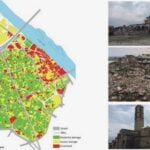
By the time the nine-month battle to retake Mosul ended in July 2017, roughly eighty per cent of the Old City lay in ruins. Housing suffered the most destruction. The tight, compact streets that had sheltered generations of Moslawi families became the front line of urban warfare, and by some estimates close to a million residents were displaced from their homes. Many spent years in camps in neighbouring towns, uncertain whether there would be anything to return to, or whether the version of Mosul that came back would still feel like theirs. Even amid the fighting, residents tried to protect what they could: during the battle for the Old City, a group of Moslawis formed a human chain around the base of the minaret, an act of pure defiance that UNESCO credits with keeping the tower’s foundations from being wiped out entirely.
“When the minaret was destroyed, I couldn’t eat for three days.” — Shaima Abdul Munaim, Old City resident, UNESCO-Revive the spirit of Mosul
Fifty-year-old Shaima Abdul Munaim, who lives close to the mosque, still remembers hearing that the minaret had fallen. She could not eat for three days, she later told UNESCO researchers, and mourned it as she would a person. For her, the tower was never just a landmark: it was tied to childhood trips to the market, to stopping for water on the way home, and to Ramadan evenings when neighbours swapped dishes, making the whole quarter feel like one household. Her neighbour Noor al-Din Nadeem, a father of three, said that rebuilding the mosque connects Moslawis back to the roots of their fathers and fills families with hope again.
Rebuilding a city after this kind of urbanicide is never simply a construction project. It is an argument, in concrete and stone, about what a place is for and who it belongs to. UNESCO’s response, launched in April 2018 under the banner “Revive the Spirit of Mosul”, tried to hold three ideas together at once: restoring heritage, reviving cultural life and rebuilding education. It went on to mobilise around 115 million dollars from fifteen partners, including the United Arab Emirates and the European Union, treating architecture not as decoration on top of recovery but as one of the mechanisms of recovery itself.
“A Breath of Fresh Air”
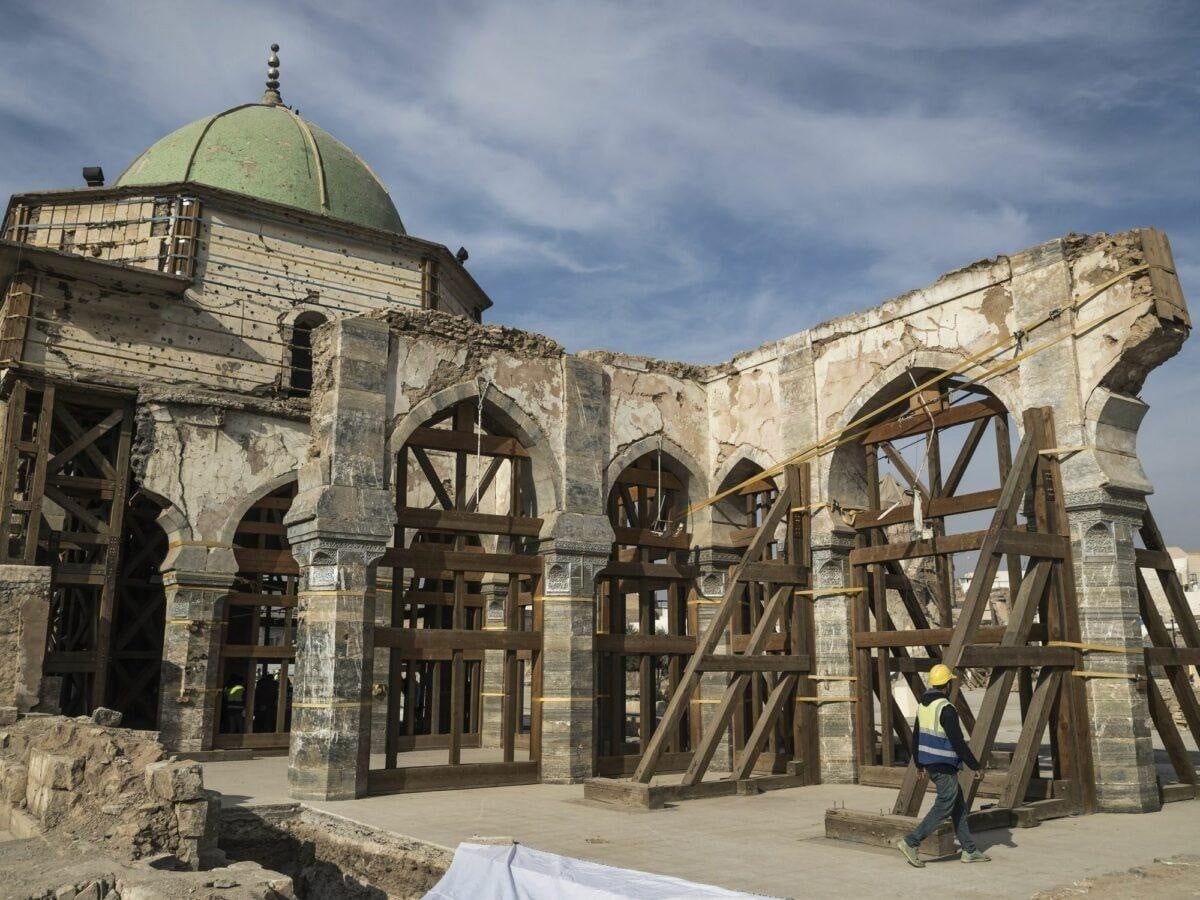
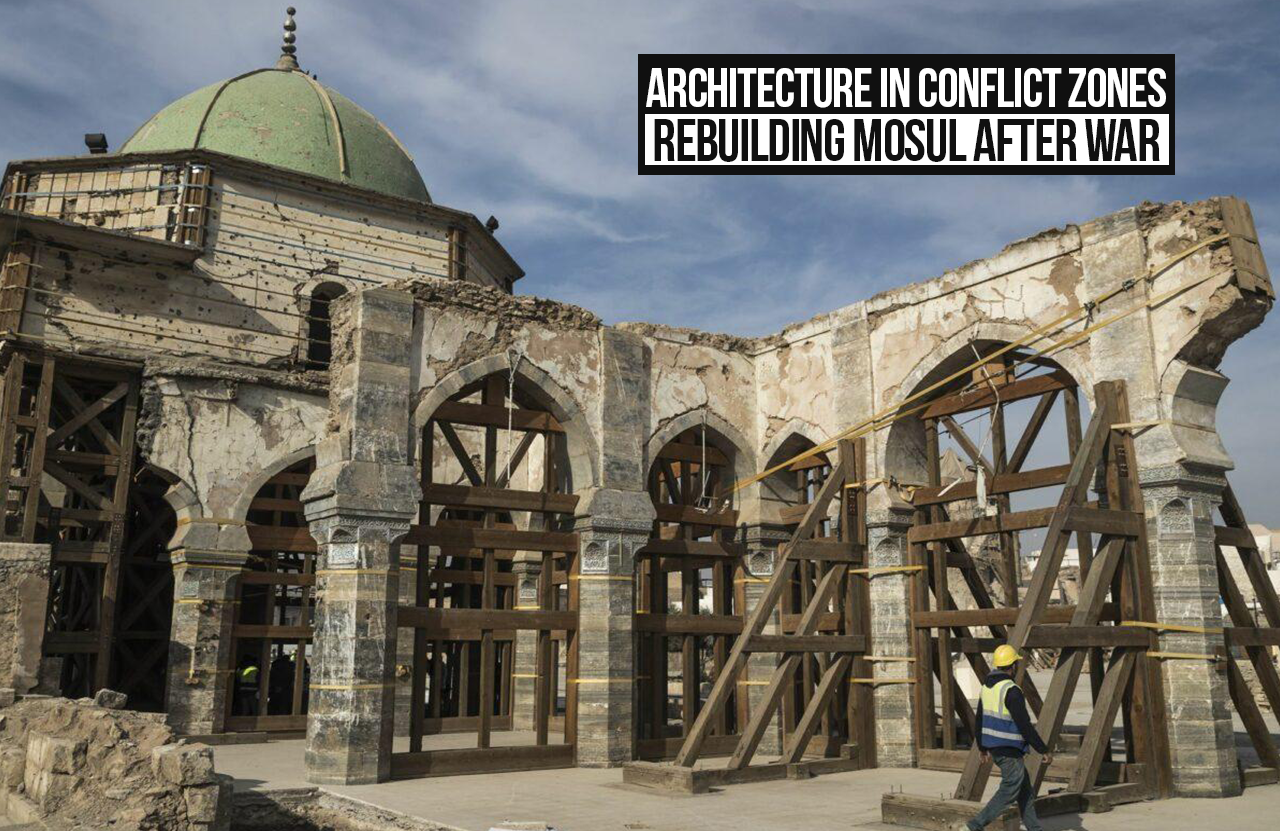
The Al-Nuri mosque complex provided a more public test of this logic. In November 2020, UNESCO launched an international design competition to decide how to restore the site and its shattered minaret. It drew 123 entries from around the world, a reminder of how much the fate of one Iraqi mosque had come to matter well beyond Iraq. Before the brief was even written, UNESCO and the University of Mosul asked residents what they actually wanted, and seventy per cent said they wanted the prayer hall rebuilt as it had been, with only modest additions such as a proper ablutions area and a garden. The winning proposal, called “Courtyards Dialogue”, came from a team of eight Egyptian architects led by Salah El Din Samir Hareedy. Their approach kept the prayer hall looking much as it had before 2017 but opened the wider complex outward, threading it into the surrounding Old City through five new points of entry and giving women and visitors considerably more space than the original layout allowed. Partway through construction, in August 2021, workers checking the foundations found gaps beneath the exposed floor near the prayer hall and uncovered four buried rooms, probably used for ablutions, dating to the twelfth century, along with coins and pottery that helped date the find. Rather than paving over it, the design team folded the discovery into the new complex, which will eventually let visitors walk through a small museum of the mosque’s own foundations.
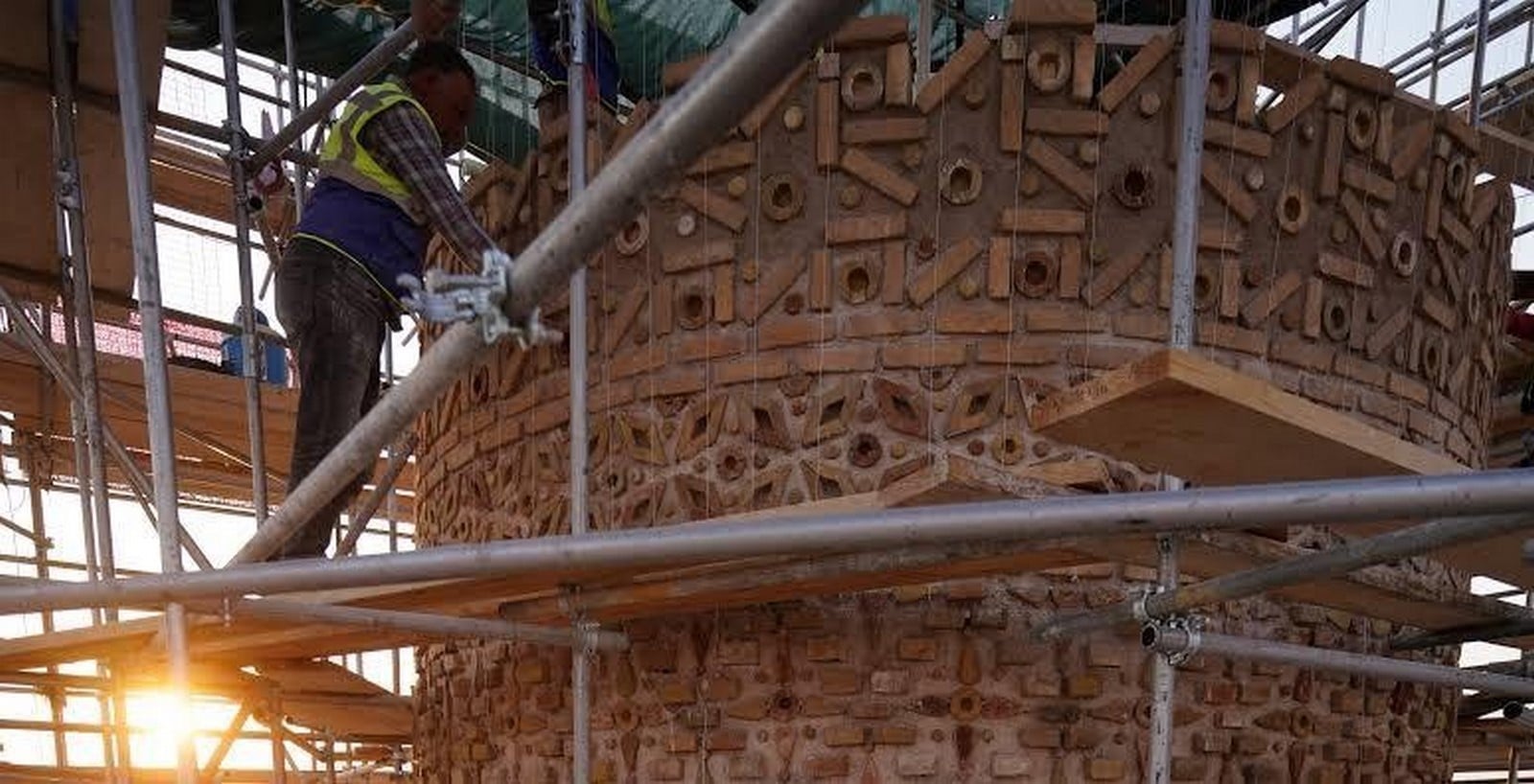
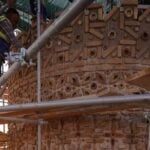
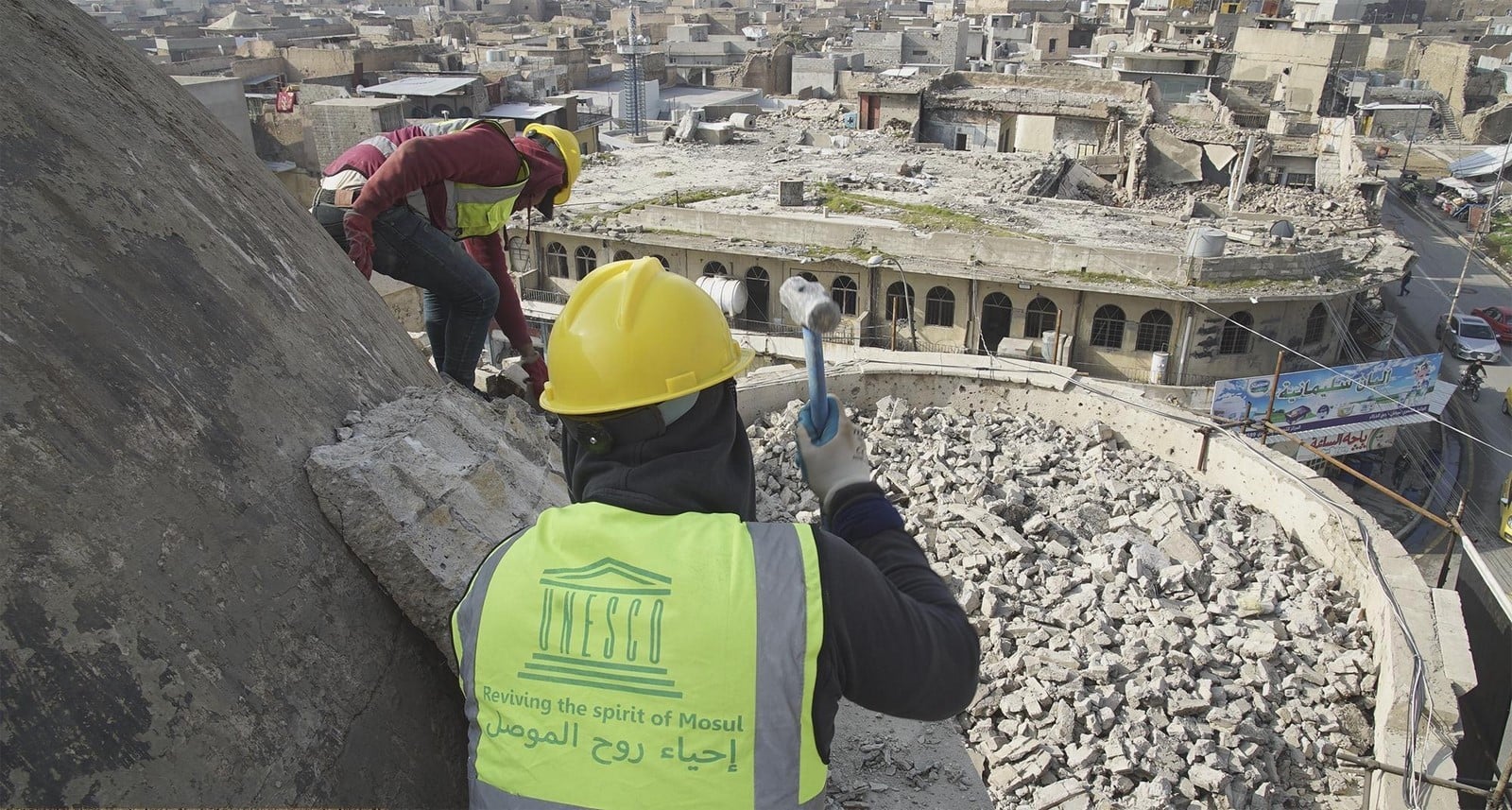
That balancing act, between fidelity to what was lost and the needs of people living now, runs through almost every reconstruction decision in Mosul. Rebuilding the minaret meant painstaking and unglamorous work: clearing rubble tangled with the debris of war, separating salvageable carved stone from ordinary wreckage, and insisting on original materials so the tower would keep its place on UNESCO’s World Heritage list rather than becoming a modern replica wearing an old name. A survey of Moslawis found that ninety-four per cent wanted the minaret restored exactly as it had stood before, tilt and all, which meant engineers had to reproduce a centuries-old lean using nothing but brick masonry, a technique that nobody in Mosul had practised in generations. Omar Taqa, the site engineer overseeing both the minaret and the mosque, has described the sheer difficulty of working on a site so thoroughly damaged that every layer of rubble had to be treated as a potential evidence hazard and heritage all at once. The same care has gone into the city’s religious buildings beyond the mosque. The Convent of Our Lady of the Hour and the nearby Al-Tahera Church, both severely damaged when their roofs collapsed and their walls were reduced to rubble, have been restored as part of the same programme. For Mar Benedictus Younan Hanno, the Archbishop of Mosul for Syriac Catholics, the point was never really the architecture in isolation. As he put it, when Al-Tahera reopened, rebuilding churches was about reviving the history their ancestors lived. A restored wall only matters because of what it lets people carry on doing inside it.
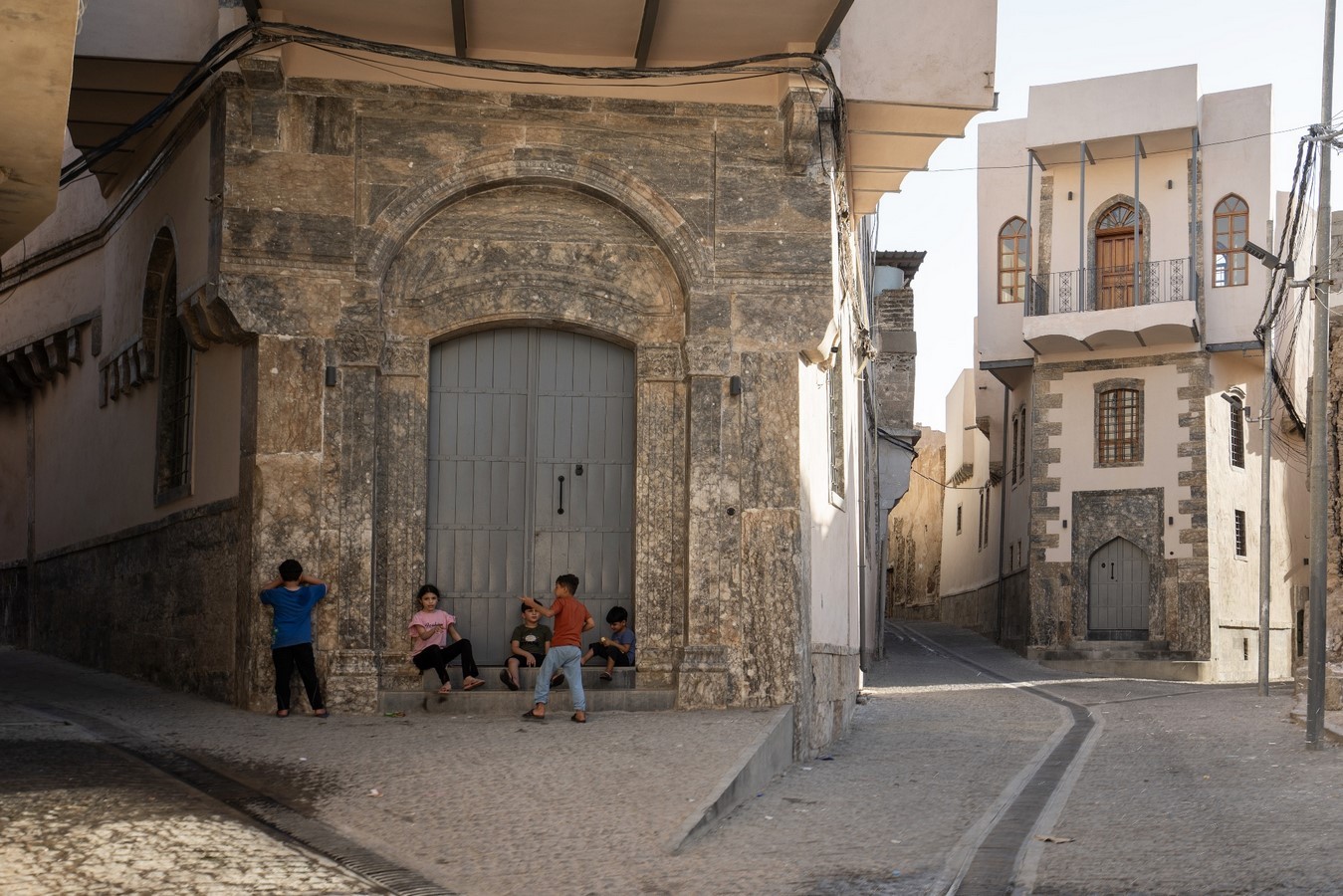
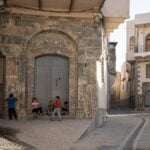
Underpinning all of this work has been an enormous, and less visible, investment in people rather than buildings. UNESCO‘s own accounting puts the number of local jobs generated by the programme at around 7,700, with some 2,800 craftspeople trained in skills that had nearly vanished from the city, from traditional stone-carving to the plasterwork and construction techniques that gave Mosul’s houses their distinctive character before the war. Some 124 historic houses have been rehabilitated under the same initiative, and each one raises the same quiet dilemma facing conservation architects everywhere: how closely should you copy the past? Research into Mosul’s Old City has identified several competing approaches at work in the reconstruction, ranging from exact reproduction of the original house to hybrid designs that blend old and new to fully contemporary interventions inserted into historic plots. The same research concludes that the most appropriate path for Mosul is neither strict replication nor a wholesale modern rebuild, but a form of renewal calibrated to what residents actually need from their homes today, rather than what best photographs as authentic.
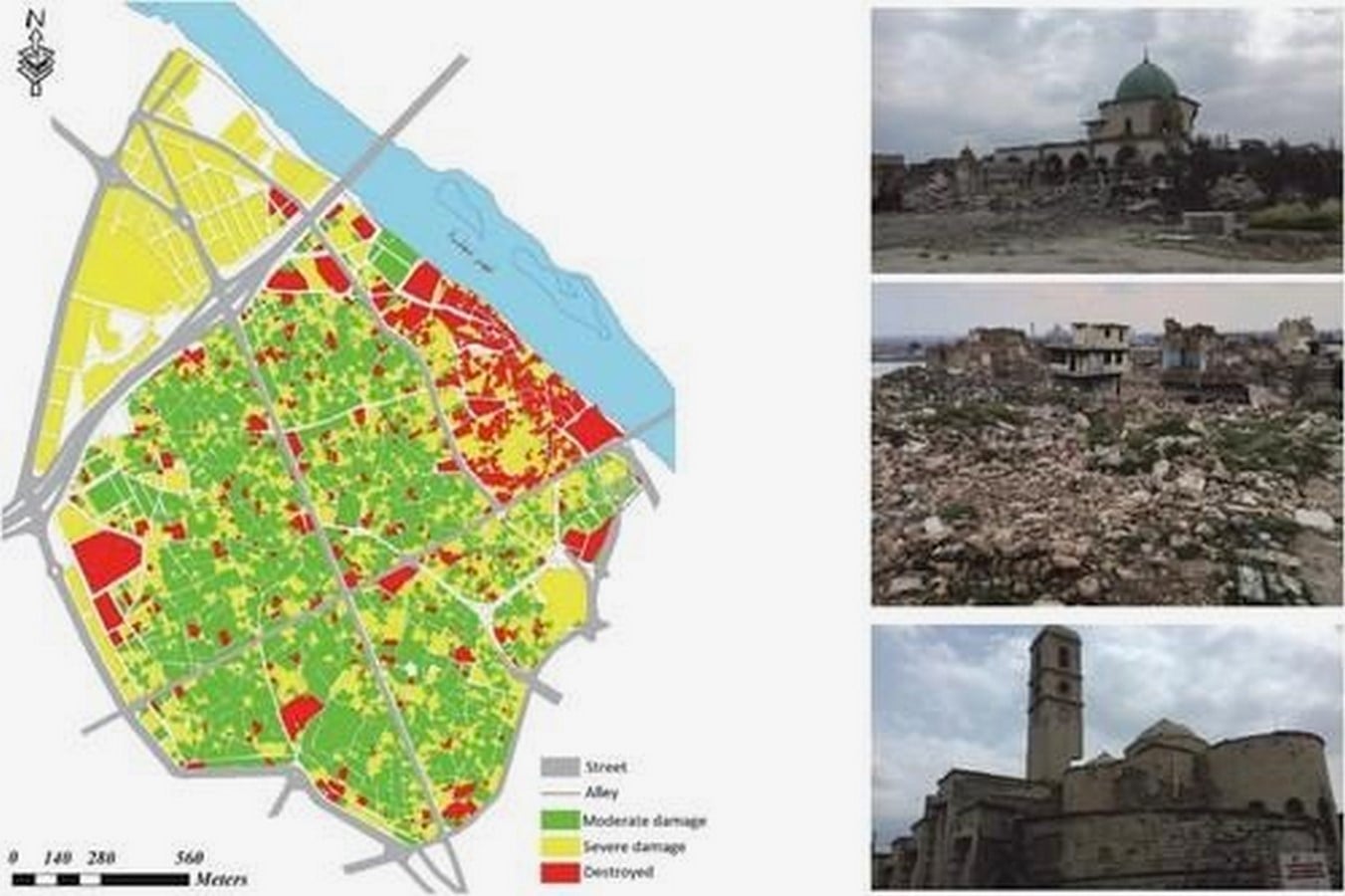
A 2025 survey of residents across four of the Old City’s historic districts, including the areas around the al-Nuri mosque and the Bab al-Tob market, tried to measure how reconstruction is actually landing with the people who live there, asking about safety, accessibility and basic infrastructure rather than architectural symbolism alone. The findings are a useful corrective to any narrative that treats a rebuilt minaret as proof that a city has healed. Monuments can return long before daily life does, and a skyline can look whole again while the streets beneath it still wait for reliable water, safe pavements, and stable electricity.
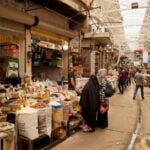
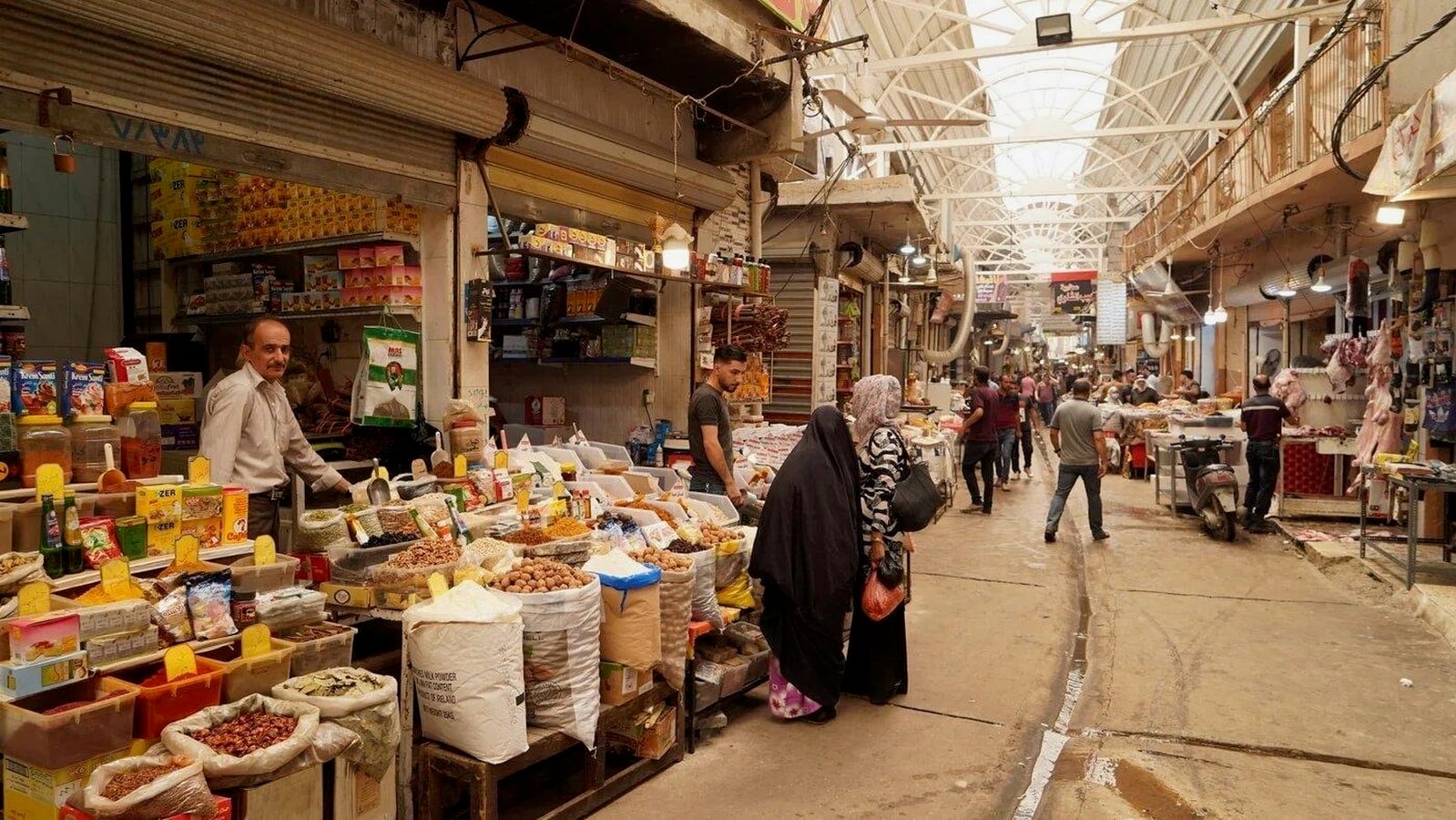
Yet it is precisely in those in-between spaces, the alleys and markets rather than the monuments, that Mosul’s recovery is clearest. The alleyways around Al-Nouri Mosque were handed back to pedestrians in March 2024 after rehabilitation work, and the Bab Al-Saray Bazaar has resumed trading in the heart of the Old City. A seventeenth-century caravanserai, Khan Al-Gumrug, hosted a New Year’s Eve gathering in January 2025, and by December 2024 the market by the Old Bridge was again selling fish, and the lights of Al-Saa’a Church were once more lit along Nineveh Street. None of this is architecturally dramatic. A man pouring tea for customers at a café in the Old City is not a UNESCO milestone, but it is precisely the kind of ordinary public life that heritage reconstruction is ultimately in service of, and its return is arguably a more honest measure of whether Mosul feels like a city again than any single building’s completion date.
None of these events is a reason to dismiss what has been achieved. Nearly eight years after Islamic State fighters brought down al-Hadba, the minaret’s silhouette is back over Mosul, and locals have described the strange, moving experience of seeing it again after believing it gone forever. Officials have promised a fuller reopening ceremony, with calls to prayer sounding from the minaret and worship resuming inside the mosque, framed by Nineveh’s governor as proof that the province is, in his words, back again. Whether that promise holds will depend less on any single ribbon-cutting than on the slower, less photogenic work still going on in the housing blocks and back streets around it.
What Mosul offers, more than any single building, is a working case study of what reconstruction after conflict actually demands of architecture. It has to satisfy engineers who need original materials to preserve a World Heritage listing, and it has to satisfy a mother who just wants a working roof before winter. It has to reconstruct a skyline recognisable enough to reassure people that their city still exists, while making room for what a mosque, a church, a market stall or a home actually needs to do for the people using it now. Heritage, public space, housing and identity turn out not to be separate categories of recovery at all, but four names for the same slow argument about the soul of Mosul. Ultimately, it will never be the account of what ISIS attempted to destroy in Mosul, nor will it ever be a complete account of restoring it. But as one watches a leaning minaret rise again over the Tigris, it is impossible not to feel that this time the stones are doing more than just holding each other up. They are holding a city’s memory of itself together while everything else catches up.
References:
- Al-Jaberi, S. et al. (2025) ‘Assessing Reconstruction Efforts in Old Mosul: Safety, Accessibility, and Infrastructure in Historic Public Places’, Taylor & Francis Online. Available at: https://www.tandfonline.com/doi/full/10.1080/2159032X.2025.2554489 (Accessed: 24 September 2026).
- Al-Sinjari, H. and Saeed, R. (2022) ‘Mosul City: Housing Reconstruction after the ISIS War’, ScienceDirect. Available at: https://www.sciencedirect.com/science/article/abs/pii/S0264275121003590 (Accessed: 24 September 2026).
- Euronews (2025) ‘War-ravaged landmarks in Iraq’s Mosul are reopening after UNESCO-led restoration project’, 7 February. Available at: https://euronews.com/culture/2025/02/07/war-ravaged-landmarks-in-iraqs-mosul-are-reopening-after-unesco-led-restoration-project (Accessed: 25 September 2026).
- IIETA (n.d.) ‘Trends in the Reconstruction of Traditional Houses in the Old City of Mosul’, International Information and Engineering Technology Association. Available at: https://www.iieta.org/journals/ijsdp/paper/10.18280/ijsdp.200324 (Accessed: 26 September 2026).
- KSAT (2025) ‘Historic landmarks in Iraq’s Mosul are reopening as the city heals from Islamic State devastation’, 6 February. Available at: https://www.ksat.com/news/world/2025/02/06/historic-landmarks-in-iraqs-mosul-are-reopening-as-the-city-heals-from-islamic-state-devastation/ (Accessed: 27 September 2026).
- Rudaw (2024) ‘Reconstruction finishes on Mosul’s famed minaret’, 15 November. Available at: https://manage.rudaw.net/english/middleeast/iraq/15112024 (Accessed: 25 September 2026).
- Rudaw (2025) ‘Mosul’s iconic minaret reopened after destruction by ISIS’, 6 February. Available at: https://www.rudaw.net/english/middleeast/iraq/06022025 (Accessed: 26 September 2026).
- Topos Magazine (2021) ‘Al-Nouri Mosque: Rehabilitation through Reconstruction’, 19 August. Available at: https://toposmagazine.com/unesco-al-nouri-mosque/ (Accessed: 25 September 2026).
- UNESCO (2025a) ‘Mosul, an Architectural Renaissance’. Available at: https://www.unesco.org/en/revive-mosul/architectural-renaissance (Accessed: 23 September 2026).
- UNESCO (2025b) Revive the Spirit of Mosul: The Rebirth of a City, A People’s Hope, A Story of Reconstruction, 2018-2025. Paris/Baghdad: UNESCO. Available at: https://iraq.un.org/en/download/183472/294137 (Accessed: 23 September 2026).
- UN News (2021) ‘Iraq: UNESCO architectural design winners to rebuild iconic Al-Nouri Mosque complex’, 15 April. Available at: https://news.un.org/en/story/2021/04/1089842 (Accessed: 23 September 2026).
- Urbanet (2023) ‘Reconstruction in Mosul: Challenges and Lessons in Rebuilding a City’, 8 November. Available at: https://www.urbanet.info/post-conflict-reconstruction-mosul/ (Accessed: 24 September 2026).