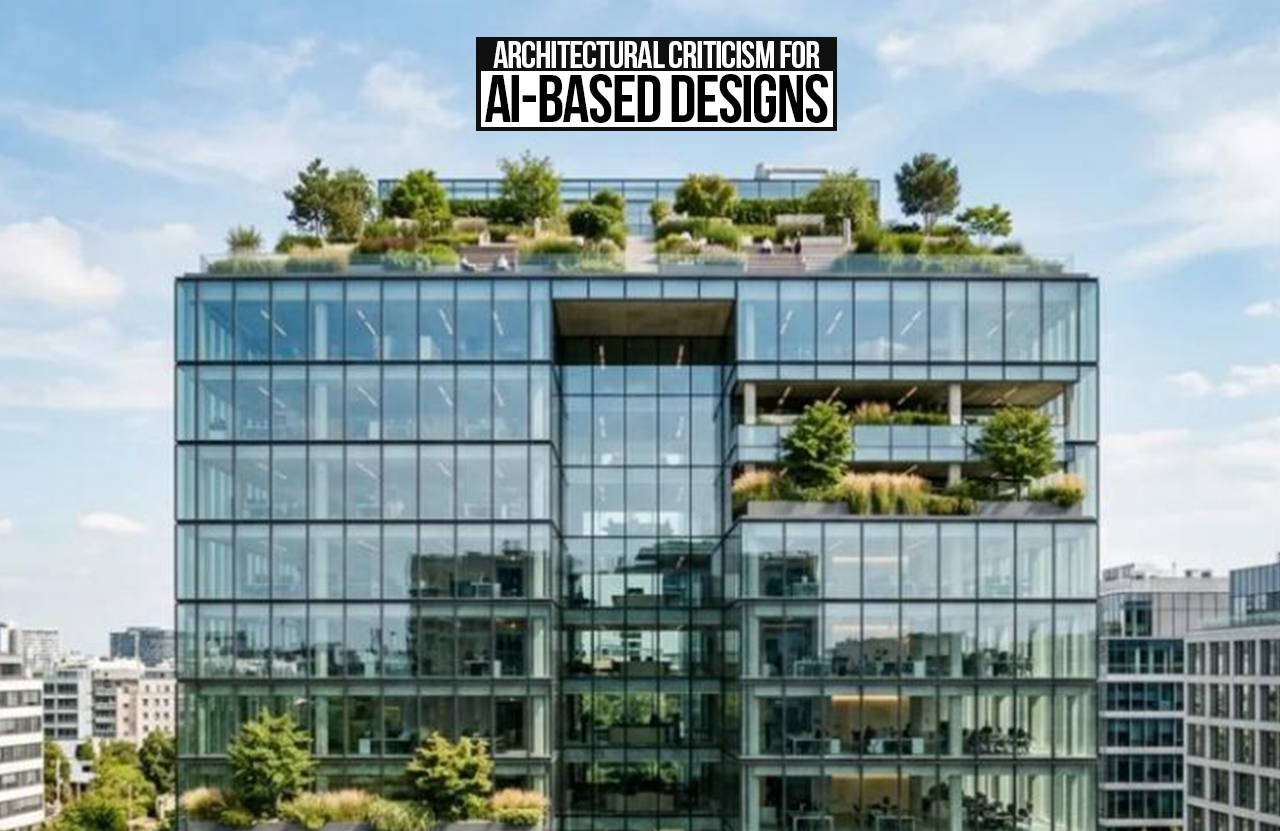
Architectural criticism serves as an essential bridge between spatial design and human experience, evaluating environmental psychology and the user experience. Architectural critique does not imply superficial judgment of style and aesthetics, but requires keen attention to structure, the tactility of space, and functional organisation in relation to user preferences.
The advent of AI in architectural design has marked a paradigm shift in the entire design process. Scroll through Instagram or Pinterest today; it comprises a plethora of images that are surreal. These images show buildings with vertical gardens, floating cities and innovative forms. These pictures show a future where nature and technology integrate to create cities.
Architects took years to master the skills of designing and consequently only those who had the skills to analyse could critique the architecture. Architectural criticism was limited to experienced ones. The rise of AI tools has significantly reduced the time frame and the effort to learn the skills. A few prompts develop the entire façade of the building. While Generative AI provides breathtaking designs but creates a major disconnect between the user experience and the built environment. It significantly lacks visual context and structural dynamics.
Analytical dimensions of Architectural Criticism
To successfully critique an architectural piece, one needs to use four different lenses. The technical specifications, contextual analysis, aesthetic perception and human integration. Whether the functional orientation of the space suffices the user’s needs. Does the structural system integrate with aesthetic credibility? Or does the building merge with existing context or deliberately stand out to make a statement piece? Does it conform to sustainability standards and respond to local climate? And most importantly, how has the architect responded to the socio-cultural aspects of the user?
Architectural criticism requires a deep understanding of explaining the above aspects through observations and perceptions. The narrative of a critique highly depends on the systematic approach of design. It depicts an evocative interpretation of the spatial design.
Real Designs vs AI designs
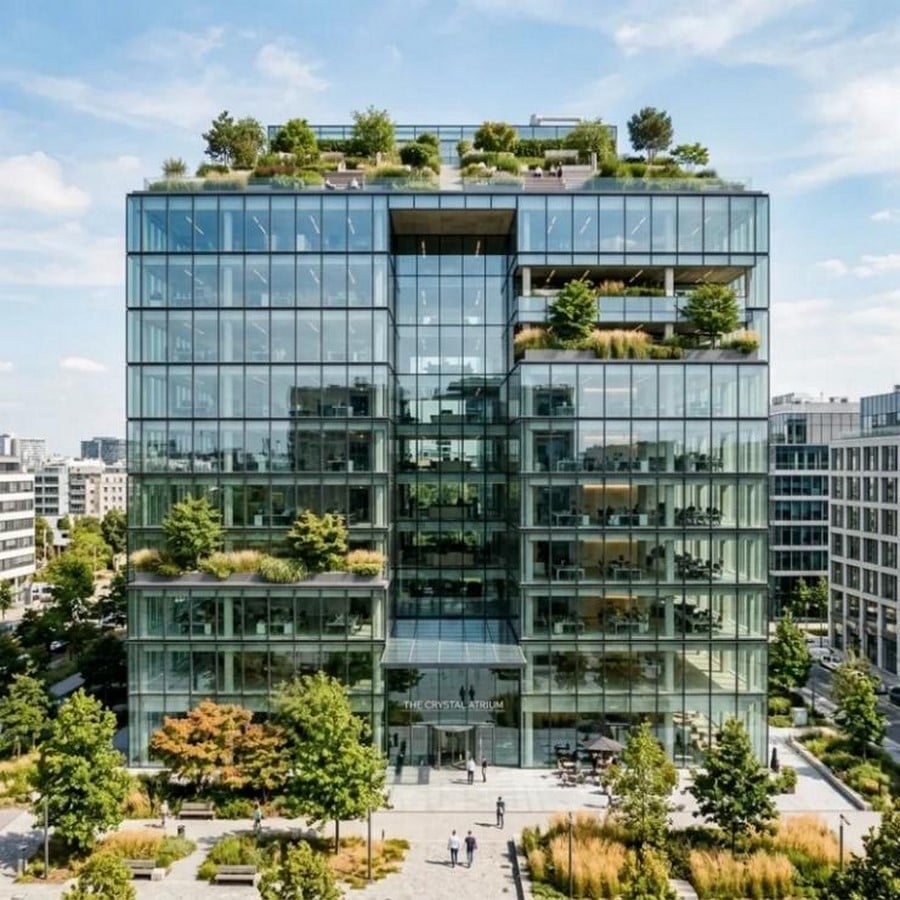
Buildings are not designed in a vacuum. Architects navigate through the building bylaws, zoning codes and structural stability. While generative AI gives a plethora of fascinating forms and facades, it somehow lacks integration of real-world problems. A green façade on a glass building does not satisfy the structural requirements of the building.
AI works on human prompts. Accurate prompting needs precise knowledge of the systems. Prompting largely depends on architectural criticism as a core knowledge base. Without architectural logic, AI architecture remains an exercise in graphic design rather than spatial creation.
An architectural critique knows the weight of saturated soil, mature root systems and dynamic wind loads on high-altitude vegetation require massive structural support that would dramatically thicken floor plates and change the geometry of the building. One cannot ignore the mechanical and structural challenges of irrigation, drainage, root containment and soil maintenance at high altitudes. The real designs come with precise detailing of the building anatomy, material specifications and other construction details.
Promptecture
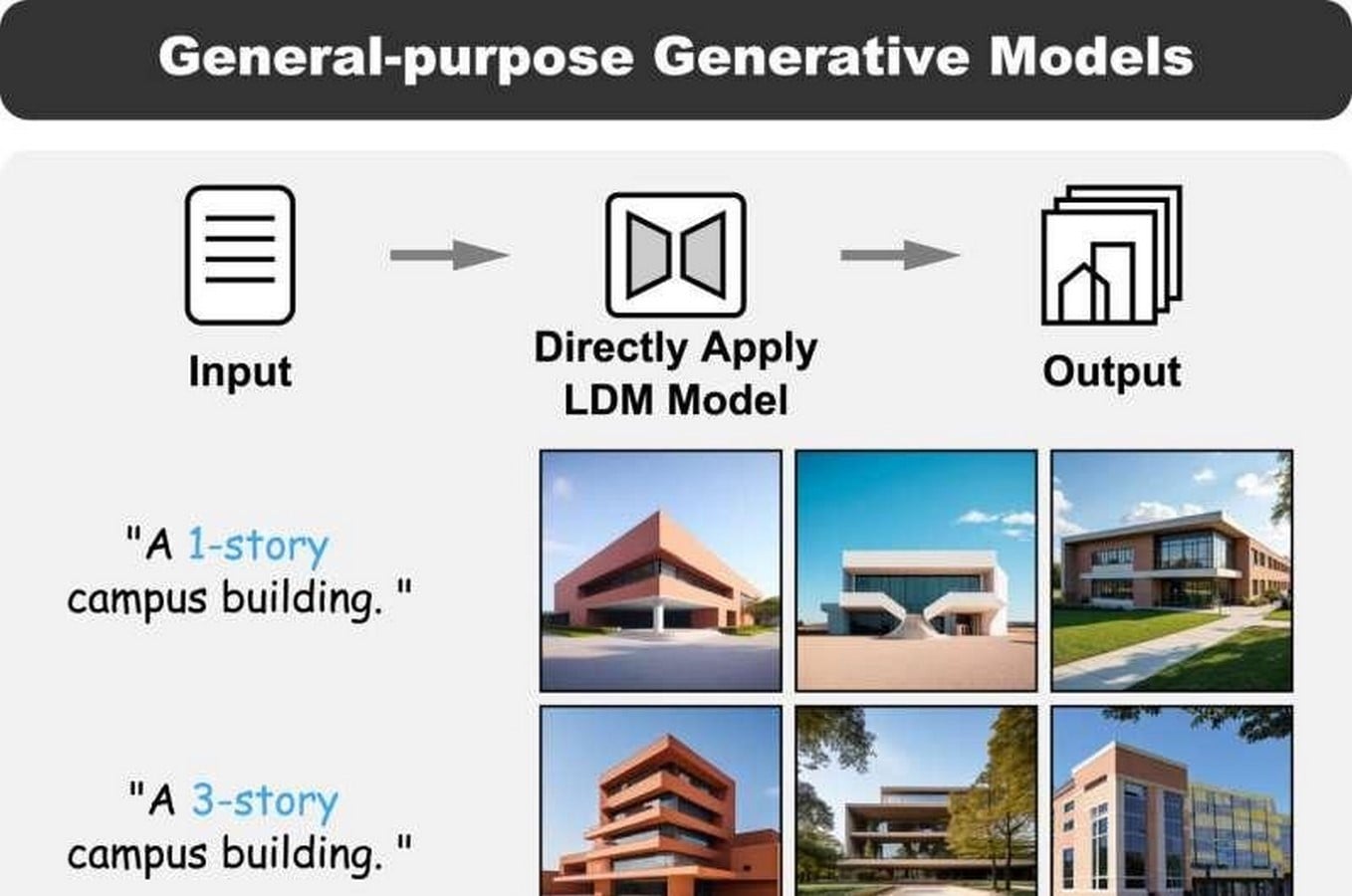
Prompt architecture, or promptecture, is a hybrid discipline that blends generative AI prompt engineering with architectural design, spatial visualisation and speculative urban planning. It is a useful tool for rapid concept exploration and a theoretical shift in the articulation, visualisation and critique of spatial ideas. Promptecture relies on the ability to translate language, such as structural systems, material specifications, lighting conditions, massing strategies and architectural movements, into text for diffusion models (e.g., Midjourney, DALL‑E, Stable Diffusion).
Architectural criticism uses words to express design and environmental psychology. Prompt architecture uses text to generate images, workflow patterns, material truth and moods to create stunning 3D visualisations. Good AI design largely depends on the anatomy of the prompt. The architectural keywords or the syntax must meet the needs of the dimensions of architectural theory and integrated systems. Superficial knowledge generates a superficial prompt and, hence, a superficial design.
Critiquing for Generative AI Architecture
Architectural criticism for AI designs involves deciphering text-to-image outputs, diffusion models and machine-learning ideas about space. Since these models create images using patterns and probabilities of real-world physics, we need different ways to judge them. The evaluation has to focus on more than aesthetics. Buildings show the culture of the people who live in them. They show the history, the weather and the way people live. AI fails to do this. It only makes things based on what it has seen.
While critiquing an AI design, one needs to analyse the spatial ergonomics and circulation. A keen eye for missing details or hallucinated renders is the key to criticism. A deep understanding of building physics helps to identify the structural impossibilities. It marks the difference between integrated MEP and simply an enveloped courtyard.
An architectural criticism of an AI-generated design must not focus only on the physical or legible dimensions of design. Rather, it must focus on the invisible prompts intended to achieve desired styles in desired settings. It must analyse whether the solutions provided satisfy the contextual requirements or are just digital facades. The critique should assess the true value of the spatial design and whether it conforms to a human-centred approach.
Generative AI is not an immediate threat to architecture. Rather, architectural criticism is a path towards identifying the missing links between human design and AI design. In an age where architectural writing is replaced by AI, architectural criticism opens new avenues to practice and implement true architectural knowledge. The role of an architectural critique becomes clear: to advocate for real designs and remind people that architects design for living while AI designs for scrolling.