Building in Korea—and especially in Seoul—means immersing oneself in a culture layered with codes and meanings accumulated over centuries. After dozens of projects and 35 years of work in Korea, beginning in 1990, this building reflects both a synthesis of the Korean way of being and our own way of absorbing its cultural particularities and social mechanisms.
Project Name: DREAMHOUSE SEOUL
Studio Name: Davide Macullo Architects with HNSA Architects & Designers (Manwon Han, Taehyun Eun, Yohan Jeong)
Location: Seoul, South Korea
Completion date: February 2025
Site area: 587.70 ㎡
Total floor area: 619.91 ㎡
Photographer: Jungsik Moon
Like every nation, Korea has its own ecology, in the broadest sense. Its climate is marked by short, often extreme seasons, contrasted with vegetation that is relatively restrained in species and colour range. Yet the true richness of the country lies in its human ecology.
A millennia-old history, long before the modern era, forged strong, clearly defined traits along a resilient spine of traditions, behaviours, and attitudes—creating a particularly robust social fabric. Geographically compressed between great empires, Korea developed, by necessity, a kind of DNA that continues to shape human relationships and, by extension, the way its territory is built.
Unlike in other nations, where outside influences often transformed or even distorted identity, here they were absorbed and adapted to the strength of Korean culture. Koreans have safeguarded and cultivated their values while opening themselves to a Western technological vision, adopting the technical and rational tools necessary for development, and ultimately becoming a global power in many fields.
Our early experiences in Korea were formative, helping us build a professional awareness rooted in humility toward the act of building. Witnessing the aggressive and superficial approach of many Western actors—driven purely by commercial or self-serving motives—only reinforced our conviction in the importance of growing together with the people and the places where one is called to intervene. It has been a true life lesson, one for which we owe much to our Korean friends.
What makes Korea so fascinating is its complexity, which its people instinctively simplify—stripping away superficial gestures and filling them with meaning that resonates with their way of life. This building, like all those we have designed in Korea, follows a recurring pattern: beginning with a project that probes the deeper layers of Korean culture, and then passing through stages of reduced expression until arriving at a synthesis of the compositional elements.
The initial expression of this undertaking was an attempt to give voice to a centuries-old cultural palimpsest. At first, the project opened itself to a wide range of possibilities — a calibrated mix of forms, materials, and compositional elements. Yet in Korea, abundance is never left as abundance. It is distilled. This is a culture that decides how things are ordered, reduced, and clarified, transforming complexity into simplicity rich with depth.
For us, the task was to explore freely, but also to recognise that the true logic of composition lies in the Korean sensibility itself. Our role was not to impose order but to allow order to emerge through this cultural lens. In this way, the project moved from multiplicity toward synthesis, from expression toward essence.
It was a necessary process: freeing ourselves from every constraint in order to reach a result that distills an inner world by aligning it with the physical and psychological reality of this micro-macro cosmos that is Korea — and, more specifically, Seoul, and even more precisely the hillside district of Itaewon, which by its very nature stands as a bridge between past and contemporary worlds.
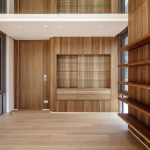
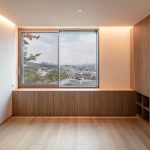
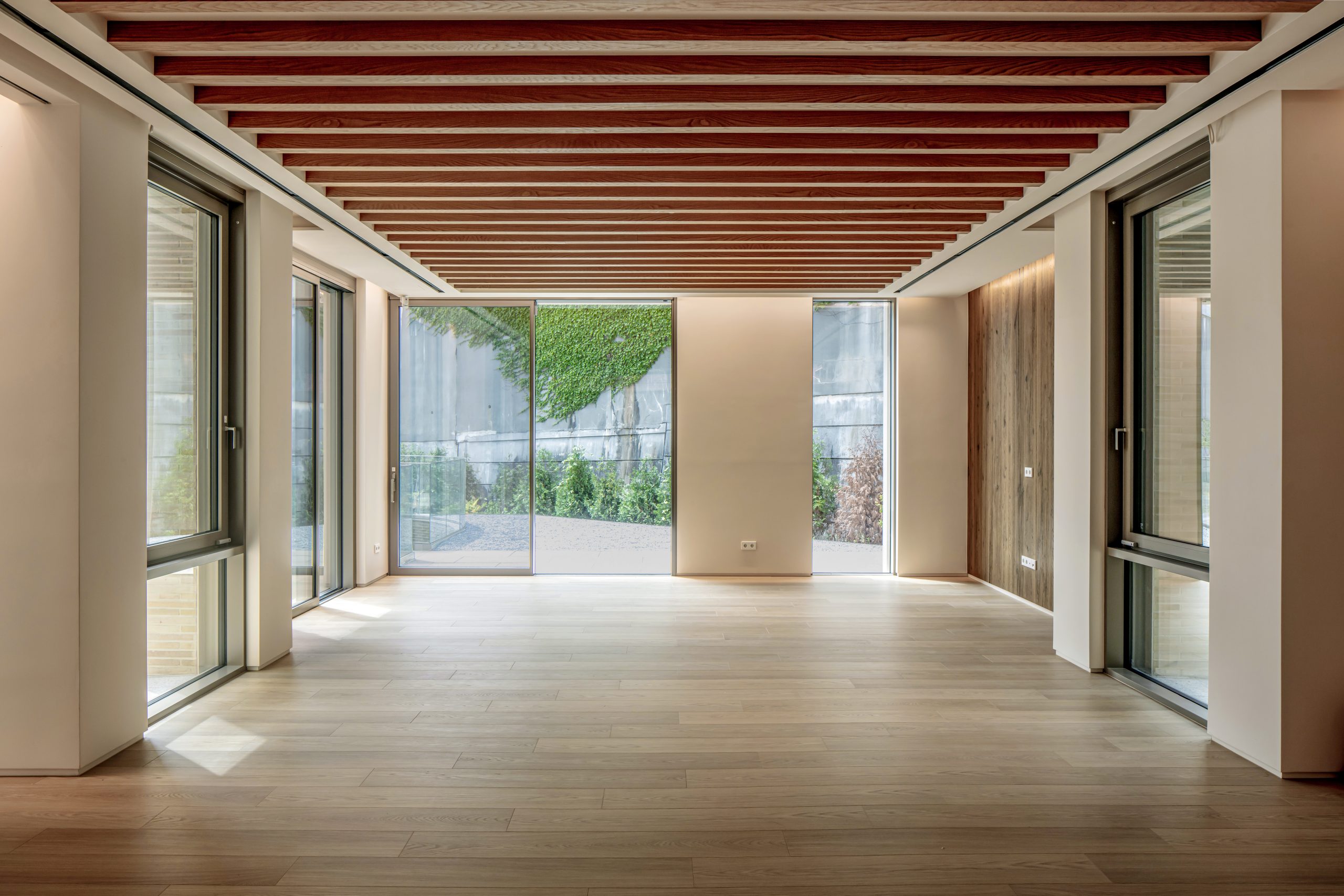
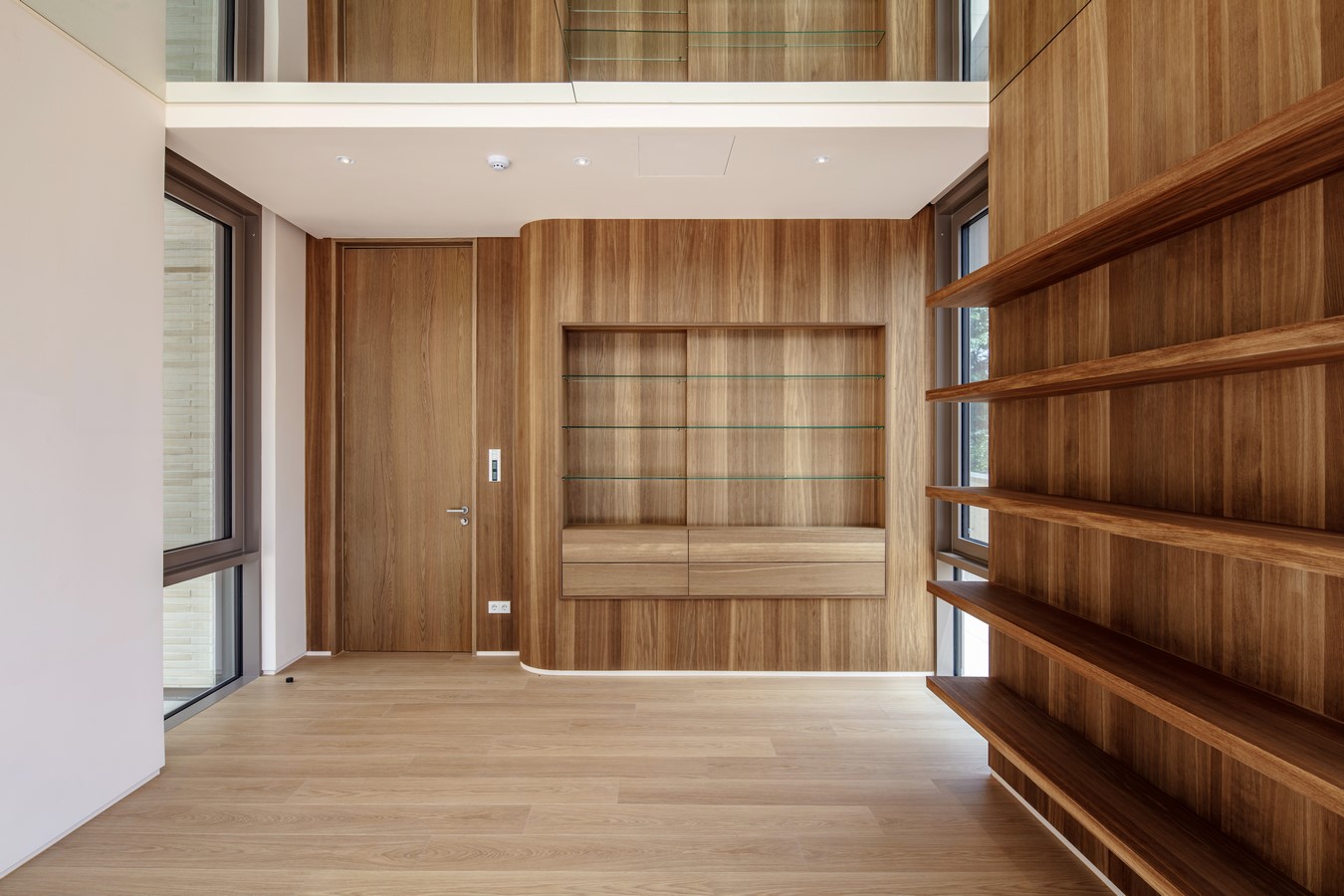
Architecture, for us, begins not with form, but with how space is felt. The psychology of space is central to our work: how light, material, and proportion can nurture intimacy, reflection, and joy. Restraint is essential in this search — a value we recognise deeply in Korean culture, where strength often finds its truest expression through refinement and reduction. Over many years of work and relationships here, this sensibility has become part of our way of designing.
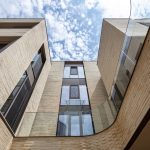
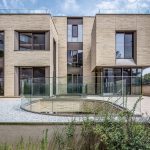
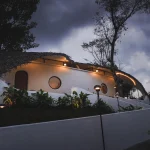
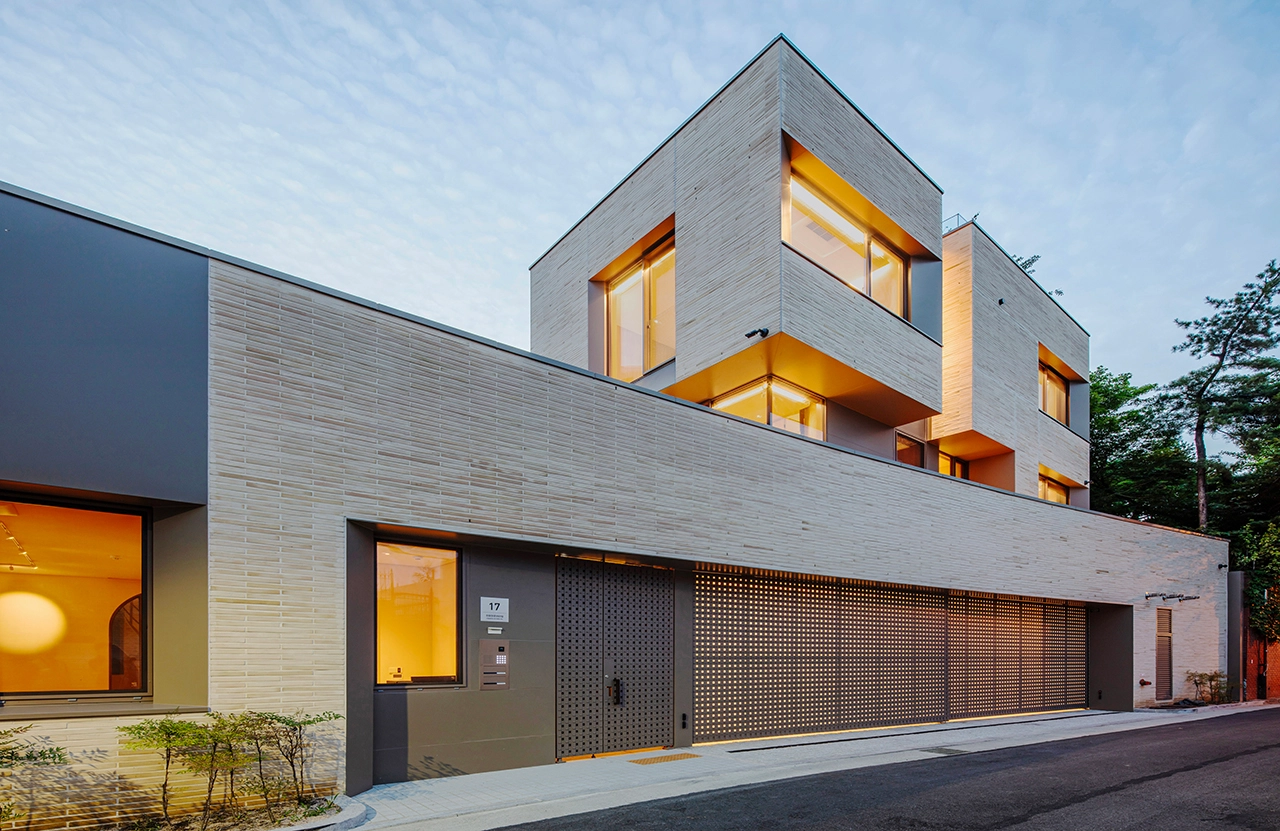
The Itaewon house grows from this attitude. Facing the street, it presents a façade of deliberate restraint: a continuous wall of pale brick, punctuated by vertical openings and a perforated metal gate. There is something of a castle in its stance — protective, enclosing — yet softened by warmth and tactility. The elongated brick, laid in subtly irregular layers, recalls ancient ways of building with earth: grounding, human, enduring. Far from defensive, it conveys permanence and hospitality. Light filtering through the perforated gate turns the threshold into a play of shadow and atmosphere.
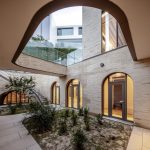
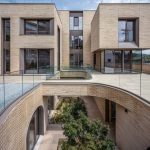
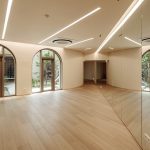
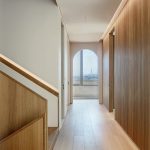
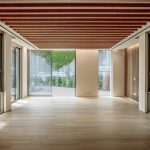
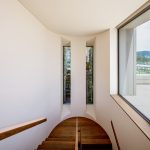
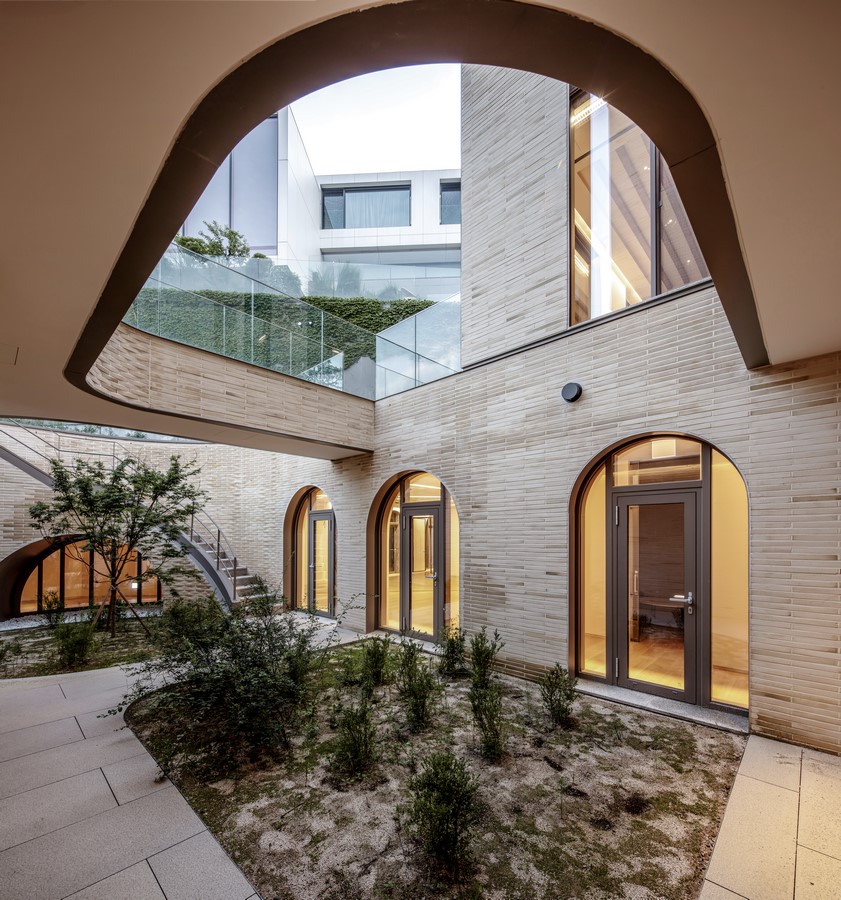
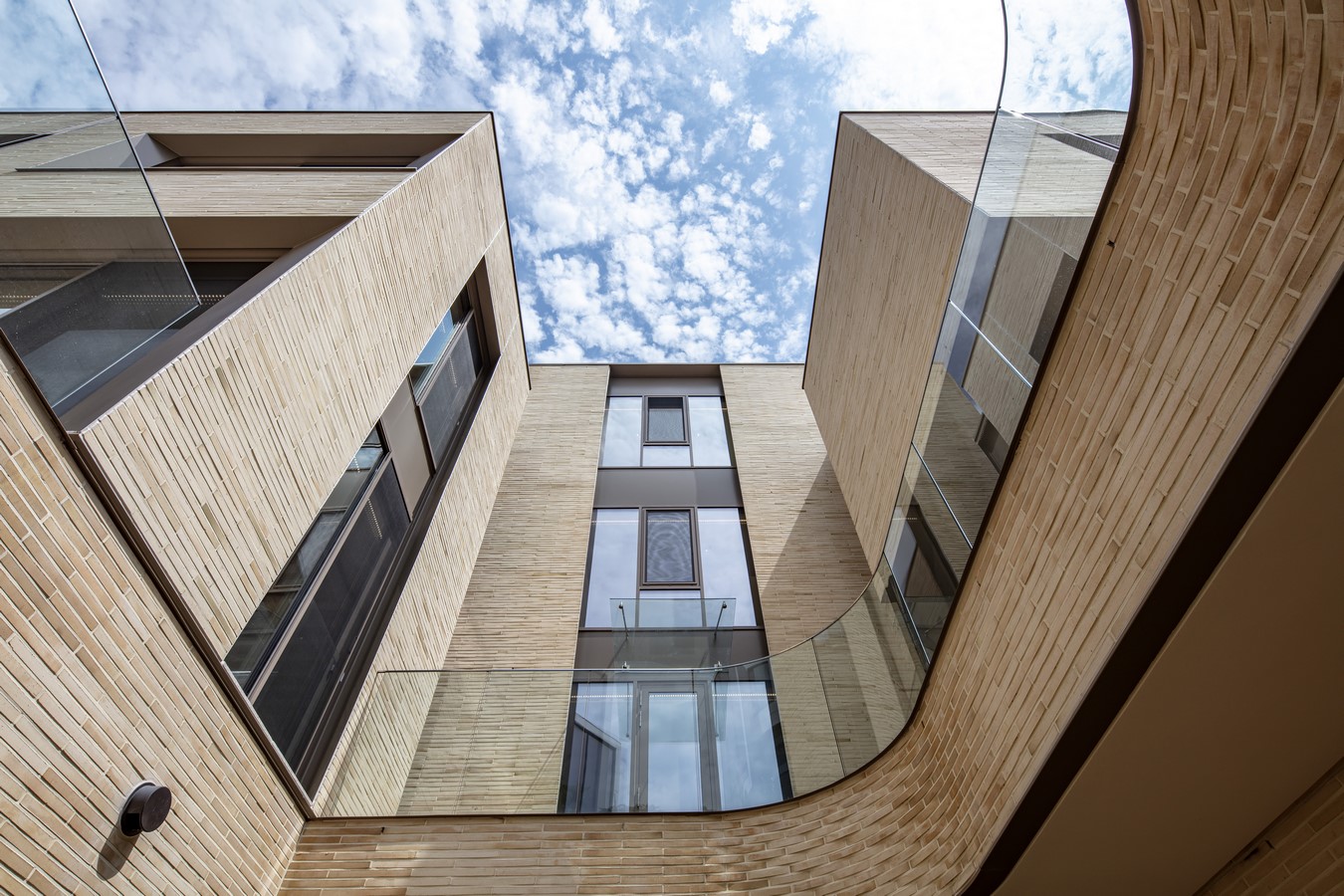
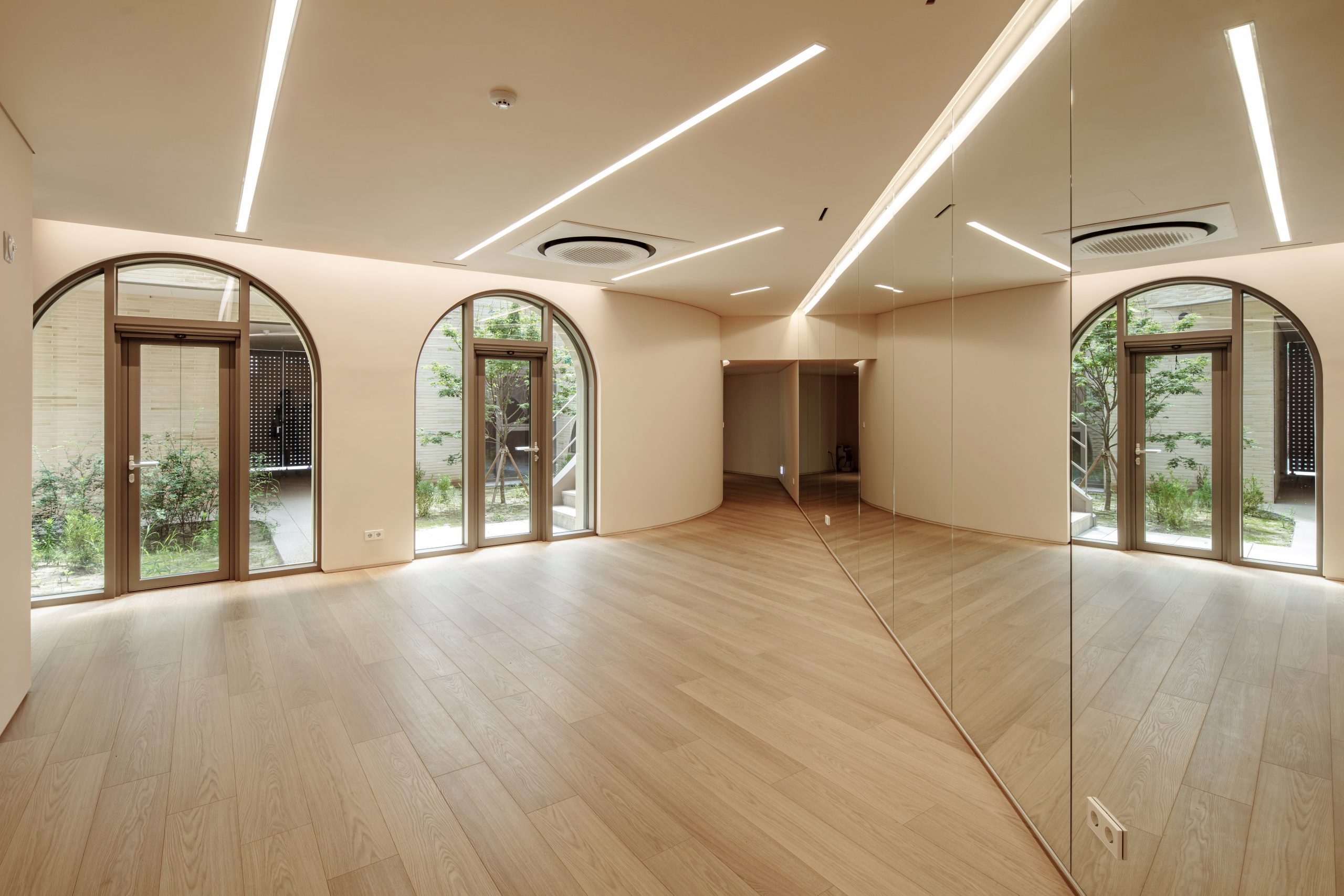
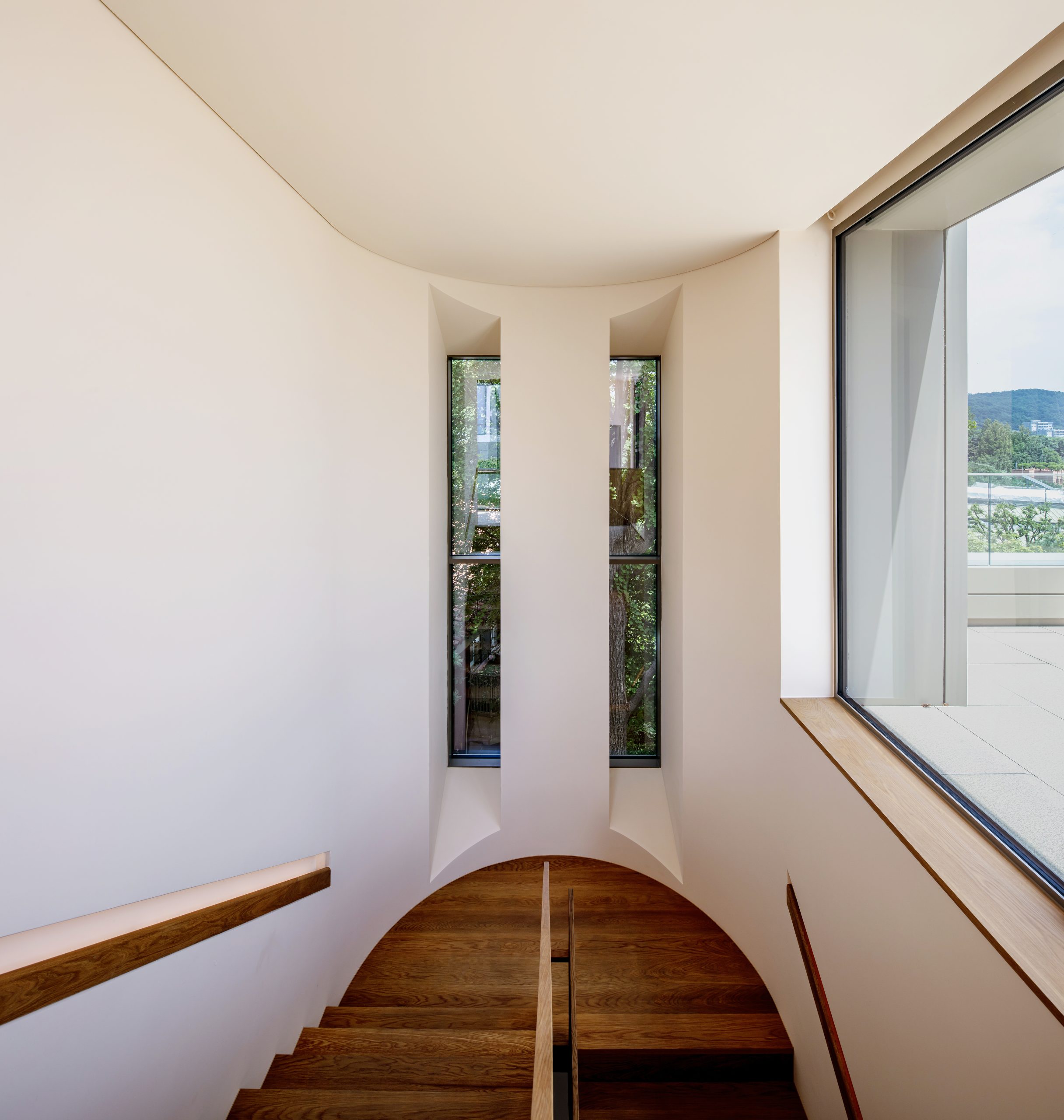
Beyond this boundary, the house opens inward. At its heart lies a courtyard — a carved void whose curved geometry contrasts with the rigor of the cubic volumes around it. Both garden and well of light, it becomes the living nucleus of the home. Circulation moves around it like choreography: arches frame views, staircases unfold with sculptural rhythm, bridges connect rooms in moments of suspension. These transitions are not merely functional but experiential, affirming our belief that architecture shapes emotion as much as space.
The volumes themselves are composed as shifted cubes, recalling the strokes of Hangul or the discipline of calligraphy. Their strength lies as much in the voids as in the solids: shaded recesses, deep reveals, the open sky above the courtyard. This interplay of full and empty, light and shadow, embodies a Korean sensibility that imbues simplicity with layered meaning.