In the quieter outskirts of Ahmedabad, where the city begins to loosen its pace and the landscape opens into stretches of green, this ten-year-old bungalow was not so much redesigned as it was gently returned to itself. The renovation came from a place of recognition rather than reinvention.
Project Name: Rēh – To dwell, to remai
Studio Name: UrbanNest Design Studio
Location: Ahmedabad, Gujarat
Area: 4124 sq ft.
Year: 2026
Photography: Umang Shah Photography
For a middle-aged Maharashtrian couple and their two sons, the home has always been more than a place to live. It is where mornings begin with music, where rituals are part of the everyday, and where familiarity holds more value than spectacle. Their inclination was never toward something new, but toward something that felt right, something that carried forward who they are. The greens beyond soften the light and the air, and once within, that stillness lingers, allowing the house to unfold slowly rather than reveal itself all at once.
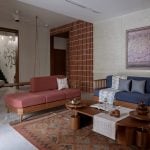
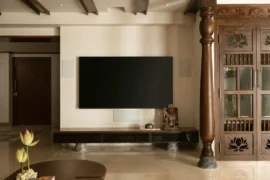
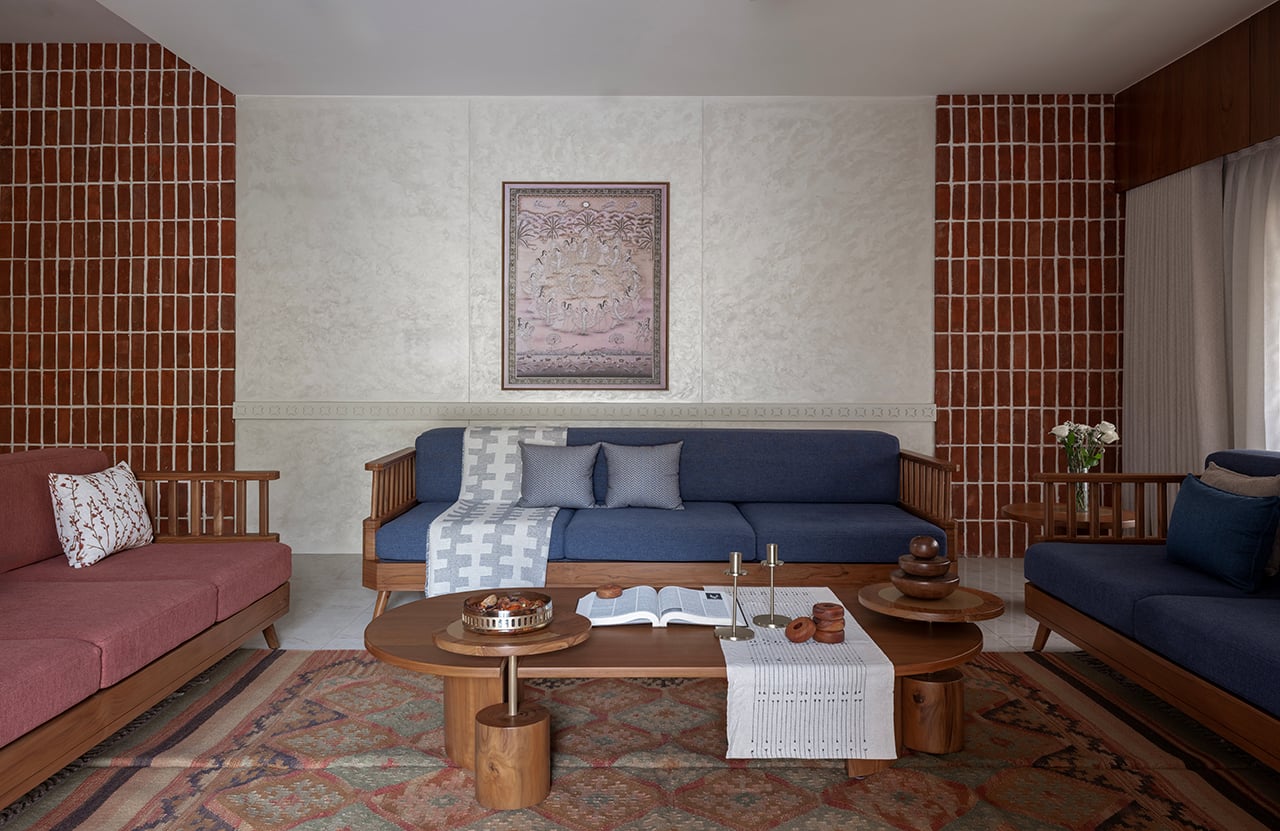
The living space feels as though it has always been there, shaped by use rather than arrangement. Warm teak surfaces hold a certain depth, their grain catching light in a way that feels familiar, almost remembered. The furniture does not assert itself; it rests comfortably within the room, its form carrying echoes of hand worked craft, of turned wood, of pieces that have passed through time rather than been newly made. There is something reassuring in this familiarity.
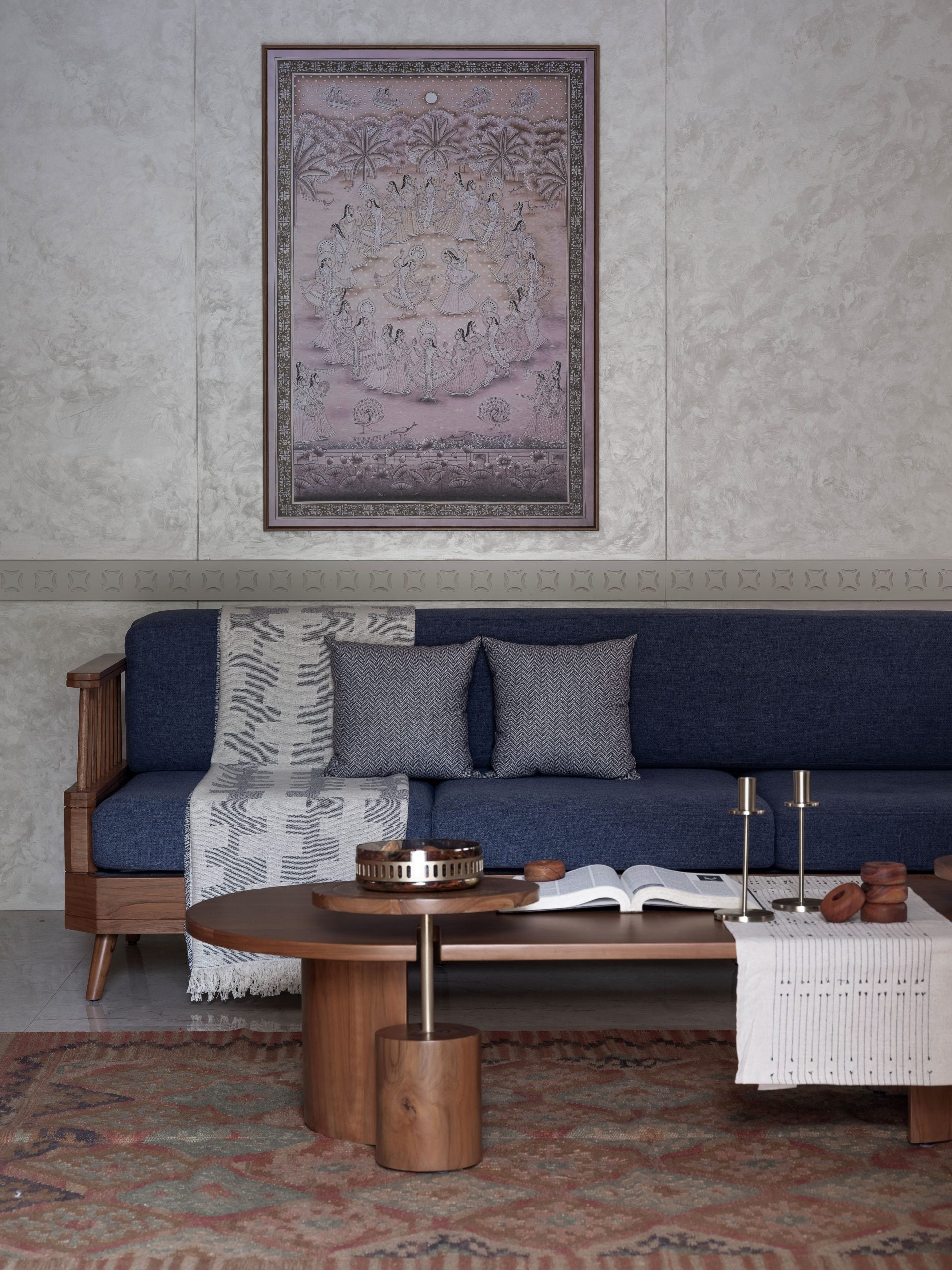
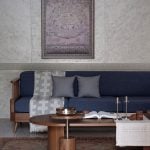
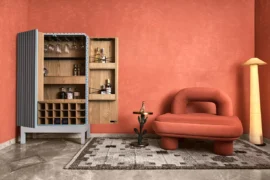
Deep indigo settles into the space quietly, absorbing light, giving the room a calm gravity. It is not a colour that calls attention, but one that holds it. Against the warmth of wood and the muted presence of terracotta, it creates a balance that feels instinctive rather than composed.
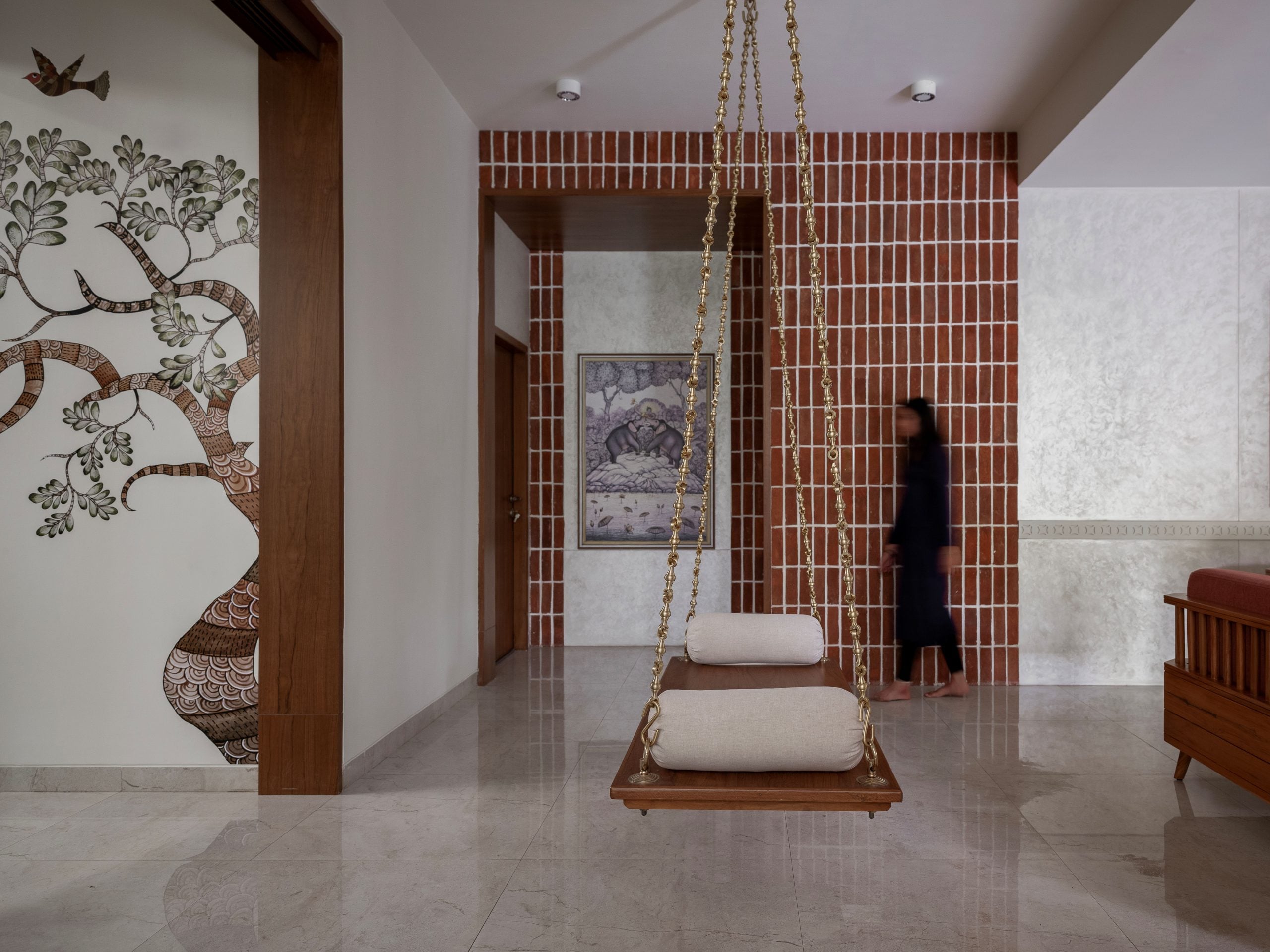
A painting of Krishna’s Raas Leela introduces a gentle movement into the stillness. The figures seem to exist between motion and pause, carrying a rhythm that feels both devotional and deeply human. It is not something one immediately notices, but something that draws you in over time. Nearby, another artwork continues the presence of Krishna, accompanied by elephants, quietly extending the narrative as though these stories have always been a part of the home.
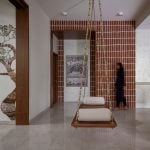
A swing sits close by, suspended with brass finished chains, offering a familiar pause within the space. It does not demand attention. It invites it. There is a certain comfort in its presence, a reminder of homes where time was slower, where sitting meant staying, and where spaces were meant to be inhabited rather than passed through.
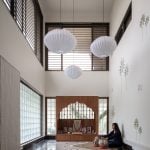
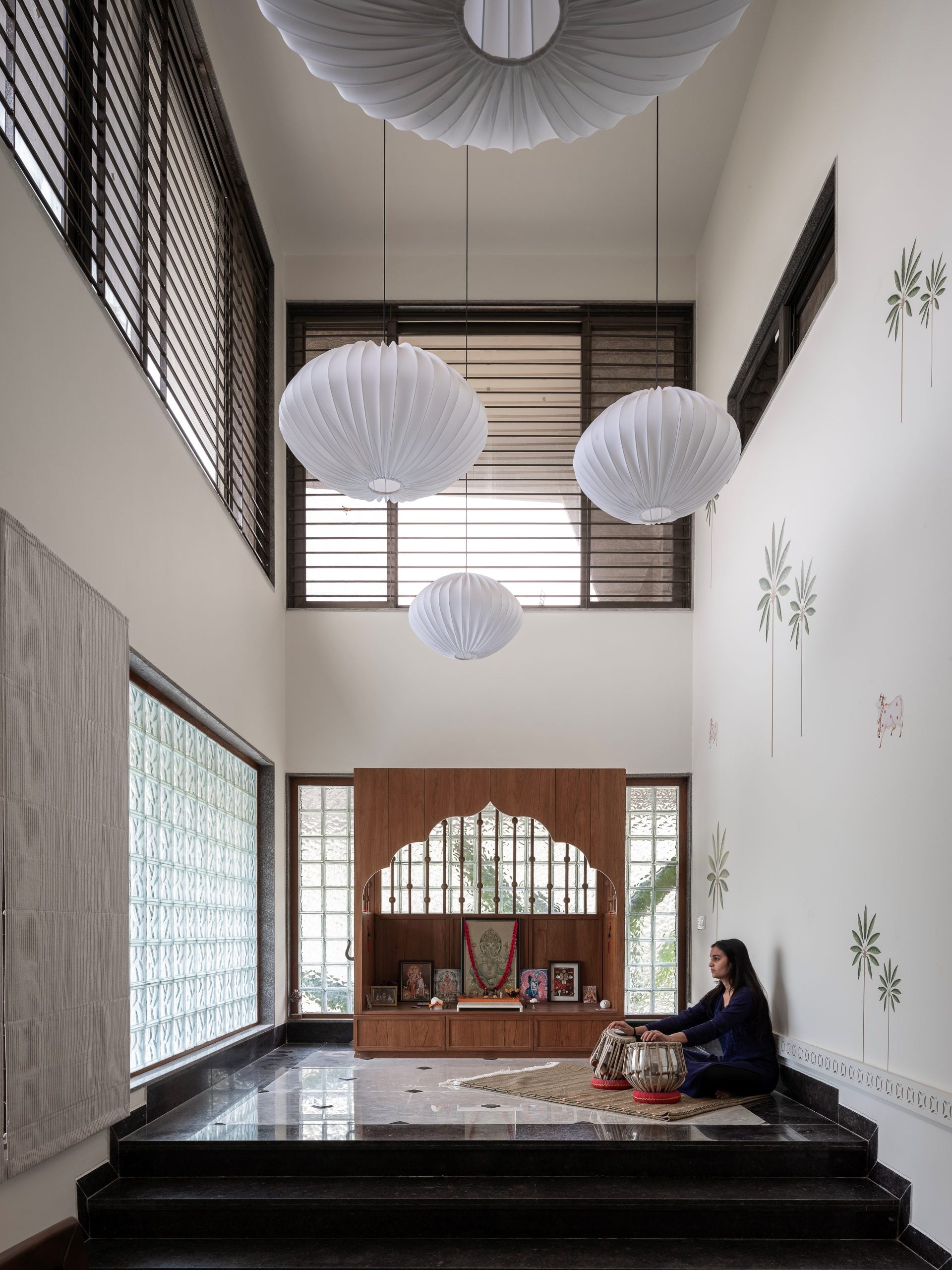
From here, the house seems to pause; The temple rises into a double height volume, yet it does not feel grand. It feels still. The carved wooden shrine sits at the far end, almost withdrawn, allowing the space around it to breathe. The walls carry images of cows and trees, forms that feel deeply embedded in cultural memory; not as symbols, but as something lived and known.
Light filters through glass blocks, diffused and softened, as though it has been slowed before entering. There is no harshness here, only a gentle illumination that shifts quietly through the day. Above, lanterns hover within the vertical space, their presence almost weightless. In the evenings, they glow softly, and the space becomes inward, almost meditative. It is here that the house feels most connected to rhythm, to ritual, to something that exists beyond design.
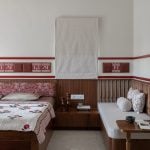
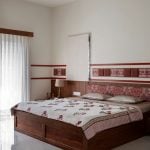
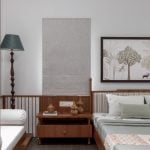
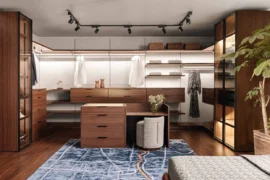
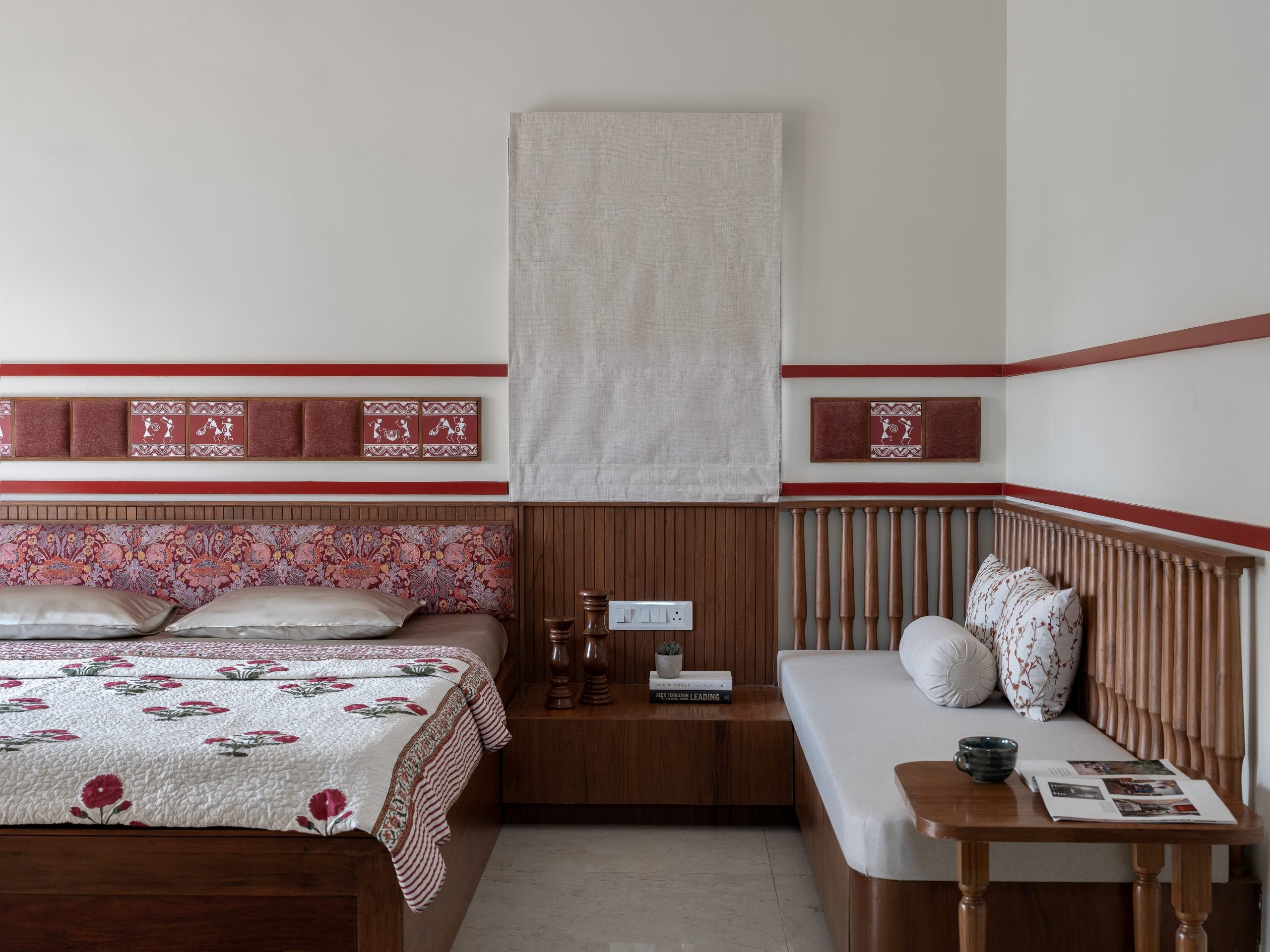
As one moves further in, the house becomes more personal. The master bedroom holds a deeper stillness. Terracotta and maroon tones wrap the room, not as colour but as warmth. The space feels contained, protected, as though it has drawn inwards. Surfaces layer gently, fabrics soften edges, and light remains subdued. Above the bed, a Worli art composition unfolds across fabric and canvas. It does not sit on the wall as an artwork; it becomes part of the room’s surface which is textural, tactile, almost woven into the space itself. There is a quiet intimacy here, where the outside feels distant and the room becomes a place to retreat into.
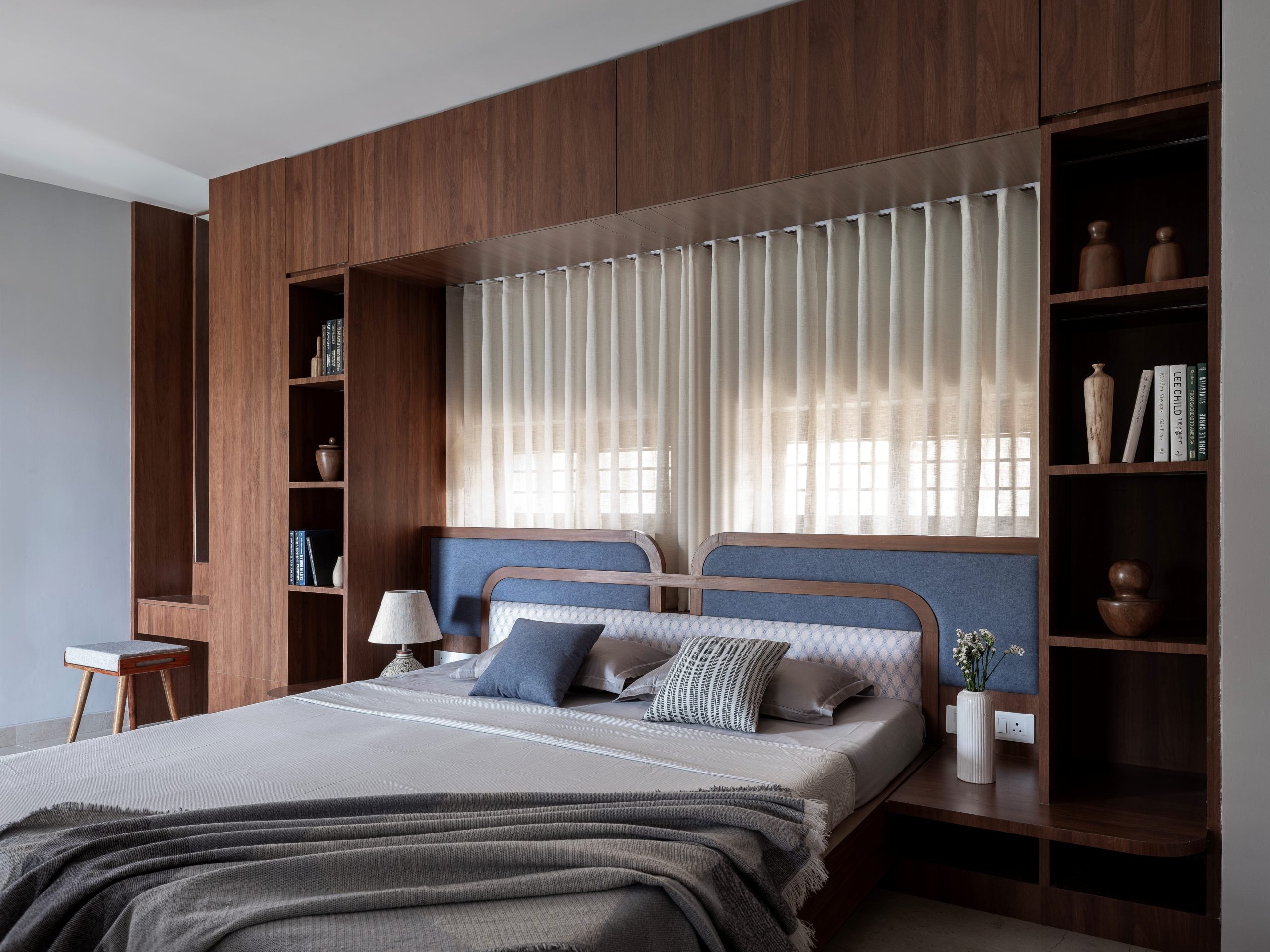
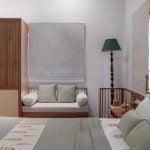
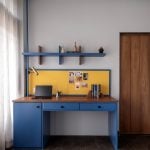
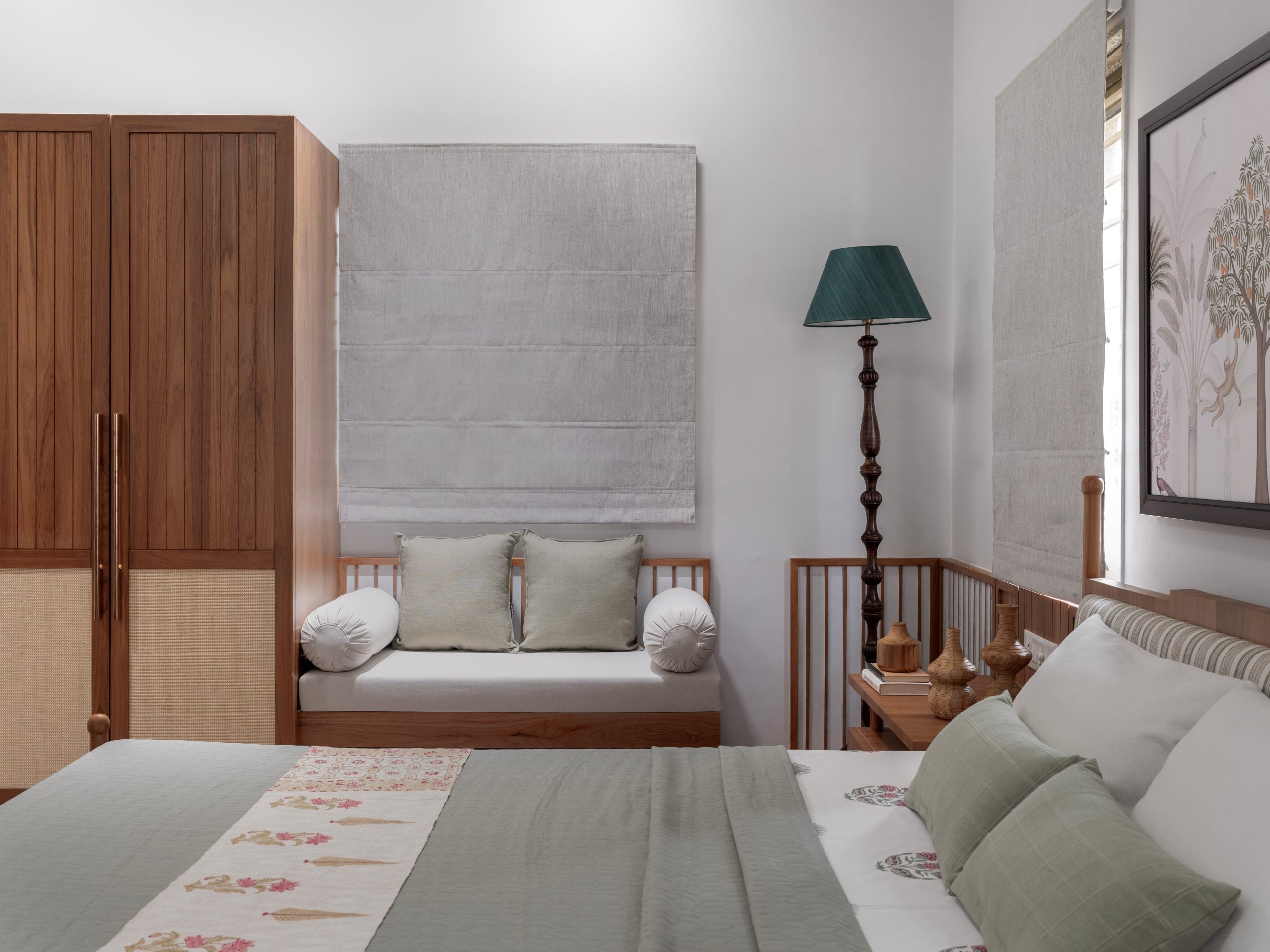
The sons’ rooms shift the tone subtly, without breaking the continuity of the home. In one, indigo returns, deeper and more enveloping. It carries a sense of calm that feels both grounding and youthful. Shelves hold books, objects, fragments of daily life; nothing curated, everything lived with. Light moves gently across surfaces, never sharp, always soft, as though it too belongs to the room. In the other, the atmosphere loosens slightly. The walls carry imagery of grazing cows, scenes that feel almost like memories rather than
illustrations. There is something quiet and familiar about them, a sense of landscape brought indoors. The room feels open & adaptable, a place that allows both rest and movement, without ever feeling defined by either.
Across the house, nothing feels imposed. Materials do not announce themselves, they settle in. Wood carries warmth, fabrics soften space, and details reveal themselves only when noticed. There is no urgency in how the house is experienced. And perhaps that is what stays with you the most.
This is not a home that asks to be seen. It allows you to stay. It holds moments gently, without framing them. It carries memory without trying to recreate it. And in doing so it becomes something rare, a space that does not feel designed, but deeply understood. In Ahmedabad, where the city continues to expand outward, this home turns inward instead. Not away from the world, but closer to itself.