The recently inaugurated World Laureates Association (WLA) Artificial Intelligence Building in Shanghai, or “AI Lab,” marks a significant milestone in the real estate sector. Designed by PLP Architecture, this facility is the first of its kind tailored specifically for AI research and development (R&D). Located in the Lingang New Area’s global R&D district, the 47,400m² AI Lab addresses the increasing demand for specialised research environments as AI continues to advance across various fields.
Project Name: The World’s First Purpose-Built AI Research Laboratory Opens in China
Studio Name: PLP Architecture

Traditional R&D spaces often hinder innovation and collaboration due to their generic and fragmented nature. The AI Lab offers a cohesive ecosystem, housing a Super Lab for physical simulations, Specialist Labs for diverse technological experiments, secure Data Centres, and General Labs designed with an emphasis on human well-being. This comprehensive approach ensures that AI companies can conduct cutting-edge research in an environment that fosters both collaboration and individual productivity.

A distinctive feature of the AI Lab is its commitment to transparency and openness. Key research areas are positioned at street level with glass walls, allowing passersby and building users to observe the ongoing work. This design choice not only demystifies AI research but also promotes a culture of visibility and engagement, setting a new precedent in how research spaces interact with their surroundings.
The building’s design goes beyond mere functionality, prioritising the well-being and social interaction of researchers. A large central atrium with five distinct collaboration zones encourages cross-disciplinary interaction and breaks down traditional research silos. Carefully curated interior lighting is intended to boost creativity and productivity, while landscaped roof terraces and gardens offer tranquil spaces for relaxation and mental recharge. This thoughtful design approach underscores the importance of a supportive work environment in fostering innovative breakthroughs.

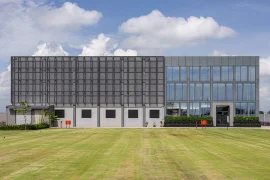
Sustainability is another cornerstone of the AI Lab’s design. The façade features large glass units and metallic panels that provide solar shading while admitting natural light into essential areas. The roof integrates a combination of translucent and opaque photovoltaic glass panels, balancing aesthetic appeal with energy production and shading requirements. These design choices reflect a harmonious blend of sustainability and functionality, ensuring that the building not only supports cutting-edge research but also aligns with contemporary environmental standards.
The collaborative effort behind the AI Lab’s creation included PLP Architecture, Arup, the Arcplus Institute of Shanghai Architectural Design & Research (AISA), Hassell, ECADI, HDA, and BAM.

Andrei Martin, Partner at PLP Architecture, articulated the vision behind the project, describing the AI Lab as a space “where human ingenuity meets the boundless potential of AI.” He emphasised that the building is designed to empower scientists to conduct groundbreaking research in adaptive environments with state-of-the-art infrastructure and seamless data flow. The AI Lab, he noted, is “a laboratory of possibilities, redefining our relationship with technology and blurring the line between human and machine.”

In essence, the AI Lab in Shanghai represents a new benchmark for AI R&D facilities. Its innovative design fosters collaboration, drives technological advancements, and supports the well-being of researchers, all within a sustainable and transparent environment. This groundbreaking facility not only meets the current demands of AI research but also anticipates the evolving needs of the future, positioning itself as a pivotal player in the ongoing technological revolution.