People typically picture caves, forests, overhanging rocks, or even simple huts when they think of human existence without architecture. Almost invariably, the discussion ends at “shelter.”
Would people be able to survive without shelter? Most likely, yes. Humans are adaptable.
However, the question only scratches the surface. If architecture is lost, what will happen to memory? collective memory as well as individual memory. The kind that makes it possible to identify civilizations across centuries.
Architecture is a means of documenting, conserving, and remembering a civilization, and it is more than mere construction.

Cities as Living Archives
Perhaps the best way to conceptualize architecture is as an external cognitive system rather than as a place to live. It stores. It stabilises. It reminds me.
Architecture is how a civilization is remembered. It makes it possible for memories to exist beyond an individual’s lifetime. So if human existence without architecture is explored, humanity might still be able to innovate, adapt, and survive without it. However, it would find it difficult to maintain depth.
Every city is an overlapping document of its past. Time does not feel linear when you walk through an old quarter, whether it is in Cairo, Rome, Hampi, or Varanasi. The building facades and streets may be centuries old, the culture may be medieval, and the signage may be modern, all of which coexist.
This overlap isn’t accidental. It is architecture that unites multiple centuries of identity and culture. This is frequently overlooked when discussing human existence without architecture. Buildings hold ancient stories, religious shifts, economic changes, and technological advancements, not as book passages, but as spatial experiences. A boulevard that has been widened could reveal information about the region’s politics. Centuries of unofficial trade networks may be reflected in a crowded bazaar down the street.
Culture would still be present without architecture, but it would be fragile. There would be numerous stories passed down, but there would be nowhere to stand and witness them. And memory becomes weaker without a place.
Anchoring Identity with Monuments
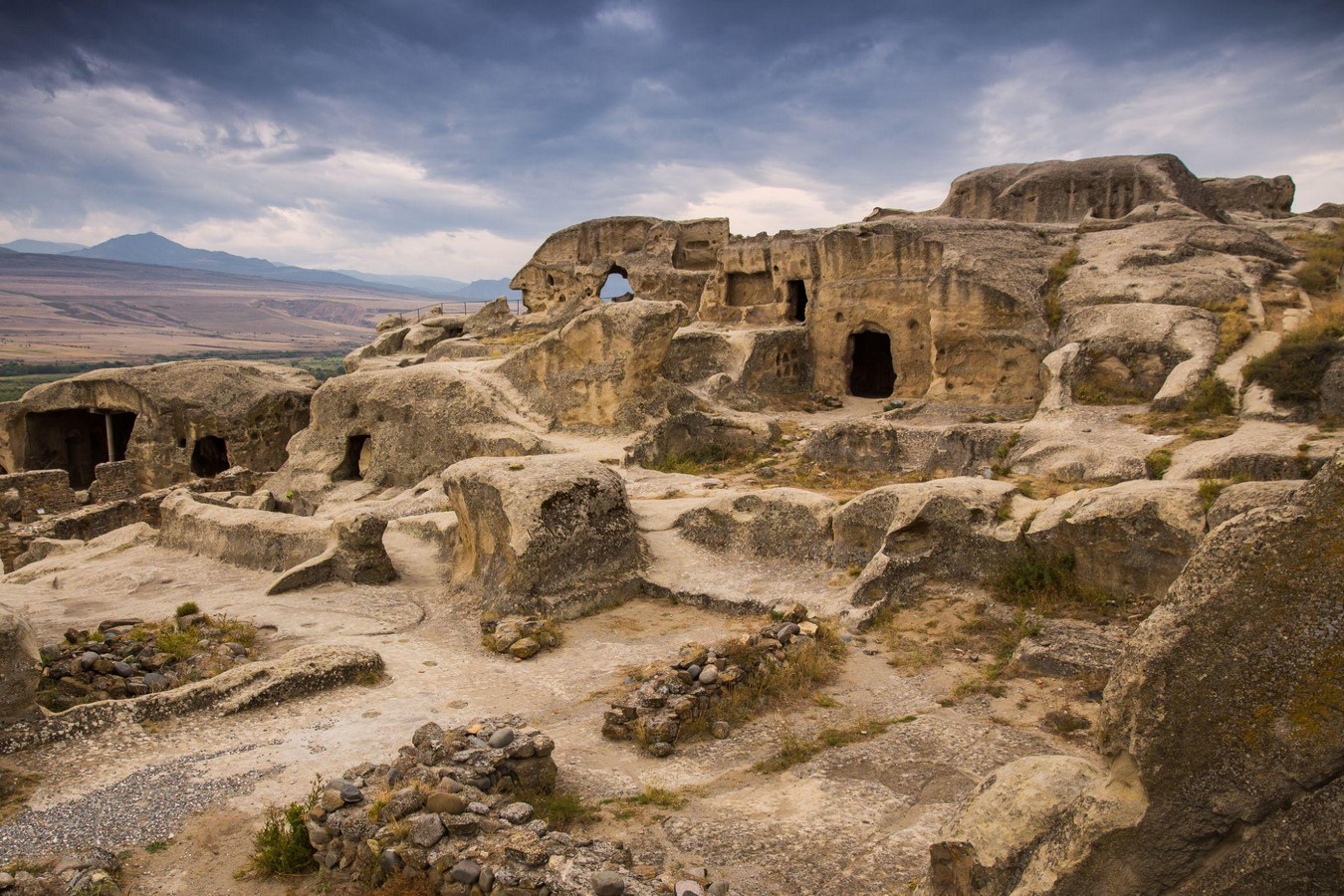
Monuments are erected by societies to serve as a reminder, not to ensure that they have a shelter. Think about Angkor Wat or the Pyramids of Giza; these buildings are more than just monuments. They are anchors that convey to future generations that this is who we were and possibly still are.
Monuments prove themselves to be a better representation of history than our manuscripts due to their ability to make a memory tangible. Identity would be much more broken in a world where there is human existence without architecture. Myths would be spoken about through generations without any spatial validation, and there wouldn’t be any tangible proof of the identity and culture we inherited.
Street Architecture
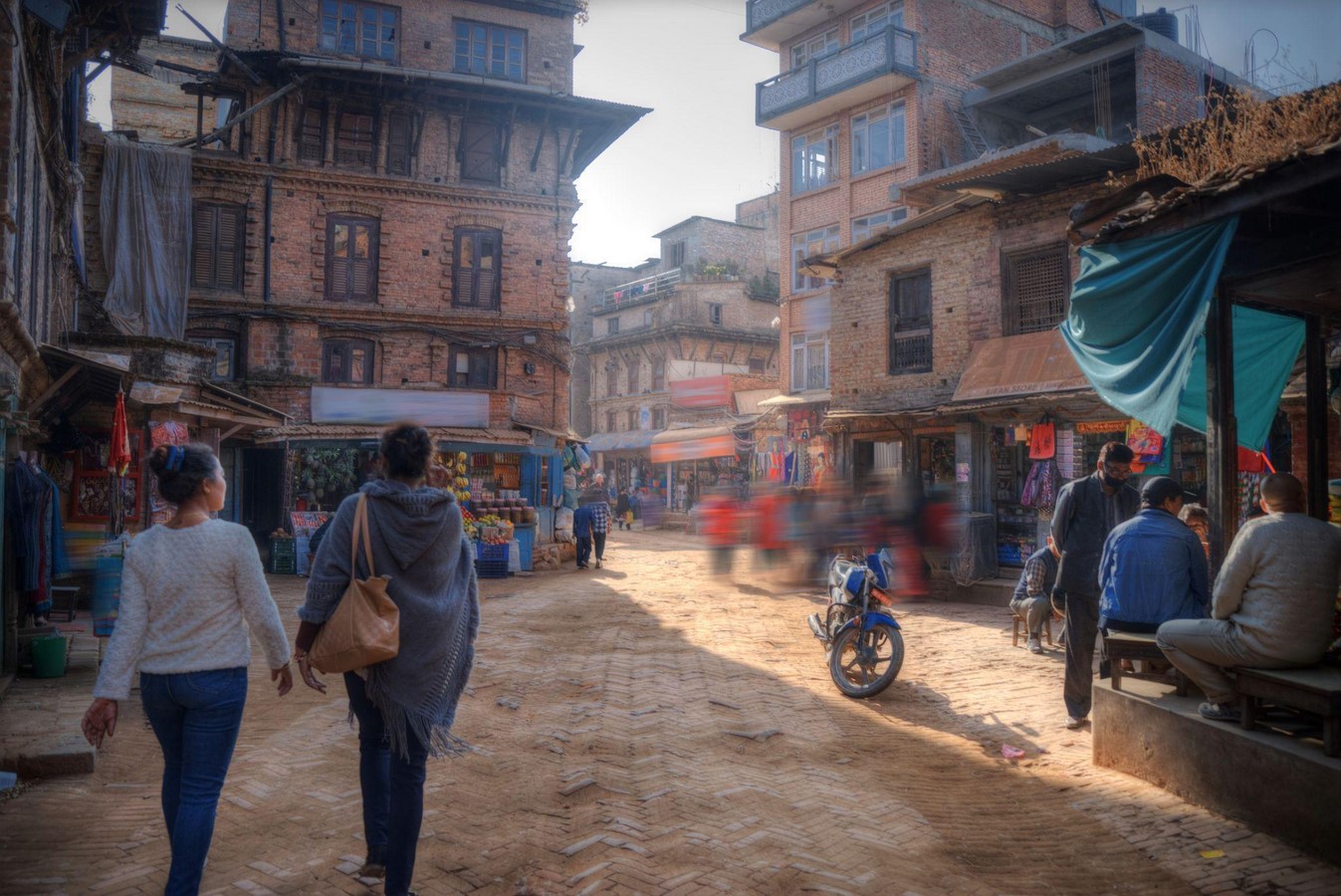
Architecture is not only monumental, but it also consists of the streets, market squares, winding alleys, and urban grids, all of which represent how a society moved, traded, gathered, excluded, and celebrated.
When one imagines human existence without architecture, streets don’t just disappear, as they too are an integral part of our culture. Spatial cues are essential to human rituals. Any procession requires a path. An urban square is needed for a protest. Edges are necessary to define a market. Rituals lose their stage in the absence of architecture.
Cultural Discontinuity.
The radical thing about architecture is that it outlives its designers.
An architectural act of faith in the future is a cathedral that takes two centuries to complete. A university campus is an agreement between generations. A library is a physical assurance that knowledge will be there forever.
Now, if we think about what human existence without architecture is,
Knowledge would exist. Experience would be acquired. However, there wouldn’t be any stable containers for the expertise acquired. Human civilization would be learning, adapting, and surviving, but rarely carrying forward the knowledge, they would be existing in the ever-present.
Architecture enables continuity without which each generation would have to start over, perhaps not completely, but enough to slow down a civilization’s progress. Storytelling, digital archives, and temporary installations would be the only way of carrying forward the cultural memory.
Everyday Architecture
Architecture not only influences the collective memory of a society or civilization, but also It also is an essential part of every individual’s memory. A childhood home. A classroom. The store on the corner. Conversations lingered on the stairway. Prior to being chronological, memory is frequently spatial.
It is simple to focus on pyramids and cathedrals when talking about human existence without architecture. However, the structures we experience as a part of our daily rituals might be more important. They offer rhythm, familiarity, and repetition. They provide a consistent framework for everyday life, and it would be confusing to exist without them.
Architecture guides an individual’s behavior. It controls how people move, where people come together, and where the elements of nature interfere with our daily life. These patterns become ingrained in memory over time. The everyday experience becomes less sensible when architecture is removed. Life would still unfold, but without the spatial consistency that enables us to form some of our core memories and habits.

To imagine human existence without architecture is for humanity to exist without a stable memory, and without memory, there is no civilization, no culture, and no sense of self. Architecture is not a privilege of human existence; it is a need.
The discussion of what would be lost in a world without architecture is, therefore, more than a thought experiment. It is an understanding of the seriousness with which architecture and its preservation must be taken.