Inspiration is what bridges the gap between tradition and innovation. Traditional design practices that date back to the earliest civilizations were slowly and steadily elevated into innovative designs when designers found the right inspiration to do so. The source of inspiration too has seen a similar transformation over time – from nature and natural materials to construction technology and techniques. Master designers made sure that every new design they created was better than the previous one, and today we designers strive to do the same.
To get inspired isn’t difficult but to source the right inspiration definitely is. As a student of architecture, I learned this from my colleagues. It was when I saw their sources of inspiration that I learned how to choose mine wisely. This anecdote is about one such incident.
I was in my third year of bachelor’s in architecture, halfway through my fifth semester – my institutional studio. After four semesters of learning the basics of design, this semester was my first attempt at creating a meaningful built form (a government school, for students from classes 1 to 8).
We were six friends living together in a 3bhk flat and we used to do everything together – eat, work, travel, and sleep – teamwork was after all a part of our profession. It was a morning practice for us to nudge and wake each other up till everyone was finally awake. Our day used to start around 8:45 am with the alarm ringing, followed by snoozing it and dozing off for another five minutes.
After all, college doesn’t start until 9:00 am and there are no hundred things in this world an aspiring architect can’t get done in ten minutes – the least of it is waking up, getting dressed, and reaching college on time. While the rest of humankind struggle at perfecting a daily routine, we architects strive to master the art of power naps. It takes a lot of learning, unlearning, and relearning when it comes to sleeping — and we excel at it.
That day, after reaching college with superhuman efforts, we realized that there was a design submission due that we didn’t even know existed – and mind you, we aren’t amateurs at that as well. Of all reasons that we are trolled over for choosing this profession, the most common is our drawing skills – and for good reason too, because even the worst of our quick sketches can justify almost all of the philosophies of design in one way or another. The drawing may not be beautiful to look at but we make sure that the vision it portrays definitely is, like they say, “Drawing is not what one sees but what one can make others see.”
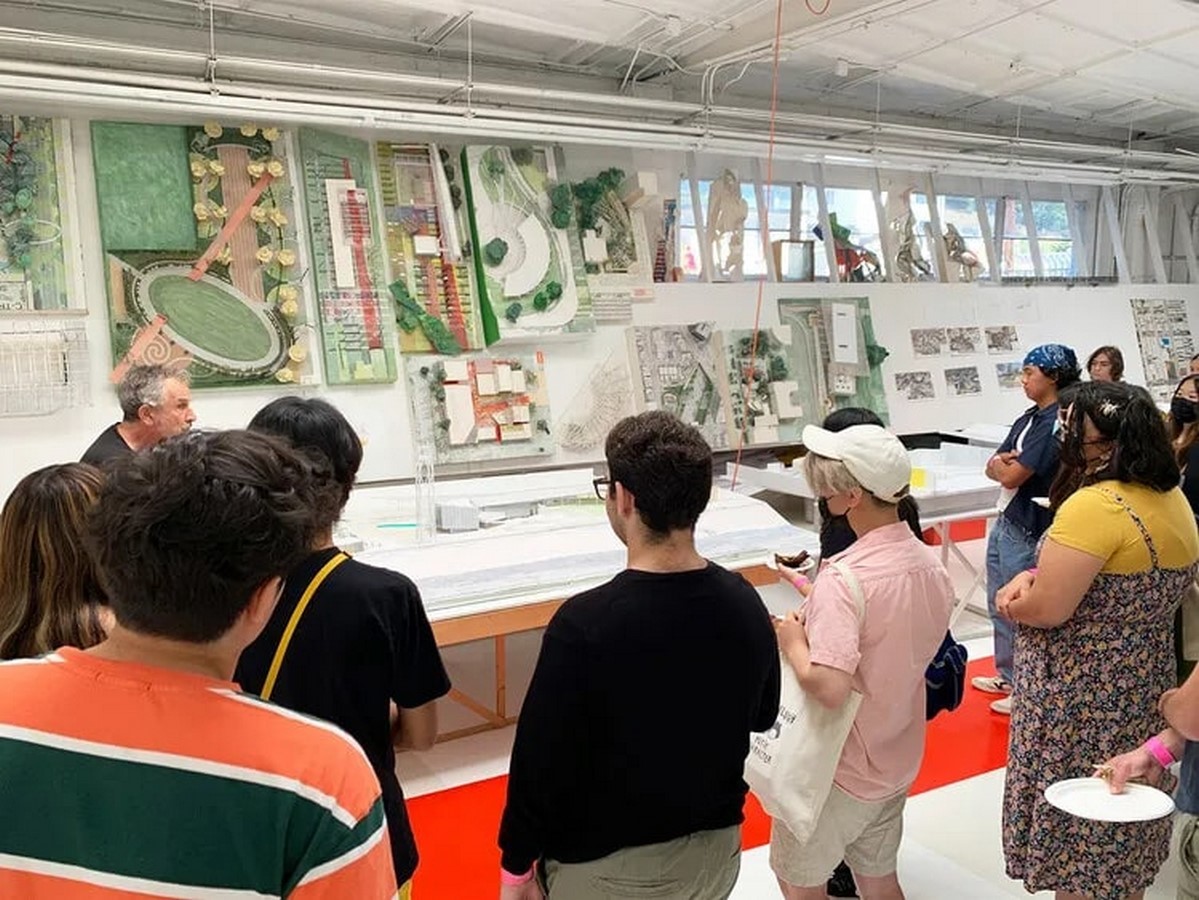
It was a design studio day, one of the dreamiest days of college, and we hadn’t worked for the submission. I went around the studio to look at the work the rest of the class had done. Some of my classmates had their floor plans drafted over A2 sheets while others had abstracted their design into blocks of polystyrene (familiarly known as thermocol) over MDF boards. What can be more exciting than envisioning unrealistic spaces as a design proposal? Precisely, nothing.

What food is to foodies is what designing is to architects; we live for it, and a design studio looks like a threshold of design opportunities at the beginning of the semester. But we were halfway through the semester, and at this point, we were driven only by the fear of faculties. Knowing that there was no way out and I would have to somehow get the submission done, I looked at my concept models (made at the beginning of my semester) and started to sketch out the floor plan on tracings. I had only 10 minutes before the faculty would come – and that was like a lifetime.
With the peer pressure going strong I whipped-up some last-minute conceptual floor plans and so did my friends, and like that, we sat prepared for discussions. The intensive design discussions began with us brimming with pride when we talked of our visions, only to be simmered down by some classic critics – “This is too basic, you should do a better case study. You haven’t worked enough. Look at the work your other classmates have done.” So, I went around the class once again and tried to eavesdrop on one of my batchmate’s discussions.
He had proposed a very impressive design for a school, with an elevational treatment that was aesthetically pleasing as well as functional in bringing in air and light into the classrooms. He had designed long fins that were at an angle in alignment with the prevalent wind direction of the site, with a circular puncture at the top. It looked inspired and was an inspiration for me to look for such alternatives. He was appreciated for his work and was pushed to work ahead. Sometimes, an appreciation someone else gets becomes a driving force to push our limits – and this was one such instance in my life.
Two to three weeks later, I was still searching for inspiration and struggling to come up with something fruitful. My design had certainly progressed, but not to the heights I had imagined and my batchmate’s design kept belittling me in my head.
After almost four weeks, on a weekday all of us were assigned site visits for another course elective. College days are usually quite long and tiring, but we had no option but to do the site visit the very same day, as we had other submissions lining up ahead in the semester. But then a site visit was always welcome, as architects traveling was our second favorite after designing (So what if it’s only to the next-door old city? It’s still traveling). As soon as the last lecture ended, we set out for the city.
The journey to the city was quite eventful that day and we had stopped by the stationery shop to buy some fresh supplies because there is nothing such as too much stationery for architects. Besides, what’s a site visit without the right pen and sketchbook. By the time we reached the site, which was near the old city, it was about half-past six in the evening and the busy old city streets were crowded with people. This always used to prove to be the best canvas for a quick session of sketching but better for an even quicker session of shopping – so, we looked at the odds and decided not to waste time.
We wrapped up the shopping session and quickly went around the site for the assigned work. Once that was done, we were on our way back to our flat. The route we used to travel to the site was blocked by heavy traffic and so, we decided to take another longer route. It was on that route that I found out the source of inspiration for my batchmate’s inspired design element.
Right in front of my eyes stood a large sports complex, which was under construction then, with its huge elevational fins slanted towards the south-west (the direction of the prevailing winds) and a proportional circular puncture on its top. I had traveled by that route a million times before as well and had never bothered to look at this building, but that day was different. When I mentioned it to my friend who was sitting behind me, it suddenly dawned upon both of us that our batchmate (whose design had been applauded) actually lived just across the road of that sports complex.
We couldn’t stop ourselves from laughing the rest of the way home realizing that we were stupid enough to not see it before and that while we scrolled through Pinterest and the internet looking for inspirations our batchmate had merely looked outside his balcony for help.
An inspired design? It didn’t quite look as much inspired as one would expect but he did cleverly pick an element used in a sports complex and administer it in his institutional design. To be honest, the discovery of the sports complex had relieved me a big deal – from the guilt of not being able to innovate something new. But it also taught me something really important –before searching beyond your limits you must have a thorough look within, for inspiration comes in the least expected ways and from least expected places.