Noun, /ˈʃɒk ˌweɪv/:
A sudden wave of increased pressure or temperature, caused by an explosion, an earthquake, or an object moving faster than the speed of sound.
A very strong reaction that spreads through a group of people when something surprising happens.
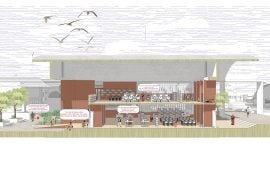
SHOCKWAVE stands for an event that triggers the adaptation of a form to the context’s conditions. A shock that waves the new Sara Hildén Art Museum into its new form and state, so as to intertwine naturally with its position in the city of Tampere. This movement serves as a strategy to define the insertion of the building in its built and natural environment, creating new relations; while also shaping the whole Museum structure as a versatile, fluid space that can adjust to any exhibition format.
Studio Name: Oiga estudio
Design Team: Juan Jerónimo Olcese / Julio Garcés/ Federica Leone / Sandra Vara
Area: Architecture
Year: 2020
Location: Tampere (Finland)
Other Credits: Jonathan Viejo / Ania García Sanz
BUILDING INSERTION
This proposal aims for the integration of the new Sara Hildén Art Museum with its surroundings while not giving up the ambition of a new, singular, innovative architectural language. This is accomplished by the following strategies:
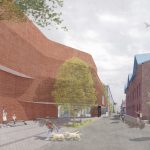
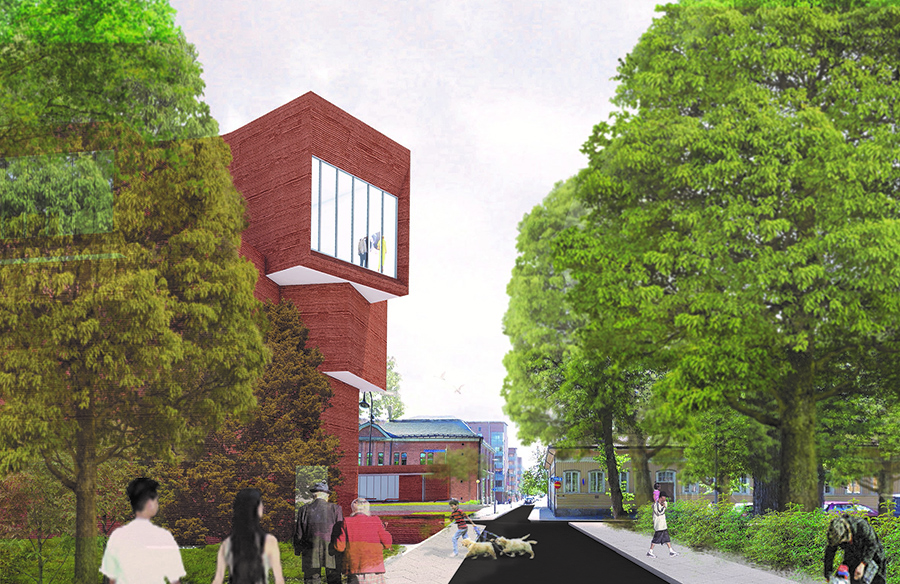
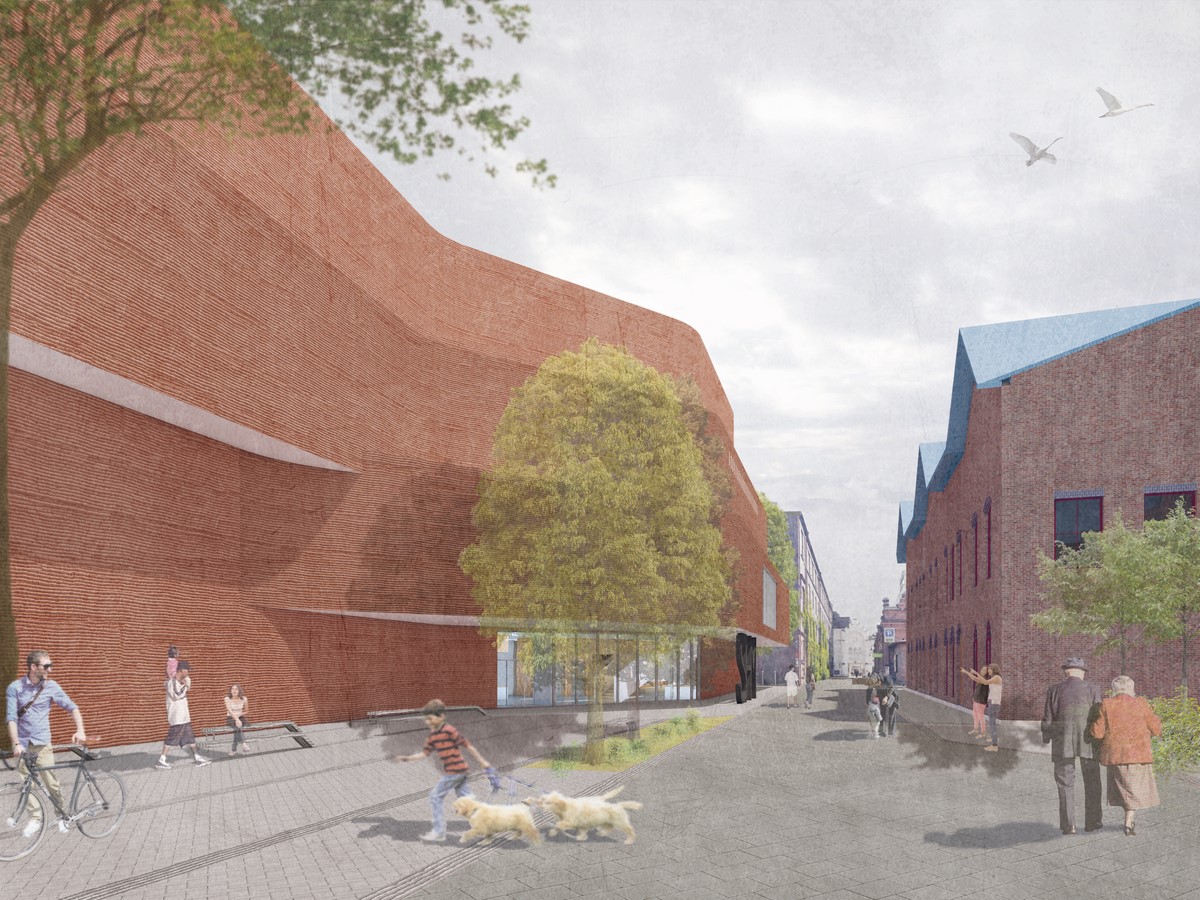
Integrating in the built tissue by following the existing buildings and roads as guidelines. The Museum’s form is a result of a straight-forward modification of a basic shape into these restraints, which allows for the maintenance of the maximum number of trees in the plot (only four of the main trees will be trespassed to a different location on the site) and the creation of a new set of urban spaces.
Merging into the density gradient in the close environment and consolidating a border of the built city, by providing continuity to its physical profile and skyline.
Harmonizing with the traditional brick masonry with a contemporary form that emulates its qualities, while offering a new geometry and order.
FORM EVOLUTION
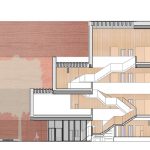
– The museum program piles up creating a basic bar-shaped building. This results in a minimum footprint, thus maximizing the pedestrian space and expanding the park area, also reaching an ideal height to merge into the built density of the surroundings.
– The museum program splits into main bands and service stripes, clearing out the exhibition and public use areas and generating a reference element among the visit.
-The museum volume gets shocked back into the park, causing the bending of the form, and adapting to the guidelines of the buildings and streets around. This creates a sense of expansion of the Finlaysoninkatu street into an urban space.
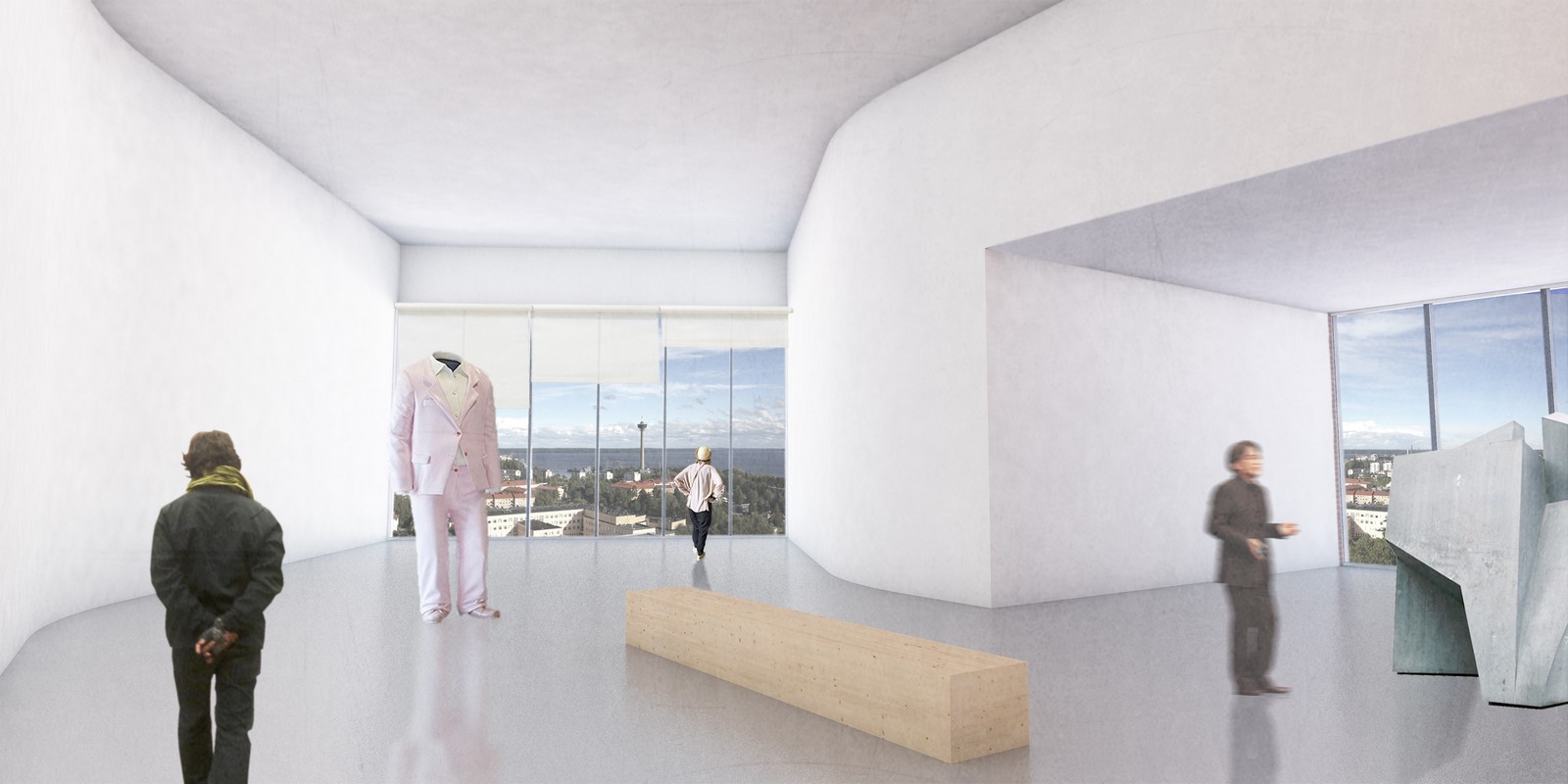
-The bands wave and slide across each other, creating horizontal volumes that dislocate diagonally and open skylight fringes that create different qualities of exhibition spaces. This vibrating movement also shapes the void of the foyer and several green roof surfaces.
-This wave reaches the top volume, resulting in an open rooftop for events, and the end exhibition rooms opening framed views onto the park and the Finlayson Palace, and displacing the volume towards the Kortelahti district, where the actual Sara Hildén Museum stands. The top volume frees the space for a roof top heading Tampere’s Cathedral, from a roof top that can be used for events.
FOYER AND CIRCULATION
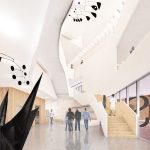
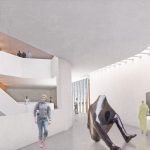
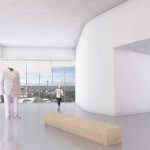
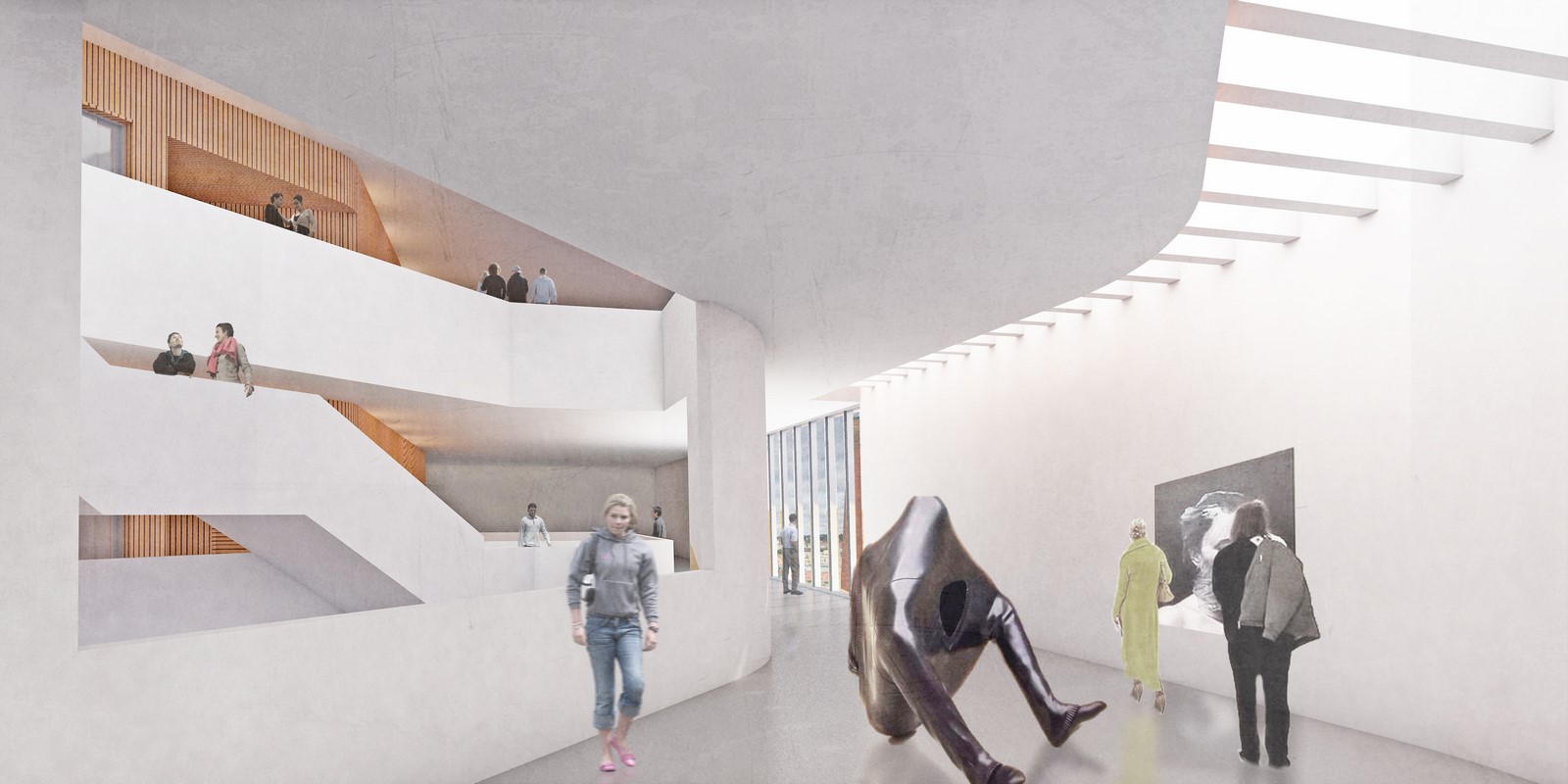
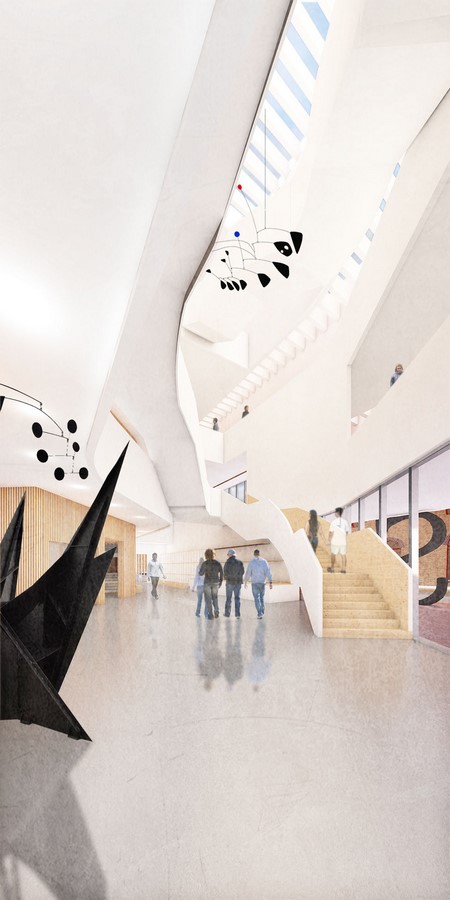
The foyer stands as a result of the shape distortions, tearing up a void there where geometry deforms and opens up the slabs vertically, reaching the roof and letting filtered light into the core of the building. The foyer functions as a space of relations between the main levels of the Museum, pursuing a fluid visit experience and connecting its visitors. The service stripe functions as an element that guides and orientate users, offering the Museum the opportunity to organize exhibitions in any ways required. The idea of an open museum where circulation happens freely and the exhibition of pieces takes place all across the building, starting even from the square, in the foyer and even on the roof top.
CHOICE OF MATERIALS
The main material palette choice stands behind the aim of the lowest environmental impact possible and harmonizing the new, singular building with the existing industrial heritage tissue.
Recycled concrete panels: The homogeneous façade with its straight and curved lines is treated with a skin of prefab colored concrete panels. 3D printing technology allows for a continuous, yet vibrating appearance, that adapts to every form. The addition of recycled brick dust to the process helps integrate the building in the industrial tissue regardless of its contemporary form.
Vertical wood facing: The core service strip is cladded with a vertical wooden batten skin, providing a warm-to-touch, but also resisting finish in the areas most exposed to user contact. This also reinforces the strip as a reference element among the visit. Its vertical display layout gives continuity to the core volume and counteracts the horizontality of the spaces.
White inner walls: Inside, all exhibition and circulation surfaces are painted white, offering a flat context in which the museums’ artworks and the glimpses of the landscape gather strength.
Continuous concrete floor: All the inner floorings are built in continuous polished concrete slabs, helping light diffuse gently and offering a resistant, low-maintenance solution for the everyday life of the museum.
Red concrete ribbons: The outer tiling of the plot takes is form by the wave that shape the whole project. These lines are print onto the surface in red-colored concrete strips that turn into urban furniture as they vibrate along.
Cobblestone walking areas: The non-built areas of the plot are seen as urban gains that are treated as squares with a semi-permeable pavement, allowing for water natural drainage and the growth of a subtle green layer as a continuity of the park area.
MATERIAL LIFE CYCLE
The façade panels, which make up a high amount of the seen building elements, are designed taking into account their life cycle and environmental impact. These are proposed to be built in 3D printing technology, which allows for a high standard of precision, a wide variety of textures and details. Old disposable bricks removed from ancient buildings are turned into brick dust; then used as an additive for the concrete panels; then installed into the Museum. After the lifespan of the building ends, the panels can be crushed into dust again for other purposes.
The 3D printed horizontal layers emulate the lines of the original Sara Hildén Art Museum interiors, which are built in cast concrete with a wooden stripped layout.
Studio Brief:
oiga estudio is an architecture and design studio, directed by Giovanni Olcese and Julio Garcés, that develops its work in Valladolid (Spain) since 2015.
Its main activity focuses on architecture in all its variants, from the design of urban spaces, new construction, refurbishment, interior design and heritage conservation; with a particular focus on the preservation of the environment, sustainability and the use of new technologies as a common ground throughout the practice.
In the field of product design, they develop objects, lighting fixtures and furniture that pay special attention of the manufacturing processes, the responsible use of materials and their life cycle; drawing inspiration from nature and traditionally used materials in architecture -such as earth and wood- for its intervention through current technologies -such as numerical control and 3D printing.