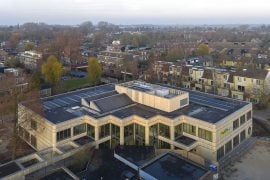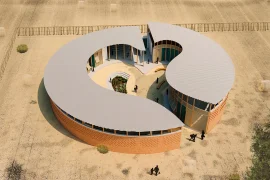
In 2009, Basics was commissioned by the senior management of DCM Group of Industries to upgrade Dr. Banshi Dhar Shriram School in Kota. Situated in Shriram Nagar, Ladpura, this initiative is part of DCM’s Corporate Social Responsibility (CSR) efforts aimed at benefiting the local community. Named after Dr. Banshi Dhar Shriram, a prominent figure in the conglomerate, the school is operated by the Shriram Social Development Society.
Project Name: DBDS School
Studio Name: Basics Architects
Location: Kota, Rajasthan
Site Area (sq ft & sq m): 123 sq.ft., 456 sq.m.
Built-Up Area (sq ft & sq m): 40,000 sq ft
Principal Architect: Vinod Singhi and Ranju Singhi
Photographer: Vinod Singhi and Nakul Jain

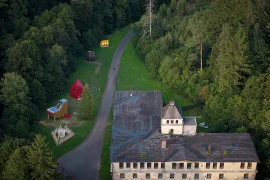
Initially established in 2008 as a primary school, the institution operated from an aging, single-story building made of exposed rubble masonry. The management’s vision was to renovate the existing structure, adding additional floors and rooms to cater to the growing number of students.
The project was divided into two stages. During the initial phase, the team assessed the structural viability of the existing building for renovation and expansion. It became evident that the structure lacked the necessary integrity for safe modifications. After extensive discussions and consultations with structural experts, it was concluded that retaining the old building was impractical. Given the CSR nature of the project, financial constraints posed a significant challenge. To address this, detailed structural reports and cost comparisons for renovation versus new construction were prepared. Ultimately, it was decided to preserve the existing building and proceed with the construction of new facilities to meet both current and future requirements.

The project began with the creation of a master plan, integrating the existing structures while planning for new ones, including classroom blocks, administrative areas, laboratories, music rooms, sports facilities, playgrounds, and landscaped spaces. The initial phases of construction spanned approximately 40,000 square feet.
Phase A focused on building the administration block, a two-story structure housing essential office spaces, the principal’s office, a reception area, conference room, staff rooms, library, and storage facilities. Adjacent to the central corridor were laboratories and practical rooms, strategically located near staff areas for quick accessibility during practical sessions.

Phases B and C involved constructing the classroom block, designed with a traditional corridor-facing layout for 16 classrooms across two levels. Washrooms were placed at the corridor ends, and staircases were conveniently positioned for ease of access and emergency exits. The U-shaped building faces the existing double-story kindergarten block, with a central courtyard forming a cohesive visual connection. Additional spaces included a T-shaped single-story structure for the primary section and language laboratories. The courtyards between buildings serve various purposes, with the central courtyard doubling as an open-air amphitheater, complete with a stage and supporting facilities.
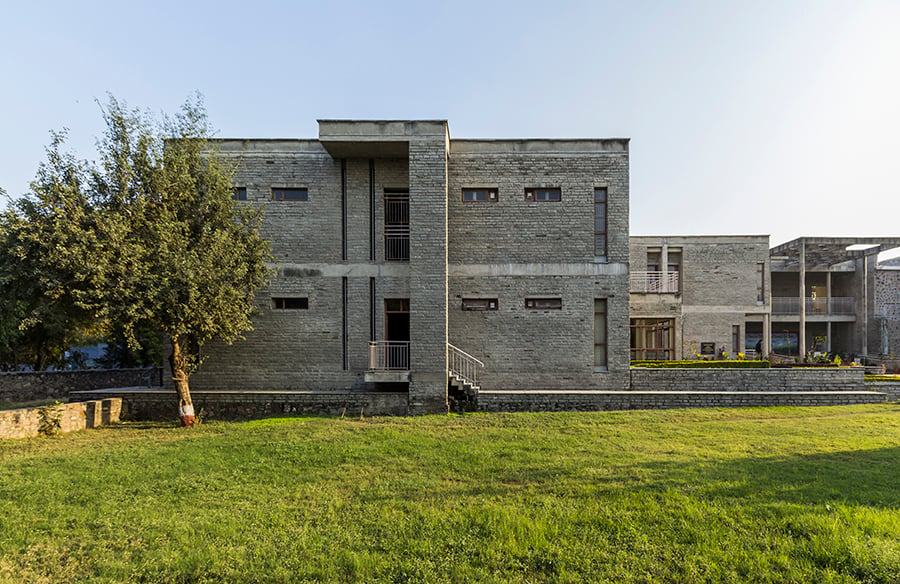
Locally sourced materials were prioritized to reduce costs and support the local economy. Fly ash from the client’s industrial operations was used to level the site, repurposing waste material sustainably. Dabri, a locally available grey stone, was extensively utilized, reflecting Kota’s prominence in the stone industry.

The first phases of the project, including Phases A, B, and C, were completed in 2014, with the school welcoming new students that same year. Work on the next phase is underway, involving a comprehensive site master plan. This phase will introduce additional buildings, a full-fledged auditorium, and outdoor facilities such as football fields, tennis and volleyball courts, and other activity spaces to foster holistic development through co-curricular activities.

This ongoing project exemplifies that design is not a one-time effort but a continuous journey of evolution, thought, and refinement, adapting and growing with every phase.