One of the many inclinations people have when they are focused on enjoying warm weather is going to a beach. Beaches are lively social environments in which people come together to enjoy themselves and the surrounding geographical area, not only an area of sand and water. Beaches are important for the enhancement of community bonds and the quality of life in general as they are natural settings that go beyond leisure to social interaction. The people can enjoy the open ambiance, and this is the same case for various groups making events that reunite them as a community.

This nurturing bond between people on the beaches presents both a challenge and an advantage to the architects. These zones can, after all, be planned in a manner that they are sustainable and friendly, promote good access, respect the environment, and exhibit the local culture. Considering such issues allows the architects to assist in the development of beach areas that serve the present needs of the community, while also educating them on the importance of caring for the environment in the future.
Creating Inclusive Public Spaces

Beaches should be designed by architects so that people of any age or level of physical fitness and from any social background can access and enjoy them. For this purpose, besides widening the beach, there may be ramps, accessible walkways, and terraced seating areas, where people with mobile impairment will be able to easily reach the beach. Some shaded sitting, shower rooms, and restroom facilities shall also help to address the issue of accessibility. Thus, inclusiveness in design can be an added value in the rehabilitation of the architect’s community.
Environmental Sustainability and Conservation Efforts

To begin with, Architects help with the design and construction of buildings without interfering with the natural beauty and ecological balance of beaches. Community participation strategies like organizing neighborhood seminars or ‘green’ activities can help educate beach visitors about the importance of the preservation and conservation of habitats with the need for a littering deterrent. Structures should be constructed using suitable environmental-friendly materials, while beach structures that are built will use energy-efficient devices such as waterless toilets and solar-powered lighting fixtures.
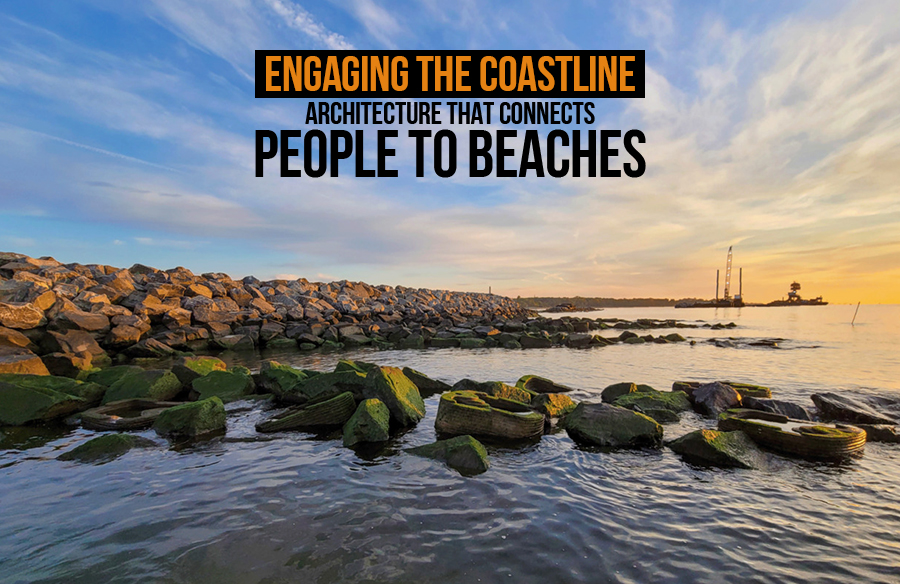
In coastal areas that are prone to erosion or where there is a rise in sea level, architects can design and build elements of the natural landscape like mangroves and sand dunes to serve as protective barriers. These sites help to protect the coastlines, as well, and act as interactive learning areas. Applying these methodologies preserves the coastlines while the population is motivated to help in the efforts to protect the beaches.
Enhancing Cultural Expression and Identity
Beaches are a common cultural element attached to a country. Designers can pay tribute to local traditions and design features conducive to such traditions through purposeful architectural changes. For example, better and raised visibility of artworks, such as sculptures that are culturally relevant in that specific locality where the structural design is located, would cultivate better place-making. Local artisans can sell their products at beach pavilion centers during fairs or communal events, which can include cultural activities, festivities, and seasonal markets.
It is ethically acceptable to wear these clothes… while doing these activities. Places of this type have an impact on the values of the community and thus in the future, they may contribute to the further explanation of the designs that would cater to daf caused by fishing.
Promotion of Recreational and Healthy Lifestyles

The sandy beaches complement the purposeful leisure activities that promote physical health and socialization. Games like beach volleyball, surfing, and water sports encourage the architects in the lively design creating interest and the people’s activity in the physical health aspects. In addition, strategically placed exercise rooms or leisure hubs with shades may enhance family gatherings and promote togetherness.
Well-aligned beach areas and proper synergistic designs may prevent clashes between activities hence promoting the intended peace. One such strategy would be the inclusion of designated areas for water play and a sitting or running area to help maintain the serene environment expected on a beach. This also caters to the different kinds of activities while enhancing the sense of togetherness.
Facilitating Environmental Education and Awareness

Incorporating educational facilities or information centers at the beach can enhance the visitor’s understanding of marine life and the importance of conservation. For example, these centers may feature displays about the fauna and flora of the region or highlight environmental concerns such as water contamination or animals at risk of extinction. The designer’s role can incorporate as well the spirit of stewardship for the coast by engaging the community in holding and participating in such events.
Environmental education and recreation activities such as beach clean-up or nature walks may also be organized in partnership with the local people. These functions serve to inform the patrons using the beach as a space for leisure but also act as a bonding mechanism for the beach users. Infrastructure such as eco-friendly information kiosks and pavilions that are well set up in the environment are examples of design features that may help in the interpretation of the place for tourists without harming the images of the surrounding area.
Using Flexible and Adaptive Designs
Since beaches are ever-changing, it follows then that when designing, there is a need for architects to devise designs that will work to the benefit of both the society at large and the environment. This type of structure can include two parts such as modular pavilions, pop-up booths and even closing umbrellas. All these can serve different kinds of events and weather seasons. Due to this characteristic, beach zones can be turned into various activities even throughout the year like conducting community events or providing shelter when there is bad weather.
Through the use of a modular design and local materials, the designs can minimize their environmental impact while responding to the site conditions of the beach. These approaches are not only flexible; they also lend themselves largely to the beach architectural intervention while addressing the needs of the community.

Architectural interventions, for instance, can turn the beaches into active, friendly, and eco-community centers. They may allow architects to create coastal ecosystems, attractive to local people, and exotically green, yet conserving the landforms of the surroundings, through sustainability, cultural identity and respect, recreation, education, and evolution. It is not just about beautiful beaches: there is a caring philosophy invested in the design of beaches, which engenders a social fabric that will ensure the ongoing existence of beaches as democratized spaces in the future. Beaches can also be made in irreplaceable locations that are eco-friendly and community-based, thanks to the involvement of the population in these ideas.