

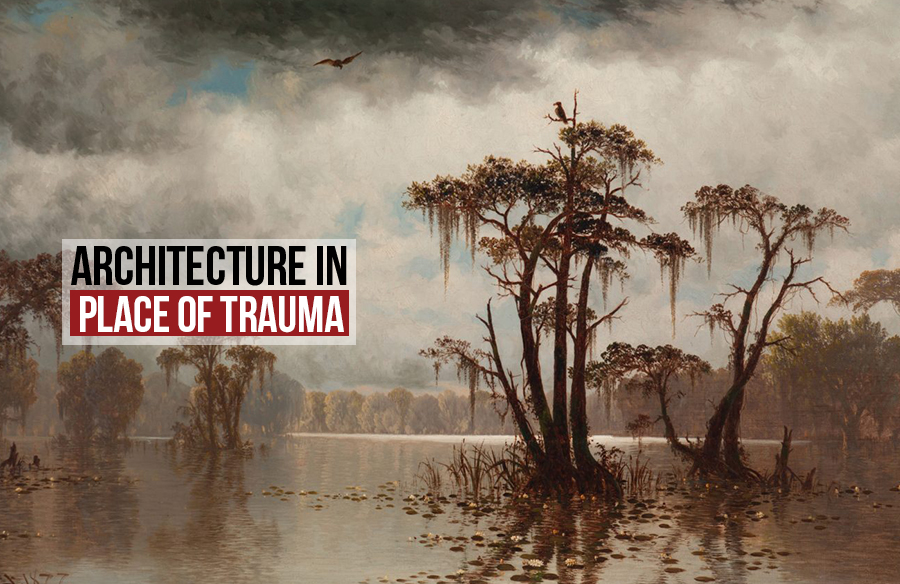
Places of trauma make use of symbolism to grasp unspeakable experiences or events that could not be put into words.
Duality of Settings
Kate Chopin’s Beyond the Bayou has a clear definition of space described as a zone to which the main character dare not cross. Unknown regions that La Folle, the main character had drawn as an imaginary line due to a traumatic event she witnessed as a child.
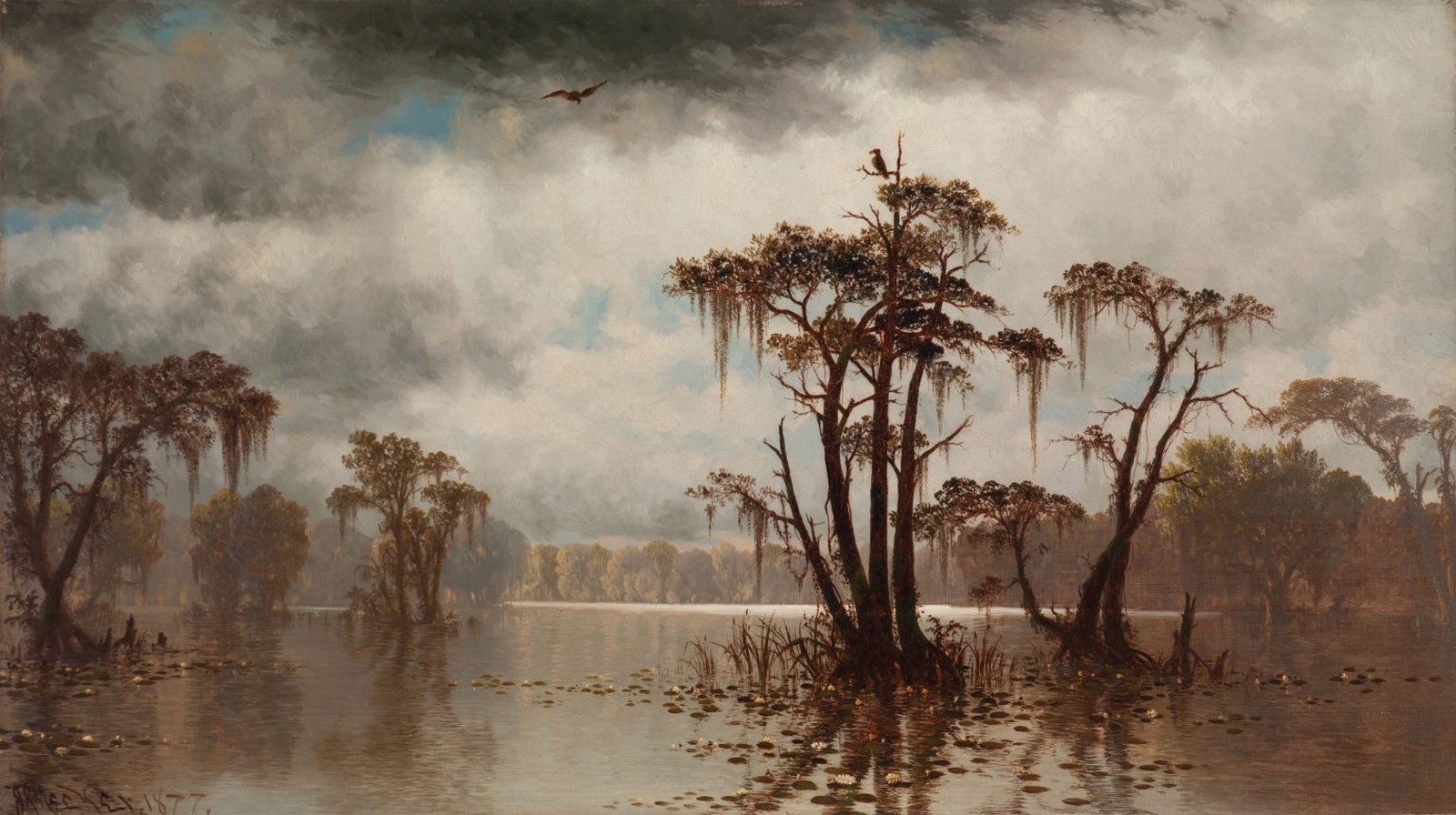
In the story was this small world of La Folle’s confined in solitude where the setting of a bayou is shaped like a crescent. Her journey in this short story is her overcoming a memory of trauma in order to save a person she loves, by going Beyond the Bayou. A bayou that is closely correlated with images of the moon, or night time. Her traumatic event as it so happens is said to take place during the evening. This is further evidenced when she was resting after overcoming her fear she was greeted with,
“moon rays, streaming in through the open door and windows….”
It is only in contrast to the world with the bayou that we begin to see what lies. “A field of white, bursting with cotton” where birds are aplenty, roses grow and all the typical descriptions of beautiful cotton fields greet her victory over fear.
At the end of the story, she watches the sun. At one point it’s a celebratory story of overcoming the triumph of fear, but at the same time it is a story filled with the imagery of its time. A white American woman from the end of the 19th century writing about stories in Louisiana whose main character is a black woman. It’s quite obvious to suspect the imagery of the La Folle’s bayou in contrast with her landowner’s place of residence as a picturesque place to be a product of its time. However, the key takeaway is the use of contrast in describing two places to journey a story about trauma.
A Monument to Build a New Order
There is a real life example to architecture that makes use of trauma, but its narrative creates a far wider implication than the previous. In Indonesia, there is a monument dedicated to the martyrs of a particular event that happened in 1965. The Indonesian National Military, or TNI, along with then President Suharto and relatives of the martyrs created a national structure, called the Pancasila Sakti Monument, as a means to present the new values of the then new political order at the time.
Trauma became a key expression of the architectural elements of the Monument, and this became tied to heroism due to the nature of the martyr’s deaths under the alleged hands of the Communist Indonesian Party (PKI). The brief of creating an artistic and official historical perspective required careful selection of symbols that was ultimately decided by a select few people that wanted to create a specific narrative,
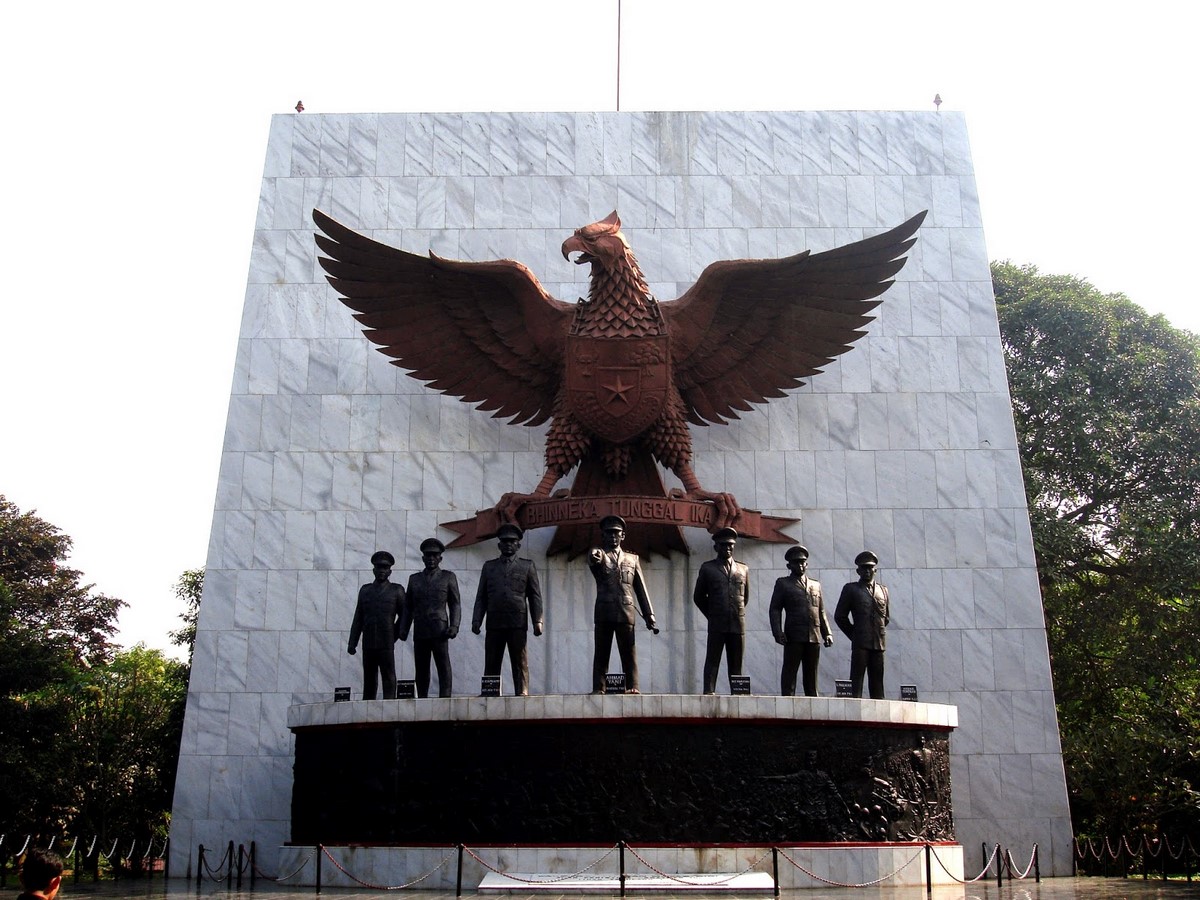
“to show the moral decadence of the left-leaning PKI in contrast to the new right wing language of restoring order”.
A previous essay made by the author on the topic did not focus so much on the symbolism of the reliefs presented or the close proximity of the site being constructed near the place of the martyr’s death, Lubang Buaya. Instead, the essay asks on who had the most influence with the artistic direction of the monument as a whole.
And as the previous example explicitly illustrates the language of trauma, through the use of environmental setting, the pitting of several architectural elements serve as a reminder between a hypothetical Old Order that would have led to a left-leaning government to the New Order’s restoration of order via the military.
Where the previous example was read explicitly as an interpretation of the story, here the interpretations are of historical sources that weigh in the important question, “who is telling the story of the trauma”.
Documenting Sarajevo
By recognizing the dynamic nature of architecture, there exists a body of work done by 5 members of the Architects Association of Das Sabih from Sarajevo documenting the destruction of the city through various mediums. Known as Wararchitecture-Sarajevo: a Wounded City, it documents war torn architecture that is captured in time while mapping the locations of such places. It may not have the typical elements of static symbolism to places and architectural elements that the previous two examples had, but it remains relevant architecturally. This is best exemplified with what Teresa Stoppani describes in her thesis, to “enter both public buildings and private lives with the precision of a surgical knife”. It became architecture under another chaotic and violent logic of war, where new classifications of spatial and architectural tools had to be recontextualized.
What is important with this example is who gets to have the conversations around the architecture of trauma. There are the architects from Sarajevo that become surveyors documenting the damage of the war with ever changing details. There are architects, as Stoppani notes, such as Lebbeus Woods creating his architectural work by working with the damage of the Sarajevo war. Who instead of creating distance from the chaos of the war to try to understand what happened chooses to use war and trauma as a form for his paper architecture ideas. An imitation of the destruction and being unable to suggest spaces of making that could slowly suggest how to live with it.
Steps to Understanding the Trauma
Perhaps what is necessary by seeing all these examples above is to suggest radical ideas of moving forward from the trauma. Break the logic of violence to transcend imitations to symbolisms of trauma.
Resources
Chopin, Kate. (ed.) (2006) The complete works of Kate Chopin., Louisiana: Louisiana State
University.
Poetiray, B.M. (2020) An Investigation Evaluating the Influence of Ideology:
To what extent were Suharto’s political views reflected in the construction of the
Pancasila Sakti Monument from 1965-1973?. International Baccalaureate Diploma
Program. Mentari Intercultural School Jakarta.
Stoppani, T. M.Arch., Ph.D. (2016) ‘Architecture and Trauma’.In Ataria, Y., Gurevitz D., et al.
Interdisciplinary Handbook of Trauma and Culture. 1st. ed., New York: Springer.
Image Resources
Bankjim. Museum (Monumen) Pancasila Sakti. Bankjim.com. [Online Image] [Accessed on 17th
of June 2023]
Meeker, J. R. (1883) ‘’Bayou Teche, Louisiana.’ Oil on Canvas, 50.8 x 91.4 cm. In:
Katechopin.org. (no date) Kate Chopin: Fault. [Online] [Accessed on 17th of June 2023]
https://www.katechopin.org/wp-content/uploads/2021/06/Meeker-1536×860.jpeg




:strip_icc():format(webp)/kly-media-production/medias/1003847/original/088430900_1443509026-museum-1.jpg?w=999)