


Javier Senosiain (born 1948, Mexico City) is Mexico’s master of organic architecture — a designer of inhabitable sculptures shaped like sharks, serpents, flowers, and shells that ask whether a house must be a box at all. Influenced by Gaudí, Frank Lloyd Wright, and Juan O’Gorman, Senosiain builds ferrocement shell structures buried in gardens, from the famous Casa Orgánica to the serpent-shaped Nido de Quetzalcóatl. The 15 projects below explore an architecture that behaves more like landscape and organism than building.
Javier Senosiain’s Famous Works at a Glance
| Project | Location | Year |
|---|---|---|
| The Organic House (Casa Orgánica) | Naucalpan, Mexico | 1985 |
| Casa Claustro (Cloister House) | Mexico City | 1994 |
| Nautilus House | Naucalpan, Mexico | 2007 |
| Casino Mona | Hobart, Australia | 2016 (design) |
| Conjunto Satélite (Satellite Set) | Naucalpan, Mexico | 1995 |
| Arena Roja (Red Sand) | Wadi Rum, Jordan | 2010 |
| Villa de los Cisnes (Swan Villa) | Placencia, Belize | 2014 |
| Pods House | New South Wales, Australia | — |
| La Casa del Árbol (Tree House) | Celaya, Mexico | 2013 |
| Snoopy House | New South Wales, Australia | 2010 |
| El Paraguas (Umbrella) | Celaya, Mexico | 2008 |
| Quetzalcóatl Nest | Naucalpan, Mexico | 2007 |
| Casa Flor (Flower House) | Naucalpan, Mexico | 1994 |
| The Shark (Casa Tiburón) | Mexico | 1990 |
| Ballena Mexicana (Mexican Whale) | Estado de México | 1992 |
Javier Senosiain, a Mexican architect and author of the “Bio-Architecture” book. He is known for his colourful organic architecture inspired by Friedensreich Hundertwasser. The architectural style is a reflection of the colourful Mexican art. It remodels the aspects of the human form. Organic architecture is the harmonization of humans and the environment.
Javier approaches his design in a surreal way. All his work is colourful with eyes that interest one to know more about the project. He blends in nature with all of his works that play a major role in the current century. Moreover, in his literal design, he adds his twist with designing the integrated furniture that suits each of his buildings.
Below is the list of 15 Projects by Javier Senosiain:
1) The Organic House | Javier Senosiain
Location: Mexico
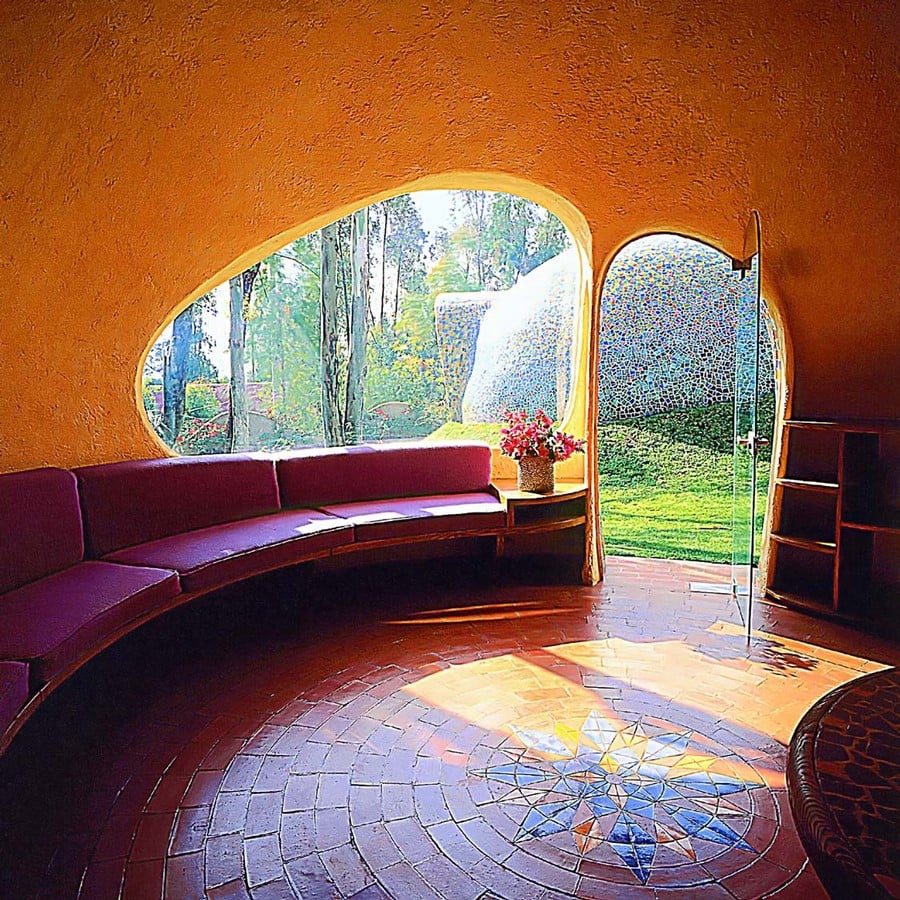
An idea that evolved from a peanut shell. A concept that revolves around the experience of the person: the perception of one day and one night. The exterior greenery creates a unique integration between the living space and the exterior garden. The interior volume is designed in a way that when you walk on the grass you are walking on the roof of the house.


2) Cloister House
Location: Mexico
A central patio surrounded with greenery on the northern side of the house and the architecture on the southern side of the house. The house depicts the tradition of Mexico. Unlike Javier’s other projects, he moves away from the colourful buildings to a more bricklayer exterior.


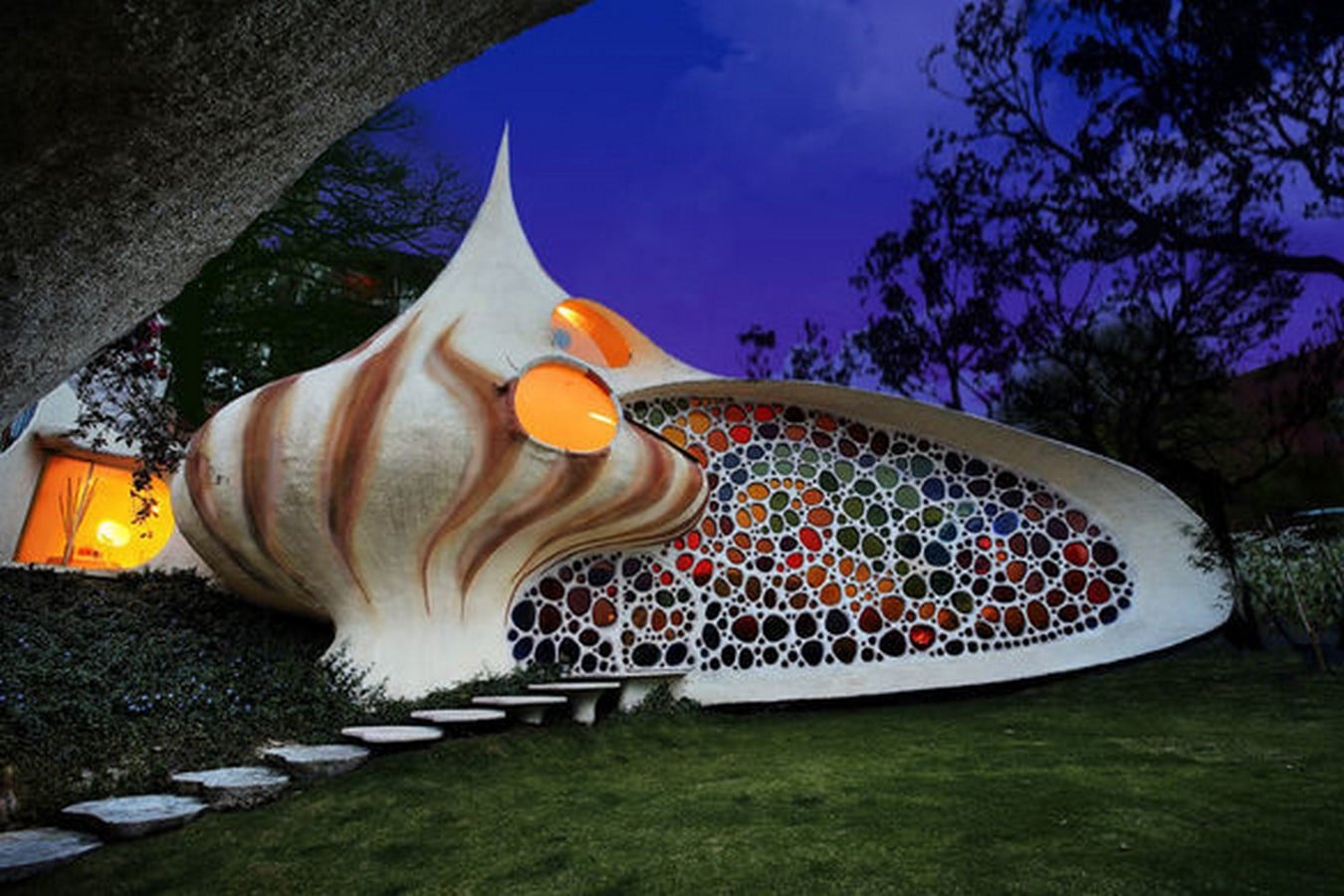
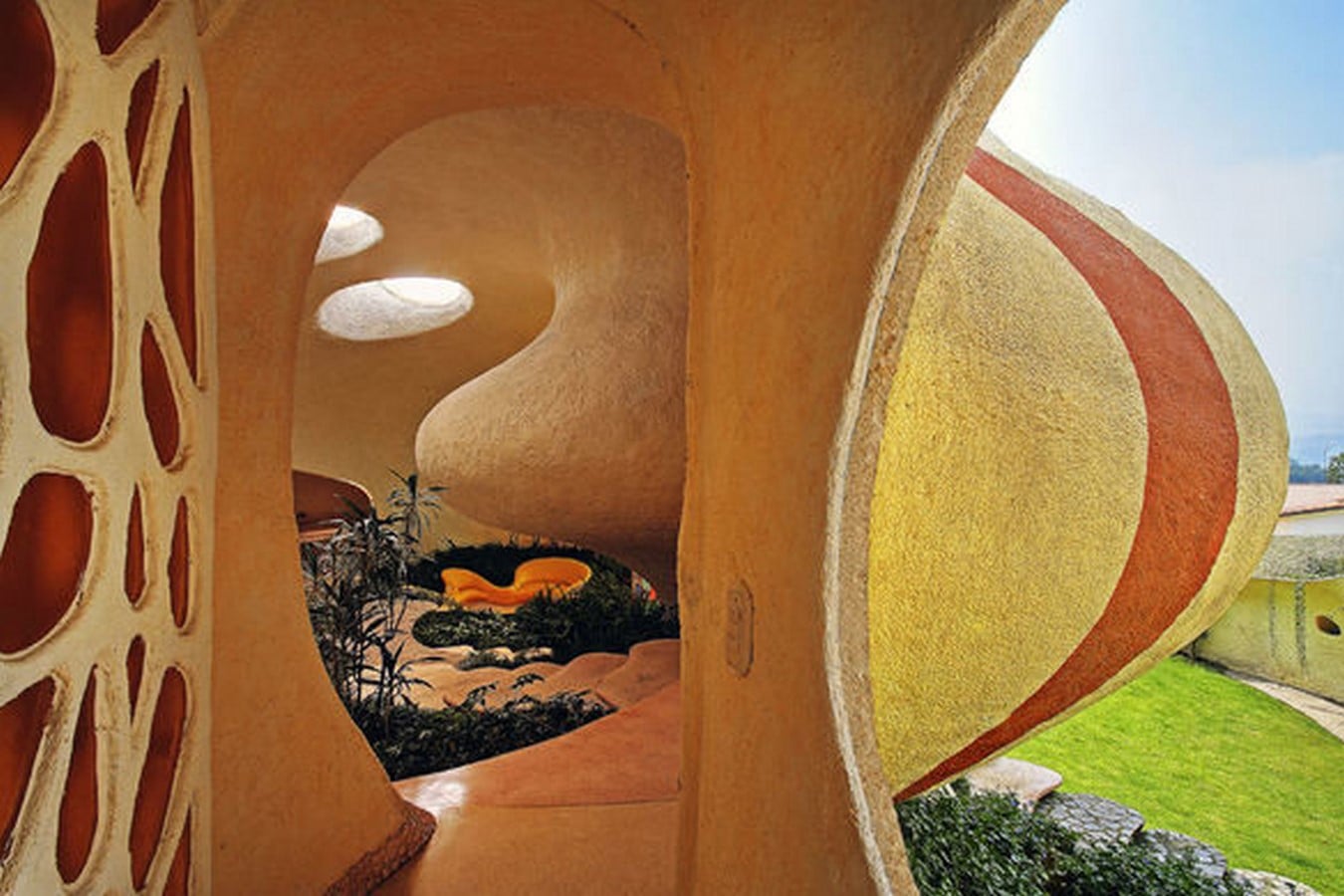
3) Nautilus
Location: Mexico
The house blends the aquatic life into architecture. The architecture is a combination of modern architecture and contemporary art. The form itself brings back ideas of the local Mexican culture and history interconnecting with nature.

4) Mona Casino
Location: Tasmania, Australia
A museum that reflects the synthesis of organic and botanical space. This was described by David Walsh, creator of the Museum of Old and New Art, in his book. The roof continues to the ground creating a shift from low ceiling volume to high ceiling volume. The interior volume welcomes nature dynamically and mysteriously.


5) Satellite Set | Javier Senosiain
Location: Mexico
Satellite House Complex is located at the outskirts of Mexico with four small complex buildings. The house is uplifted 15 m above street level to create a partially buried building resembling two eagles with extended wings as the envelope of the building.


6) Red Sand
Location: Jordan
A design that was inspired by the environment. The building blends well within the sand, rock and its oasis, just like the synchronization in the music. The use of the material is well chosen for extreme climate changes. It acts as natural ventilation. As a whole, the building covers all the aspects of design.


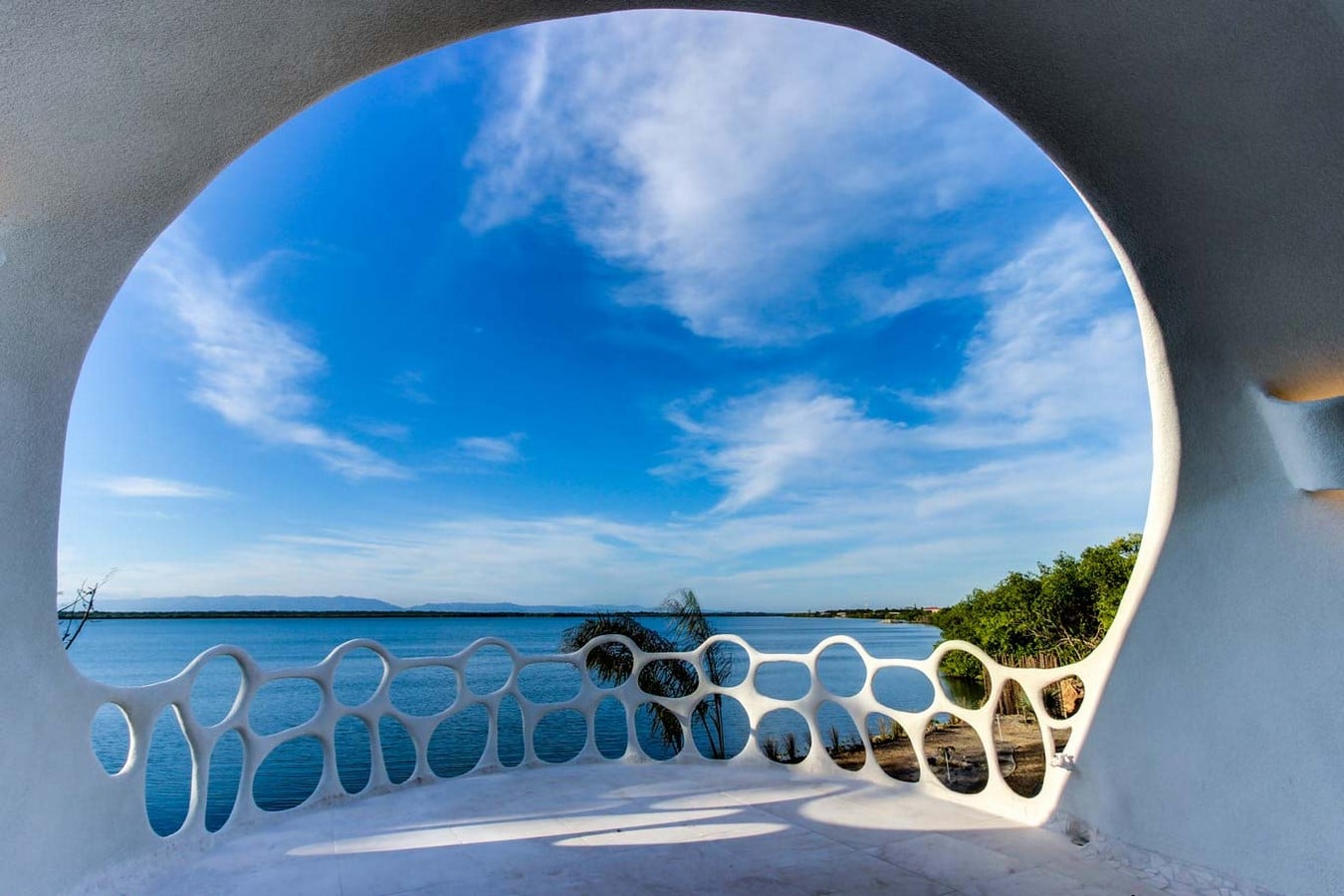
7) Swan Villa
Location: Placencia, Belize
A five two-story villa fronting the water body which is connected to the Caribbean Sea. Inspired by the swan’s neck the villa got its name as The Swan Villa. Each villa can be adapted to 1to 5 families according to their requirements.


8) Pods House
Location: New South Wales, Australia
Designed for a single-family with a view of the ocean. For this reason, the building was raised one level, to have an uninterrupted view beyond the non-fence perimeter. This allows single access to the building from behind. To reduce the maintenance of the surrounding rocks and plants that uses less water feeding with the integration of two pods.


9) The Tree House
Location: Celaya
The treehouse is inspired by the surrounding nature. In the central hub of the house is a pepper tree surrounded by the living room which provides freshness to the house. The living room is a triple-height space with the master bedroom on the upper volume like a flying saucer. The use of golden colour highlights the house from the surroundings.


10) Snoopy | Javier Senosiain
Location: MacMasters Beach, Australia
Snoopy is located in the subtropical environment in Australia with excellent views, topography and experiences. A colourful design fully ornamented with ceramic and clever designed cross-ventilation.

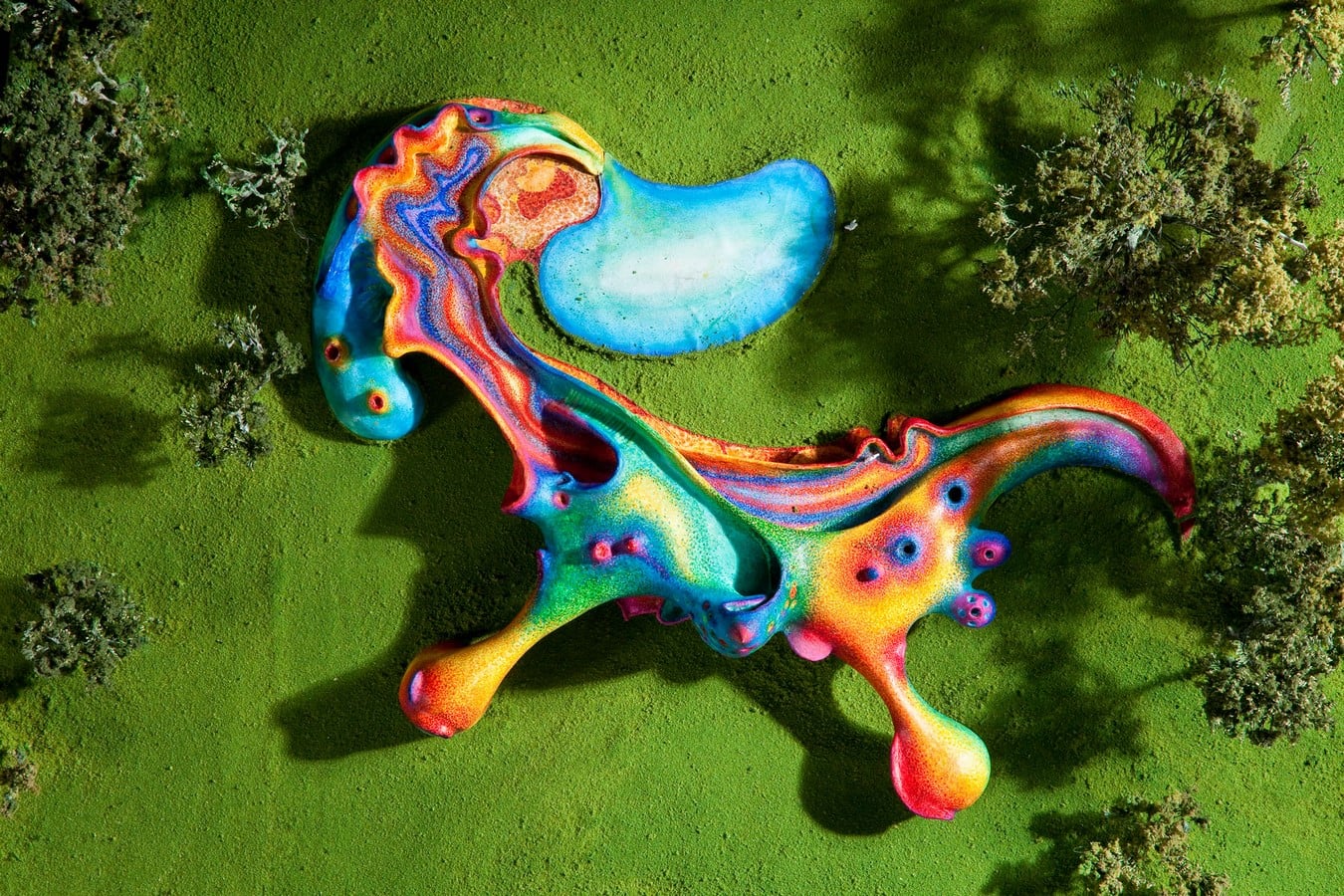

11) Umbrella | Javier Senosiain
Location: Celaya
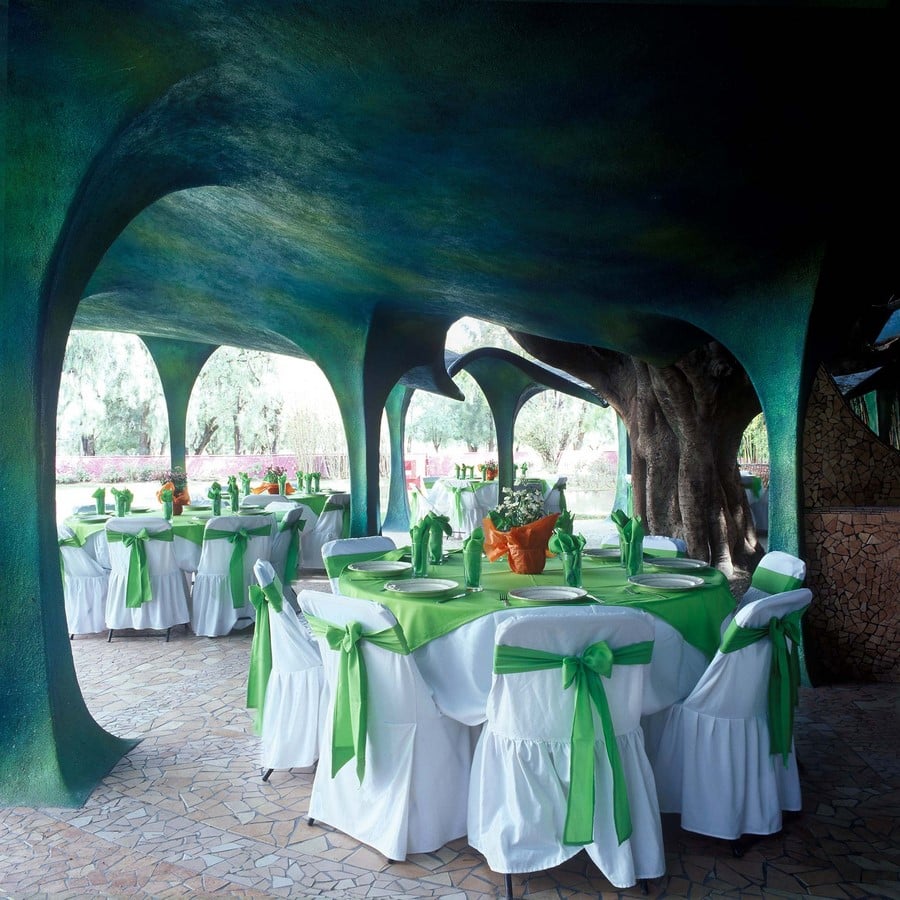
The umbrella is an open space used for luncheons and events. The ribbing structure creates an abstract effect of the umbrella undulating with hole reaching up to the floor. Space opens up in a big way to the gigantic trees.


12) Quetzalcoatl Nest
Location: Mexico
A surreal architecture in the form of a snake. Quetzalcoatl nest consists of ten apartments. The vibrant colourful wall attracts the visitors which is contrasted with the soft colour of the wooden planes.


13) Flower House
Location: Mexico
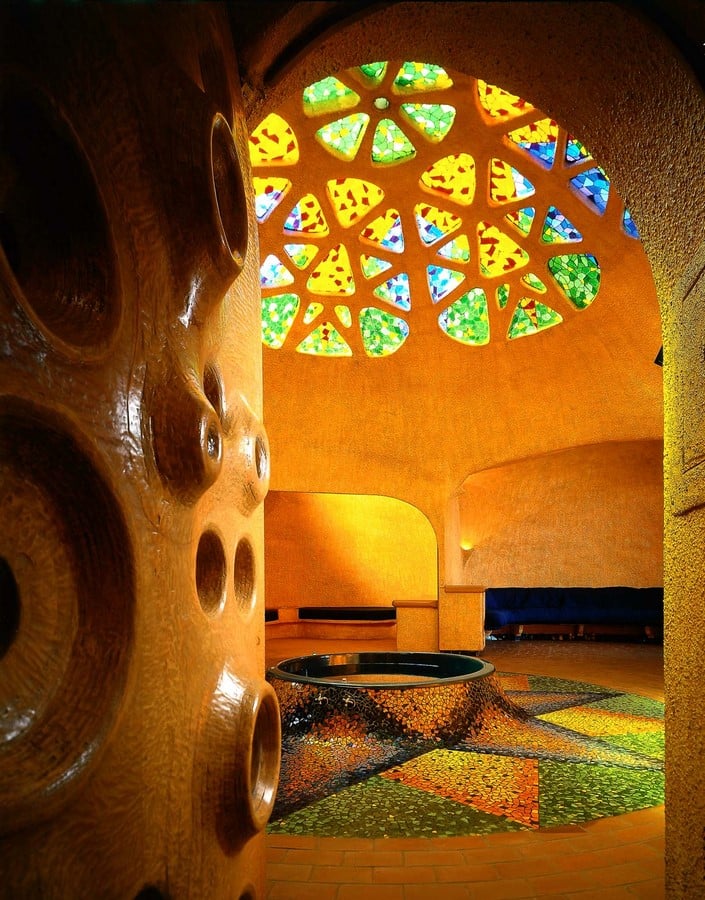
The building is submerged with greenery around the perimeter. The plan of the house represents the 6 petal flowers with a Jacuzzi in the centre. The flower house standout with turquoise colour covered beneath a polyurethane mortar framework.


14) The Shark
Location: Mexico
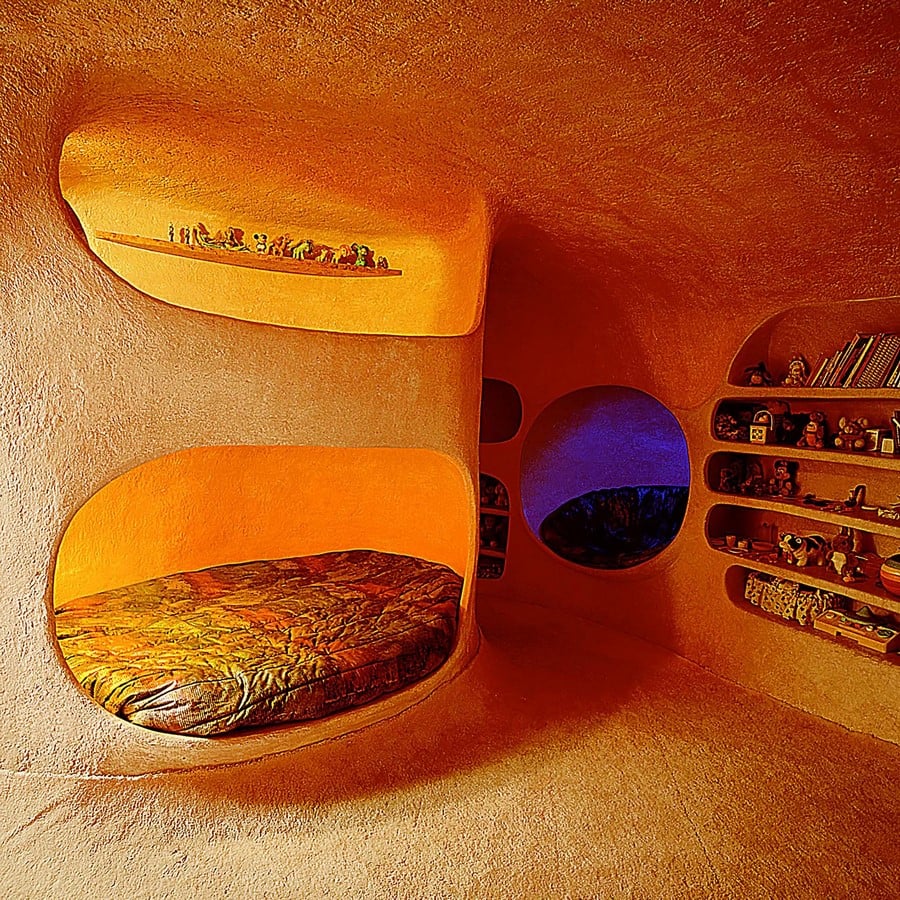
During the construction phase, the workers titled the build “the shark” which led the build to have a fin and later the build was named “The Shark”. The structure is covered with a layer of ferroconcrete and a semi-covered terrace.


15) Mexican Whale | Javier Senosiain
Location: Mexico
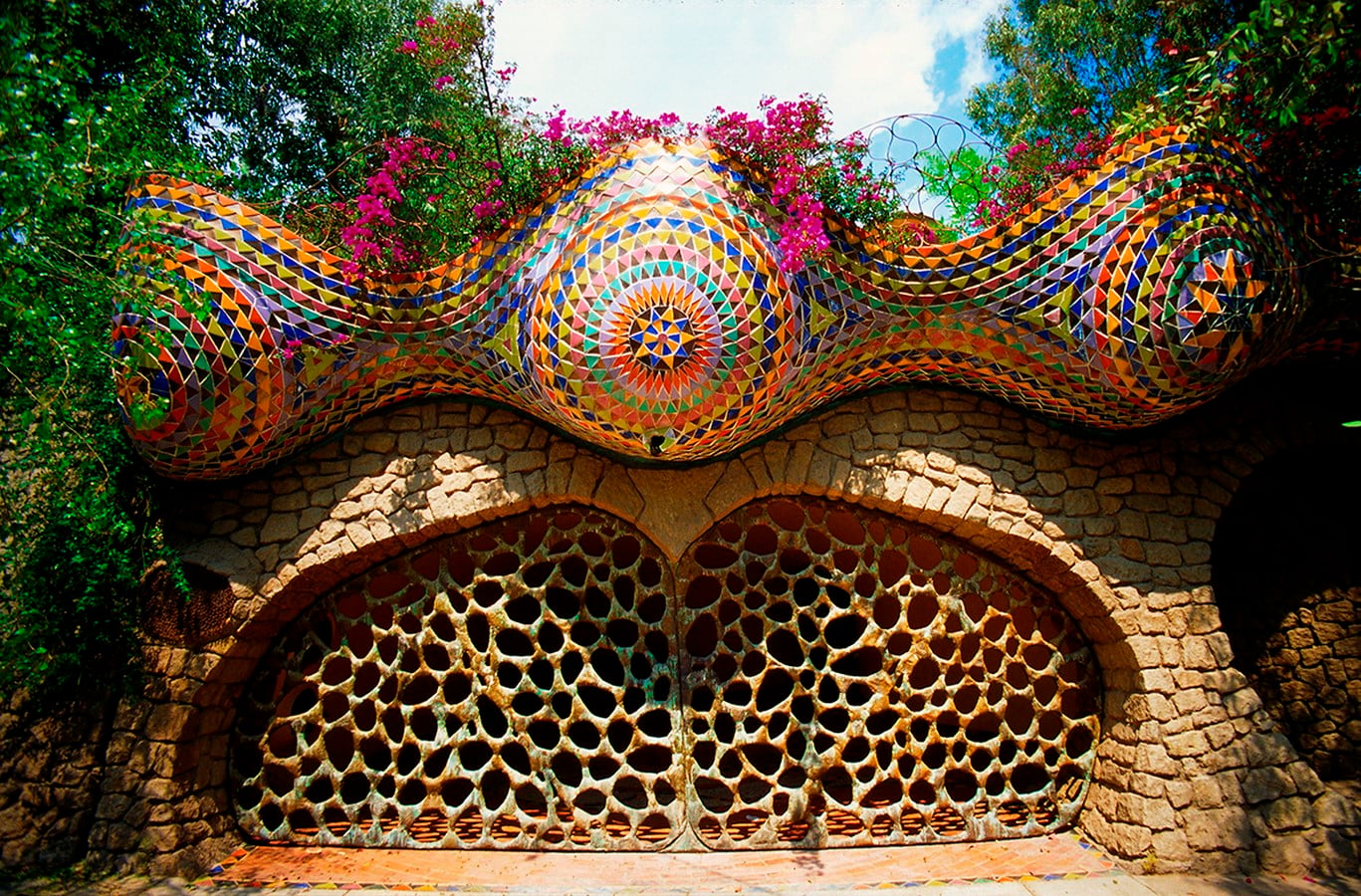
The main aim of this project was to keep intact the culture and tradition of Mexico in the design. The façade geometric pattern depicts the pre-hispanic where the dome is covered with polychrome glazed tiles.

Senosiain in 2026: Organic Architecture You Can Actually Visit
Few architects’ private houses have become public pilgrimages the way Javier Senosiain’s have. As of 2026, Casa Orgánica in Naucalpan, the grass-covered shell house he built in the mid-1980s and long lived in, is open for guided tours that routinely sell out, while El Nido de Quetzalcóatl, his serpent-shaped ten-apartment complex coiled through a ravine, has become one of the most surreal stays on Airbnb; Dwell’s overnight review called it a kaleidoscopic world of its own. Organic-architecture tours now thread his Naucalpan works together as a circuit, a rare case of radical residential architecture turned living museum.
Senosiain, born in 1948 and still leading his practice in his late seventies, remains the living link in a lineage that runs from Gaudí through Frank Lloyd Wright and Juan O’Gorman into contemporary Mexican design, a counterpoint to the austere geometry of his compatriot Luis Barragán. For both ends of that Mexican spectrum, see our guides to Antoni Gaudí’s projects and Luis Barragán’s 15 iconic works.
Frequently Asked Questions
Who is Javier Senosiain?
A Mexican architect born in 1948 in Mexico City, and the leading figure of organic architecture in Mexico. For over four decades he has built ferrocement shell houses shaped like sharks, serpents, flowers and nautilus shells, most famously Casa Organica (mid-1980s) and El Nido de Quetzalcoatl.
What is Javier Senosiain famous for?
Casa Organica, the grass-covered shell house in Naucalpan; the Nautilus House (2007), a spiral shell home with a rainbow stained-glass wall; and El Nido de Quetzalcoatl, a serpent-shaped apartment complex. His work treats buildings as organisms and landscape rather than boxes.
Can you visit Javier Senosiain’s buildings?
Yes. Casa Organica is open for guided tours that often sell out, and an apartment in El Nido de Quetzalcoatl can be booked on Airbnb, with the surrounding Quetzalcoatl park also visitable. Several other works remain private homes.
What style does Javier Senosiain work in?
Organic architecture – sometimes called bio-architecture – influenced by Antoni Gaudi, Frank Lloyd Wright and Juan O’Gorman: curved, cave-like ferrocement shells, buried under gardens, with hardly a straight line or right angle.
Is Javier Senosiain still alive?
Yes. Born in 1948, he is in his late seventies as of 2026 and continues to lead his practice, Arquitectura Organica, in Mexico City.
Sources for the 2026 update: Dwell (overnight at El Nido de Quetzalcóatl); Something Curated (2022); My Modern Met and Designboom on Casa Orgánica and the Airbnb listing.


