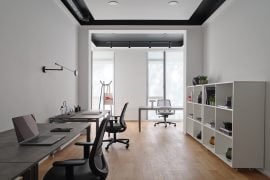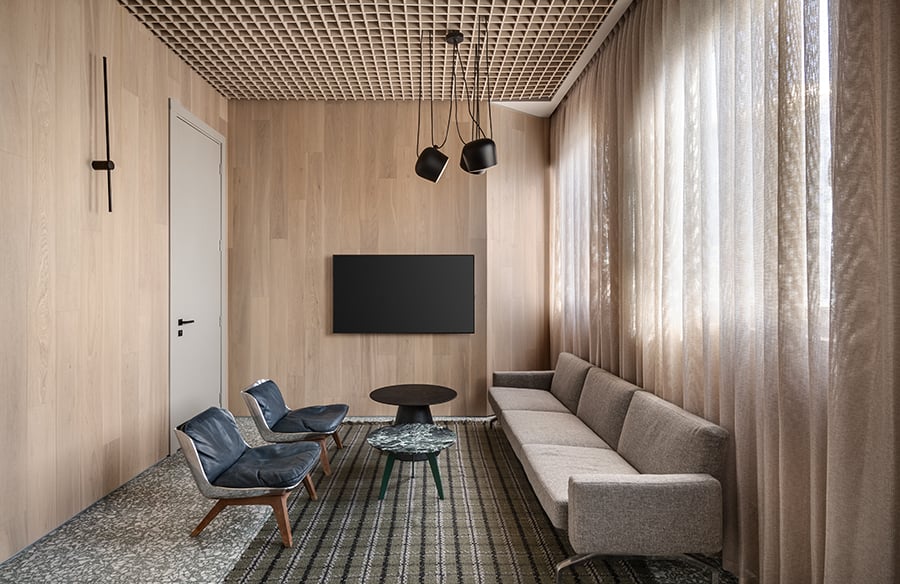
The Tel Ad project reimagines the office typology by embedding architectural volumes within whithin the greater space. Situated in a renovated structure with limited natural light, the design introduces a central artificially lit patio , redefines circulation, and uses material contrasts to articulate space and function.
Project Name: Tel Ad
Studio Name: BDM architects + YET architecture
Location: Kfar Saba
Completion year: 2025
Area: 845 m2
Photographer: Oded Smadar
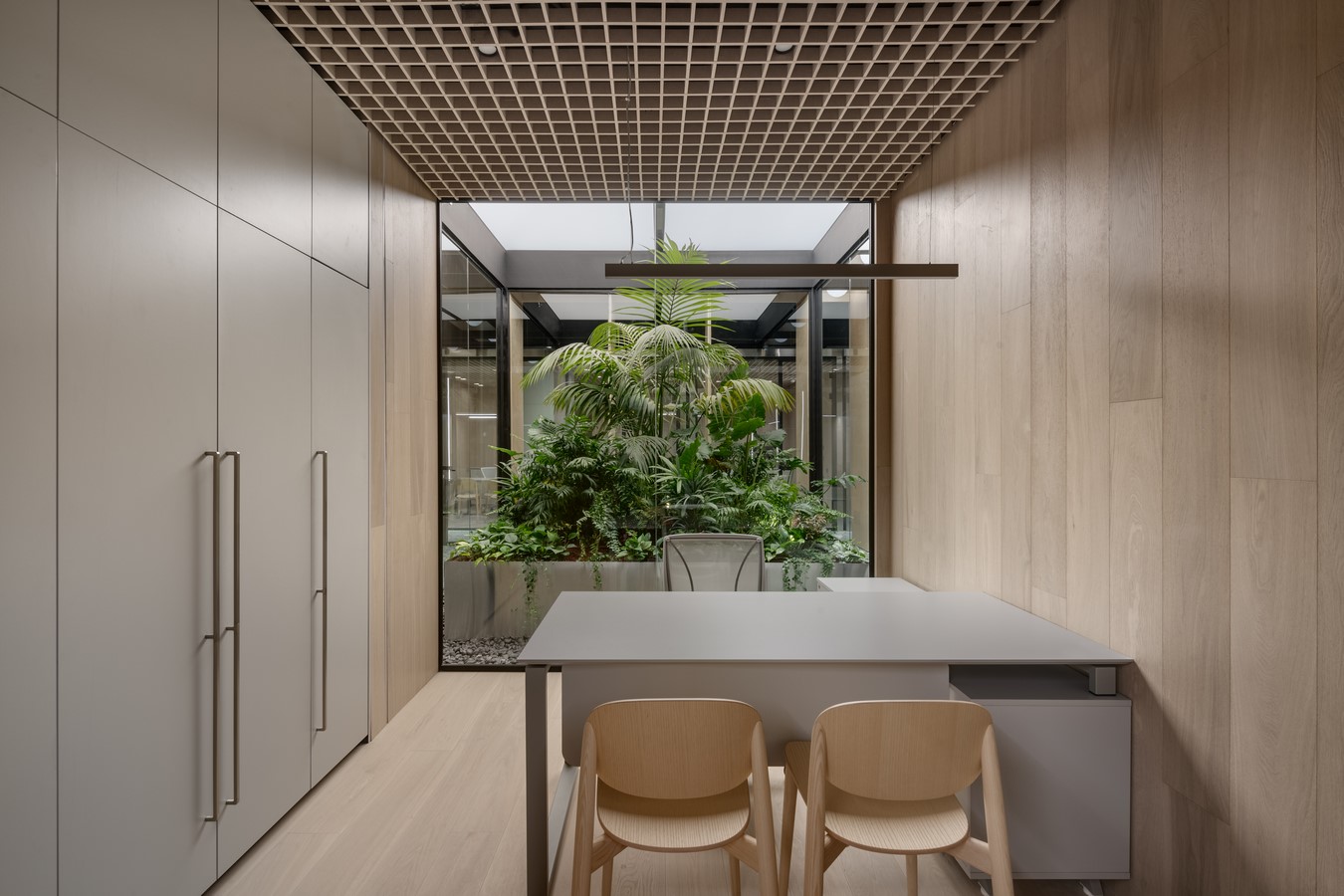
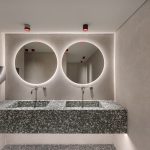
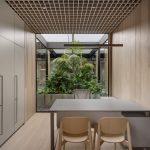
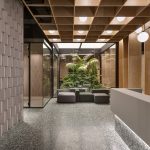
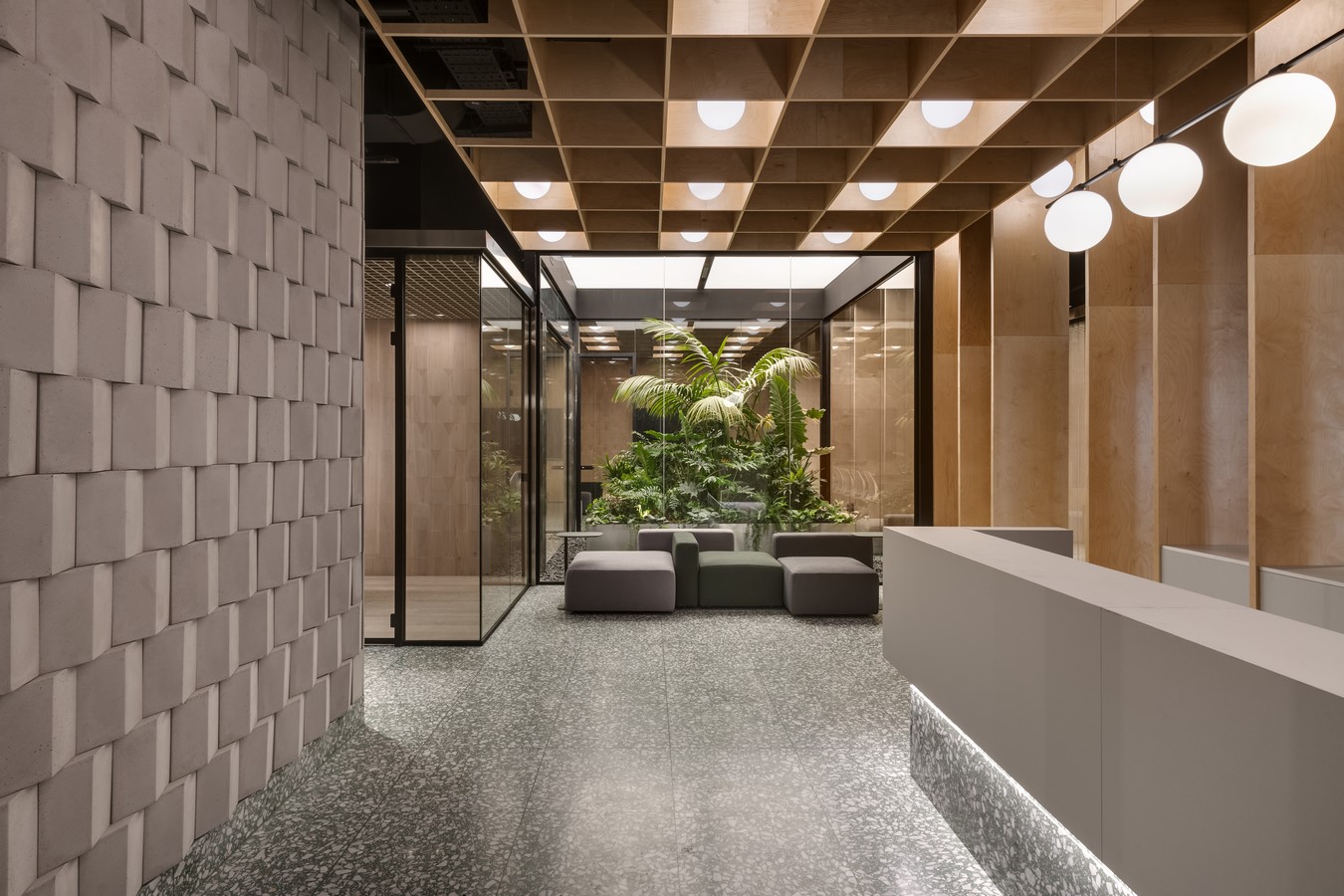
At the core of the plan is a planted void—an artificial lit patio that becomes both a spatial and atmospheric anchor. Since the building’s depth prevents consistent access to daylight, the patio is illuminated with full-spectrum agronomical lighting, ensuring the growth of lush natural vegetation throughout the year. The circulation was redefined as a loop around this green core, offering constant visual connection to greenery and enabling an intuitive, fluid movement between workspaces. Beyond its spatial role, the patio plays a key part in supporting well-being and productivity: exposure to natural elements such as vegetation and dynamic lighting has been shown to reduce stress levels, improve focus, and provide visual relief compared to conventional windowless office environments. A consistent rhythm of terrazzo flooring, stainless steel accents, and natural wood finishes ties the entire project together.
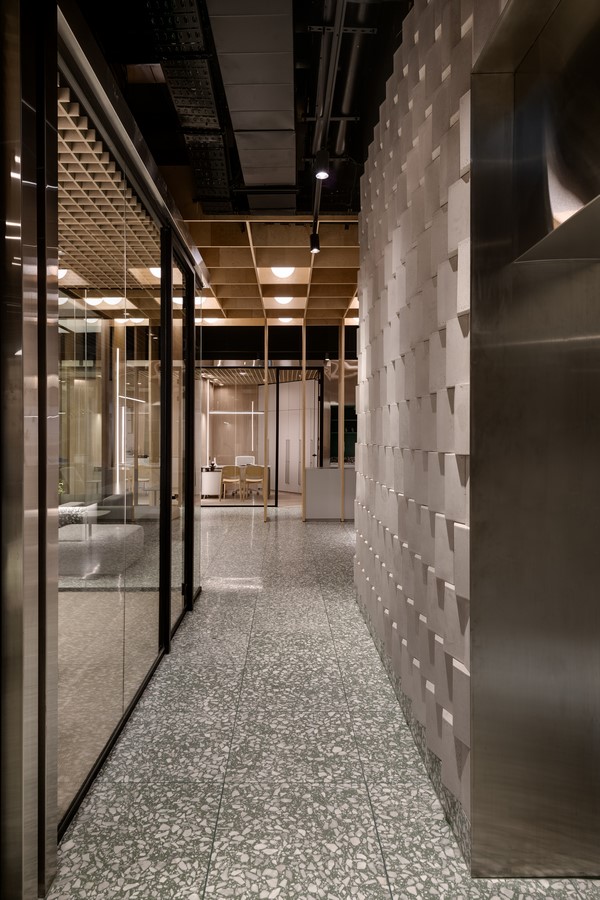
Entrance Lobby
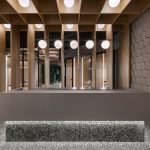
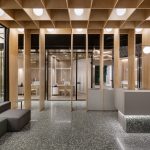
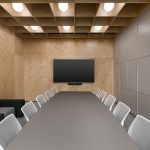
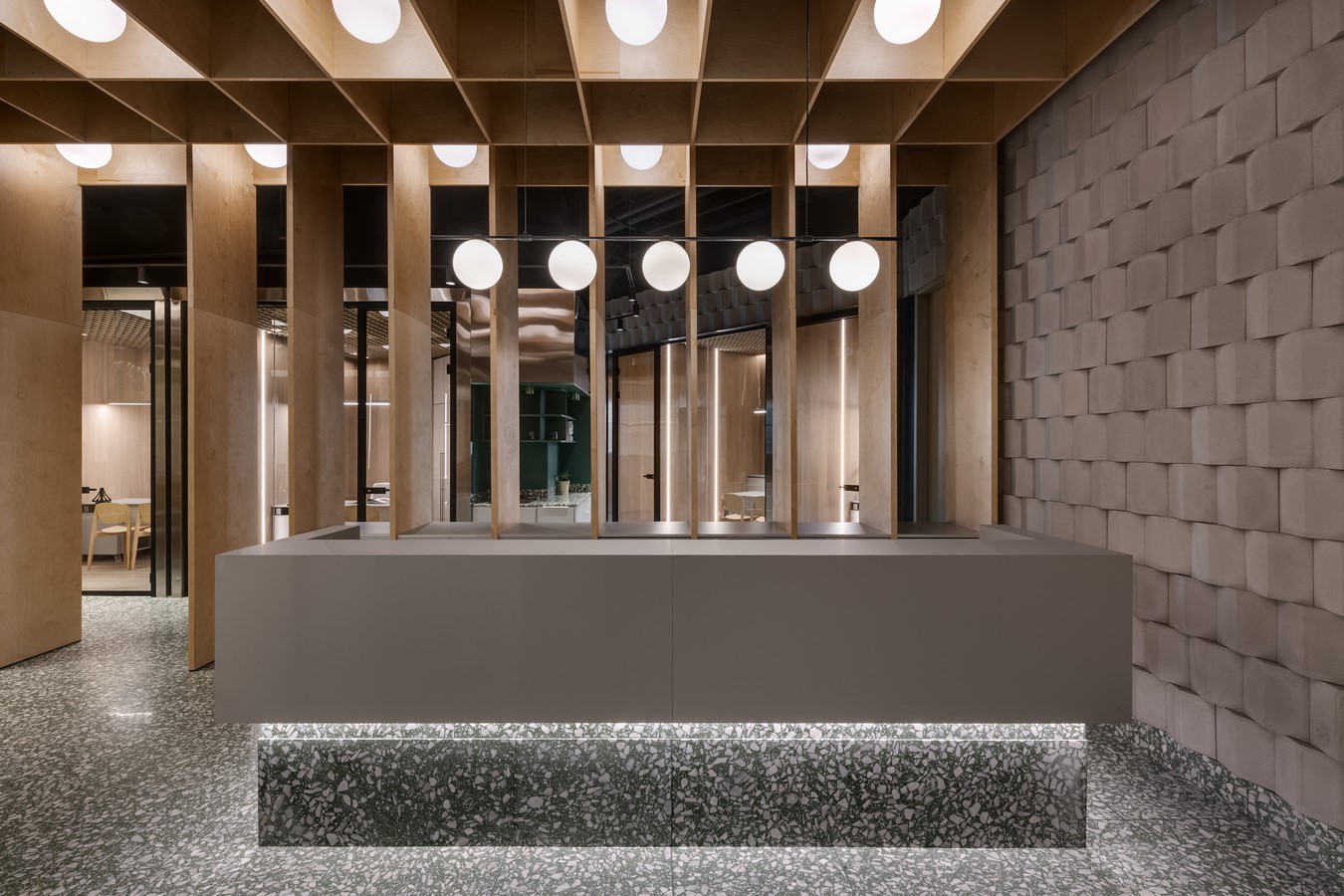
The main arrival point on the second floor is defined by a double-sided spatial relationship with the patio. A wooden ceiling grid floats above the entrance lobby, with spherical lighting elements placed symmetrically in a checkerboard layout that mirrors the logic of the interior garden. This space, along with the adjacent meeting room, envelops the patio from both sides, reinforcing its centrality. The green core not only anchors the circulation but also serves as a semi-transparent screen—providing privacy for the meeting room while subtly suggesting views toward the entrance. The interplay between orthogonal volumes, open ceiling structures, and framed vegetation establishes a calm yet structured first impression.
Office Cubes
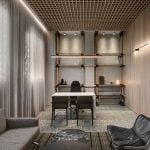
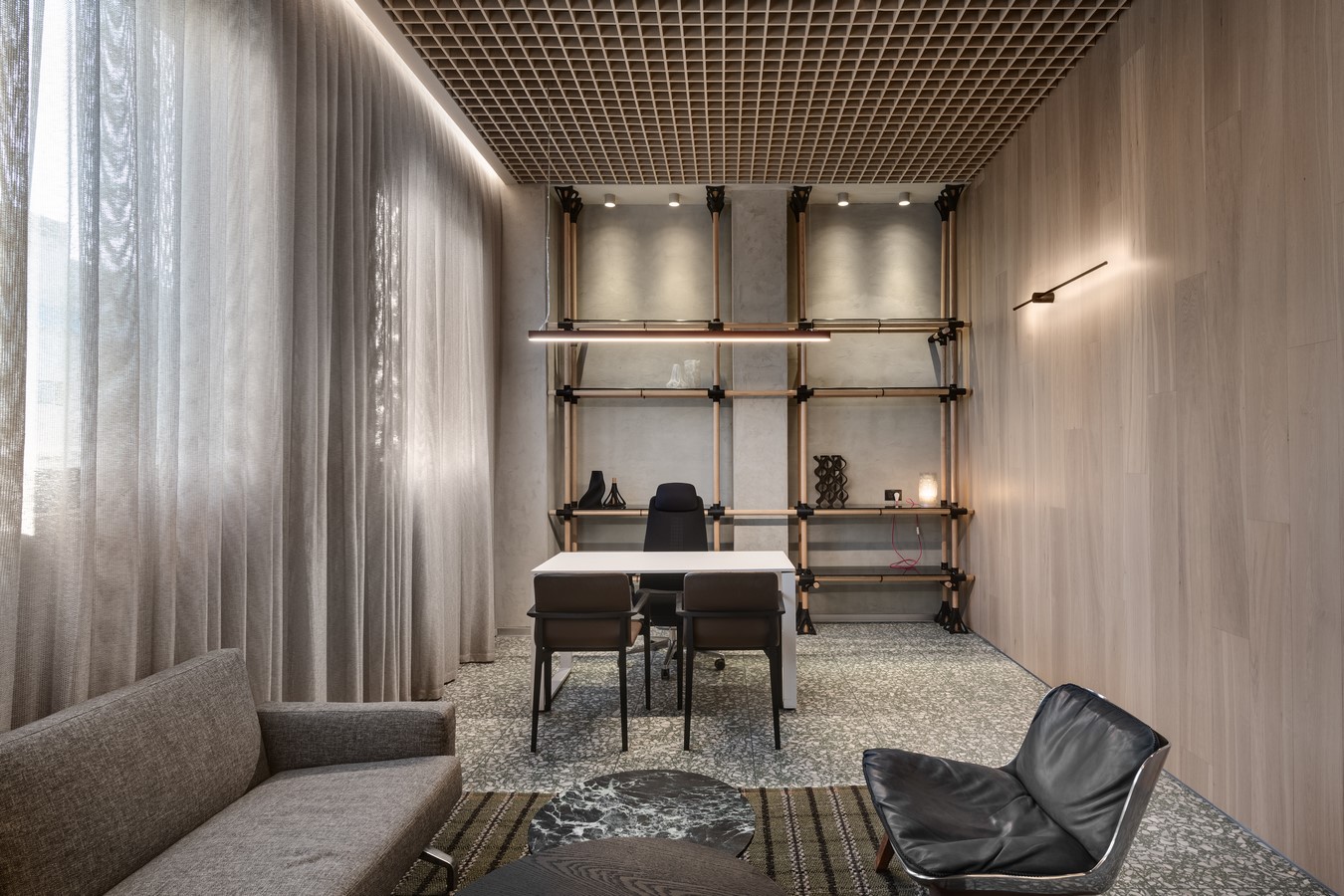
The offices themselves are conceived as autonomous “cubes,” each 3 meters high and detached from the 5-meter ceiling. This deliberate gap creates a striking volumetric condition: the feeling that each office floats within a larger architectural envelope. The cubes are clad in brushed stainless steel, which catches and reflects ambient light. In contrast, their interiors are entirely wrapped in warm bleached natural wood, providing a quiet and tactile atmosphere for focused work. These detached volumes reinforce the project’s duality between enclosure and openness, lightness, and weight, Public and private.
Kitchen and Balcony
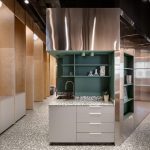
The kitchen is another key node in the spatial logic of Tel Ad. A previously sealed balcony was reopened, allowing daylight to enter from the exterior and into both the kitchen and an adjacent data center staircase. This intervention introduces light into otherwise closed-off areas, reinforcing the project’s commitment to daylight access. The kitchen itself is composed entirely of stainless-steel cladding on all vertical surfaces, paired with a red ceiling and green terrazzo flooring—creating a bold, chromatic composition. A custom 3D-printed lighting fixture, fabricated by YET Fab, hangs above the kitchen island. Its form is derived from organic geometry and adds a sculptural, experimental layer to the otherwise industrial space.
Power Wall and Material System
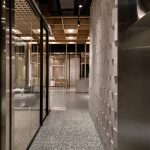
A continuous “power wall” envelopes the building’s core, visually uniting the office spaces along its length. This wall is clad in custom-developed concrete tiles produced specifically for the project, adding texture, rhythm, and material depth. Together with terrazzo floors, rotating concrete facade blocks, stainless steel cladding, and extensive interior woodwork, the material palette operates as a carefully balanced system—each element defining a role in structure, surface, or sensation.
Tel Ad proposes an office as a composition of atmospheres—industrial and organic, open and enclosed, luminous and grounded. Through spatial separation, precise detailing, and a strong material identity, the project transforms a constrained structure into a layered, dynamic workplace.
Ground Floor: Lobby and Facade
The ground floor of Tel Ad serves as both spatial and conceptual threshold. A new entrance lobby introduces visitors to the core material palette through terrazzo flooring, custom lighting, and refined detailing. The building’s facade features a dynamic array of rotating concrete blocks, arranged parametrically to modulate light and shadow throughout the day. These sculptural units were custom-designed and fabricated for the project, forming a rhythm of solid and void that gives the facade a kinetic, ever-shifting quality. Built-in planters at the base soften the grid’s geometry and echo the interior patio’s vegetation, seamlessly tying the building to its urban context.
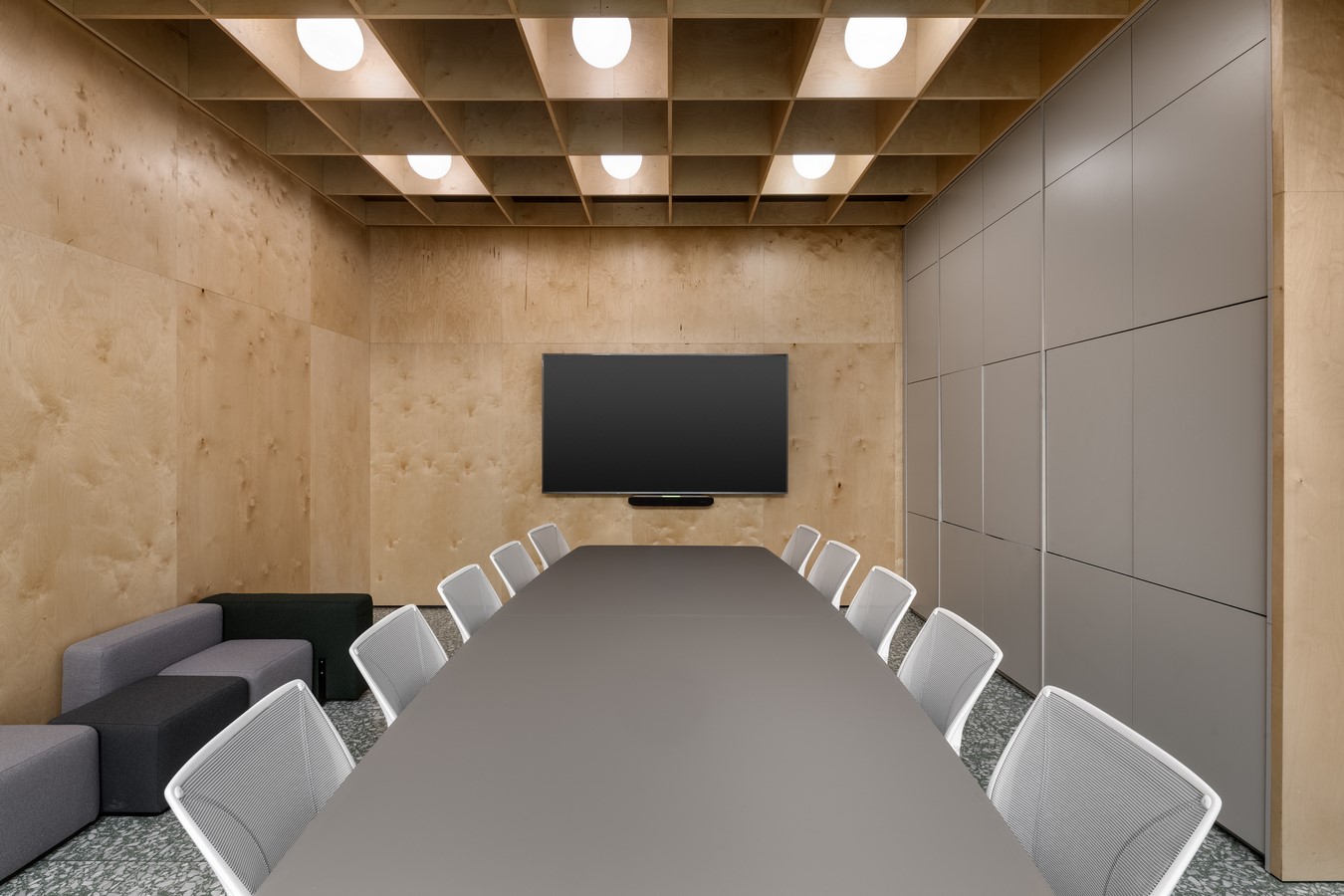
This duality continues throughout the project: the exterior reads as a hard shell—defined by concrete, stainless steel, and terrazzo—while the interior spaces reveal an entirely different atmosphere. Behind the reflective and structured outer surfaces, the contents of the office volumes are warm, quiet, and lined entirely in wood. This contrast between metal and wood, exterior and interior, establishes a deliberate tension between precision and softness, enclosure and intimacy.