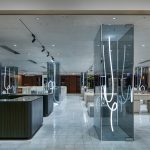
The relationship between spaces and products in commercial facilities is similar to that between tableware and food. There is no doubt that the food is the protagonist, but the tableware can completely change the way the food is perceived.
Project Name: Tamagawa Takashimaya S・C South Hall 3F Gathering Space
Studio Name: DDAA
Location: Setagaya-ku, Tokyo
Date of completion: October / 2024
Total site area: 210m²
Photo: Kenta Hasegawa
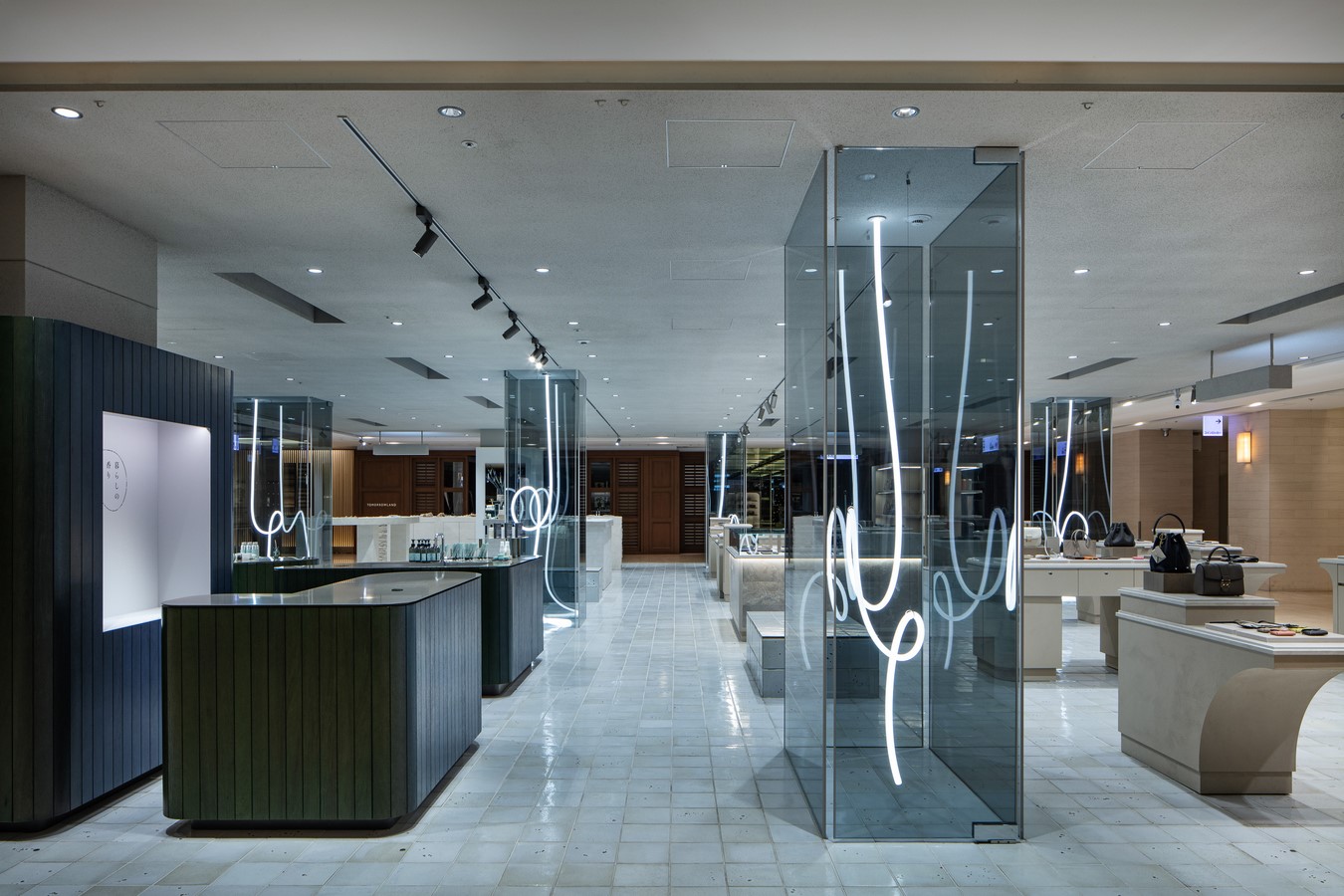
Tableware sometimes serves as a simple backdrop, and other times becomes an object of appreciation in its own right. In commercial facilities, common areas other than tenant spaces are referred to as “environments,” which serve as the backdrop for each tenant space, which in turn serves as the backdrop for the products. It is difficult to design stores in spaces that are overly intentional in terms of the overall environmental planning of the facility, which is understandable from tenants’ perspective. On the other hand, in terms of environmental planning, it is desirable to create a coherent whole. Is it possible to design rules that positively allow these contradictory conditions to coexist? We aim to maintain a sense of unity while allowing each space to exist freely. We hope to achieve both.
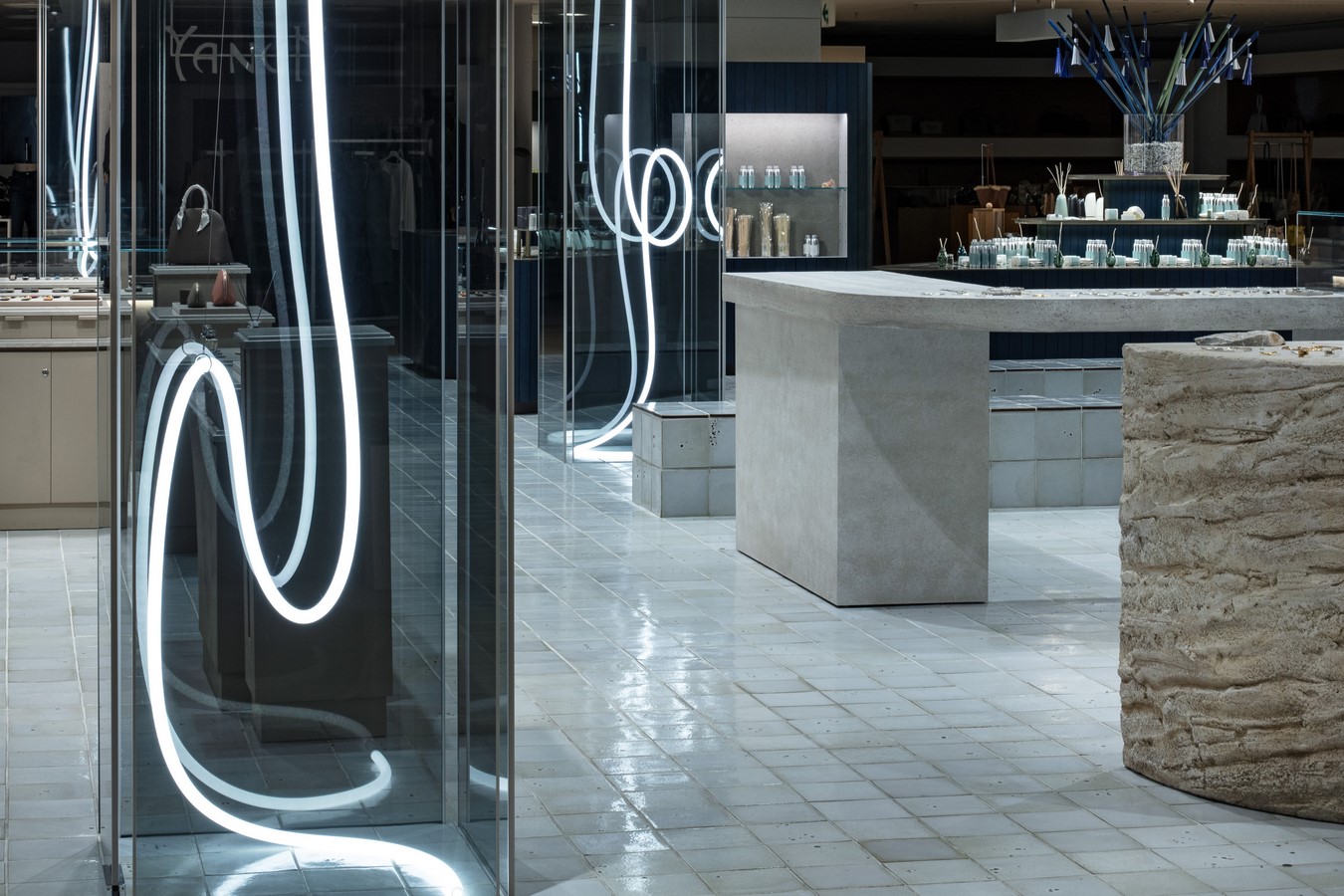
For example, lease lines represent a rule that states, “Do not go beyond this line.” While this rule clearly defines each area, it also seems to undermine the advantages of maintaining a sense of unity among tenants. In a lively shopping district, the shops often spill out onto the street or into adjacent spaces, yet the overall atmosphere maintains a sense of unity. Similarly, we want to design an environment where tenant stores can coexist while maintaining their own unique identities and interacting with neighboring tenants in a harmonious way.
With these thoughts in mind, we conducted a series of studies for the renovation project of the third floor of the South Hall of Tamagawa Takashimaya S.C. The project began with a request to remove the walls between each tenant’s space, which blocked the view of the stores behind them, brighten up the sales area, improve overall visibility, and create a “gathering space” that would serve as a traffic node for people coming from all the connecting passageways. The client requested a chandelier as a symbol of gathering in the gathering space, as well as benches for meeting and taking short breaks.
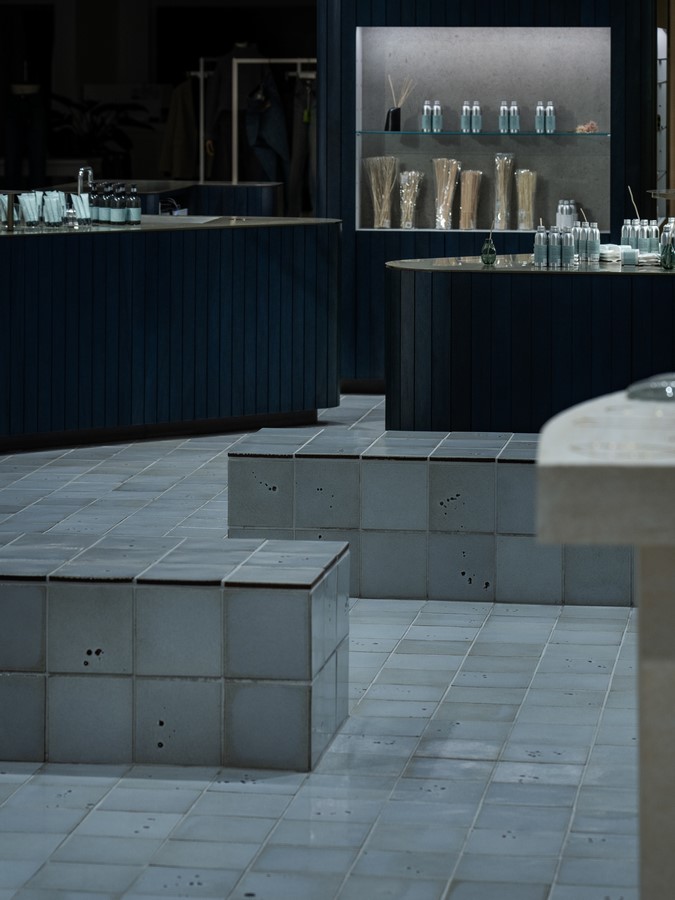
First, we decided to explore the concept of lease lines by arranging each tenant’s fixtures and fittings.
Tenants expected to occupy the gathering space included those selling bags, cosmetics, fragrances, and jewelry. We researched similar stores of the same size and calculated the ratio of fixtures to the lease area, which turned out to be approximately 20-40%. Based on these results, we proposed a rule stating that “if the area occupied by fixtures is within 50% of the tenant’s space, it is acceptable to extend beyond the lease line.”
This rule eliminates unfairness that could cause problems while allowing tenants the benefit of extending beyond the lease line. Furthermore, the boundaries become blurred as each tenant actively extends beyond their designated space, reducing the presence of “passageways” and creating a sense of unity throughout the space.
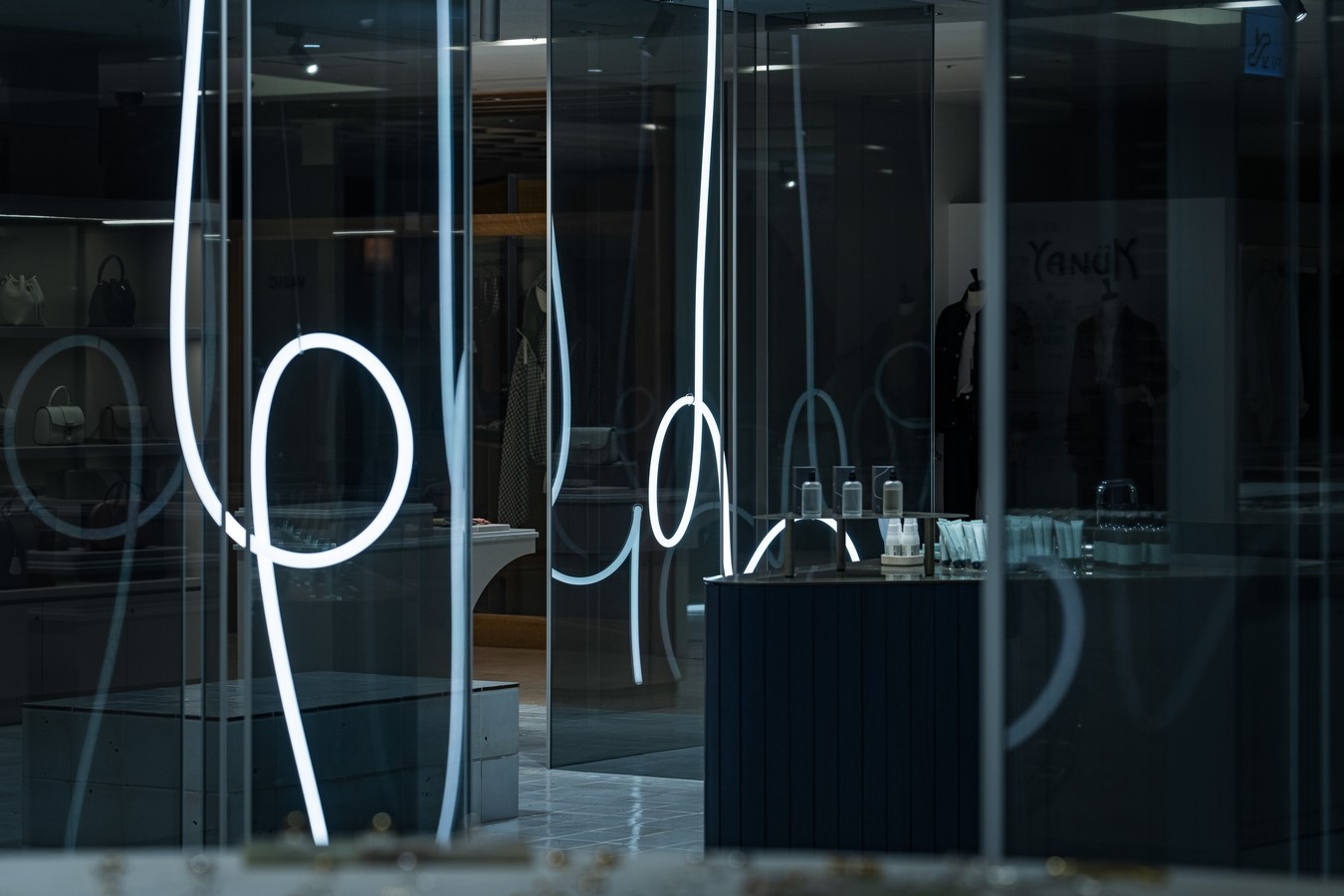
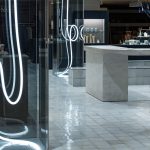
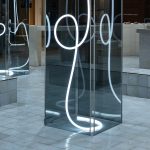
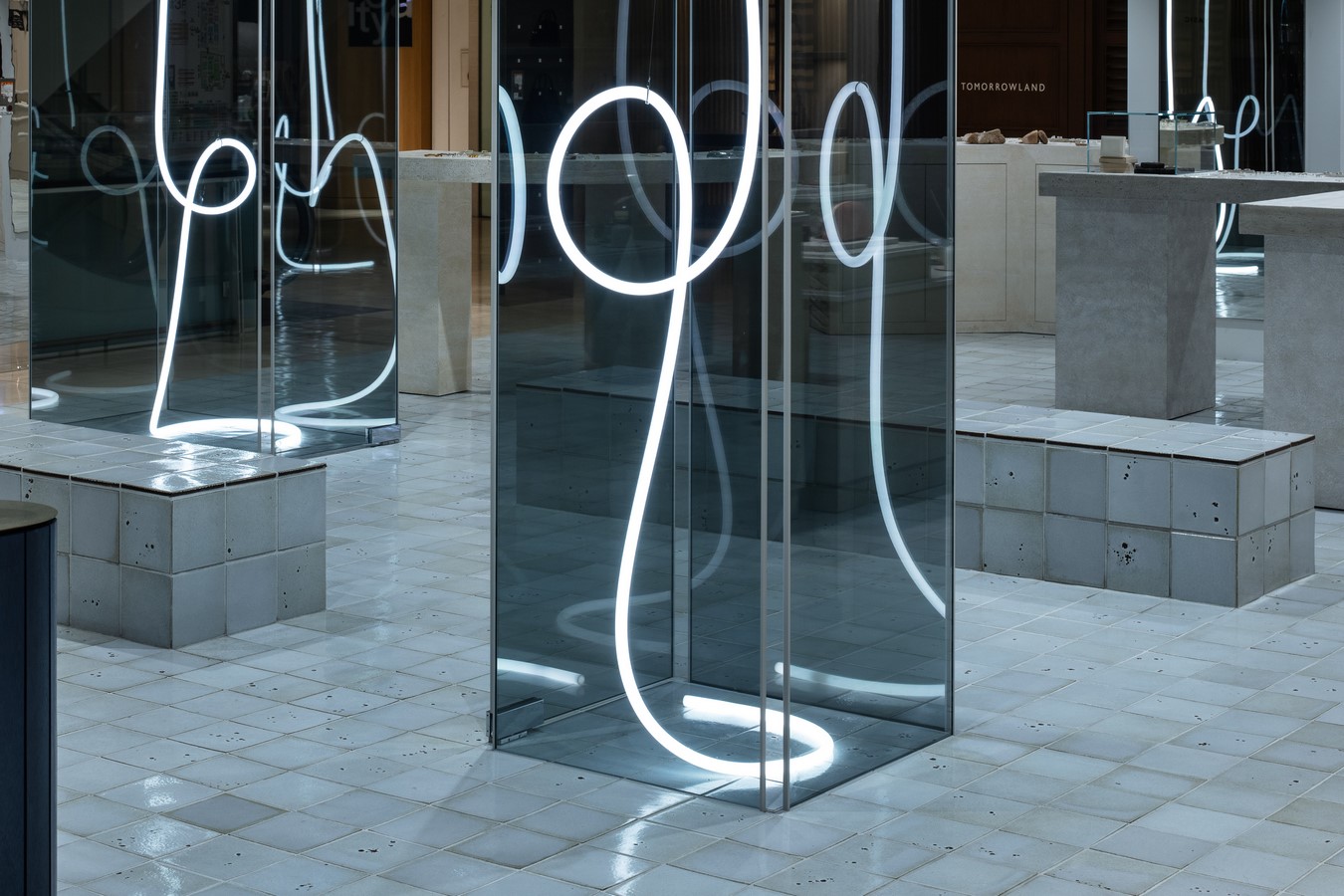
Under this rule, each tenant can arrange their fixtures in a more spacious manner than usual. However, allowing fixtures to extend beyond the designated area without restrictions would result in unlimited expansion, making the entire area cramped. Therefore, an upper limit was set to maintain the distance between fixtures and allow for sufficient space for circulation. Furthermore, lighting fixtures resembling light objects, adjusted in size to match the fixtures to brighten the atmosphere of the gathering space, were distributed throughout the space, visually connecting the fixtures in each store. In this way, the stores will be perceived as a unified area instead of four separate entities.
There is no way of knowing what kind of tenants will occupy the commercial facility.
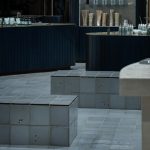
Therefore, we wanted to create an environment that is as neutral as possible, yet has a distinctive character to maintain some consistency regardless of what materials and designs are incorporated. However, in considering materials, there are colors which convey too strong a meaning when used as a background. On the other hand, white may be too clean, and black may be too heavy. Therefore, we laid gray tiles that do not carry a specific meaning, positively incorporating uneven firing and mottled patterns that reveal the underlying earthen surface.