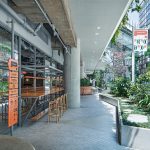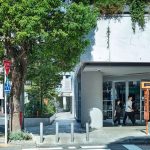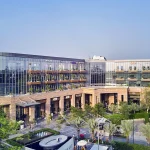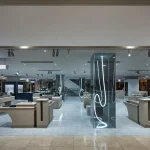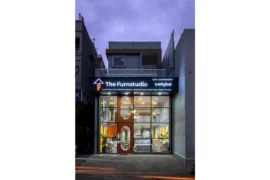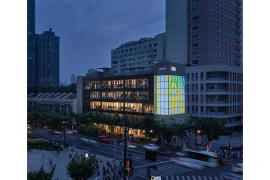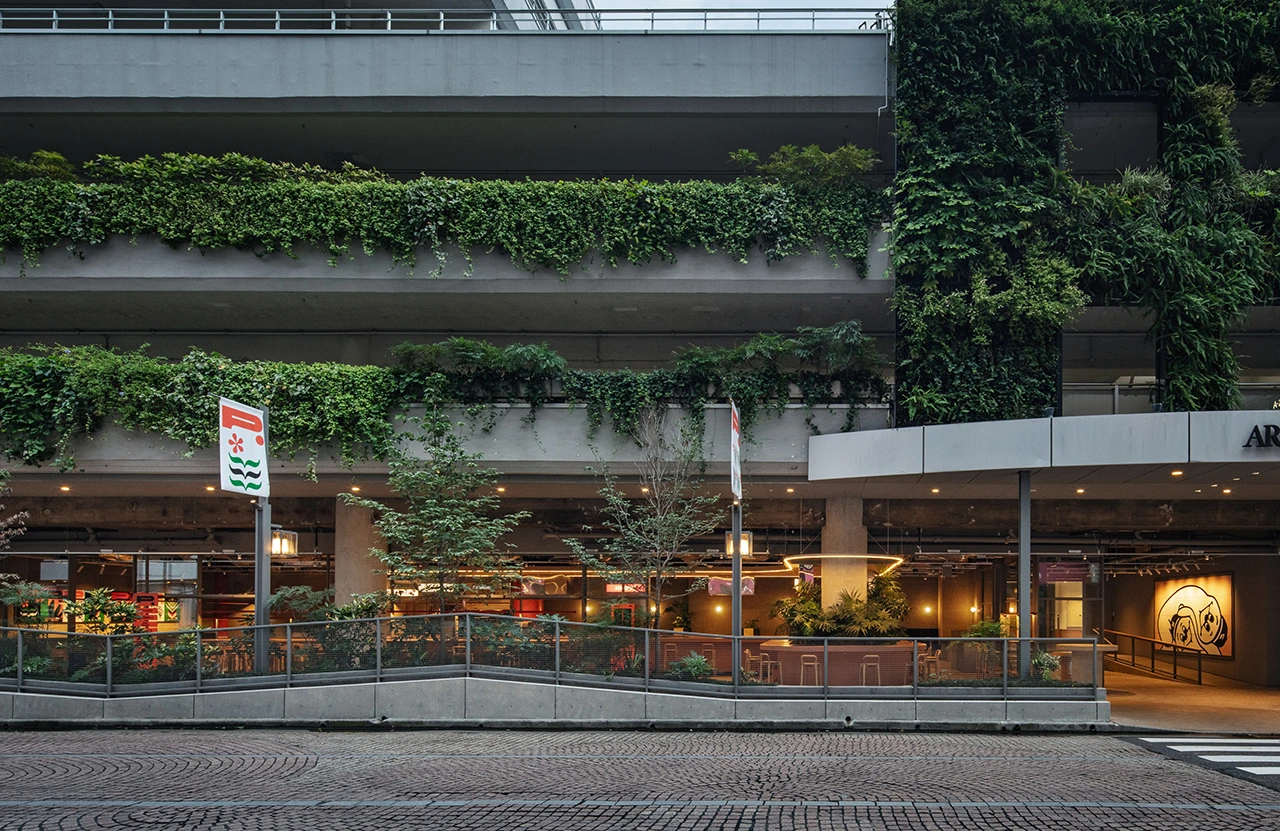
“P.” involved renovating the street facing the West Wing of Tamagawa Takashimaya S.C., located just a short walk from Futakotamagawa Station, and converting the former parking lot along the street into a food court. The client’s request was to transform the street, which was lined with luxury brands and not frequented by many visitors, into an open community hub that everyone could use. Therefore, we proposed to make the street itself the main protagonist, not just changing its atmosphere through tenant turnover.
Project Name: Tamagawa Takashimaya S.C. West bldg.StreetFood Court
Studio Name: DDAA
Location: Setagaya-ku, Tokyo
Date of completion: November / 2024
Total site area: 1,035.38m²
Project Team: Daisuke Motogi / Riku Murai / Taiki Nakamura
Photo: Kenta Hasegawa
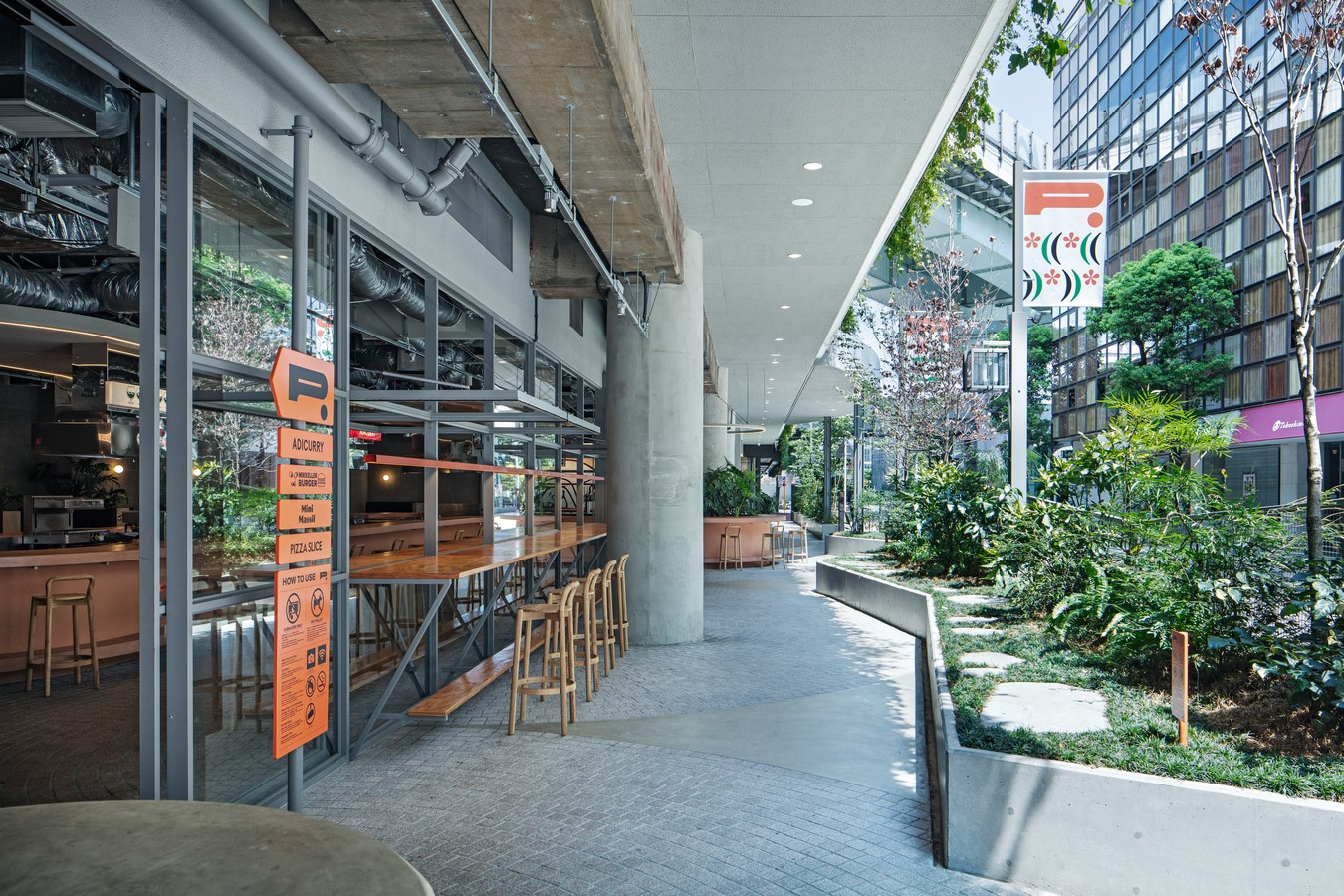
This plan was a departure from the traditional approach of commercial facilities, which people typically visit for specific purposes, and an attempt to provide the city with a public space where people can freely spend time, like a park or plaza, through private-sector initiative, while consciously connecting it to the surrounding stations and shopping districts. To this end, we envisioned a place open from morning to night, serving as a café, a restaurant, a resting spot, and a meeting place. It should be a receptacle for diversity, offering a place for everyone—children, families, the elderly, individuals, and groups—to feel welcome whenever they visit. For these reasons, the program naturally settled on a food court.
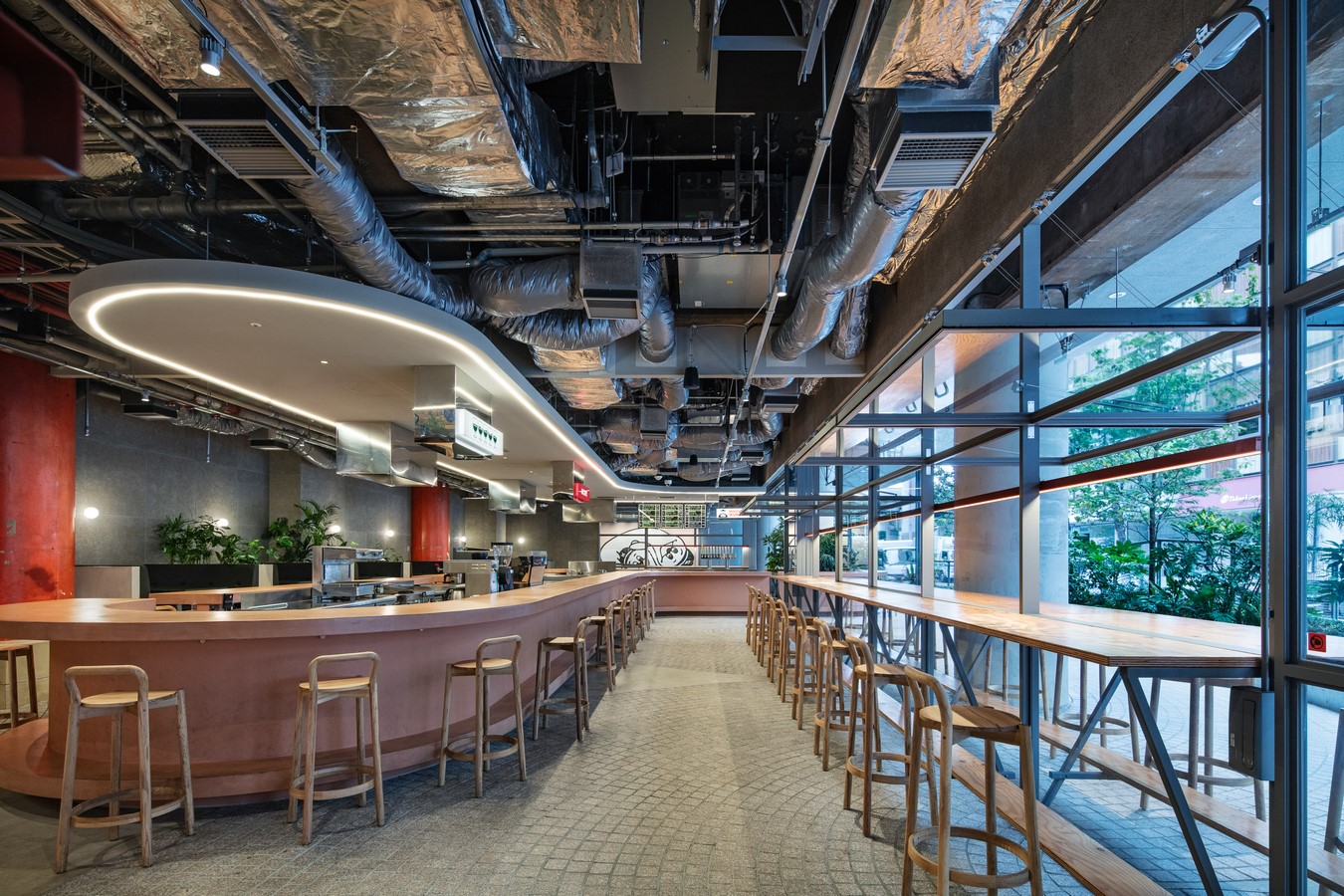
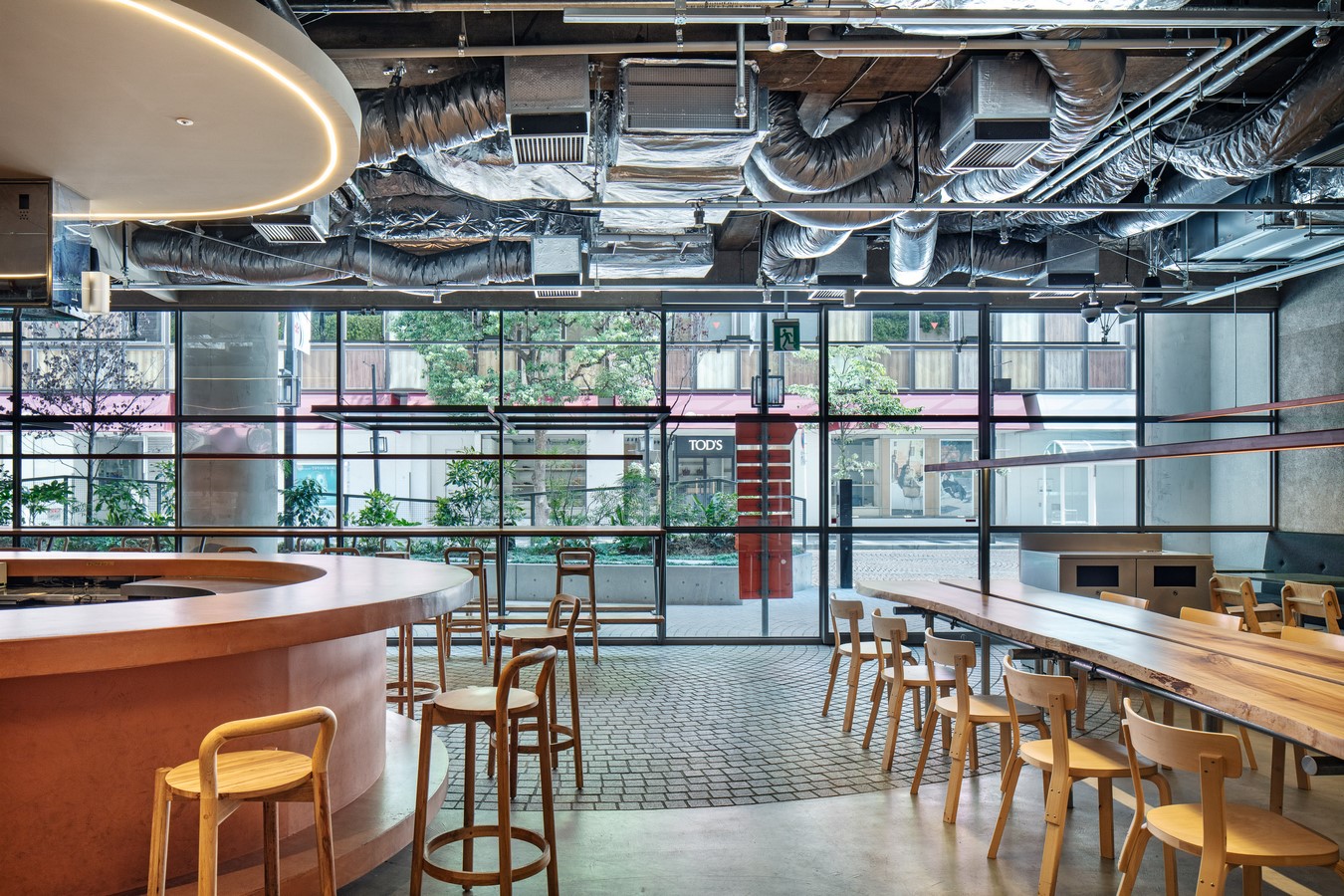
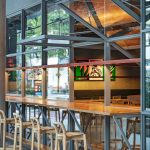
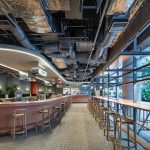
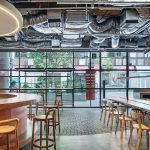
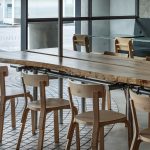
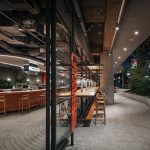
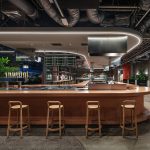
The food court design began by setting back the exterior wall line (or tenant boundaries) 2m from its previous position to widen the street. Next, we installed a large counter next to the street, creating a point of contact between staff and passersby, like a coffee stand in the city. Furthermore, we decided to have multiple stores share this counter to create a unified atmosphere in the food court. This leasing approach of “multiple companies sharing a counter” was a challenging one, but it was made possible thanks to the client’s proactive cooperation. This symbolic counter extends beyond the property line, allowing the dining space to expand onto the widened street. Conversely, external elements, such as the cobblestones on Arena Street, were actively incorporated into the interior design. Furthermore, we designed sidewalk-facing windows to be as open as possible, aiming to blur the boundary between the store and the street and let activities flow freely beyond it. Counters attached to the mullions transform into large tables that connect the inside and outside by opening the swing windows.
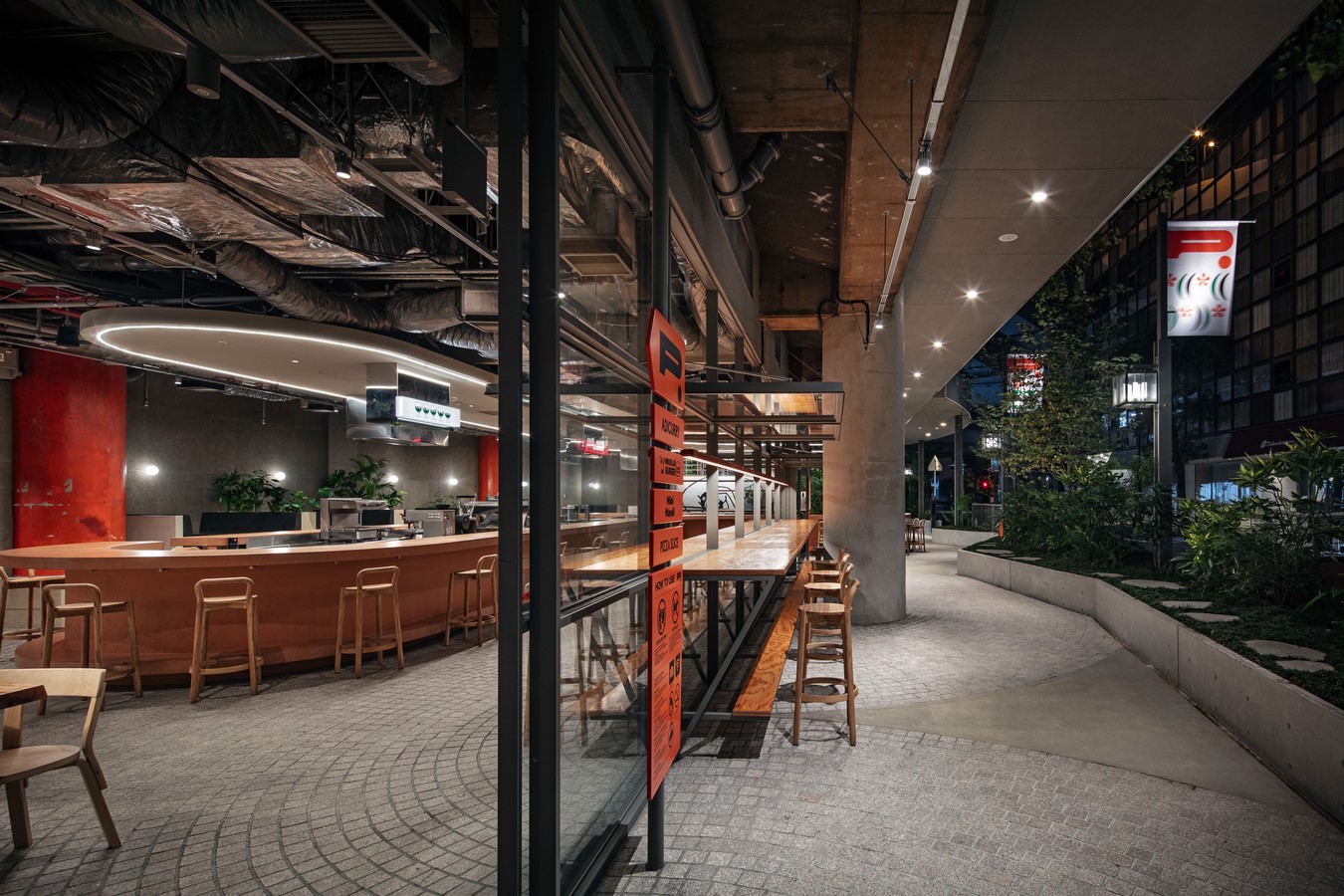
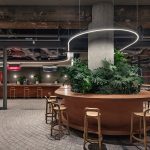
Visitors can spend time in a relaxed atmosphere, similar to that of cafes or family restaurants, in the slightly spacious wall-side sofa seats or box seats. We suggested to the client several shops as tenants for the food court that serve coffee, beer, pizza, etc., as we thought they would pair well with semi-outdoor seating. The planting strips are raised to the height of the benches, with stones placed at intervals for seating or setting items, allowing the entire street to serve as a meeting spot or a place for a quick break. This design spreads the atmosphere of P. and gives the 150-m-long West Wing Street a plaza-like quality.
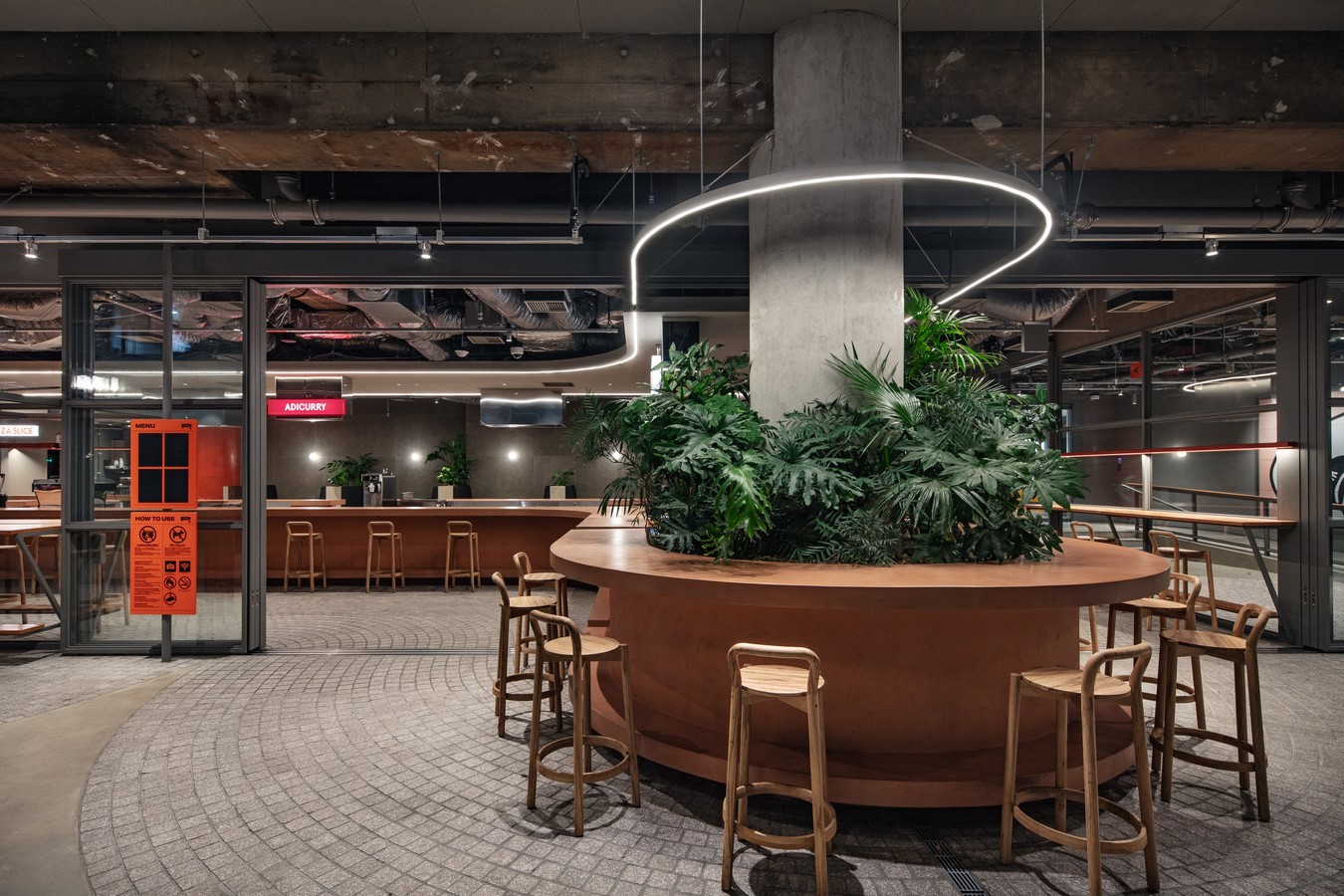
This renovation included not only the entire West Wing Street but also urban-scale interventions. Curb positions were adjusted to connect the pedestrian flow from the station to the restaurant district, Yanagikoji, and the tenant space was reduced to chamfer building corners for better visibility around bends. We anticipate that gradual improvements will continue around this street, further revitalizing the entire area, including the shopping district.
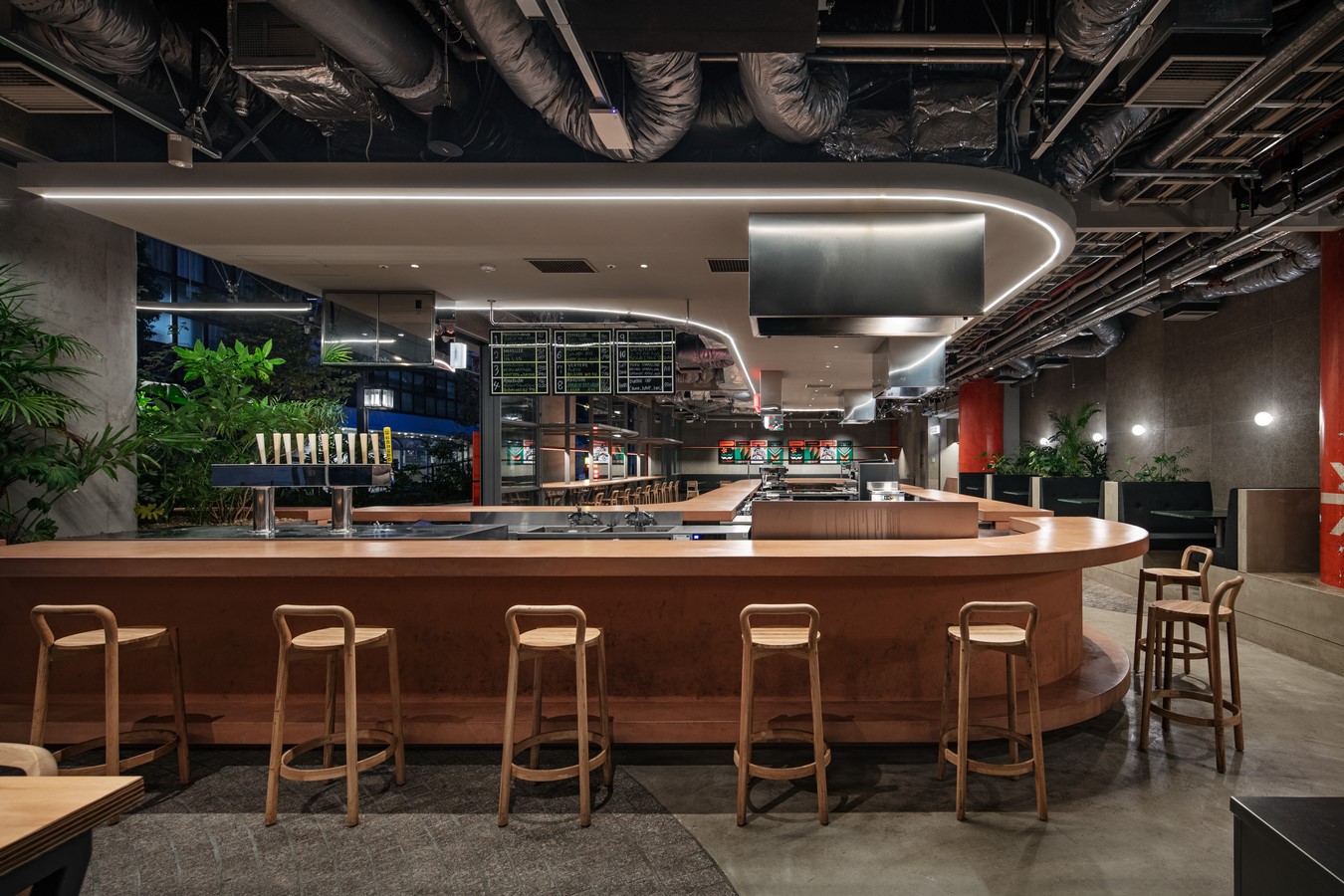
The name “P.” derives from this location’s former use as a parking lot (“Parking”), as well as from other abbreviations for “Public” and “Park.” What commercial facilities lack, we believe, is the quality symbolized by these words—a plaza or park where people can linger without purpose. Even if it is not as expansive as a typical plaza, it can be used like one, which would improve the surrounding atmosphere. Increasing opportunities for people to gather would ultimately benefit the commercial facility. We believe it’s crucial to go beyond proposing spaces for commercial demands. Instead, we should unite with clients to forge a partnership, devising gift-economy mechanisms that provide the city with places that possess the qualities of public space. We also believe it’s vital to create sustainable cycles centered around these spaces.