Public buildings and infrastructure have defined the nature of the relationship between humans and their surroundings over time. There is a plethora of knowledge about how it all began with the Greek Agora which succeeded in the Roman forums, further carried onto Renaissance plazas, and evolved into the modern era currently being experienced. A public space reflects the harmony between symmetry and proportion in design; it used to be organized per the social order and was generally activated by its social domain – squares, marketplaces, temples, gymnasiums, and theaters.
In general, the history and design of public buildings and infrastructure in Asia have not been promoted in the depths of how Western architecture has been aggrandized. Asian architecture in general is characterized by its culture which harmonizes nature, community, and socio-economy. Nepalese architecture has been renowned for its architecture to insinuate its historic traditional culture into the modern era; resonating the past in the present with its evergreen historic structures still coming into the play of the people at present day life.
Historic settlements
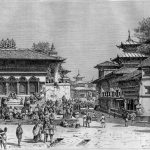
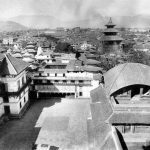
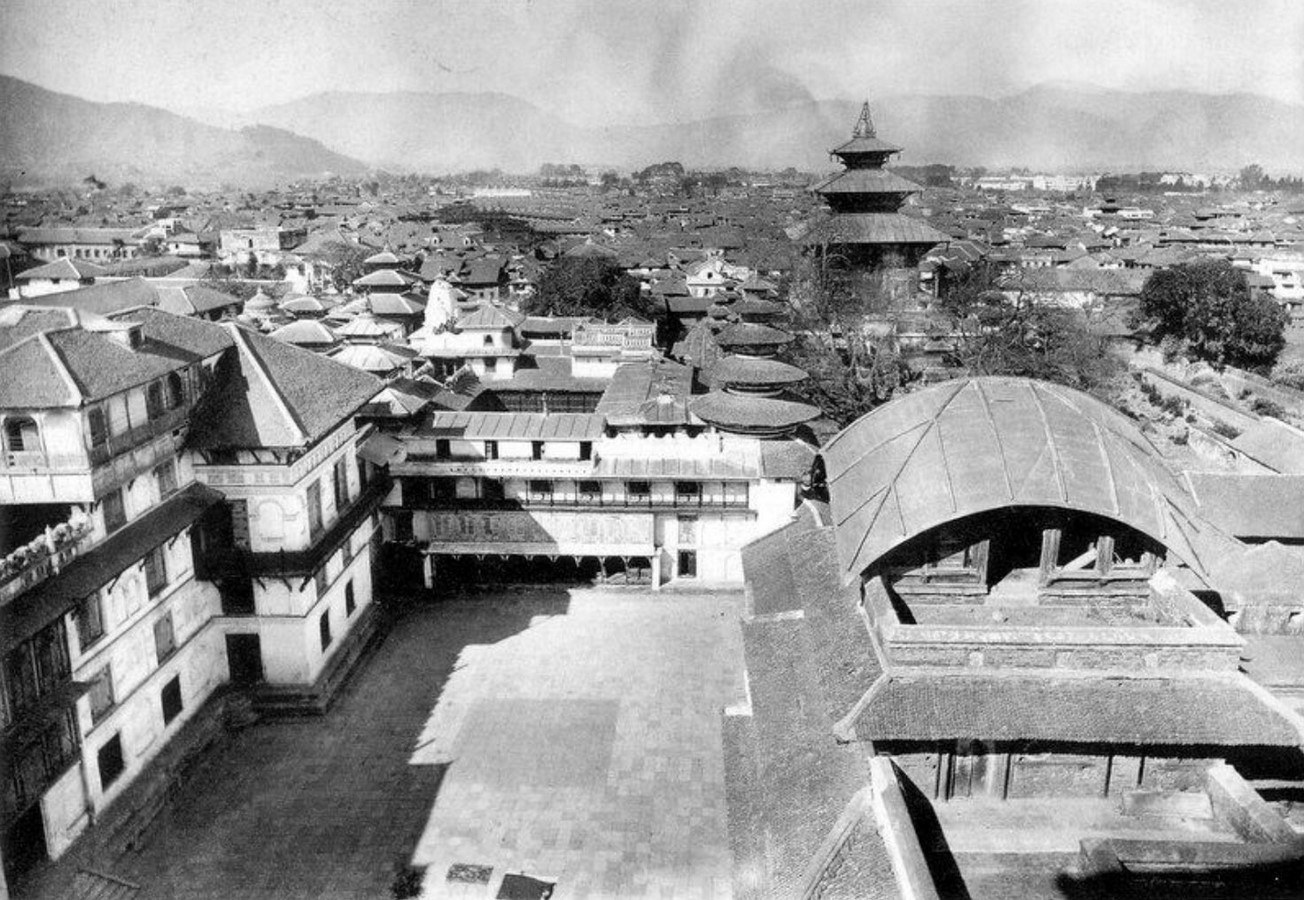
Nepalese civilization is considered one of the world’s oldest civilizations and has survived independently for thousands of years. Kathmandu Valley, the capital of Nepal has established its architectural history; with the majority of the demographics dominated by the ‘Newars’, the Newars have highly dominated the art and architecture of the Valley with their unique coexistence of Hindu/Buddhist culture. During the Malla period 15th Century, buildings followed the ‘Pagoda-style’ which was characterized by tiered roofs and monumental structures which mostly housed sacred temples and relics of the royal family.

Ancient water supply system
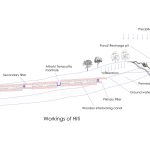
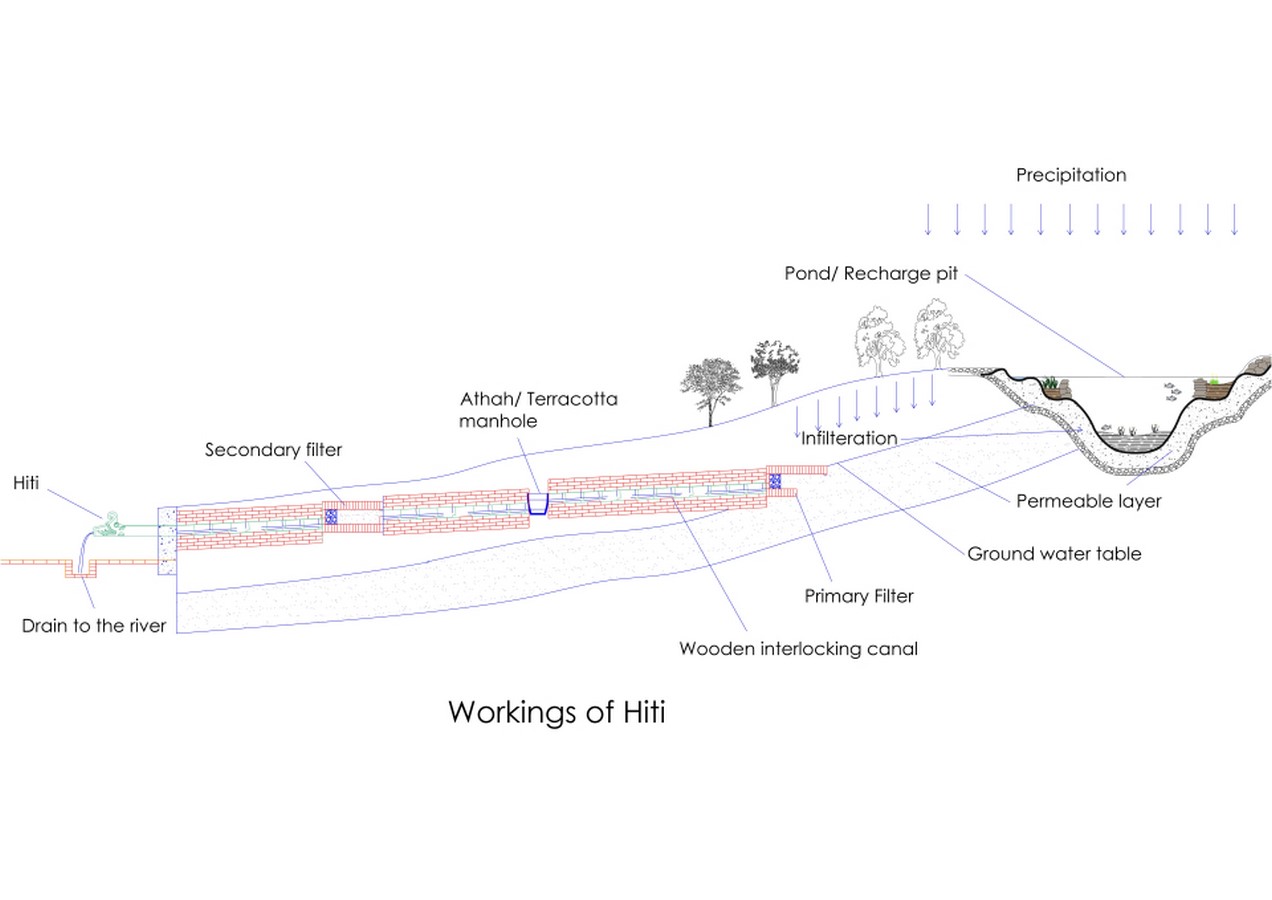
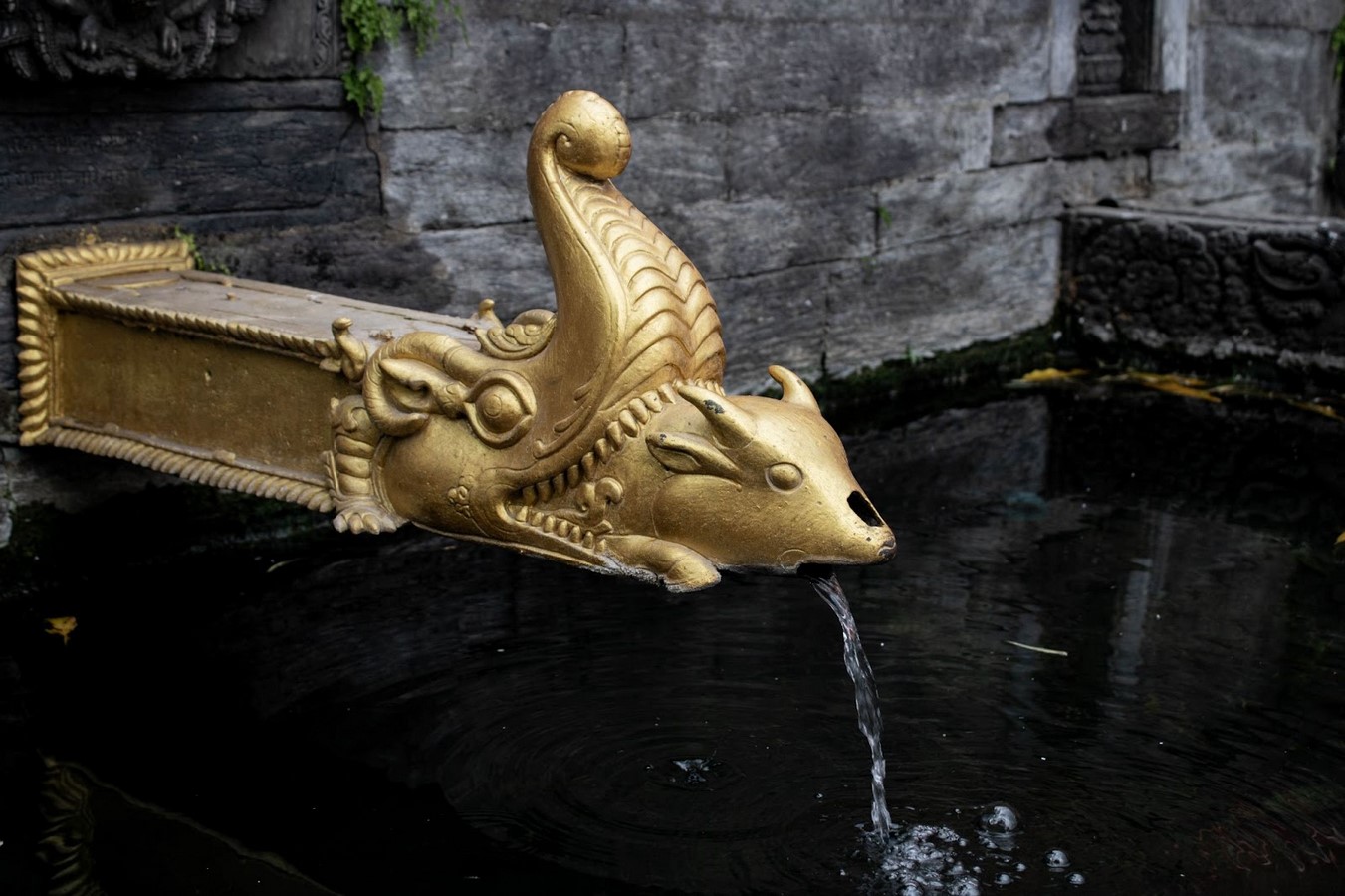
It is believed that a robust water system is at the heart of all civilizations. Those that were not able to maneuver the flow of nature succumbed to being obsolete. In Kathmandu Valley, there is a very rigid water supply system known as the ‘Hiti’, built and working for merely 1300 years ago. It is a very sustainable method to channel natural water into the core of the locality and also provide them with filtered drinking water available year-round.
The construction of the Hiti system was considered an act of public service in those times as it is believed that water is a public utility, privileged to all the kings and commoners’. The accessibility of water to all living entities was considered a social and religious duty.
Domestic Rituals
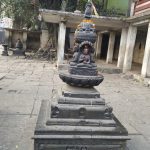
Life in Kathmandu begins with the commoners’ daily walk around the valley, traversing through the dark narrow alleys towards the wide open squares with a handful of rice and flowers that they sprinkle around the Chaitya as a form of offering. Chaityas or ‘Chiba dyos’ are one of the most common heritage icons of Kathmandu valley; they are not just symbols of art or architecture, they have become a part of the locals’ domestic ritual, as a symbol of devotion to the teachings of Buddha and life of the Buddha.
Analyzing the symbolic aspect by gazing at it vertically, at its base, we can find serpents or ‘Nagas’ tapering around it, which mythologically correlates to the valley being a lake that the Nagas were indigenous to. As a homage to making the valley a sanctuary for human settlement, water bodies have been allocated all across Kathmandu, such as Nagpokhari, Taudaha, and Nagdaha, to maintain a symbiotic relationship with the Nagas. It is believed that Nagas are prosperous in bringing rain and preventing droughts, and rain gives life to the natural entities of Kathmandu Valley.
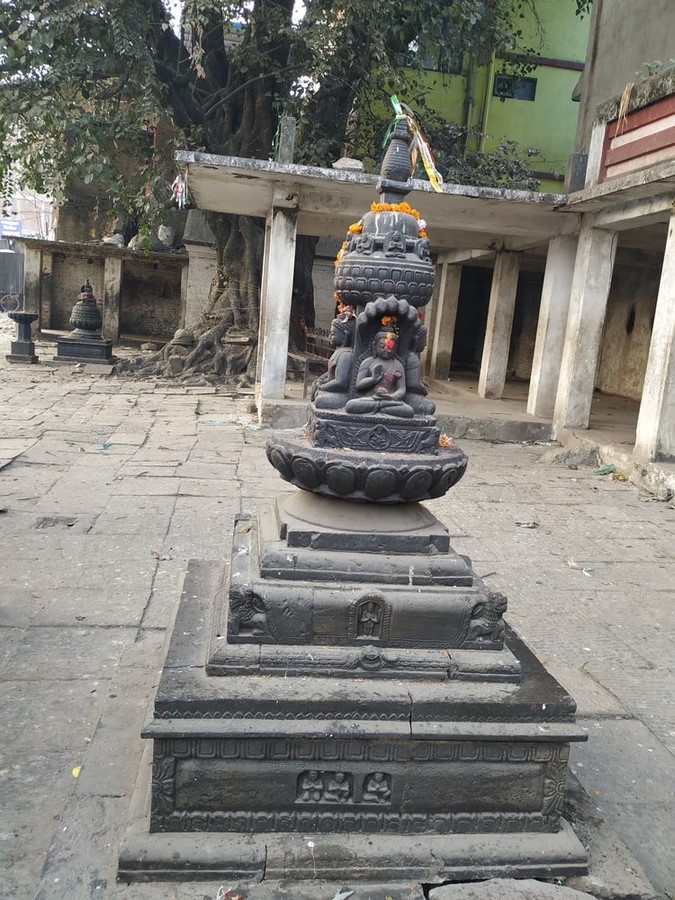
https://www.wmf.org/project/chivas-and-chaityas-kathmandu-valley
Further above, there’s a lotus or the ‘Padma’ represented as a thrown i.e. ‘Padmasan’, where the Buddha rests upon. The lotus floats on water and has its roots latched onto the earth; in this materialistic world, people get attached to everything that has form. The lotus grows past the water. In Buddhism, water is considered an illusory element, which reflects what the spectacle wants to see. In human life, if one can grow past their attachments and the elusive human wants/needs just as the lotus grows past the water, then only can one be rightful to bestow upon the lotus throne.
In Buddhist architecture, Buddha is most commonly found resting on top of a lotus depicting his life cycle of going past the three phases. Viewing the Chaitya in its entirety, it reminds us in our daily life of Buddha’s teachings, which beautifully articulates the importance of the conservation of nature, the power of speech, and how one must move past their attachments, leading us toward a life without suffering.
Reference List:
– Nepali Times, Tuladhar A., 23 March 2022, Kathmandu’s ancient water spout still functioning [online] https://www.nepalitimes.com/here-now/kathmandu-s-ancient-water-spouts-still-functioning
(Accessed date: 7 July 2023)
– Nepali Times (2021) Walkabout with Anil: Chiba, the life and teachings of Buddha.
[YouTube video].
Available at https://www.youtube.com/watch?v=w6oor-FChfs&list=TLPQMDkwNzIwMjPENF4COAgXNA&index=5 [Accessed 8 July 2023].
-Nepali Times (2021) Walkabout with Anil: Hiti, Kathmandu Valley’s ancient water supply system.[YouTube video].
Available at https://www.youtube.com/watch?v=Rggblppqixs&t=32s
[Accessed 8 July 2023].
– Rethinking The Future, Chitnis A., 6 Instances of evolution of public spaces throughout history of architecture [online]
(Accessed date: 8 July 2023)
– Image 1 – Gustav le Bon 1885AD, Archive of Historical Photographs of Kathmandu Durbar Square [Sketch]https://www.digitalarchaeologyfoundation.com/historical-photographs-of-kathmandu-durbar-square/
– Image 2 – Images of the Century, A view from atop Basantapur Durbar over Nasal Chowk towards the north, in the 1920s. The Kirtipur tower in the foreground was built in the 18th century; its roof is in the Bengali style. [Photograph]https://www.digitalarchaeologyfoundation.com/historical-photographs-of-kathmandu-durbar-square/
– Image 3 – Hrishav Raj Joshi, Kathmandu’s ancient water spout still functioning [Architectural Cross section] https://architexturez.net/pst/az-cf-224709-1644207178
– Image 4 – Riam Basnet, The Historical Hitis of Kathmandu Valley [Photograph] https://nepaltraveller.com/sidetrack/the-historical-hitis-of-kathmandu-valley
– Image 5 – World Monuments Fund, Chivas and Chaityas of Kathmandu Valley [Photograph]https://www.wmf.org/project/chivas-and-chaityas-kathmandu-valley