Le Corbusier’s Palace of Assembly – Best Projects of Le Corbusier
Le Corbusier, the luminary of modern architecture, left an indelible mark with his visionary designs, and the Palace of Assembly stands as a testament to his prowess in shaping monumental structures. This article meticulously explores the historical context, architectural innovations, and enduring significance of the Palace of Assembly, exemplifying Le Corbusier’s impact on the architectural landscape.
Historical Context
A Beacon of Democracy
Commissioned in the early 1950s, the Palace of Assembly, located in Chandigarh, India, was conceived as the legislative assembly for the newly formed state of Punjab. Le Corbusier’s design aimed to symbolize the democratic ideals of the emerging nation, blending modernist principles with a deep respect for local context and culture.
Architectural Innovations
1. Monumentality and Modernism
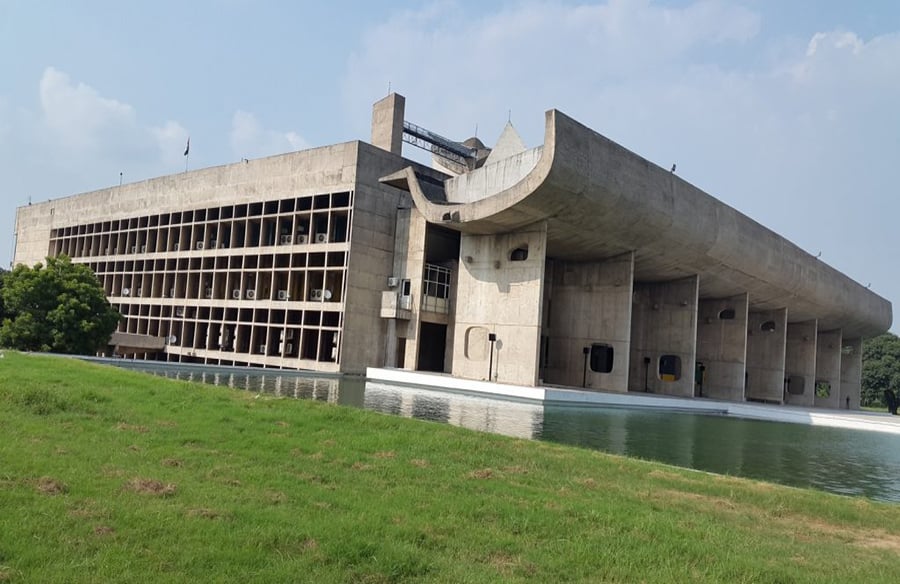
The Palace of Assembly stands as a monumental embodiment of modernist architecture. Le Corbusier’s design seamlessly integrates monumental scale with functional efficiency. The building’s monumental character is evident in its imposing structure, characterized by bold geometric forms and a play of light and shadow.
2. Modular Planning: Rationality in Design
Le Corbusier’s commitment to modular planning is prominently displayed in the Palace of Assembly. The building is organized around a modular grid, emphasizing a rational and efficient use of space. This design approach not only contributes to the building’s aesthetic appeal but also reflects Le Corbusier’s belief in the importance of order and proportion in architectural design.
3. Brise Soleil: Climate-Responsive Design
In response to the region’s climate, Le Corbusier incorporated brise soleil, or sunbreakers, into the design of the Palace of Assembly. These elements serve as external shading devices, mitigating glare and heat while adding a distinctive visual element to the building’s facade. This climate-responsive design showcases Le Corbusier’s attention to both form and function.
Enduring Significance
1. Architectural Icon of Chandigarh
The Palace of Assembly has become an iconic symbol of Chandigarh, representing not only the city’s administrative core but also the ideals of democracy and modernity. The building’s enduring significance lies in its role as a landmark that reflects the aspirations and identity of the city and its residents.
2. UNESCO World Heritage Recognition
In 2016, the Palace of Assembly, along with other works by Le Corbusier in Chandigarh, received UNESCO World Heritage status. This recognition elevates the building’s global importance and underscores its contribution to the evolution of modern architecture.
Statistical Insights
1. Dimensions and Layout
The Palace of Assembly covers an area of approximately 7,000 square meters. The layout is organized to accommodate the legislative chambers, administrative offices, and public spaces. The building’s dimensions reflect a careful consideration of both symbolic and functional requirements.
2. Material Usage
Le Corbusier employed a combination of reinforced concrete and brick in the construction of the Palace of Assembly. This choice of materials not only aligns with modern construction techniques but also reflects a harmonious integration of traditional craftsmanship and contemporary design.
Visiting the Palace of Assembly
A Architectural Pilgrimage
For architecture enthusiasts, a visit to the Palace of Assembly offers a profound experience of Le Corbusier’s design philosophy. Guided tours provide insights into the historical context, architectural innovations, and the enduring legacy that makes the building an integral part of Chandigarh’s architectural narrative.
Conclusion
In conclusion, the Palace of Assembly stands as a testament to Le Corbusier’s ability to blend modernist principles with cultural and contextual sensitivity. As we reflect on this architectural marvel in Chandigarh, it becomes evident that the building is not just a legislative space; it is a symbol of democratic ideals and a timeless expression of architectural grandeur.