Exploring Le Corbusier’s Maison Curutchet – Best Projects of Le Corbusier
Le Corbusier, an iconic figure in modern architecture, has left an indelible mark on the built environment with his innovative and influential projects. Among his notable works, Maison Curutchet in La Plata, Argentina, stands out as a testament to his visionary design principles. This article delves into the nuanced details of Maison Curutchet, providing insights into its historical context, architectural innovations, and enduring significance.
Historical Context
A Fusion of Modernity in La Plata
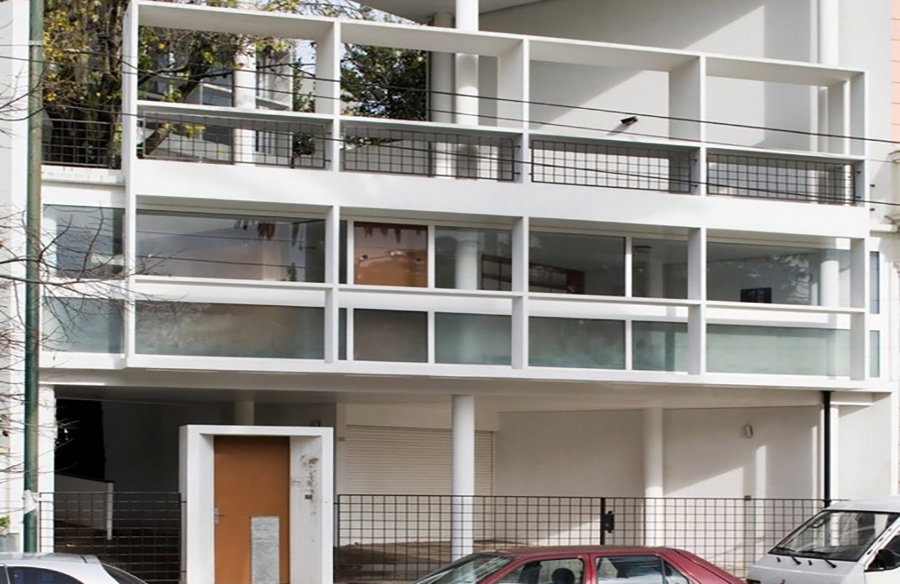
Commissioned by Dr. Pedro Curutchet in 1948, Maison Curutchet represented a unique challenge for Le Corbusier. Placed within the urban fabric of La Plata, a city known for its grid layout and neoclassical architecture, the residence had to harmonize with its surroundings while embodying the modernist ideals championed by Le Corbusier.
Architectural Innovations
1. Integration of the Five Points of Architecture
Maison Curutchet is a quintessential manifestation of Le Corbusier’s Five Points of Architecture. The pilotis, or elevated supports, elevate the main living area, creating an open space underneath. The free facade allows for design flexibility, while the horizontal windows and roof garden further emphasize the integration of nature into the living experience.
2. Curvilinear Staircase: A Sculptural Element
One of the standout features of Maison Curutchet is the curvilinear staircase that connects the various levels of the residence. Functioning as both a practical circulation element and a sculptural masterpiece, the staircase showcases Le Corbusier’s ability to blend form and function seamlessly.
3. Modular Design and Efficiency
Le Corbusier’s penchant for modular design is evident in Maison Curutchet. The residence is organized into a grid, with carefully arranged spaces that optimize functionality. The modular approach allows for a rational use of space, reinforcing Le Corbusier’s commitment to efficiency and simplicity.
Enduring Significance
1. UNESCO Recognition
Maison Curutchet, along with other works by Le Corbusier, was inscribed as a UNESCO World Heritage site in 2016. This recognition underscores the global significance of the residence and its contribution to the evolution of modern architecture.
2. Educational and Cultural Venue
In addition to being a private residence, Maison Curutchet has served as a venue for educational and cultural events. Its open design and historical importance make it a sought-after destination for architects, students, and enthusiasts keen on exploring Le Corbusier’s architectural legacy.
Statistical Insights
1. Dimensions and Layout
Maison Curutchet spans approximately 350 square meters, showcasing Le Corbusier’s ability to create a harmonious living space within a relatively compact footprint. The layout is organized around the central staircase, with carefully arranged rooms that cater to the needs of the residents.
2. Restoration Efforts
Over the years, Maison Curutchet has undergone meticulous restoration to preserve its architectural integrity. Restoration efforts have focused on maintaining the original design intent, ensuring that the residence remains a living testament to Le Corbusier’s vision.
Visiting Maison Curutchet
A Pilgrimage for Architecture Enthusiasts
For those eager to witness Le Corbusier’s brilliance firsthand, visiting Maison Curutchet is a pilgrimage into modernist architecture. Guided tours provide a comprehensive understanding of the design principles, spatial innovations, and the historical context that shaped this iconic residence.
Conclusion
In conclusion, Maison Curutchet stands as a remarkable example of Le Corbusier’s ability to transcend cultural contexts and create a harmonious fusion of modernity within existing urban landscapes. As we reflect on this architectural gem in La Plata, it becomes evident that Maison Curutchet is not just a residence; it is a living testament to the enduring influence of Le Corbusier’s revolutionary design principles.