The Architectural Grandeur of Le Corbusier’s Palace of Justice – Best Projects of Le Corbusier
Le Corbusier, a luminary in the realm of modern architecture, left an indelible mark through a diverse array of pioneering projects. Among these, the Palace of Justice stands as a monumental testament to his avant-garde design principles. This article delves into the intricate details of the Palace of Justice, exploring its historical context, architectural innovations, and enduring significance.
Historical Context
A Legal Marvel in Chandigarh
Commissioned as part of the ambitious Chandigarh Capitol Complex project in the 1950s, the Palace of Justice was envisioned to be the judicial heart of the new capital city of Punjab, India. Le Corbusier, along with his team of architects, embarked on the challenge of creating a judicial edifice that would embody the principles of modernity and functionality.
Architectural Innovations
1. Monumental Scale and Angular Design
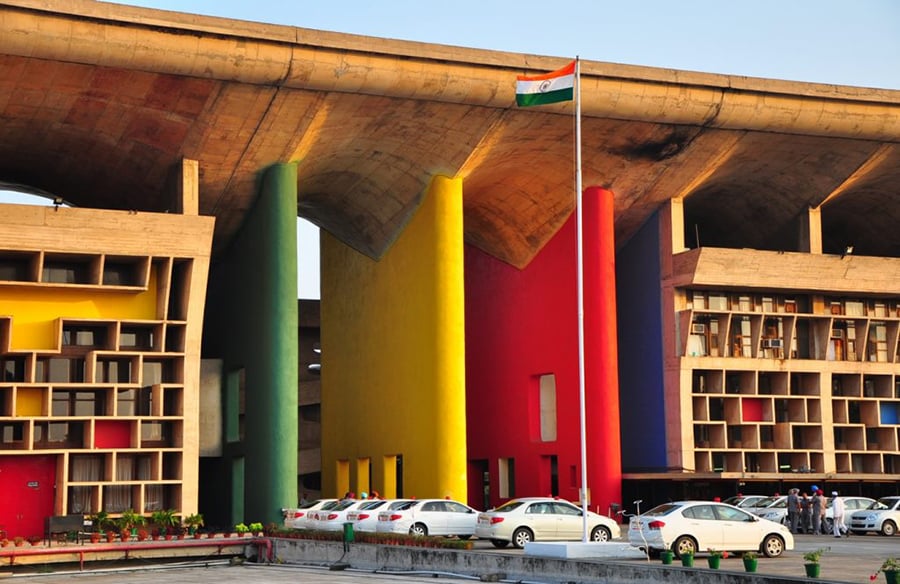
The Palace of Justice, with its monumental scale, stands as an architectural behemoth. Le Corbusier’s design embraced angular geometry, deviating from traditional courthouse designs. The imposing facade, characterized by sharp angles and clean lines, exudes a sense of authority while maintaining a modern aesthetic.
2. Pilotis and Open Spaces
True to Le Corbusier’s modernist principles, the Palace of Justice features pilotis, or elevated supports, creating an open and dynamic space beneath the building. This design choice not only contributes to the visual appeal of the structure but also allows for better ventilation and a sense of transparency.
3. Play of Light and Shadow
Le Corbusier’s meticulous attention to the play of light is evident in the design of the Palace of Justice. The strategic use of brise-soleil, or sun breakers, creates captivating patterns of light and shadow on the facade. This intentional interplay enhances the visual interest of the building while serving a practical purpose of shading.
Enduring Significance
1. Integral Element of Chandigarh’s Capitol Complex
The Capitol Complex in Chandigarh, including the Palace of Justice, was designated a UNESCO World Heritage site in 2016. The architectural ensemble stands as a testament to Le Corbusier’s vision for modern urban planning, and the Palace of Justice plays a pivotal role in this historic complex.
2. Influence on Modern Judicial Architecture
The design principles manifested in the Palace of Justice have influenced subsequent judicial architecture worldwide. The departure from traditional ornamentation and the emphasis on functionality and spatial harmony have become guiding principles for architects seeking to create contemporary and efficient courthouse designs.
Statistical Insights
1. Dimensions and Layout
The Palace of Justice covers a vast area of approximately 33,000 square meters. The grandeur of the structure is accentuated by its height, with the main building rising to about 60 meters. The layout is carefully organized to accommodate various judicial functions, from courtrooms to administrative spaces.
2. Construction Materials
Le Corbusier utilized a combination of modern materials in the construction of the Palace of Justice. Reinforced concrete, steel, and glass were employed to create a structure that not only exuded strength and durability but also embraced the ethos of modern architecture.
Visiting the Palace of Justice
A Journey into Architectural Majesty
For architects, students, and enthusiasts, visiting the Palace of Justice offers a profound experience of Le Corbusier’s architectural genius. Guided tours provide insights into the design philosophy, spatial planning, and the historical context that shaped this monumental courthouse.
Conclusion
In conclusion, the Palace of Justice stands as a crowning achievement in Le Corbusier’s illustrious career, embodying his principles of modernity, functionality, and spatial poetry. As we reflect on this architectural masterpiece, it becomes evident that the Palace of Justice is not merely a courthouse; it is a symphony of design elements that continue to inspire and influence the evolution of judicial architecture on a global scale.