Le Corbusier’s Mill Owners’ Association Building – Best Projects of Le Corbusier
Le Corbusier, the luminary of modern architecture, left an indelible mark on the cityscape with his innovative projects. The Mill Owners’ Association Building in Ahmedabad, India, stands as a testament to his groundbreaking design philosophy. In this detailed exploration, we delve into the historical context, architectural innovations, and enduring significance of this iconic structure.
Historical Context
A Vision for Modern Industry
Commissioned in 1951, the Mill Owners’ Association Building was conceived as the headquarters for Ahmedabad’s prominent mill owners. Le Corbusier’s design aimed to embody the spirit of industrial progress while harmonizing with the cultural context of post-independence India. The building stands as a symbol of the synergy between modernity and tradition.
Architectural Innovations
1. Brise Soleil: Form and Function
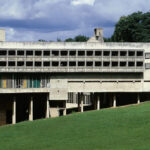
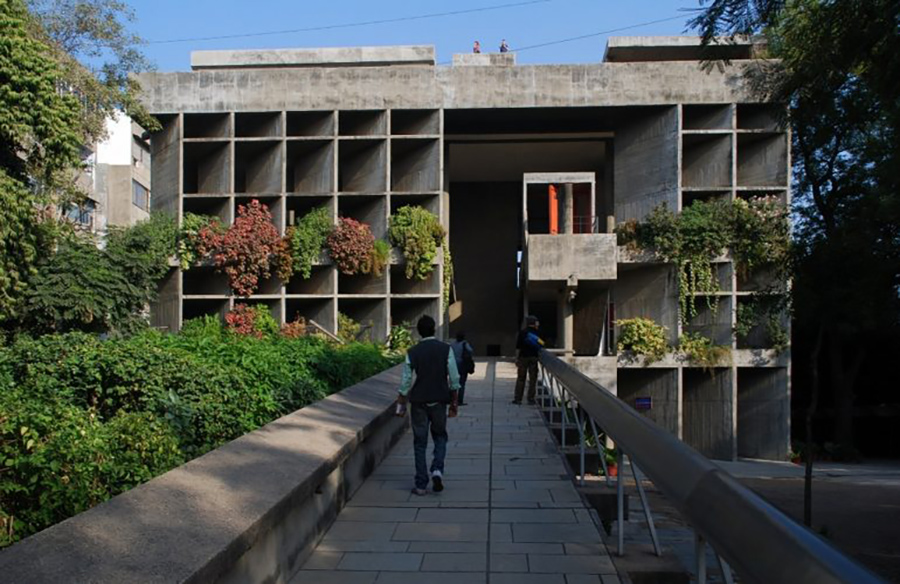
The Mill Owners’ Association Building showcases Le Corbusier’s mastery of brise soleil, a design feature that combines form and function. The brise soleil, or sunbreakers, serve as an external shading device, reducing glare and heat while adding a rhythmic aesthetic to the building’s facade. This innovation reflects Le Corbusier’s commitment to climate-responsive architecture.
2. Modular Grid: Rational Design
A hallmark of Le Corbusier’s architectural language, the Mill Owners’ Association Building employs a modular grid system. The structural grid not only provides a rational organization of space but also exemplifies Le Corbusier’s belief in order, proportion, and efficiency. The building’s layout is a testament to the architect’s commitment to functionality and simplicity.
3. Pilotis and Open Spaces
True to Le Corbusier’s Five Points of Architecture, the Mill Owners’ Association Building features pilotis, or slender columns, elevating the main floor. This design choice creates an open and flexible space underneath, allowing for a seamless integration of the building with its surroundings. The pilotis contribute to the visual lightness of the structure, enhancing its aesthetic appeal.
Enduring Significance
1. UNESCO World Heritage Recognition
In 2016, the Mill Owners’ Association Building, along with other works by Le Corbusier, was inscribed as a UNESCO World Heritage site. This recognition underscores the global significance of the building and its contribution to the evolution of modern architecture.
2. Cultural Symbol of Ahmedabad
Beyond its architectural acclaim, the Mill Owners’ Association Building has become a cultural symbol of Ahmedabad. It serves as a reminder of the city’s industrial heritage and its pivotal role in shaping India’s post-independence identity. The building stands as a testament to the resilience of Le Corbusier’s design principles in diverse cultural contexts.
Statistical Insights
1. Dimensions and Layout
The Mill Owners’ Association Building covers an area of approximately 3,500 square meters. The layout is organized around a central core, with offices and meeting spaces arranged systematically. The building’s dimensions reflect a careful consideration of proportion and balance, hallmarks of Le Corbusier’s design philosophy.
2. Construction Materials
Le Corbusier employed a combination of reinforced concrete and brick in the construction of the Mill Owners’ Association Building. The choice of materials reflects a balance between modern construction techniques and a nod to traditional craftsmanship, underscoring the architect’s holistic approach to design.
Visiting the Mill Owners’ Association Building
An Architectural Pilgrimage
For architecture enthusiasts and students, visiting the Mill Owners’ Association Building offers a profound experience of Le Corbusier’s design principles in action. Guided tours provide insights into the building’s historical context, architectural innovations, and its role in shaping the industrial narrative of Ahmedabad.
Conclusion
In conclusion, the Mill Owners’ Association Building stands as a testament to Le Corbusier’s genius in seamlessly blending modernity with cultural context. As we reflect on this architectural gem in Ahmedabad, it becomes evident that the building is not merely a functional space; it is a living legacy that continues to inspire architects and admirers of modern design.