Odessa asks more of a roof than almost any city in the country, and the punishment arrives quietly, on days when nothing is falling from the sky at all. The Permian Basin stacks the deck against roofing materials in ways homeowners rarely tally in one place: sunshine most days of the year at an elevation near 2,900 feet, where thinner, drier air lets more ultraviolet radiation through; summer air temperatures that push roof surfaces past 150 degrees for hours at a stretch; wind that runs hard through every season and gusts violently in storms; and airborne dust that scours, coats, and clogs everything it touches. Hail gets the headlines because it damages roofs in an afternoon, but the sun and the wind do their work every single day, and by the time a Basin roof meets its first serious hailstorm, the daily weather has usually already decided how well it will survive. This is why the same shingle product that serves 25 years in a milder state often retires early here, and why understanding the mechanisms, what heat, ultraviolet light, wind, and dust actually do to roofing materials, is the most practical roofing knowledge an Odessa homeowner can carry.
The subject breaks cleanly into three parts, and they organize everything below. The first is the sun, the region’s slowest and most certain roof destroyer, covering what heat and ultraviolet radiation do to asphalt at the material level, how the Basin’s daily temperature swings work every seal and joint through thousands of expansion cycles, and the ventilation and reflective strategies that genuinely blunt the damage. The second is the wind and the dust it carries, covering how uplift fatigues shingle seals years before anything visibly fails, what blowing dust does as both an abrasive and a clogging agent, and the installation details that determine whether a roof holds in the gusts this region produces routinely. The third is the response, the material choices, maintenance schedule, and repair versus replacement timing that let a homeowner manage the climate instead of being surprised by it. None of it requires technical background; it requires thinking of a roof as a system under continuous load rather than a surface that only matters when it leaks. Roofs here do not fail suddenly; they fail on schedule, and the schedule is readable years in advance by anyone who knows what the climate is doing.
How Relentless Sun and UV Exposure Age Odessa Roofs Faster
The sun is the place to start because it is the input nothing on a Basin roof escapes. Odessa sits in one of the sunniest regions in the United States, and the combination of intensity, duration, and elevation delivers an ultraviolet dose that ages roofing materials measurably faster than national averages assume. Any experienced roofer Odessa homeowners bring up for an inspection reads sun damage first, because it is the background condition against which every other problem develops. The three sections below cover the mechanism in the shingles themselves, the daily thermal cycling that attacks the seals and details, and the ventilation and reflectivity measures that actually push back.
What Heat and UV Radiation Do to Asphalt Shingles Over Time
An asphalt shingle is, at its heart, a mat saturated with asphalt and armored with mineral granules, and the sun attacks all three layers by different routes. Ultraviolet radiation breaks down the asphalt’s chemical structure directly, a process called photodegradation, snapping the molecular bonds that give the material its flexibility; heat accelerates the companion process, driving off the volatile oils that keep asphalt supple. The granules exist precisely to shield the asphalt from this assault, an opaque mineral armor that blocks ultraviolet light, and their adhesion depends on the asphalt beneath them staying slightly tacky; as the asphalt dries and hardens, its grip on the granules weakens, granules shed into the gutters, and every bare spot exposes more asphalt to the radiation that dries it further. The result is a feedback loop, dry asphalt shedding armor, exposed asphalt drying faster, and it runs quicker in Odessa than nearly anywhere, because the region’s elevation thins the atmosphere’s ultraviolet filtering while its cloudless calendar maximizes the dose. A shingle here is fighting the loop from its first summer.
The visible symptoms of the loop appear in a recognizable order, and a homeowner can learn to read them from the ground. Granule loss shows first, as accumulating grit in gutters and at downspout splash blocks, then as darkened or shiny patches on the slopes where the mat is beginning to show through; the sheen is exposed asphalt reflecting light, and it marks exactly where the armor has thinned. Curling follows as the asphalt loses volume and flexibility, with shingle edges lifting and cupping because the dried material can no longer lie flat, and cracking comes behind it, first at the exposed butt edges, then spidering across surfaces as the material loses the elasticity to ride the roof’s daily movement. Fading and thinning across whole slopes round out the picture, the grayed, flattened look that separates an old Basin roof from a young one at a glance. Each stage matters more than the last because each removes capability: a granule thin shingle absorbs more heat, a curled shingle gives the wind an edge to grip, and a brittle shingle fractures under hail that flexible material would have absorbed, which is how sun damage quietly becomes storm damage.
Orientation and geometry decide how unevenly the loop runs, and the unevenness has practical consequences. South and west facing slopes take the longest and hottest sun exposure of the day, and they consistently age years ahead of north facing slopes on the same house; a roof can be honestly healthy on one exposure and finished on another, which is why competent inspections assess slope by slope rather than issuing one verdict for the whole roof. Steeper pitches take the sun at a shallower angle and fare slightly better than low slopes that face the sky directly, dark colors run hotter than light ones, and unshaded roofs, which is most of them in this famously treeless region, get no relief at all. The practical uses of this knowledge are concrete: watch the west slope, because it fails first and forecasts the rest; expect repair and replacement conversations to reference specific exposures rather than the roof as a unit; and understand that addressing the exhausted slope while the protected ones continue serving is sometimes the honest recommendation. The sun writes its damage unevenly, and reading the pattern is half of reading the roof.
Thermal Cycling, Expansion, and the Seals That Dry Out First
Temperature swing is the sun’s second weapon, and in some ways the meaner one, because it attacks the roof’s joints rather than its surfaces. The Basin’s dry air holds little overnight warmth, so a summer day that bakes the roof surface far past 150 degrees hands off to a night that drops it fifty or sixty degrees, and the materials respond the way physics requires, expanding through the afternoon and contracting through the night. Every component moves a different amount, since asphalt, metal flashing, wood decking, and plastic vents all carry different expansion rates, and the joints between them absorb the disagreement, flexing through a cycle nearly every day of the year. Multiply the daily cycle by decades and the arithmetic explains what inspectors find: fasteners walked loose by thousands of tiny movements, nail heads backed out and telegraphing through shingles as raised bumps, sealant joints fatigued into cracks, and flashing pulled away from the surfaces it was formed against. Nothing in this paragraph requires a storm; the roof does it to itself daily, which is why the details fail on Basin roofs years ahead of the shingle field around them.
The sealants and accessories bear the worst of the cycling because they are the flexible parts, and flexibility is exactly what heat and ultraviolet exposure remove. Pipe boots, the rubber collars around plumbing vents, are the canonical example: engineered to flex with the pipe and the roof, they sit in direct sun absorbing the full dose, and in this region they dry, crack, and split commonly within a decade, far ahead of the shingles surrounding them, opening a direct water path into the house. Caulks and sealant beads at flashing joints, skylights, and equipment curbs follow the same curve, drying to brittleness and cracking under movement they once absorbed. Plastic components, vent caps, turbine bases, and older skylight domes, grow chalky and brittle in the ultraviolet bath until hail or a hard gust finishes them. The pattern gives Basin roofs their signature failure profile, a healthy field leaking at its details, and defines the region’s most valuable maintenance habit: a periodic professional pass over every penetration and joint, re booting, resealing, and refastening, small work that retires most of the roof’s actual leak risk for a fraction of what the water damage costs.
Thermal shock adds the dramatic version of the same stress, and West Texas manufactures it regularly. A supercell arriving on a summer afternoon drops cold rain and sometimes hail onto a roof surface running well above 150 degrees, and the surface temperature can fall a hundred degrees in minutes; materials that were fully expanded contract violently, and the sudden movement finds every joint, aged seal, and hairline crack the gradual cycling had been preparing. Shingles already embrittled by years of sun are at their most vulnerable in exactly this moment, which is part of why hail damage assessments in this region so often show fracture patterns worse than the stone size alone would predict, the thermal shock and the impacts working together on material the sun had pre weakened. There is no prevention for the weather itself; the mitigation is material condition, since flexible, well maintained components ride the shock that brittle ones cannot. The takeaway: in this climate the sun is a force multiplier for every other threat the region delivers, and managing it is how a homeowner manages the rest.
Attic Ventilation and Reflective Materials That Fight the Heat
Attic ventilation is the most underrated heat defense a Basin house has, because a large share of the heat attacking the shingles arrives from below. A poorly vented attic in an Odessa summer can hold air far hotter than the outdoors, cooking the shingles from their underside while the sun works the top, measurably shortening shingle life; manufacturers take this seriously enough that inadequate ventilation can compromise shingle warranties. The system is simple in principle, intake vents low at the soffits drawing cooler air in and exhaust vents high at the ridge letting hot air escape, and it fails in equally simple ways: soffit vents painted over or blocked by insulation, exhaust capacity mismatched to intake, ducts and storage choking the airflow paths, and wind driven dust screening off the openings over years. The symptoms are readable, an upstairs that never quite cools, air conditioning that runs continuously, and attic air that hits like an oven at midday, and the fixes are modest, clearing and adding vents, baffles to keep insulation off the intakes, and verifying the balance. Ventilation work is the rare roofing investment that pays three ways at once, in shingle life, in cooling costs, and in warranty standing.
Reflectivity is the second structural defense, and the region’s roofing choices increasingly show it. Lighter shingle colors absorb meaningfully less heat than dark ones, and the difference is not cosmetic, since peak surface temperature drives both the asphalt drying rate and the daily expansion range; several manufacturers now produce reflective shingle lines with specially coated granules that bounce more solar energy even in mid tone colors. Metal roofing takes the principle further, reflecting a large share of solar radiation outright and shedding its absorbed heat quickly after sundown. On flat and low slope sections, the white reflective membranes standard in commercial work, and the reflective coatings applied over aging systems, demonstrate the same physics at building scale, cutting cooling loads enough that energy codes now reward them. Radiant barriers, foil surfaces installed under the decking to reflect heat back out of the attic, extend the strategy inside. None of these measures makes the sun harmless; together they lower the roof system’s operating temperature, and every degree removed slows the aging chemistry the first section described.
The practical decision points for heat defense arrive at specific moments, and knowing them keeps the options from being missed. Replacement time is the big one, since color, reflective product lines, ventilation corrections, and radiant barriers all price at their cheapest when the roof is already open, and a replacement specified for this climate should address all of them deliberately rather than defaulting to whatever the old roof had. Ventilation problems justify action on their own schedule, because the payback in shingle life and cooling costs does not wait for a reroof, and a professional assessment can quantify the current airflow against the attic’s needs. Even routine repairs offer small openings, an upgraded vent here, a baffle correction there, that an attentive contractor will flag while on the roof. The homeowner’s role is mostly to ask the questions, how is my ventilation, what would a reflective option cost, does my attic need a radiant barrier, at the moments when the answers are cheap. Heat defense in this region is a set of choices made correctly at the right times, and the households that make them own roofs that age on a slower clock.
How Constant Wind and Blowing Dust Wear Down West Texas Roofs
Wind is the Basin’s other daily force, and it never really takes a season off. The region ranks among the windiest inland areas in the country, with hard spring afternoons gusting past 50 miles per hour under clear skies and storm outflows pushing well beyond that, and the dust those winds carry adds an abrasive, clogging dimension the textbooks written for calmer places never mention. A knowledgeable roofer Odessa property owners consult will read wind and dust wear as fluently as sun damage, because the three arrive together on every local roof. The sections below cover the uplift mechanics that fatigue shingles invisibly, the dust that scours and clogs, and the installation details that decide whether a roof holds when the big gusts come.
Wind Uplift, Fatigued Shingle Seals, and Edge Damage Explained
Wind damages shingle roofs through uplift, and the mechanics reward understanding because they explain why the damage is so often invisible until it suddenly is not. Air accelerating over a roof creates low pressure above the surface, the effect that lifts an airplane wing, and the suction tries to peel the roof upward, concentrating hardest at the eaves, rakes, ridges, and corners where the airflow separates. A shingle resists through two anchors, the nails through its upper zone and the adhesive seal strip bonding it to the course below, and the seal is the critical one, because it keeps wind from getting under the exposed edge. Every gust flexes every sealed edge slightly, and the flexing accumulates as fatigue: seals stressed thousands of times a year weaken gradually, a hard event breaks a few outright, and each broken seal turns its shingle into a larger sail for the next gust to work on. The failure is progressive and mostly silent, which is why a Basin roof can look perfect from the driveway while a third of its seals have quietly let go, and why the roof that loses a swath of shingles in one storm almost always spent years being prepared for it.
The edges and components carry their own wind stories, and they fail in readable ways. Ridge caps ride the roof’s highest, most exposed line and take the strongest uplift, which is why creased, loose, and missing caps lead so many post wind repair lists; rake and eave edges depend on their starter courses and edge metal, and a lifted drip edge or skimped starter strip gives the wind a pry point that works the whole field behind it. Flashing responds to gusts like a lever wherever a corner has lifted, with each event bending the metal a little further from the surface it seals. Everything mounted on the roof joins the exposure, since vents, turbines, satellite dishes, and the evaporative coolers common across West Texas homes all present surfaces for the wind to push, rock, and eventually loosen, working their fasteners and flashing with every blow. Off the roof but tied to its fate, gutters loaded with wind blown debris tear at their hangers in gusts, and unpruned branches scrub granules off shingles in ordinary wind before snapping onto them in storms. Each item on this list is inspectable, and most are fixable at trivial cost.
The fatigue mechanism defines the correct response, which is testing rather than looking. Because a broken seal is invisible from the ground and often invisible from a casual roof walk, the meaningful wind inspection is tactile, a professional hand lifting gently at shingle edges across the field to find the courses that have released, along with a fastener check for the nail pops that thermal cycling and wind vibration back out together. The findings are correctable short of crisis, since released shingles can be hand sealed back into service with roofing adhesive, a routine repair that restores the wind resistance of the affected courses for a small fraction of what replacing blown off sections costs after the next event. The seal check belongs in the pre storm season inspection each spring and after any event with serious gusts, and age raises the stakes, because seal adhesive dries and weakens with the same sun exposure that ages everything else, making older roofs progressively easier for the wind to open. A homeowner cannot see any of this from the yard, which is the argument for the free professional inspection that makes invisible failures visible while they are cheap.
Dust Storms, Abrasion, and Clogged Gutters in the Permian Basin
Dust is the Basin’s signature addition to the standard wind story, and it damages by two separate routes. The first is abrasion: wind driven dust and sand work as a slow sandblaster on every exposed surface, scouring granules from the windward faces of shingles, dulling and thinning the protective finishes on metal roofing and flashing, and wearing at sealant beads already embrittled by sun. The effect is gradual and directional, showing worst on the exposures that face the prevailing wind, and the major dust events the region occasionally produces, the haboob walls that roll across the flatland, deliver a season’s abrasion in an afternoon. The second route is accumulation, since everything the wind carries eventually lands, and dust settles into gutters, packs into the scuppers and drains of flat roof sections, screens over attic ventilation intakes, and coats reflective surfaces until their reflectivity measurably drops. Neither route produces a dramatic failure on its own; both shave capability continuously, and the honest summary is that dust never totals a Basin roof but quietly shortens the life of every component on it.
The clogging route deserves its own paragraph because it sets up the region’s characteristic water failure. West Texas rain arrives rarely and violently, and a drainage system that spent months collecting dust meets its first real test already compromised: gutters half packed with sediment overflow at the eaves in a downpour, soaking fascia and backing water up under the lowest shingle courses, while flat section drains and scuppers narrowed by dust turn a hard rain into a rooftop pond within minutes. The chemistry makes it worse, since fine dust wetted by the first rain sets into a dense sludge that no subsequent flow clears on its own, which is why the visually clean gutter in this region so often turns out to be a third full of concrete like sediment. The resulting failure pattern confuses homeowners, stains at the tops of exterior walls and around upper windows that trace to overflowing eaves, and ponding on porch and patio roofs probing seams designed only for moving water. The defense is unglamorous frequency, drainage cleaned on a dust adjusted calendar, spring and fall at minimum plus a check after major blows, which is cheap, boring, and responsible for preventing a remarkable share of the region’s water damage.
Dust also degrades the roof’s supporting systems in ways worth cataloging because they hide behind other explanations. Attic ventilation loses capacity as intake screens silt over, raising attic temperatures and feeding the heat problems of the first section, a connection few homeowners make when the upstairs starts running warm. Evaporative coolers, common on area roofs, ingest dust by design and shed mineral crusted overflow onto the roofing around their curbs, aging the seals at one of the roof’s largest penetrations, and their seasonal service is the natural moment to have that interface inspected. Reflective surfaces, from white membranes to cool roof shingles, lose a slice of their performance under a dust film between rains, which matters for the energy math on commercial buildings especially. Even solar installations, increasingly common in a region with this much sun, trade output for soiling on the same schedule. They justify a Basin specific habit: treating dust events like weather that happened to the roof, worth a brief ground check and, after the big ones, the same drainage attention a storm would earn.
Wind Rated Installation Details That Keep Shingles on the Roof
Installation is where wind resistance is actually purchased, and the difference between a roof that holds and one that peels in the same gust usually traces to details decided years earlier. Fastening leads the list: shingles nailed in the manufacturer’s specified zone, with the correct number of nails, driven flush rather than overdriven or angled, hold as designed, while high nailed or under nailed courses fail at a fraction of their rating; in high wind regions, six nails per shingle instead of four is the standard worth specifying, a trivial material cost that meaningfully raises the roof’s holding power. The perimeter details follow, since uplift concentrates at the edges, and proper starter strips with their adhesive at the eave and rake, correctly lapped drip edge, and fully adhered ridge caps armor exactly the zones the wind attacks first. Modern shingles carry wind ratings well past 110 miles per hour, and the ratings are real, but every one of them assumes the installation instructions were followed. A homeowner cannot verify nail patterns from the ground; they can hire the installer whose reputation and documentation say the patterns were followed.
The sealing timeline is the wind detail homeowners least expect, and it explains a whole category of early failures. Shingle seal strips are heat activated, designed to bond in the sun’s warmth over days or weeks, which means a roof installed in cool weather can wait months for its seals to fully set, and an unsealed roof is a vulnerable roof no matter how well it was nailed; quality installers hand seal shingles with roofing adhesive when installing in cold conditions or ahead of forecast wind, a labor step that cheap bids skip. Dust adds a local complication, since seal strips contaminated by blowing dust during installation bond weakly or not at all, another reason installation conditions and crew care matter here. The same logic extends to repairs, where replacement shingles woven into an existing roof should be hand sealed rather than left to wait for heat, and to the aftermath of wind events, where released courses get re adhered as described earlier. The pattern: wind resistance is not a property a roof has; it is a property a roof is given, by specification, workmanship, and maintenance.
Beyond shingles, the region’s wind argues for a short list of structural and equipment standards. Roof mounted equipment gets engineered anchorage, since a marginally mounted evaporative cooler or satellite dish in a 70 mile per hour outflow becomes both a casualty and a projectile, and abandoned mounts get removed and their penetrations properly sealed rather than left to work loose. Metal roofing, widespread on area shops and homes, earns its wind reputation through concealed fastener standing seam designs, while exposed fastener panels need their thousands of gasketed screws checked on a schedule as washers age. Gutters get hung to withstand loading, trees get trimmed back from rooflines, and the yard’s loose inventory gets secured when warnings go up, since a share of every storm’s roof damage arrives as someone’s airborne patio furniture. At replacement time, the wind conversation belongs alongside the sun and hail conversations, with fastening specification, perimeter details, and any enhanced wind warranty tiers named in the scope. A roof specified and maintained against wind treats the region’s ordinary gusts as weather rather than events.
Protecting Your Roof From the Odessa Climate Year After Year
Knowing the mechanisms is preparation; acting on them is protection, and the actions sort into three decisions every Odessa roof owner eventually makes. The first is material, choosing products engineered for this specific combination of sun, wind, and hail when replacement time arrives. The second is maintenance, running the inspection and upkeep calendar that catches climate wear while it is cheap. The third is timing, recognizing when accumulated climate wear has crossed from maintainable to finished, and making the repair versus replacement call on evidence. The sections below take them in order.
Choosing Roofing Materials Built for Sun, Wind, and Hail
Material selection is where a household gets to answer the climate directly, and the modern options answer it well. For shingle roofs, the impact rated class 4 products deserve first mention because they address the region’s central material problem, brittleness: built on polymer modified asphalt, they stay flexible years longer than standard shingles, absorbing hail strikes that fracture conventional material and riding thermal cycling with less fatigue, and Texas insurers have long been required to offer premium discounts for qualifying impact resistant roofing, a recurring return that improves the upgrade math every year. Reflective and lighter colored lines attack the heat side, lowering peak surface temperatures and slowing the asphalt drying chemistry, and the two strategies combine, since several manufacturers offer impact rated products in reflective colorways. Wind ratings round out the shingle specification, with the higher rated lines and the installation standards from the previous section purchased together. None of this doubles a roof’s price; the upgrades typically add a modest percentage to a replacement while addressing sun, wind, and hail simultaneously, which is why the material conversation belongs at the center of every Basin replacement.
Metal deserves its own paragraph because it answers this climate’s exam unusually well, which is why it has served West Texas buildings for generations. Metal panels reflect a large share of solar radiation rather than absorbing it, shed their heat quickly after sundown, and carry no granules to lose or asphalt to dry, taking the sun’s chemistry attack largely off the table; their wind performance, particularly in concealed fastener standing seam designs, leads the residential market, and their hail behavior is honest, denting cosmetically in serious storms while rarely losing function. Service life runs multiples of asphalt in this exposure, and the premium purchase price amortizes accordingly for households with long horizons. The considerations are real but manageable: exposed fastener versions trade cost for a long term gasket maintenance schedule, cosmetic hail denting is a fact worth understanding alongside any insurance cosmetic damage endorsement, and installation quality matters as much as it does with any system. The point is not that any single material wins; it is that the Basin’s climate is an engineerable problem, and the market sells solutions for anyone who asks at replacement time.
The selection process matters as much as the selection, and it runs on side by side evidence. A replacement decision in this climate deserves written proposals comparing the realistic finalists on the actual house, standard architectural shingle against class 4 against any metal or reflective option in play, each with its installed price, its warranty documents, its wind and impact ratings, and its insurance implications stated, including the impact resistance discount quoted from the household’s own carrier. The comparison converts marketing into arithmetic and routinely surprises households in both directions, the class 4 upcharge smaller than expected inside a full project, the metal premium larger but amortizing better than assumed. Manufacturer credentialed installers matter in this process twice, once because the strongest warranty tiers flow only through them, and once because credentialed status marks the training that the installation dependent performance of every modern system requires. The homeowner’s contribution is refusing to let the decision be made by default; the difference between the roof the climate will destroy on schedule and the roof built to resist it is usually one deliberate conversation held at the moment it is cheap.
The Inspection and Maintenance Schedule West Texas Roofs Need
The maintenance schedule is the same regardless of material, and the Basin’s version runs on its weather calendar. Late winter and early spring carry the year’s most important professional inspection, ahead of the storm season, covering the shingle field’s condition and seal adhesion, every penetration and flashing detail, the drainage system, the attic’s ventilation and moisture evidence, and everything mounted on the roof; the repairs it surfaces get made before the supercells arrive to test them. The storm months carry the event driven habit, a ground level walk and photographs after any hail or serious wind, and a free professional inspection when the walk finds collateral evidence. Fall carries the drainage service, gutters, scuppers, and flat section drains cleared of the summer’s dust before winter’s rare but real freeze events. Evaporative cooler households add the roof interface check to the unit’s seasonal startup and shutdown. The professional pieces cost nothing to schedule where free inspections are standard, the homeowner pieces cost minutes, and together they convert the climate from a series of surprises into a managed load.
Documentation turns the schedule into an asset, and it asks almost nothing. A dated photo baseline of the roof and its details, refreshed at each inspection and stored where a damaged phone cannot take it, becomes the reference that separates new storm damage from old climate wear in any insurance conversation, a distinction this region’s claims turn on because every local roof carries visible sun aging. The file grows naturally, inspection reports, repair invoices, and warranty documents added as they arrive, serving every future audience at once, the next inspection reading faster against its baseline, the renewal questionnaire asking the roof’s age and condition, the eventual claim, and the eventual sale, where a documented maintenance history reads as value. The habit also keeps the household’s own decision making honest, since the accumulating record shows the aging trend line no single visit reveals, and the year the reports start using words like distributed and brittle is the year to start the replacement planning described next. Ten minutes of filing per event is the entire cost.
The maintenance mindset also includes managing the roof’s traffic and its neighbors, small habits with outsized returns in this climate. Every trade visit to the roof, HVAC service, cooler maintenance, antenna work, carries some risk to sun brittled shingles that crack underfoot far more easily than fresh material, so service paths, walkway awareness, and a post project roof glance belong in the household’s routine, and roof penetrations by other trades should happen only in coordination with the roofing contractor so flashings are done right and warranties survive. Trees, where lots have them, get kept off the roofline, since branches that scrub in the daily wind remove granules faster than the sun does. Storm season housekeeping, securing the yard’s loose items when warnings go up and keeping vehicles under cover in hail threats, protects the roof’s collateral company. None of these habits is roofing in the technical sense; all are roof management, and the difference between Basin homes with fifteen year old roofs that inspect clean and ten year old roofs that inspect tired is usually this accumulation of small managed loads.
When Climate Wear Becomes Roof Failure: Repair and Replacement Timing
Climate wear eventually wins, and the skill at the end is recognizing when maintenance has stopped buying years and started buying months. The transition announces itself in patterns rather than events: repairs arriving more often and at scattered locations, technicians noting brittle shingles that crack during the fix, granule loss and cracking distributed across slopes rather than localized, seal adhesion failing broadly on the tactile check, and the inspection reports’ remaining life estimates shortening visit by visit. The distinction that governs everything is localized damage versus distributed wear, since a specific failed component on a healthy field is a repair at any roof age, while distributed wear is the field itself finishing, and no quantity of component repairs reverses it, because the next failure is already developing beside the last fix. West facing slopes usually lead the announcement. The call is exactly what written inspection reports exist to date, and asking the direct question, how many serviceable years remain, converts the drift toward failure into a planning number.
The timing decision rewards being made early, because in this region a scheduled replacement beats a forced one on every axis. A roof replaced deliberately in the calm months gets competitive bids, unhurried material decisions including the climate answering upgrades this article describes, favorable scheduling, and installation conditions that let seals set properly, while the same roof replaced after the storm that finished it gets surge pricing, compressed choices, a crowded market salted with out of town operators, and possibly an interior repair bill riding along. The forward looking math adds the aged roof’s elevated storm vulnerability to the cost of delay, and there are honest cases where the right recommendation is replacing an exhausted roof ahead of a hail season rather than repairing into it. The insurance dimension follows the same logic, since carriers increasingly price and sometimes limit coverage on aging roofs, with actual cash value roof endorsements paying depreciated claims on exactly the roofs most likely to need them, one more quiet cost of running a roof past its honest end.
The endgame, handled well, closes the loop this article opened. The replacement specified for the climate, impact rated or metal, reflective where it helps, wind detailed at the edges and fasteners, ventilated correctly underneath, resets the aging clock with a system built for the load rather than exposed to it, and the paperwork, warranties registered, impact certification delivered to the carrier for its discount, completion photographs filed, converts the project into documented value. The maintenance calendar then resumes on the new roof from year one, which is what lets the next aging curve run its full, slower course. Nothing about the sequence is exotic; what distinguishes the households that live it is that they started, usually with a single free inspection that put the roof’s actual condition in writing. The West Texas climate is not negotiable, and it does not need to be. It is legible, its damage runs on schedules, and every schedule in this article can be met a step ahead by an owner who knows it exists.
Why PB Roofing Is a Trusted Choice for Roofing in Odessa, TX
Managing a roof against this climate ultimately runs through a capable local partner, the company whose inspections read the sun and wind wear honestly and whose installations are specified for it. Homeowners and businesses in Odessa and across the Permian Basin have an established, locally owned option whose stated services fit that role. The details below reflect the company’s published background, offerings, and service area.
Local Permian Basin Roofer Installing Systems Built for West Texas Weather
PB Roofing is a full service, locally owned roofing company based in Odessa, Texas, serving homeowners and businesses throughout the Permian Basin since 2022. The company handles roof repair, roof replacement, and new roof installation for residential and commercial properties, installing manufacturer systems from trusted brands including IKO and TAMKO, materials and workmanship chosen to hold up against the relentless sun, high winds, and sudden hailstorms that define West Texas weather. It holds an A+ rating with the Better Business Bureau alongside membership in the National Roofing Contractors Association and the Odessa and Midland chambers of commerce.
The company’s stated commitments fit the climate management approach this article describes. Estimates and inspections are free with no obligation, performed as thorough, honest evaluations, including telling a homeowner how much life is left in an existing roof and recommending a repair over a replacement when that is truly the right call. 24/7 emergency roofing service covers the storm events that arrive outside business hours, insurance claim assistance runs from documented inspection through completion, and every roof replacement is backed by a 5 year workmanship warranty, performed by background checked, professionally trained crews.
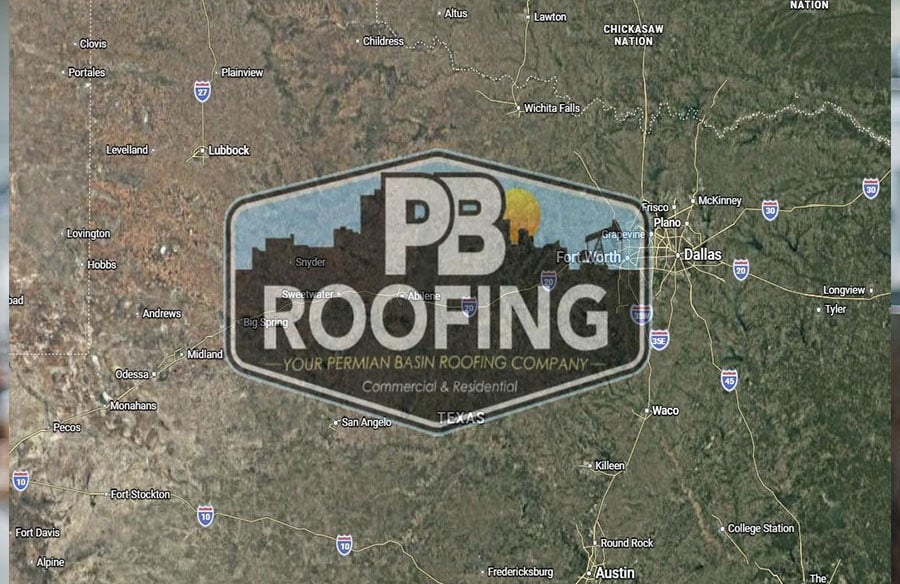
The stated service area covers Odessa, West Odessa, and Midland along with the wider Permian Basin, including Andrews, Big Spring, Fort Stockton, Kermit, Lamesa, Monahans, Pecos, and Seminole. For property owners anywhere in that footprint, the response to this article’s subject starts with one step: a free professional inspection that reads the sun, wind, and dust wear on the actual roof, documents its condition slope by slope, and puts its realistic remaining life in writing. The West Texas climate will keep doing what it does every day; knowing exactly what it has done to a particular roof so far is free, and it is the difference between managing the weather and being managed by it.
Sean Carroll Jr
13311 W County Rd 122, Odessa, TX 79765
PB Roofing
(432) 853-7270
https://roofingpb.com/
[email protected]