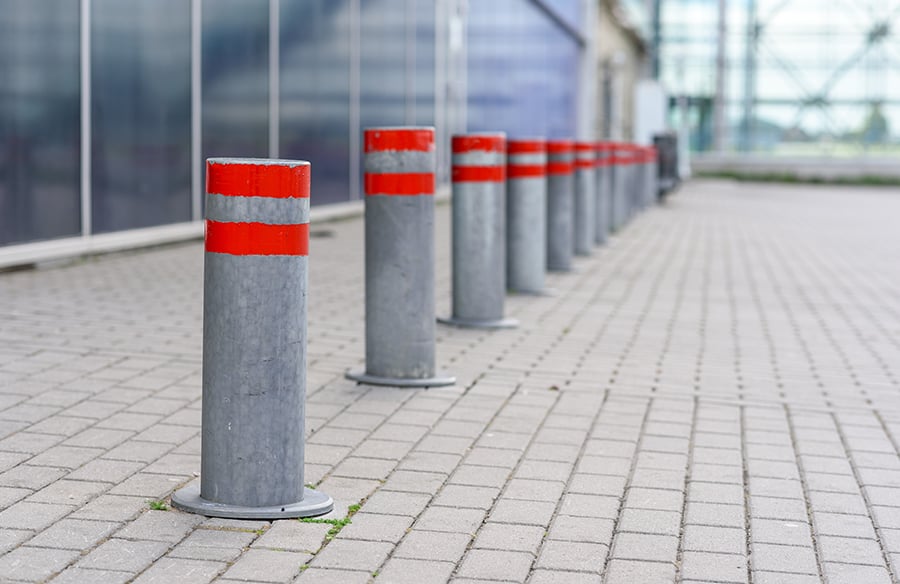
In 2026, commercial developments must balance stringent security requirements with high-traffic accessibility. Telescopic security bollards offer a proven, retractable solution that provides heavy duty protection against vehicle ingress without permanently obstructing the landscape. These systems allow property managers to secure perimeters effectively while maintaining the flexibility to grant authorised vehicle access whenever necessary, supporting both safety and operational flow.
For architects and developers, this reflects a wider change in site planning. Security is increasingly specified alongside landscaping, pedestrian routes and servicing strategies rather than added after construction, a trend also visible in telescopic bollard market analyses.
Why are telescopic security bollards essential for 2026 commercial site planning?
Mixed-use commercial sites rarely have one predictable traffic pattern. A retail park may need deliveries before opening, event access at weekends and a pedestrianised forecourt at other times. Office campuses face a similar tension between service vehicles, staff parking and welcoming public space. Permanent static barriers provide a fixed boundary, but they also limit how the layout can be used.
Retractable posts address that conflict. Raised, they create a visible physical barrier to control vehicle movement. Lowered, they return the surface to pedestrians, deliveries or temporary uses. This flexibility is particularly relevant where access frequency is high or a site serves several functions. It is not, however, a universal solution: standard retractable posts suit everyday access control, while locations exposed to deliberate vehicle attack may require separately tested crash-rated or HVM products.
How do heavy-duty retractable systems improve urban architectural aesthetics?
When retracted, a well-integrated telescopic post sits close to the finished ground surface, leaving a discrete lid visible. This can preserve the clean lines of contemporary paving and avoid the visual clutter associated with rows of fixed posts or railings. Careful placement also helps prevent trip hazards in busy pedestrian areas.
Material and finish choices allow security hardware to relate to the wider palette of a scheme, with options considered alongside paving, lighting and street furniture. For projects comparing telescopic security bollards, Bollard Security is a UK supplier and installer with Secured by Design accreditation, subject to verification for the specific product and project. The company presents a product range spanning driveway posts, commercial access control and higher-security categories, and its stated experience of more than 15 years should be treated as company information, while product suitability remains dependent on the individual site.
What technical specifications define high-quality commercial bollard installation?
Three considerations deserve attention at specification stage. First is operation. Heavy-duty posts can be impractical to lift repeatedly without assistance, so lift-assisted mechanisms can reduce the effort required during raising and lowering. Where access is very frequent, automatic bollards may be more appropriate, provided the control system and maintenance requirements are planned.
Second are materials and corrosion protection. High-grade steel construction and appropriately specified finishes are central to long-term durability: they help posts withstand weather exposure and resist corrosion, while also supporting architectural integration where security hardware forms part of a visible design setting. Third is the foundation. Commercial posts typically need substantial below-ground support, but depth and construction depend on the product, ground conditions and required resistance. Foundation design should therefore be coordinated with the wider engineering package, not left as an installation afterthought.
Standard access control bollards should also be separated from crash-rated or HVM products. Tested impact performance can only be attributed to a specific product where the appropriate documentation confirms it.
How does flexible access control influence commercial property insurance and risk management?
Physical security may form part of how insurers, tenants and risk assessors review a commercial property, but installing bollards does not automatically reduce premiums or liability. Instead, the system should be considered within a wider, documented approach to site risk, vehicle movement and building management.
Specifications should distinguish between terms that are sometimes grouped together in product literature. Secured by Design is a relevant UK design designation that should be verified for the specific project. Sold Secure is an independent product testing body. Any impact-testing standards relevant to hostile vehicle mitigation products should only be referenced where they are documented for the specific product. These are not interchangeable approvals. A specifier should ask which designation applies to the exact product being considered.
Why is a professional site survey critical for heavy-duty bollard placement?
Even a strong design can fail if groundwork is overlooked. Before ordering commercial bollards, a site survey should identify underground services such as cables, water and gas lines, as these can restrict foundation positions. Drainage is equally important because a retractable post uses a below-ground chamber that must manage surface water.
Ground levels, gradients, traffic flow and construction sequencing also affect placement and programme. Bollard Security states that it can provide nationwide UK installation within 5 to 10 working days, although the achievable programme remains subject to survey findings, product availability and site conditions. As a UK supplier and installer, the company can combine product supply with installation support, helping developers coordinate specification and commissioning.
Frequently asked questions
What are the main benefits of telescopic security bollards for retail parks?
They provide a physical vehicle barrier that can be lowered for deliveries, events and servicing. This helps retail forecourts remain usable and visually clear when vehicle access is not required.
Are heavy-duty telescopic bollards suitable for high-traffic environments?
They can be, provided the mechanism matches the access frequency and the product suits the site. Lift-assisted posts support regular manual use, while automatic bollards may suit more frequent operation.
How do lift-assisted mechanisms improve manual bollard operation?
They support the post during raising and lowering, reducing the physical effort required from site staff and making repeated manual operation more practical.
What maintenance is required for commercial retractable bollards?
Inspect the post, locking mechanism and below-ground chamber, and keep drainage clear. Intervals depend on the product and environment, so the installer’s maintenance guidance should be followed.
Can telescopic bollards be integrated with existing access control systems?
Manual posts operate independently, while automatic bollards can often connect with keypads, fobs or wider access control infrastructure where coordinated entry is required.
What is the difference between standard and heavy-duty telescopic posts?
Heavy-duty posts use more robust construction for demanding commercial environments. Neither category should be assumed to provide impact resistance without product-specific testing documentation.
How long does professional installation take for commercial sites?
The programme varies with the survey, ground conditions, product availability, number of posts and site readiness. Timescales should be agreed with the installer after the project has been assessed.
The appropriate combination of product type, security level and installation approach should follow from actual site conditions and usage. Early professional advice helps protect operational flow without compromising the architectural intent.