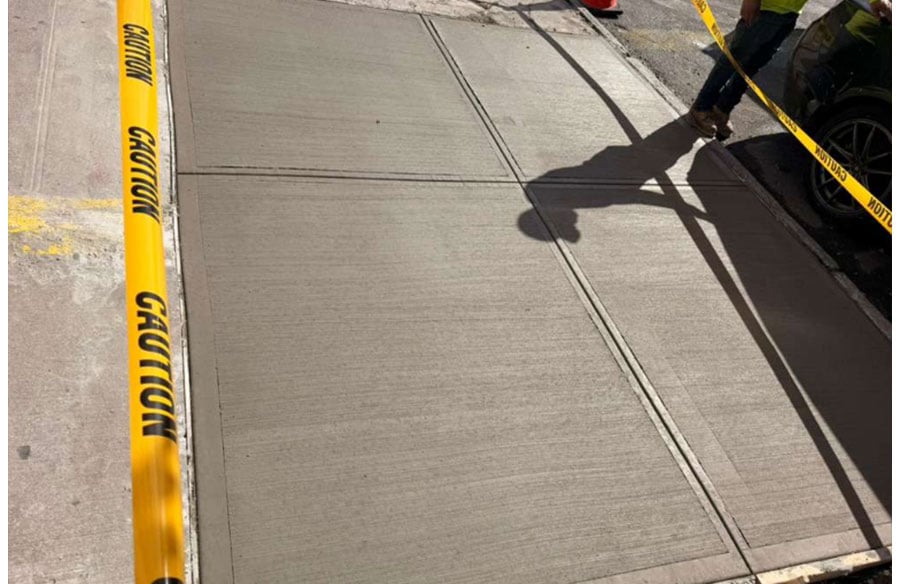
Sidewalks are a significant part of New York City’s infrastructure. They provide safe walking routes for residents, connect neighborhoods, and give people access to homes, businesses, schools, and public spaces. However, years of foot traffic, changing weather, tree root growth, and heavy construction activity can damage sidewalk surfaces. Cracked concrete, raised slabs, loose pavement, and uneven walking areas can create hazards for pedestrians.
Maintaining sidewalks is not just a matter of appearance. In New York City, property owners have specific responsibilities for sidewalk maintenance and may receive violations when their sidewalks fail to meet city requirements. Understanding the rules, repair process, and equipment used by professional contractors can help property owners make informed decisions.
This guide explains how sidewalk repair services work in NYC, what regulations property owners should understand, and which tools and equipment are commonly used to complete repairs safely and correctly.
Understanding NYC Sidewalk Repair Requirements
New York City has regulations governing sidewalk maintenance and repair. Under Section 19-152 of the NYC Administrative Code, property owners are generally responsible for maintaining the sidewalks adjoining their properties in a reasonably safe condition.
This responsibility applies to many residential and commercial properties. However, there are certain exceptions, including specific situations involving one-, two-, or three-family owner-occupied residential properties, depending on the applicable legal requirements.
The NYC Department of Transportation (DOT) oversees sidewalk inspections and issues violations when it identifies certain defects. Property owners should pay attention to these notices because ignoring a sidewalk violation can lead to additional expenses and enforcement action.
Common Sidewalk Defects That Require Attention
Not every crack requires complete sidewalk replacement, but certain conditions can create pedestrian hazards and require corrective work.
Common sidewalk problems include:
- Uneven concrete slabs: One section of a sidewalk sits higher than an adjoining section, creating a tripping hazard.
- Cracked concrete: Cracks can develop because of temperature changes, soil movement, aging materials, or excessive loads.
- Missing or broken sections: Damaged sidewalk panels may leave gaps or unstable walking surfaces.
- Tree root damage: Growing tree roots can push concrete slabs upward or cause them to crack.
- Poor drainage: Standing water can accelerate surface deterioration and contribute to further damage.
- Deteriorated joints: Damaged expansion or control joints can allow water to enter and weaken surrounding concrete.
The appropriate repair depends on the extent and cause of the damage. Minor defects may be addressed through localized repairs, while severely damaged sections may need to be removed and replaced.
NYC DOT Sidewalk Violations and Property Owner Responsibilities
A sidewalk violation is an official notice indicating that a sidewalk does not meet applicable city maintenance requirements. The DOT may identify defects during inspections or through other inspection processes.
When a property owner receives a violation, the notice should be reviewed carefully. It typically identifies the location and nature of the problem and provides instructions for correction.
What Happens After Receiving a Violation?
Property owners should take the following steps:
- Review the violation notice: Check the affected sidewalk location, defect description, and correction deadline.
- Arrange a professional inspection: A qualified contractor can assess the damage and determine the appropriate repair method.
- Check permit requirements: Sidewalk work generally requires a DOT permit before construction begins.
- Complete the necessary repairs: The damaged section should be repaired or replaced according to applicable city standards.
- Arrange the required sign-off: Follow the instructions for inspection, documentation, and violation closure.
The correction period stated in the violation notice is important. Property owners should not assume that repairing the concrete automatically closes the violation. They should also confirm that the required inspection or documentation has been completed.
Who Is Responsible for Sidewalk Repairs?
In most cases, the adjoining property owner is responsible for maintaining the sidewalk. This includes sidewalks in front of private residential buildings and commercial properties.
However, responsibility can depend on the property type and circumstances. Certain residential properties may qualify for statutory exceptions, and damage involving city-owned trees or public infrastructure can require additional review.
Before starting a project, property owners should understand their responsibilities and confirm whether any special requirements apply to their location.
Permits and Regulations for Sidewalk Repair in NYC
Sidewalk construction in New York City is regulated to protect pedestrians, maintain public access, and ensure that completed work meets city standards.
The NYC DOT generally requires a permit before contractors perform sidewalk construction, replacement, or other regulated work in the public right-of-way.
Why Is a DOT Permit Necessary?
A sidewalk permit authorizes the work and helps the city maintain oversight of construction activities. It also ensures that contractors follow applicable requirements for pedestrian protection, construction materials, and worksite conditions.
Depending on the project, contractors may need to submit an application, provide supporting information, and meet additional requirements before beginning work.
Property owners should confirm that their contractor has addressed the necessary permits rather than assuming that a routine concrete repair does not require authorization.
Sidewalk Construction Standards
Repairs should follow the applicable NYC DOT specifications. These requirements can cover concrete quality, sidewalk thickness, surface finish, joints, slope, and other construction details.
The specifications may vary depending on the sidewalk location and conditions. For example, work around street trees, utility structures, driveways, and vaults can involve additional considerations.
Properties located in designated historic districts may also require approval from the NYC Landmarks Preservation Commission before certain exterior work can proceed.
For this reason, professional contractors should review the project location and applicable requirements before ordering materials or removing existing concrete.
Essential Equipment Used in Professional Sidewalk Repair
Sidewalk repair involves more than pouring fresh concrete over a damaged surface. Contractors need appropriate equipment to remove old materials, prepare the base, install concrete, and create a durable finish.
The equipment used depends on the size of the project, sidewalk condition, accessibility, and surrounding structures.
1. Concrete Cutting Saws
Concrete cutting saws are used to create clean, controlled cuts in existing concrete. They help contractors separate damaged sidewalk sections from surrounding pavement before removal.
A straight cut makes it easier to remove the affected area without unnecessarily damaging adjacent concrete. Walk-behind saws are useful for larger sections, while handheld models can help with smaller or more restricted areas.
2. Jackhammers and Concrete Breakers
Jackhammers and electric or hydraulic concrete breakers help remove damaged concrete slabs. These tools break thick or heavily deteriorated sections into smaller pieces that workers can remove.
Contractors must use these tools carefully, especially near underground utilities, tree roots, and existing structures. Uncontrolled demolition can cause additional damage and increase repair costs.
3. Excavators and Mini Skid Steers
Larger sidewalk projects may require compact excavation equipment to remove broken concrete, excavate unsuitable soil, or transport materials.
Mini skid steers are particularly useful in restricted urban spaces where larger machinery cannot operate efficiently. Their compact size helps contractors work around buildings, trees, and other obstacles.
4. Concrete Mixers and Ready-Mix Concrete Trucks
Concrete can be supplied through ready-mix delivery trucks or prepared using suitable mixing equipment, depending on the project’s size and site conditions.
For sidewalk work, contractors must use concrete that meets the applicable DOT specifications. The correct mix design, strength, and air-entrainment requirements are important for durability, especially in areas exposed to freezing temperatures and deicing salts.
5. Screeds and Concrete Floats
After concrete placement, workers use screeds to level the material and establish the required surface profile.
Concrete floats help smooth and consolidate the surface before the final finishing process. Proper finishing creates an even walking surface while maintaining the necessary texture for pedestrian traction.
6. Edging and Jointing Tools
Edging tools create neat edges along sidewalk panels, while jointing tools help form control joints.
These joints are important because concrete naturally expands, contracts, and develops shrinkage cracks. Properly placed joints help control where cracking occurs and improve the appearance of finished sidewalk panels.
7. Compactors and Base Preparation Equipment
A stable base is essential for a durable sidewalk. Contractors may use plate compactors or other suitable compaction equipment to prepare the underlying soil or aggregate.
Poor compaction can lead to settlement, uneven surfaces, and premature cracking. Base preparation should therefore receive as much attention as the concrete installation itself.
8. Safety Barriers and Pedestrian Protection Equipment
Sidewalk construction takes place in public spaces, so pedestrian safety must remain a priority.
Common site-protection equipment includes:
- Construction barricades and safety fencing
- Traffic cones and warning signs
- Pedestrian detour signage
- High-visibility clothing
- Safety helmets, gloves, and protective eyewear
- Dust-control equipment
Contractors must maintain appropriate pedestrian access and follow applicable work-zone safety requirements throughout the project.
How Professional Sidewalk Repair Services Work
Although every project has different requirements, professional sidewalk repair generally follows a series of steps.
Step 1: Inspection and Damage Assessment
The contractor examines the sidewalk to identify damaged panels, raised sections, drainage problems, and possible underlying causes.
The inspection also helps determine whether the project requires localized repairs or more extensive replacement.
Step 2: Permits and Worksite Preparation
Before construction starts, the contractor addresses the required DOT permits and other applicable approvals.
The work area is then secured with appropriate barriers and pedestrian protection measures. Existing utilities, nearby trees, and surrounding structures should also be considered.
Step 3: Removal of Damaged Concrete
Workers use cutting saws and concrete breakers to remove defective sections. Broken concrete is collected and transported for appropriate disposal.
The removal process should avoid unnecessary damage to surrounding pavement and public infrastructure.
Step 4: Base Preparation
Once the old sidewalk has been removed, contractors inspect the exposed base. Loose or unsuitable material may need to be excavated and replaced.
The underlying area is then prepared and compacted to provide a stable foundation for the new sidewalk.
Step 5: Concrete Placement and Finishing
The concrete is placed, spread, and leveled to meet the required dimensions and surface profile. Contractors form the necessary joints and finish the surface to provide a suitable walking area.
The concrete should also be protected during the curing process to reduce the risk of premature damage.
Step 6: Final Inspection and Documentation
After the work is completed, the contractor checks the finished surface for proper alignment, drainage, joint placement, and overall workmanship.
Where a DOT violation is involved, the property owner should follow the applicable inspection and documentation procedure to obtain the required sign-off or closeout.
Choosing a Sidewalk Repair Contractor in NYC
Selecting a contractor is an important part of any sidewalk repair project. A low initial estimate does not necessarily represent the best value if the work does not meet city requirements or needs to be corrected later.
Property owners should look for contractors who understand NYC DOT regulations, have experience with local sidewalk conditions, and can explain the repair process clearly.
For example, NY Vanta Contractors is one of the NYC contractors that property owners can consider when researching sidewalk and concrete repair services. When evaluating a company, it is useful to review its relevant project experience, licensing and insurance documentation, permit-handling process, and approach to completing work according to city specifications.
Before hiring any contractor, consider asking these questions:
- Have you completed similar sidewalk projects in NYC?
- Will you handle the required DOT permit application?
- What materials and concrete specifications will you use?
- How will you protect pedestrians during construction?
- Is the estimate inclusive of demolition, disposal, materials, and labor?
- What documentation will be provided after completion?
- How will the work address the underlying cause of the damage?
Getting a written estimate and understanding the scope of work can help prevent misunderstandings.
How Much Does Sidewalk Repair Cost in NYC?
The cost of sidewalk repair depends on several factors, so there is no single price that applies to every property.
Important cost factors include:
- The total square footage requiring repair
- The thickness and condition of existing concrete
- Whether demolition and excavation are necessary
- The condition of the underlying soil
- Tree roots and underground utility obstructions
- Concrete specifications and material requirements
- Permit, site preparation, and pedestrian protection requirements
- Accessibility and equipment requirements
A small repair involving a limited number of sidewalk panels may cost considerably less than replacing an extensive sidewalk area.
Property owners should compare estimates based on the same scope of work. A detailed quote should explain what is included, identify potential additional expenses, and clarify whether permit-related services are covered.
Maintaining Sidewalks After Repairs
Completing the repair is only part of maintaining a safe sidewalk. Regular observation can help property owners identify developing problems before they become more extensive.
Keep the following maintenance practices in mind:
- Inspect sidewalk panels periodically for cracks and movement.
- Pay attention to areas where tree roots are close to the surface.
- Keep drainage paths clear to reduce standing water.
- Avoid placing excessive loads on areas that may not be designed to support them.
- Address minor deterioration before it spreads.
- Follow the contractor’s guidance regarding concrete curing and when the repaired area can be reopened to pedestrians.
Property owners should also keep copies of permits, contractor invoices, inspection records, and other relevant documentation.
Final Thoughts
Sidewalk repair in New York City requires careful planning, appropriate equipment, and an understanding of local regulations. From identifying pedestrian hazards to securing permits and preparing a stable concrete base, each stage contributes to the quality and durability of the finished sidewalk.
Property owners who receive a DOT violation or notice visible sidewalk damage should address the issue promptly. Working with an experienced contractor who understands NYC construction requirements can make the process easier and help reduce the risk of incomplete or non-compliant repairs.
A properly repaired sidewalk does more than improve the appearance of a property. It helps maintain safer pedestrian routes and supports the condition of the surrounding neighborhood.