According to the STAR*D trial funded by the National Institute of Mental Health, roughly 30% of people with major depression do not respond to antidepressant medications, even after multiple attempts. That figure represents millions of people stuck in a frustrating cycle of trying one drug after another. For them, the question is not which pill comes next, but whether a different kind of treatment might work at all.
rTMS treatment for resistant depression is one such alternative. Repetitive transcranial magnetic stimulation, or rTMS, is a non-invasive procedure that uses magnetic pulses to stimulate areas of the brain involved in mood regulation, offering relief without medication. It is specifically designed for people who have not found success with traditional approaches.
Because depression and anxiety so often travel together, many people exploring this path also look into rtms therapy for anxiety, since the same brain-stimulation principle applies to both conditions. The treatment has grown from an experimental idea into an established option backed by more than fifteen years of clinical use. Knowing how it works, and who it helps, can open a door that medication alone could not.
This article covers what rTMS is, how it performs for treatment-resistant cases, what a course of treatment looks like, and the realistic limits worth knowing.
What Makes Depression “Treatment-Resistant”?
Treatment-resistant depression is generally defined as depression that has not improved after at least two adequate trials of antidepressant medication. The label does not mean a person is untreatable; it means the standard first approach has not worked.
The threshold is well established in research. STAR*D, the largest real-world depression trial ever conducted, found that the likelihood of remission drops sharply after two failed medication trials, which is why two failures became the working definition. Each additional medication attempt tends to bring lower odds and more side effects.
This is exactly the gap rtms treatment was developed to fill. Rather than continuing to cycle through drugs with diminishing returns, rTMS approaches the problem through a completely different mechanism.
Signs You May Have Treatment-Resistant Depression
A few patterns suggest a case has moved beyond standard treatment:
- Two or more antidepressants tried without meaningful relief
- Symptoms returning even while on medication
- Intolerable side effects forcing repeated medication changes
- Partial improvement that never reaches full recovery
- Depression lasting years despite consistent treatment
How Does rTMS Treatment Work?
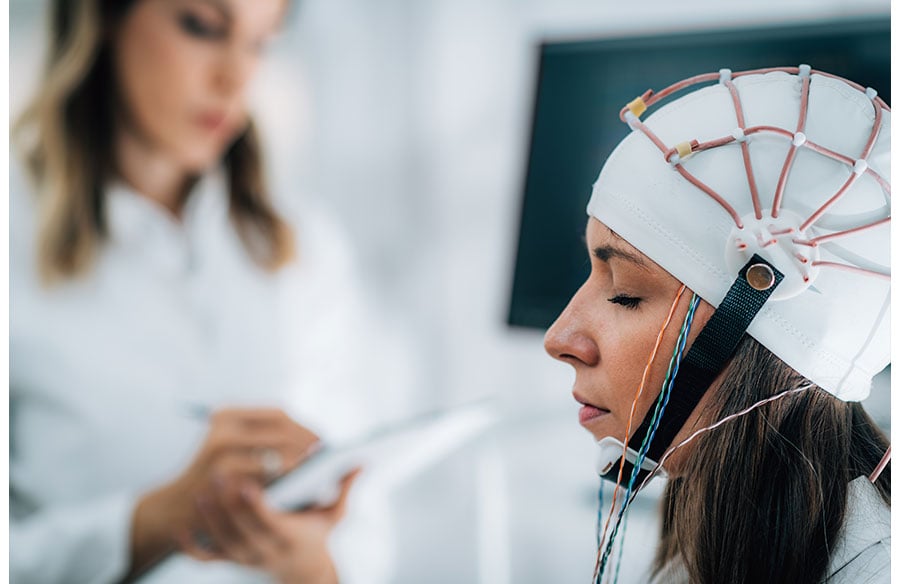
rTMS works by delivering targeted magnetic pulses to the prefrontal cortex, a brain region that tends to be underactive in people with depression. These pulses stimulate nerve cells, gradually restoring healthier activity in mood-regulating circuits.
The process is grounded in established neuroscience. During a session, an electromagnetic coil placed against the scalp generates magnetic fields identical in strength to an MRI, which pass painlessly through the skull to reach the target area. Repeated sessions strengthen these neural connections over time, which is why a full course matters.
What sets rtms treatment for depression apart is its precision and its side-effect profile. Because it targets specific brain regions rather than flooding the entire body like a pill, it avoids the systemic effects that drive many people away from antidepressants.
What a Typical Course Looks Like
Treatment follows a predictable structure that helps set expectations:
- Initial evaluation. A licensed psychiatrist confirms eligibility and maps the treatment target.
- Daily sessions. Most protocols involve sessions five days a week, each lasting roughly 20 to 40 minutes.
- Treatment window. A standard course runs four to six weeks, depending on the individual plan.
- Awake and alert. Patients sit in a chair, fully conscious, and can read or watch TV during sessions.
- Immediate return to life. With no sedation or downtime, people drive themselves home and resume their day.
How Effective Is rTMS for Resistant Cases?
rTMS produces meaningful improvement in a substantial share of people who failed medication, which is notable given how difficult these cases are. Response and remission rates are encouraging precisely because this group has already exhausted standard options.
The clinical data supports its use. Research on people with treatment-resistant depression has shown response rates well above those seen with additional medication trials, with many patients reaching full remission. For a population where each new drug offers shrinking odds, those results represent a real shift.
| Feature | rTMS Treatment | Antidepressant Medication |
| Mechanism | Targeted magnetic brain stimulation | Body-wide chemical changes |
| Common side effects | Mild scalp discomfort, headache | Weight gain, fatigue, sexual issues |
| Downtime | None | None, but adjustment period varies |
| Best suited for | Those who failed medication | First-line treatment |
| Administration | In-clinic, daily for weeks | Daily at home |
Who Is a Good Candidate for rTMS?
The strongest candidates are adults with major depression who have tried antidepressants without adequate relief. It is designed as a next step, not usually a first one.
Eligibility depends on a few factors that a clinician reviews carefully. People with certain metal implants in or near the head, or with a history of seizures, may not be suitable, which is why evaluation is essential. Most others who have struggled with medication are potential candidates.
Beyond depression, the same approach extends to related conditions. Some people pursuing rtms therapy for anxiety do so because their anxiety coexists with depression, and addressing the shared brain circuitry can ease both. A consultation is the only reliable way to confirm fit.
Questions Worth Asking Before Starting
Anyone considering treatment can come prepared with a few practical questions:
- Am I a candidate given my medical and medication history?
- How many sessions will my specific plan require?
- Will my insurance cover the treatment?
- What response rate is realistic for my situation?
- What happens if I respond only partially?
Living Through a Course of Treatment
Daily life during rTMS stays remarkably normal, which is one of its quiet advantages. Because there is no sedation and no recovery period, most people fold sessions into their routine without major disruption.
The main commitment is scheduling. Showing up five days a week for several weeks takes planning, especially around work, which is the most common practical hurdle people mention. Many patients begin noticing shifts in mood within two to four weeks, though completing the full course gives the best chance of lasting results.
For New Yorkers exploring non-invasive depression treatment in Brooklyn, proximity to the clinic makes that daily schedule far more sustainable over the full treatment window.
Where rTMS Fits in the Bigger Picture
The clearest takeaway is that failing antidepressants does not mean failing at recovery, and rTMS offers a genuinely different route for people who had begun to lose hope. It treats the brain directly, sidesteps the side effects that derail so many medication plans, and carries strong evidence behind it.
Recovery from treatment-resistant depression is realistic with the right approach. If medication has repeatedly fallen short, a professional consultation can clarify whether this proven, non-invasive option belongs in your plan.
Reach out to a licensed provider for a confidential evaluation to find out whether rTMS is the right next step for your depression.
Frequently Asked Questions
How is rTMS different from electroconvulsive therapy?
They are very different treatments. rTMS is non-invasive, requires no anesthesia, and produces no seizure, while ECT involves sedation and an induced seizure. rTMS also has far milder side effects and no recovery time.
Will my results from rTMS last after treatment ends?
Many people maintain improvement for months or longer after a completed course. Some benefit from occasional maintenance sessions if symptoms begin returning. Pairing rTMS with therapy or medication can help sustain results over time.
Is rTMS painful during the sessions?
Most people describe a tapping sensation on the scalp rather than pain. Any discomfort, such as mild headache, usually fades within the first week as you adjust. The treatment requires no numbing or sedation.
Can I keep taking my antidepressants during rTMS?
Yes, in most cases you can continue your current medication. Many people undergo rTMS alongside their existing prescriptions, and any changes are made gradually under a doctor’s supervision. Your provider will tailor this to your situation.