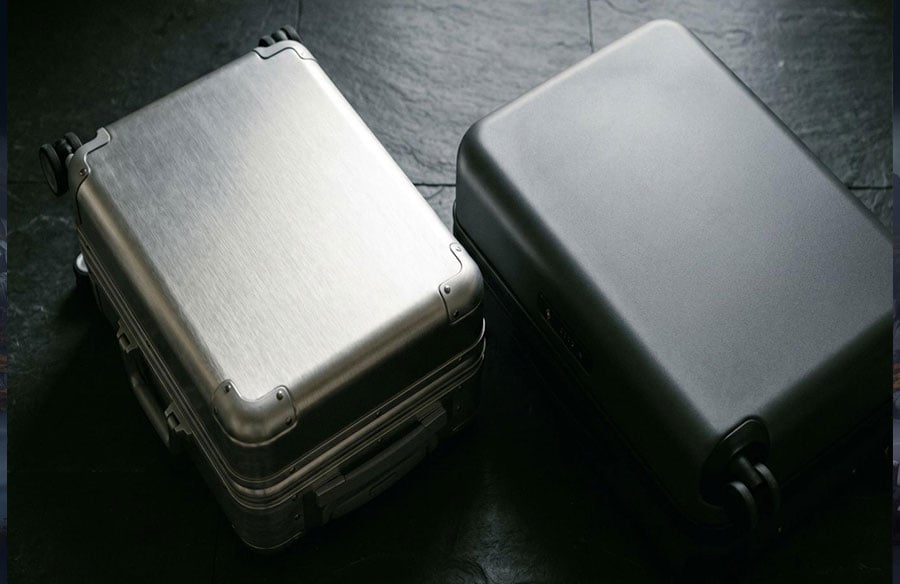
Every material decision in product design communicates something. In luggage, that communication is unusually direct — the shell is the product. Before the zipper is opened, before the interior is inspected, the shell material has already told the customer something about the brand’s positioning, price point, and values.
For brand buyers and product designers working in the luggage category, material selection is not a specification detail to be handled at the end of the design process. It is a brand architecture decision that should be made at the beginning.
Aluminum: The Language of Permanence
Aluminum luggage occupies a specific visual and emotional register. The brushed finish, the visible panel construction, the latched closure rather than a zipper — these details communicate durability, engineering, and a certain indifference to fashion cycles. Aluminum luggage is not designed to be this season’s color. It is designed to last.
An experienced aluminum luggage manufacturer offers surface treatment options including brushed, sandblasted, and anodized finishes — each communicating a distinct brand aesthetic. Brushed aluminum reads as industrial and functional. Anodized color reads as considered and contemporary. Sandblasted matte reads as understated premium. The same alloy, three different brand statements.
For brands targeting the $280 and above retail tier, aluminum provides the physical credibility to support the price point. For brands targeting corporate gifting, duty-free, or specialty retail channels, the material’s perceived permanence aligns with the purchase context.
Polycarbonate: The Language of Flexibility
Polycarbonate communicates differently. Its elastic recovery — the ability to flex under impact and return to shape — is a functional property that has also become a design language. PC luggage can be any color, any texture, any finish. It can be matte or gloss, solid or translucent, minimal or expressive.
For brands in the $80 to $250 retail range, for e-commerce and DTC channels, for fashion-adjacent luggage lines that refresh color seasonally, PC is the material that delivers the commercial flexibility the business model requires. A color change requires no new tooling — only a resin color adjustment in the thermoforming process.
Hybrid Approaches and the Scaling Path
Some brands use material strategically across their product line rather than committing to a single shell. An aluminum carry-on as a hero SKU, a PC checked bag range for volume, a titanium limited edition for brand authority. This approach requires a manufacturing partner with genuine multi-material capability.
Working with a custom luggage manufacturer that supports both aluminum and polycarbonate production under one roof gives design-led brands the flexibility to evolve their material mix as the brand scales — without the supplier transition risk that comes with splitting production across multiple factories.
The Practical Implication
Material choice has downstream consequences: MOQ thresholds, tooling costs, lead times, surface treatment options, and the QC framework required to maintain consistency across production runs. The design decision and the sourcing decision are not separable. Brands that treat them as sequential rather than parallel processes typically discover this when the first bulk order arrives.