Two dirt bikes can weigh the same and feel different when you push them through the garage, change direction on a trail, or stop on uneven ground. Total weight matters, but so does where that weight sits. Battery position, motor location, suspension, and the rider’s own movement all contribute to the result.
For a buyer, the goal is to connect those design choices with recognizable riding tasks. A compact battery installation may look promising, yet the motorcycle can still be difficult to manage if its seat is too tall, its controls are awkward, or its suspension is poorly matched to the load. Handling belongs to the complete bike and rider combination.
Start with the weight you will actually ride
Compare motorcycles in a ready-to-ride condition. Check whether the listed weight includes the battery, and identify any accessories fitted to the demonstration bike. For a gas motorcycle, account for fuel when comparing weights. A dry specification and a fully equipped electric bike are different starting points.
Then include yourself, protective equipment, tools, and anything carried on the ride. A bag strapped high behind the seat affects the complete system differently from the same load secured lower down in an approved mounting location. Load capacity sets an upper limit; it does not promise that every permitted load will handle equally well.
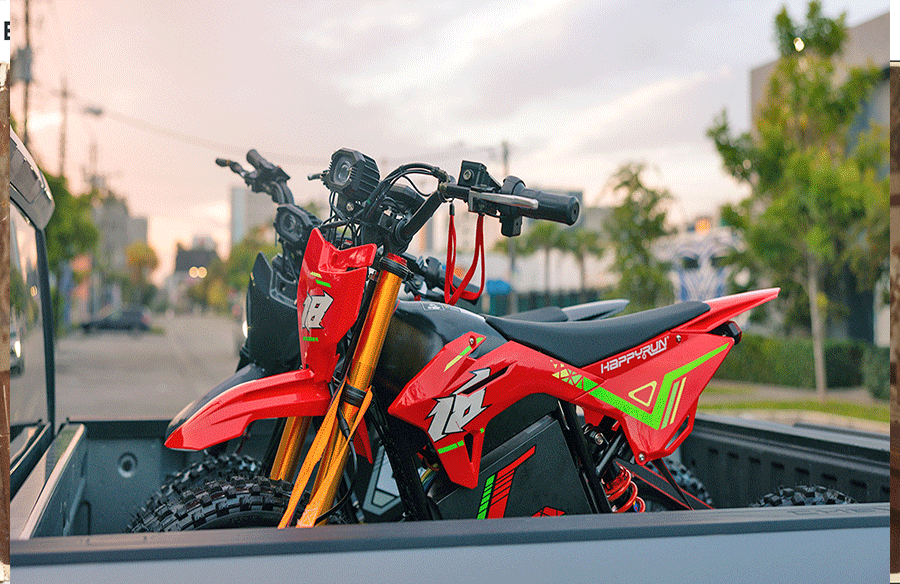
When comparing adult electric dirt bikes, examine the battery enclosure, motor placement, and riding position together. A chassis photograph can show the arrangement, but it cannot establish the actual center of gravity. Ask for ready-to-ride weight and suspension setup guidance, then assess whether the bike fits your planned load and terrain.
Separate a low center of gravity from centralized mass
The center of gravity represents the balance point of the system’s weight. Its position depends on the mass and location of all the parts included in the calculation. Adding the rider changes that position, and moving the rider changes it again. Seat height alone therefore cannot tell you the height of the combined center of gravity.
Mass centralization describes a different question: how closely the heavy parts are grouped around the relevant rotation axes. Mass farther from an axis contributes more to rotational inertia, which affects the effort required to change the rotation. Bringing major components inward can reduce that contribution without making the motorcycle lighter overall.
That distinction helps explain why a low battery is not a complete handling verdict. Packaging also has to accommodate ground clearance, suspension movement, and room for the rider. Steering geometry, tires, and wheelbase remain important. Avoid assuming that every electric motorcycle is agile or that every gas motorcycle carries its weight poorly.
Notice which components move with the wheels
Motor location affects more than the appearance of the frame. A hub motor sits in the wheel assembly and adds mass that moves with the wheel as the suspension responds to bumps. A frame-mounted mid-drive places its motor in the mass supported by the suspension, although its chain, sprockets, and other drive components still require consideration.
This distinction is often described as unsprung versus sprung mass. The suspension must control the wheel assembly as it follows uneven ground. Its response depends on that assembly’s mass as well as the spring, damping, tire, and surface. Motor location is a useful design clue, but it cannot predict grip or ride quality on its own.
A mid-drive also brings its own layout and maintenance requirements. A hub-drive arrangement may simplify the route from motor to wheel. Compare complete designs rather than awarding a handling winner from the motor label alone. In particular, avoid comparing two bikes with different tires and suspension settings as if motor placement were the only difference.
| Design detail | Useful question for a buyer |
|---|---|
| Battery position | Does the enclosure leave adequate room for body movement and the intended terrain? |
| Motor location | Which components move with the wheel, and how is the suspension configured? |
| Seat and footpeg layout | Can the rider reach the controls and change position comfortably? |
| Cargo mounting | Where will the actual riding load sit, and is that installation approved? |
Include the rider in the fit check
With the bike stationary and securely supported, check the cockpit while wearing your usual boots and gloves. Look for room to move without trapping a knee against the enclosure or stretching to reach a lever. A wide seat can change how easily your feet reach the ground even when its listed height seems manageable.
Understanding the core anatomy of an electric dirt bike makes this inspection more useful. The battery, motor, frame, and suspension form one physical package, while the seat, handlebar, and footpegs determine how you interact with it. Consider the space for movement alongside the locations of the heavy components.
Standing on the footpegs does not automatically lower the combined center of gravity simply because your weight passes through the pegs. Standing usually moves your body’s center of mass upward. The value of a suitable standing position lies in the movement and control it permits, which should be learned through appropriate off-road instruction.
Have suspension sag and adjustments checked against the manufacturer’s recommendations for your riding weight. An unsuitable setup can change ride height and available suspension travel. Fixing that mismatch may be more useful than trying to judge battery placement from a photograph.
Evaluate the tasks that matter on your route
Where a demonstration ride is available, begin in a permitted, controlled area. Check smooth starts, manageable stops, and easy changes of direction before trying rougher ground. Notice whether the bike allows you to stay relaxed and make small corrections. Do not force a comparison by attempting terrain beyond your current skills.
Include the less exciting parts of ownership. Can you push the bike backward into storage, turn it in a confined space, and load it using suitable equipment? A motorcycle that feels manageable while moving can still be inconvenient when it needs to be transported or repositioned with the power off.
Choose the design that supports your actual riding routine. Favor comfortable movement, predictable response, and a suspension setup suited to your load. Weight distribution can help explain why a bike feels right, but the strongest buying evidence is how the complete machine fits the tasks you need it to perform.