
Few things disrupt a productive workday like a chair that squeaks every time you lean back, shift your weight, or swivel toward your desk. The good news is that most squeaks are easy to diagnose and even easier to fix. In this guide, we will walk you through exactly how to fix a squeaky office chair, what tools you need, and when it might be time to consider a replacement.
Why Do Office Chairs Squeak?
Office chairs are made up of dozens of moving parts: bolts, screws, springs, casters, gas cylinders, and swivel mechanisms. Over time, daily use causes these components to loosen, dry out, or wear down. The most common culprits behind a squeaky chair include:
- Loose bolts and screws that allow metal parts to rub against each other
- Dry joints and springs that have lost their original lubrication
- A worn gas cylinder or chair piston that creaks when you adjust the height
- Damaged casters (wheels) that grind against the base
- A tired tilt mechanism or seat tension spring under the seat
Identifying the source of the noise is half the battle. Once you know where the squeak is coming from, the fix usually takes less than 20 minutes.
Tools You Will Need
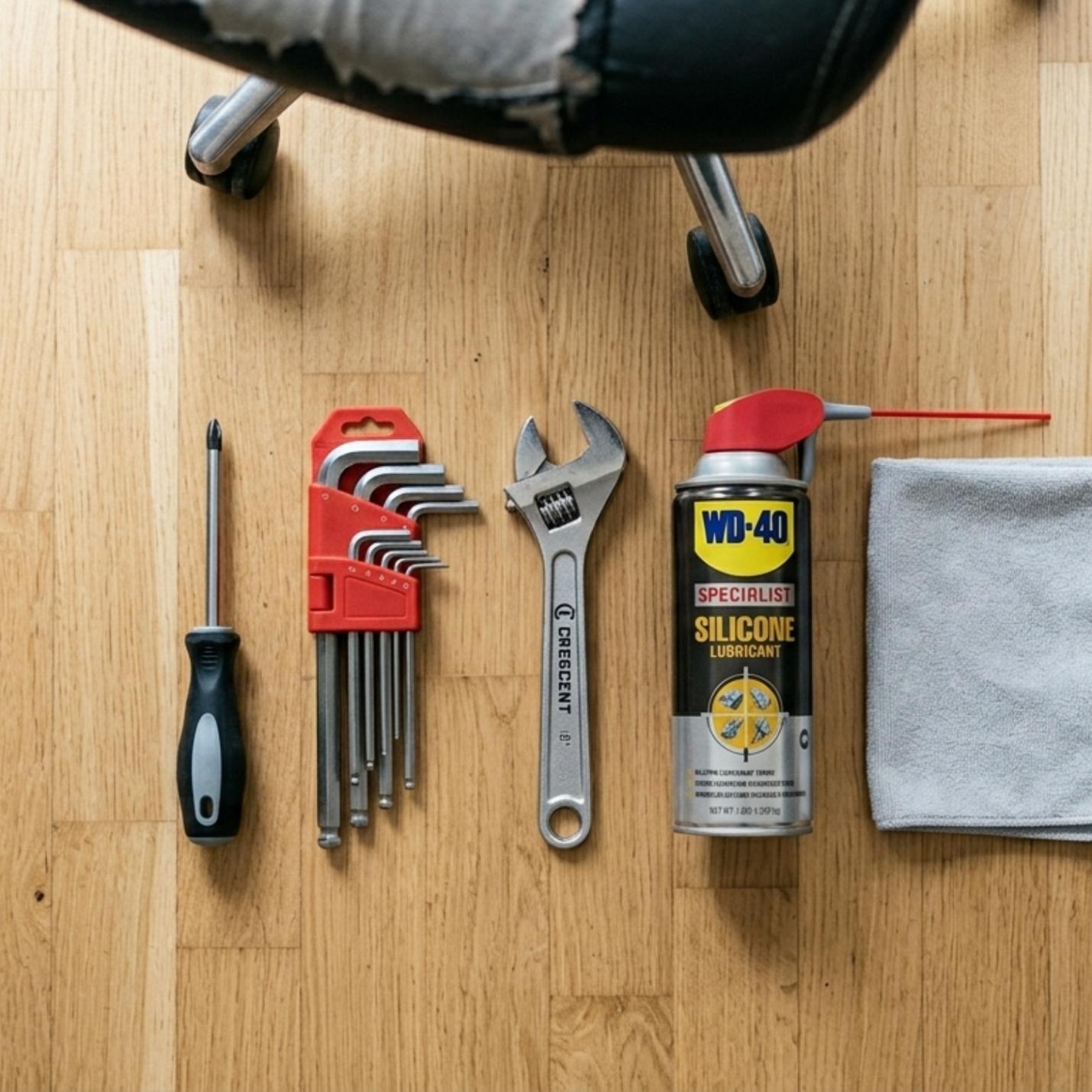 Before you begin, gather a few basic items:
- A screwdriver and an adjustable wrench (or Allen keys)
- Silicone-based lubricant or a spray such as WD-40
- A clean cloth or paper towels
- Optional: light machine oil for metal springs
Step 1: Find the Source of the Squeak
Sit in the chair and move the way you normally would: lean back, swivel, roll, and adjust the height. Better yet, ask a friend or coworker to sit in the chair while you listen closely underneath. Squeaks most often come from the seat tension spring, the swivel base, or the point where the backrest connects to the seat.
Step 2: Tighten All Bolts and Screws
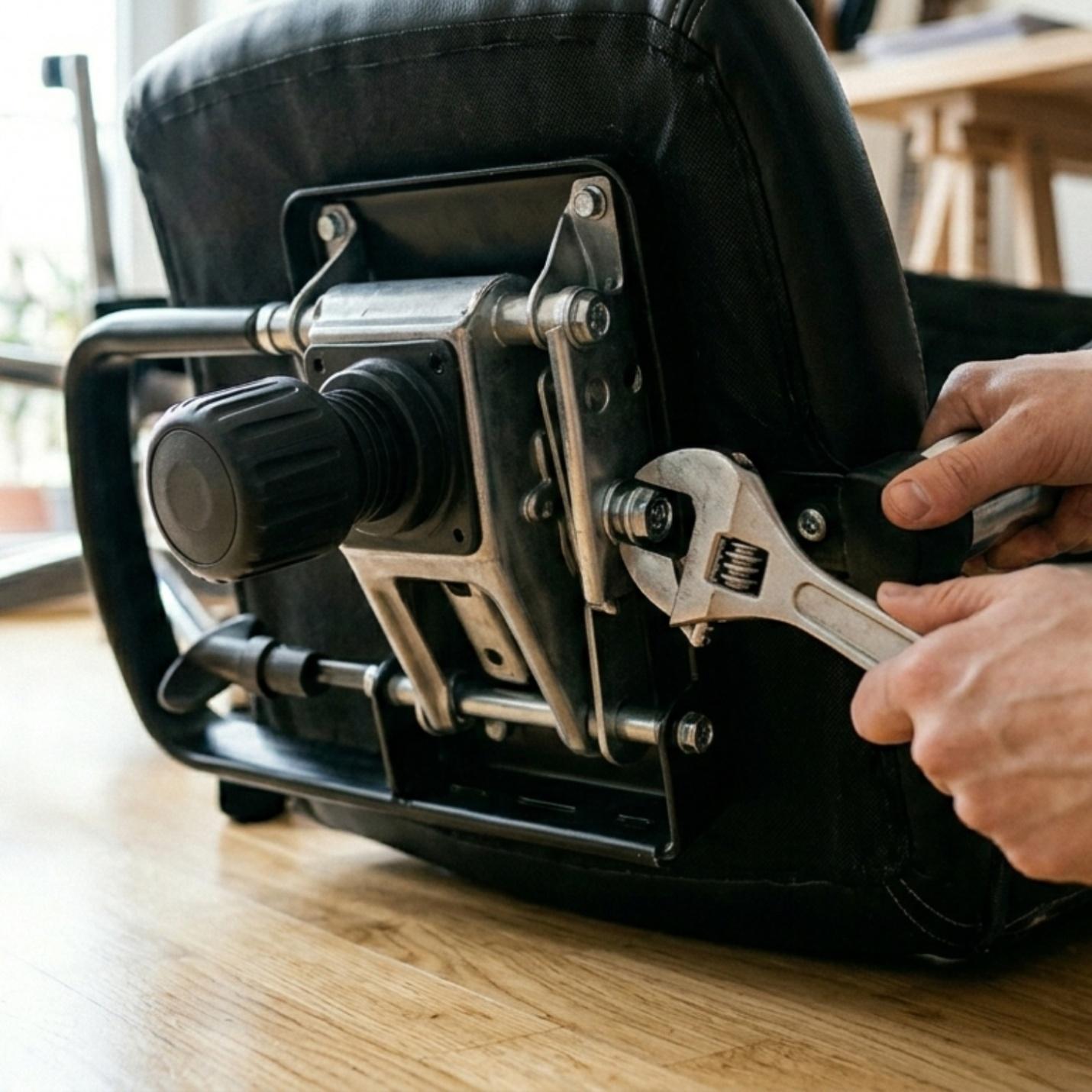 Flip the chair over or turn it on its side. Using your screwdriver or wrench, tighten every visible bolt and screw, paying special attention to the mechanism under the seat and the connection points on the backrest. Loose hardware is the single most common cause of chair noise, and this step alone resolves a large share of squeaks.
Step 3: Lubricate the Moving Parts
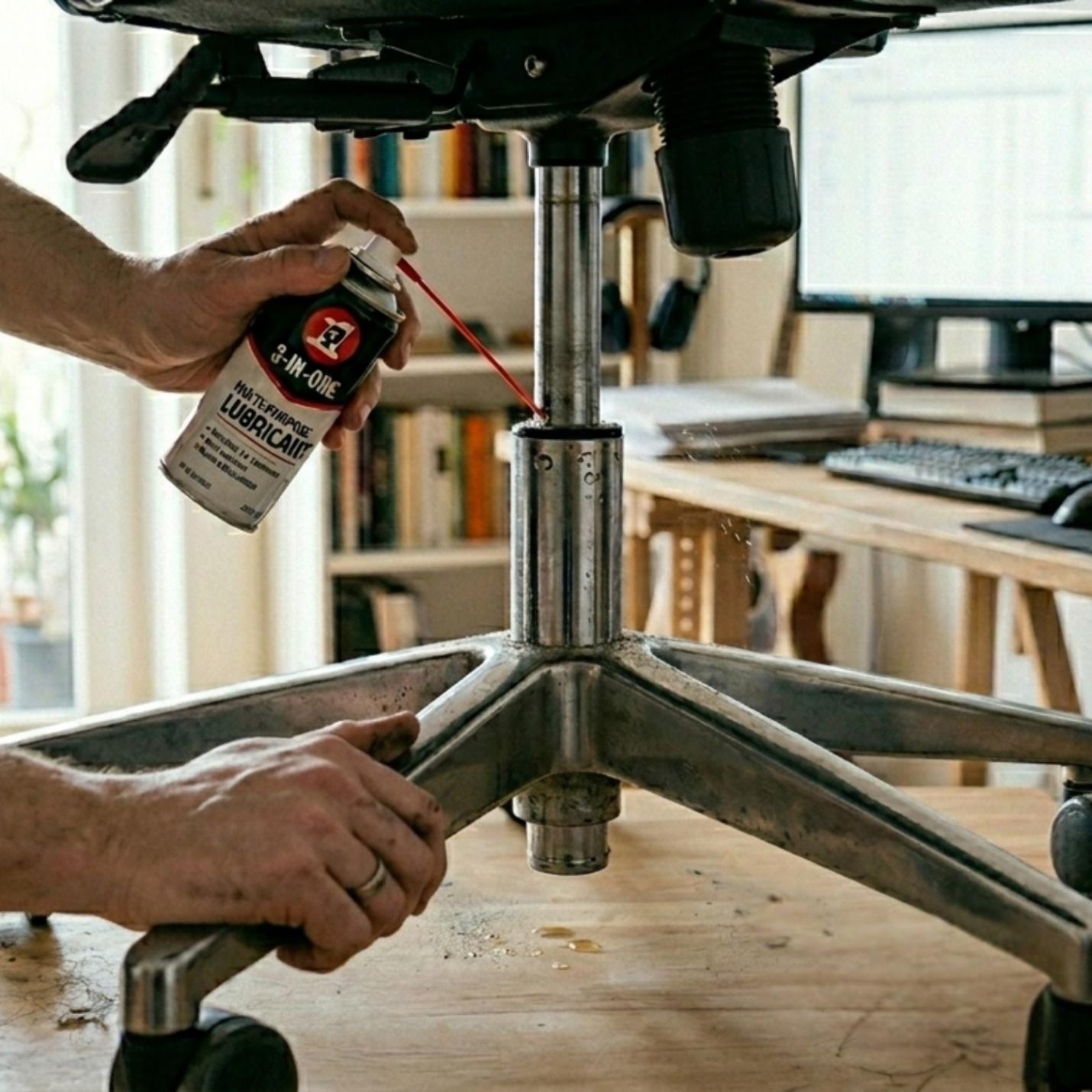 Apply a silicone-based lubricant to all joints, springs, and connection points. Spray a small amount directly onto the squeaky area, then work the mechanism back and forth to distribute the lubricant. For precision, spray the lubricant onto a cloth first and wipe it onto the part. Key areas to lubricate include:
- The seat tension spring inside the turn-knob housing
- The gas cylinder where it meets the base and the seat
- The swivel mechanism
- The points where the backrest attaches to the seat
Wipe away any excess to prevent drips on your carpet or flooring.
Step 4: Inspect the Casters
Remove each wheel from the base and clear out any hair, dust, or debris wrapped around the axle. Apply a small amount of lubricant to the axle and the wheel housing, then reattach. If a caster is cracked or wobbly, replacement wheels are inexpensive and widely available. However, if the damage extends beyond the wheels — a bent base or a cracked frame, for example — browsing an online furniture store such as OJCommerce for a new chair may be the more practical option.
Step 5: Check the Gas Cylinder
If the squeak occurs when you raise or lower the chair, the gas cylinder is likely the source. Wipe the cylinder clean, then apply a light coat of lubricant where the piston enters the housing. If the chair sinks on its own or the noise persists, the cylinder may need to be replaced — a repair that costs far less than a new chair.
Step 6: Test and Repeat
Sit back down and run through your normal movements. If the squeak remains, repeat the lubrication process; some joints require two or three applications before the lubricant fully penetrates. Stubborn squeaks in springs may benefit from a few drops of light machine oil applied directly to the coil.
Preventing Future Squeaks
A few simple habits will keep your chair quiet for years:
- Tighten hardware every few months. A quick check twice a year prevents most noise.
- Lubricate moving parts annually. Think of it as routine maintenance, like oiling a door hinge.
- Keep casters clean. Debris buildup strains the wheels and the base.
- Avoid leaning on one armrest or rocking aggressively, which stresses joints unevenly.
When Repair Is Not Enough: Time for an Upgrade?
Sometimes a squeak is a symptom of a bigger problem. If your chair has a cracked base, a failing cylinder, sagging foam, or a tilt mechanism that no longer holds tension, repairs become a temporary patch rather than a solution. A chair that constantly needs fixing may also be telling you that it was never built for full-time use in the first place.
If you have reached that point, the market offers excellent ergonomic options that do not require a four-figure budget. Modern mid-range chairs come with adjustable lumbar support, breathable mesh backs, durable gas cylinders, and smooth, quiet mechanisms designed for eight-plus hours of daily sitting. Explore this curated collection of the best ergonomic office chairs under $500 to find a replacement that combines comfort, durability, and value — without the squeaks.
Final Thoughts
Learning how to fix a squeaky office chair is a simple skill that saves money and extends the life of your furniture. In most cases, a screwdriver, a can of lubricant, and 20 minutes of effort are all it takes to restore a silent, smooth-rolling chair. Tighten the hardware, lubricate the joints, clean the casters, and your workspace will be quiet again. And if your chair is beyond saving, a high-quality ergonomic upgrade under $500 is closer — and more affordable — than you might think. Before you buy, take a moment to review the best office chair options for different desk styles so your new chair matches your workspace perfectly.