Circuit breakers are the only components in a home’s electrical system whose entire job is protection, and most homeowners never think about them until one misbehaves. Each breaker stands guard over one circuit, opening the moment current exceeds what the wiring can safely carry, which is the mechanism that keeps an overloaded or faulted circuit from overheating inside the walls. What few people realize is that breakers are mechanical devices with finite lives. Inside each one is a thermal element, a magnetic trip mechanism, springs, and contacts, and all of it degrades with age, heat, and use. A breaker that has protected a circuit for thirty Brazoria County summers has cycled through decades of thermal expansion, storm surges, and heavy air conditioning loads, and it does not retire gracefully on a schedule. It drifts, becoming either too sensitive, tripping under loads it carried for years, or too sluggish, staying closed when a fault demands it open. The first failure mode is an annoyance that announces itself; the second is invisible and dangerous, because a breaker that will not trip provides no protection at all while looking perfectly normal in the panel.
The Gulf Coast environment accelerates all of it. Breakers are calibrated around expected ambient temperatures, and a panel in an unconditioned Angleton garage runs far above that calibration through the summer, aging thermal elements and softening trip accuracy. Salt bearing humidity corrodes the contacts and the bus connections where breakers seat, adding resistance and heat at exactly the points that wear first. Storm season delivers lightning transients that stress breaker internals and the electronics inside modern GFCI and AFCI units. The result is that breakers here reach the end of their service lives earlier than the same devices inland, and the warning signs deserve local attention. What follows covers the three ways a failing breaker reveals itself: the behavioral signs, meaning trips and resets that no longer follow the rules; the physical signs, meaning heat, sound, smell, and visible damage at the panel; and the situations where the breaker’s failure points past itself to the panel behind it. Knowing the signs turns a slow moving hazard into a scheduled repair.
Breaker Behavior That Signals Trouble: Trips, Resets, and Silent Failures
Behavior is the first channel through which a failing breaker communicates, and reading it correctly requires knowing what normal looks like. A healthy breaker trips for a reason, resets firmly, and holds until the same overload or fault recurs; a failing breaker breaks that pattern in one of several directions. Any experienced electrician Angleton homeowners call about breaker complaints starts with the behavioral history, because the pattern usually points at the cause before the panel is even opened. The three sections below cover the behaviors that matter: tripping that no longer matches the load, resets that feel wrong or will not hold, and the silent failure mode where the breaker stops protecting without any symptom at all.
Breakers That Trip Randomly Under Normal Electrical Loads
The classic sign of a worn breaker is the mystery trip: a breaker that opens under loads it carried without complaint for years, at random times, with no new appliances and no fault findable on the circuit. The mechanism is calibration drift. The thermal element inside a breaker is designed to heat and bend in proportion to current, tripping at a precise threshold, and decades of load cycles, hot summers, and surge events shift that threshold downward until ordinary demand crosses it. The pattern distinguishes this from a genuine overload. Overload trips follow usage, clustering around meal preparation or hot afternoons when specific appliance combinations run; worn breaker trips ignore usage, opening at 2 p.m. on a mild day under half the circuit’s normal load. Homeowners can sharpen the diagnosis with a simple log noting the breaker, the time, and what was running, because a documented pattern of trips unconnected to demand points at the device rather than the circuit. It is worth saying that even random seeming trips deserve investigation rather than assumption, since intermittent wiring faults can mimic breaker wear, and distinguishing the two is measurement work.
Ambient heat complicates the picture in a distinctly Gulf Coast way, and it deserves its own paragraph because it misleads so many homeowners. Breakers are thermal devices calibrated for roughly room temperature surroundings, and a panel in an Angleton garage or on a sun exposed wall routinely operates well above that through the summer. Elevated ambient temperature causes breakers to trip earlier than their rating, producing seasonal nuisance trips that vanish in October and return in June. A breaker that trips only on the hottest afternoons may be reporting three different things: a genuinely undersized circuit strained by summer loads, a panel location cooking the breaker beyond its calibration, or a thermal element aged to the point that summer pushes it over the edge. Each has a different fix, from a new dedicated circuit to breaker replacement to a larger conversation about the panel, and only inspection and measurement separate them. What the summer pattern rules out is ignoring the problem, because whichever cause applies, the breaker is spending every summer at the margin of its capability, and margins shrink each season.
The dangerous responses to random tripping are the improvised ones, and they are worth naming plainly. Swapping the breaker for a larger one silences the symptom by removing the protection, allowing the wiring to carry current beyond its rating, which is how conductors overheat inside walls. Replacing the breaker with whatever fits from the hardware store risks installing a device not listed for the panel, a code violation that can create poor bus connections even when it physically snaps in place. Holding a breaker closed against a trip subjects the mechanism to exactly the stress it exists to interrupt. The correct response is diagnosis: a licensed electrician measures actual current on the circuit with a clamp meter, compares it against the breaker’s trip behavior, and inspects the termination and bus connection before condemning the device. A breaker opening at 60 percent of its rating has diagnosed itself; a breaker tripping at its rating under a load nobody realized was that large has diagnosed the circuit instead. Replacement, when warranted, uses a breaker listed for the specific panel, which is routine licensed work and inexpensive against what it protects.
Breakers That Will Not Reset or Feel Loose When Switched
The reset is the second behavioral channel, and a healthy breaker resets with a distinct, firm action: handle fully to off, then to on, with a positive snap into position. Departures from that feel are diagnostic. A breaker that trips again the instant it is reset is usually reporting a live fault on the circuit, a dead short or ground fault demanding attention, and the correct response is to stop resetting and unplug everything on the circuit; if it holds with everything unplugged, a plugged in device is the culprit, and if it still trips bare, the fault lives in the fixed wiring and the job is professional. That instant retrip behavior means the breaker is working. The breaker itself becomes the suspect when the reset feels wrong rather than the circuit: a handle that flops loosely without resistance, a mechanism that will not latch into the on position at all, a handle that sticks or grinds, or a breaker that requires several attempts to catch. Those sensations describe worn springs, damaged latches, and degraded internals, and a breaker whose mechanism no longer operates crisply cannot be trusted to trip crisply either.
A breaker that will not reset even with the circuit verified clear has reached a definitive endpoint. Internally, breakers contain a trip mechanism that must relatch after each operation, and age, heat damage, corrosion, and surge stress can leave that mechanism unable to complete the cycle. Gulf Coast conditions contribute their specific share, since humidity driven corrosion inside the device stiffens moving parts and oxidizes contacts, and a breaker that spent years running warm from a loose termination may have cooked its own internals past function. Storm season adds the surge dimension: lightning transients stress every breaker they pass through, and the electronic internals of GFCI and AFCI breakers are particularly vulnerable, which is why a breaker that behaves strangely after a lightning heavy week has earned suspicion. Whatever the mechanism, a breaker that cannot reset is a breaker that has failed safe, leaving its circuit dead, and the household’s inconvenience is the tolerable version of the failure. The replacement itself is quick professional work, and the visit doubles as an inspection of the neighboring breakers that lived the same life.
GFCI and AFCI breakers add their own reset language worth learning, because they fail more often and more subtly than standard breakers. These devices contain electronics alongside the mechanical trip, and both device types carry test buttons for exactly that reason. A GFCI or AFCI breaker that will not hold a reset with its circuit clear, that fails to trip when its test button is pressed, or that trips randomly in humid weather has likely reached electronic end of life, and coastal humidity and surge exposure shorten that life measurably. The test button habit, monthly and after major storms, is the homeowner’s tool for catching these failures, since a dead protective device looks identical to a live one in the panel. The stakes differ by device: a failed AFCI removes arc fault fire protection from living area circuits, and a failed GFCI removes shock protection from the wet and outdoor locations where this climate makes it matter most. Modern replacements include self testing features older units lack, one more reason aging protective breakers earn proactive replacement rather than service until failure.
The Silent Failure: Breakers That No Longer Trip When They Should
The most dangerous breaker failure produces no symptoms at all. Calibration drift runs in both directions, and a breaker that has drifted sluggish carries current beyond its rating without opening, providing degraded protection while appearing perfectly normal. Nothing in daily life reveals the deficiency, because the breaker still passes power, still switches manually, and still looks like every other breaker in the row; the defect only expresses itself at the moment a fault or sustained overload demands the trip that comes late or never. The consequences concentrate in the wiring, since the entire logic of the system pairs breaker ratings to conductor sizes, and a 20 amp circuit protected by a breaker that effectively trips at 35 amps is a circuit whose wires can be driven past their thermal limits inside walls and attics. This failure mode is well documented in aged breakers generally, and it is the specific, notorious defect of Federal Pacific Stab Lok breakers, which independent testing found failed to trip at alarming rates. A household cannot detect any of this from the panel face, which is the entire problem.
The risk factors for silent failure are knowable even if the failure itself is invisible. Age leads the list, since breakers past roughly three or four decades of service are operating beyond their design era regardless of appearance, and much of Angleton’s housing stock carries panels from exactly that period. Heat history matters, because breakers that spent their lives in hot garages, in chronically loaded panels, or above loose terminations have aged faster than the calendar suggests. Surge history matters on a coast where every storm season delivers transients. Brand matters most of all: Federal Pacific and Zinsco equipment carries documented failure patterns that make every breaker in the panel suspect by identity, with Zinsco adding the failure mode of breakers that fuse to a corroded bus and remain energized even when switched off. And corrosion, the Gulf’s signature contribution, works on contacts and mechanisms invisibly inside devices that still look serviceable. A panel combining several of these factors, old, hot mounted, coastal, and off brand, is a panel whose protection is statistically compromised whether or not any breaker has misbehaved yet.
The response to an invisible failure mode is testing and, past a certain point, replacement on evidence rather than symptom. Licensed electricians can evaluate suspect breakers through inspection of the panel and terminations, thermal measurement under load, and functional assessment, and they can identify the equipment categories where evaluation is moot because the answer is already documented. A single tired breaker in a healthy modern panel deserves exactly one new breaker; a population of aged breakers in an obsolete panel deserves the larger conversation, since piecemeal replacement across a discontinued panel line runs into the scarcity of correct listed breakers and the questionable aftermarket that fills the gap. The practical homeowner takeaways are modest and useful: know the panel’s brand and age, treat test buttons as the one self check the system offers, give the panel a professional inspection if it has never had one, and treat the silent failure mode as the reason inspection exists. Protection that has never been tested is protection assumed, and on equipment this old in this climate, assumption is the wrong tool.
Physical Warning Signs at the Breaker Panel: Heat, Sound, and Damage
Behavior aside, failing breakers and their connections announce themselves physically, and the panel rewards an occasional look with senses engaged. Heat, sound, smell, and visible damage each report on conditions inside the equipment, and each has a specific meaning worth knowing. A licensed electrician Angleton residents call about these signs treats several of them as same day matters, because the physics behind them, resistance heating and arcing, do not pause while a household deliberates. The three sections below cover the warm breaker and what heat at the panel means, the sounds and smells that signal active deterioration, and the visible evidence, including the corrosion that Gulf Coast panels accumulate, that confirms damage has already occurred.
Warm Breakers and Hot Spots on the Electrical Panel
Temperature is the most informative physical sign at a panel, because nearly every failure mechanism produces heat before it produces anything else. A breaker carrying load generates some warmth normally, and a heavily loaded circuit can leave its breaker mildly warm to a touch on the face; distinct heat, a breaker noticeably hotter than its neighbors, or warmth radiating from the panel cover itself all fall outside normal. The mechanisms behind abnormal heat are few and specific. A loose termination, where the circuit conductor lands on the breaker screw, resists current and heats; a degraded bus connection, where the breaker clips onto the panel’s spine, does the same; and a breaker with worn internals heats from its own compromised contacts. Each mechanism feeds itself, since heat degrades the connection further, which raises resistance, which makes more heat. That self reinforcing cycle is how panel fires begin, and it is why heat is the sign least appropriate to monitor casually. A homeowner who notices a hot breaker has caught the cycle in progress, and the correct response is reducing load on that circuit and scheduling professional inspection promptly rather than seasonally.
Diagnosing the source of heat is measurement work, and it matters because the fix differs by mechanism. Electricians use clamp meters to read the actual current through the warm breaker, separating the overloaded circuit, where the breaker is hot because the load is genuinely heavy, from the failing connection, where the breaker is hot at modest load because resistance is doing the heating. Thermal imaging extends the diagnosis across the whole panel, revealing hot terminations and bus points invisible to the eye. The distinction drives the remedy: an overloaded circuit needs load redistribution or a new dedicated circuit, a loose termination needs de energizing and proper torquing, a degraded bus connection needs evaluation of whether the bus itself has been damaged, and a breaker heating from its own internals needs replacement with a unit listed for the panel. The caveat electricians respect is that heat migrates, so a breaker running hot from a bad connection will act and feel like a failing breaker while the actual defect sits at the termination. Swapping the breaker without inspecting the connection treats the symptom and reinstalls the disease, which is why the diagnostic visit inspects both.
Gulf Coast summers add a layer that panel owners here should understand. Ambient heat in an unconditioned garage stacks on top of load heat, pushing every component in the panel toward its thermal limits during exactly the months when air conditioning drives the heaviest loads of the year. A panel that runs warm every July is aging faster than its inland twin, and the chronic version of that condition, a panel serving near its capacity through long cooling seasons, wears the bus, the main breaker, and every heavily loaded connection year over year. This is the mechanism by which capacity problems become condition problems, and it is one reason older 100 amp services in this area so often show both at once. The practical habit costs nothing: a hand near the panel cover and a glance at the breakers a few times each summer, with any distinct warmth treated as information rather than normal. Panels are supposed to be boring to the touch, and in this climate, the ones that are not have something to say.
Buzzing, Crackling, and Burning Smells From the Breaker Box
A healthy panel is silent, and sound from one is never cosmetic. The sounds sort by severity. A faint hum under heavy load can be benign, the vibration of components under current, though a hum that grows or localizes to one breaker deserves attention. Buzzing is a step worse, typically reporting a breaker failing internally, a device vibrating against a worn bus connection, or a load straining a deteriorating contact. Crackling, sizzling, or popping is the serious tier, because those are the sounds of arcing: current jumping a gap where a connection has loosened or corroded, generating temperatures of several thousand degrees at the contact point. Arcing inside a panel mounted on wooden framing is an ignition source in progress, and intermittent ticks and pops deserve the same respect as continuous crackling, since arcs often start intermittently. The response scales with the sound. A new hum earns a scheduled inspection; buzzing earns a prompt one; and crackling or sizzling earns a same day call, with the main breaker shut off if that can be done safely. Around Angleton, 24/7 emergency electrical service exists for precisely this tier of finding.
Smell escalates the urgency further, because odor means heat has progressed far enough to break down materials. The smells are distinctive: hot plastic, scorched insulation, and the acrid, fishy odor that overheating electrical components characteristically produce as their compounds degrade. By the time any of these is noticeable in the room, the temperature at the source is well past safe limits, and the source is frequently a connection or breaker that has been running hot for weeks. The smell often comes and goes with load, strongest when heavy appliances run, which is itself a clue that current through a compromised point is doing the heating. Households sometimes hunt a failing appliance while the actual source is the panel, so an odor that localizes near the breaker box should put the panel first on the suspect list. This is not a symptom to monitor. The correct response is the same as for crackling: main breaker off if safely possible, professional help the same day, and no waiting until morning on a gamble whose downside is fire inside a wall.
The combination of sound or smell with the earlier behavioral signs completes a picture worth acting on as a whole. A breaker that trips randomly and buzzes, a panel that smells faintly hot on heavy afternoons and has a breaker that will not reset firmly, or warmth plus intermittent popping are not separate small problems; they are one deteriorating assembly reporting through multiple channels. Fault physics connects them, since the loose or corroded connection produces the heat, the heat produces the odor and the drift in breaker behavior, and the arcing produces the sound. The homeowner’s role in that situation is restraint plus escalation: reduce load, stop resetting, do not open the dead front cover, and get licensed eyes on the equipment quickly. The professional’s role is the diagnostic sequence already described, from clamp meter to thermal inspection to the termination and bus evaluation that determines whether the fix is a breaker, a repair, or a larger conversation. Locally, that first look is easy to justify, since Schultz Family Electric waives its diagnostic fee when it performs the repair, which suits exactly the inspect and correct visits these symptoms call for.
Corrosion, Rust, and Scorch Marks Inside Gulf Coast Panels
Visible evidence is the most unambiguous physical sign, and it comes in two families: heat damage and corrosion. Heat damage reads as scorch marks or browning around a breaker, discoloration of the breaker face or handle, melted or deformed insulation on conductors visible at the panel, and soot or carbon tracking on surfaces. Any of it confirms that overheating or arcing has already occurred, and the confirmation matters because overheated components are compromised components, prone to earlier and less predictable failure even if everything currently works. A scorched breaker is not a candidate for cleaning and reuse, and the damage frequently extends past the visible device into the bus connection beneath it, which shifts the conversation from breaker replacement toward panel evaluation. Homeowners can and should look for this evidence at the level of the panel door and breaker faces, and they should not go further; the dead front cover stays on, because the service conductors behind it remain energized even with the main breaker off, and everything past that boundary is licensed work.
Corrosion is the Gulf Coast’s signature contribution, and around Angleton it deserves equal billing with heat. Salt bearing humidity works on every metal in the panel year round, and the evidence accumulates visibly: white or green crusting on breaker contacts and terminations, rust on the enclosure, mounting hardware, and breaker straps, water staining inside the door, and rust streaks below the box. The functional meaning tracks the visible signs, since corroded connections carry higher resistance and heat under load, corroded bus stabs grip breakers weakly and intermittently, and corroded grounding connections degrade the fault path the whole system depends on. Moisture intrusion accelerates everything, entering through failed service mast gaskets, aged weatherhead seals, and the general exposure of panels mounted outdoors or in humid garages, and flood history writes the extreme chapter: a panel that has been submerged is a replacement item under every safety authority’s guidance, because floodwater leaves conductive contaminants that corrode the equipment from within. Critically for breakers, a corroded bus is not serviceable, and new breakers clipped onto pitted stabs inherit the old connection’s problems immediately.
Visible findings drive a decision tree worth understanding in advance. Isolated heat damage at one breaker in an otherwise healthy modern panel supports a targeted repair: replace the breaker with a listed unit, correct the termination, and verify the bus point survived. Corrosion or heat evidence at multiple points, rust through the enclosure, water history, or a panel already identified as Federal Pacific or Zinsco moves the recommendation to replacement, because piecemeal repair across compromised equipment rebuilds the hazard one component at a time. Age tips close calls, since a forty year old panel showing its first visible damage is usually showing the leading edge rather than an isolated event. The honest professional presents the evidence behind whichever recommendation applies, and the honest homeowner benefits from hearing it early, on a scheduled visit, rather than late, after a failure or during a home sale inspection. In this climate, the panel that has never been opened by a professional is the panel most likely to be hiding exactly these findings, which is the standing argument for periodic inspection in any coastal home past its second or third decade.
When a Failing Breaker Points to a Bigger Electrical Panel Problem
Sometimes the breaker is the symptom rather than the disease, and recognizing when the diagnosis moves up a level saves money and risk. A single worn breaker in a sound panel is a component swap; several breakers misbehaving across one panel, or a breaker failing inside equipment with a documented history, points past the device to the panel behind it. The three sections below cover the escalation cases that matter most locally: multiple breakers failing in the same box, the legacy panel brands where breaker problems are panel problems by definition, and the repair versus replacement decision that a professional evaluation settles with evidence.
Multiple Breakers Failing in the Same Panel: Bus Bar and Connection Problems
When breaker problems multiply across a panel, the shared component becomes the suspect, and the shared component is the bus. The bus bar is the panel’s spine, the conductor that distributes power to every breaker through the stab connections where each device clips on, and it ages as an assembly: oxidation on its surfaces, lost spring tension at its stabs, and heat damage at the points where loose fitting breakers have arced against it over the years. A deteriorating bus creates resistance at many connection points at once, and that resistance heats the breakers above it, drifting their calibration and producing what looks like a rash of independent breaker failures scattered around the panel. The telltale is multiplicity with variety: different circuits, different loads, different symptoms, all developing within a season or two of each other, often alongside panel level signs like warmth on the cover, buzzing from the enclosure, or flickering that spans rooms on unrelated circuits. Replacing breakers one at a time into that environment treats each symptom while the shared cause keeps working, and each new breaker inherits the compromised stab it clips onto.
The same multiplication logic applies to terminations and to the main breaker, and both belong in any evaluation of a misbehaving panel. Every circuit’s conductor lands on a screw somewhere in the box, and decades of thermal cycling back those screws off fractionally as conductors expand under load and contract at rest; a panel whose terminations have never been checked in twenty five years almost certainly has some no longer tight, and loose terminations reproduce the whole heat and drift mechanism circuit by circuit. The main breaker, meanwhile, is a breaker like any other, wearing with age and duty, and its failure modes scale with its position: a main that trips on hot afternoons may be reporting genuine service level overload, its own drift, or heat from the service conductor terminations above it, and a main that has grown unreliable puts the entire home behind a single questionable device. Professional evaluation covers all of it in one pass, with the dead front off, the bus inspected, terminations checked and torqued, thermal readings taken under load, and the findings sorted into the repairable and the structural.
The structural findings are the ones that end the component level conversation. Bus damage, whether heat pitting, arc scarring, or corrosion, is not serviceable, because the bus is not a replaceable part in any practical sense; a panel with a compromised bus has a terminal diagnosis regardless of how new its breakers are. Widespread termination corrosion, enclosure rust with water history, and heat evidence at multiple points carry the same weight, and the Gulf climate produces all of them on an accelerated schedule. Capacity findings often ride along, since the panels old enough to show structural wear are typically the 100 amp services that modern loads strain anyway, and the load calculation performed during the evaluation frequently confirms the home has outgrown the box on paper as well as in copper. When multiple breakers fail in one panel, the useful reframing is that the breakers are witnesses rather than culprits, and the professional visit exists to determine what they are witnessing. Around Brazoria County, that determination lands on panel replacement often enough that the possibility belongs in the homeowner’s expectations going in.
Failing Breakers in Federal Pacific and Zinsco Panels
Certain panel brands convert any breaker complaint into a panel conversation by identity alone, and Federal Pacific Electric leads the list. FPE panels with Stab Lok breakers went into millions of homes from the 1950s into the 1980s, including across coastal Texas, and independent testing later documented breakers that failed to trip under overload and short circuit conditions at rates far beyond acceptable limits, the silent failure mode in its most concentrated form. Investigations reported the manufacturer used questionable practices to obtain its safety listings, and expert analyses have linked the equipment to thousands of fires. The practical implication for a homeowner with a misbehaving breaker in an FPE panel is that the misbehaving breaker is not the problem; the trustworthy looking breakers beside it are, because none of them can be relied upon to trip when a fault demands it. Replacing individual Stab Lok breakers misses the point and runs into a compromised aftermarket besides. The industry recommendation for these panels has been settled for decades, and it is replacement of the equipment, not service of its components.
Zinsco and Sylvania Zinsco panels carry a different documented defect that Gulf Coast conditions aggravate specifically. The Zinsco design’s vulnerability centers on its bus, which is prone to corrosion, and on breakers that can overheat and fuse to that bus, continuing to pass current internally even when the handle is switched off, a failure mode that defeats both automatic protection and manual control at once. Coastal humidity and salt drive the corrosion at the heart of the design’s weakness, which makes Brazoria County a poor retirement climate for equipment that struggled inland. The identification for both brands is straightforward from the panel door or label, with the names Federal Pacific Electric, FPE, Stab Lok, Zinsco, or Sylvania, and Stab Lok breakers often showing colored handle bands. Fuse boxes and split bus panels, the other mid century holdouts still present in older area homes, join the same category on grounds of age and obsolescence rather than defect, since neither supports the grounding, capacity, or protective technologies a modern household requires. For all of them, a breaker symptom is simply the occasion; the equipment was the finding all along.
The pressure to act on these identifications increasingly arrives from outside the electrical system. Insurance carriers writing coastal Texas scrutinize panels through inspections and underwriting questionnaires, and FPE, Zinsco, and fused services appear on exclusion lists that surface as binding conditions, surcharges, or nonrenewal notices. Home inspectors flag the same equipment during every sale, converting a panel label into a repair demand or price concession on the transaction’s timeline rather than the homeowner’s. The economics of acting early are the same here as everywhere in this subject: the replacement costs what it costs in either scenario, and the proactive version preserves schedule, installer choice, and negotiating position while removing a documented fire risk on the homeowner’s terms. A household that discovers one of these names on its panel door has received the diagnosis without needing a symptom, and the appropriate next step is an evaluation and a replacement plan, ideally in the calm months before storm season adds its own urgency to everything electrical on this coast.
Repair or Replace: How a Professional Breaker Evaluation Settles It
The repair versus replace decision is an evidence question, and a proper evaluation gathers the evidence in a defined sequence. It starts with history, meaning the behavioral log the homeowner brings: which breakers, what symptoms, what loads, what timing. It proceeds through inspection, with the dead front removed by licensed hands, the bus and stabs examined, terminations checked, and heat and corrosion evidence documented. It adds measurement, with clamp readings under load, thermal scanning across connections, and functional assessment of suspect devices, and it includes identification, confirming the panel’s brand, era, and listing status. It closes with a load calculation where capacity is in question, comparing the home’s real demands against the service rating. The output is a diagnosis with support: a specific worn breaker in a healthy panel, a connection level repair, or structural findings that make replacement the honest recommendation. Homeowners protect themselves by expecting exactly that structure, since a recommendation without the inspection behind it is a guess, and a replacement pitch without evidence deserves the skepticism it invites.
The repair path is real and worth crediting where the evidence supports it. A modern, listed, sound panel with one drifted breaker gets one new breaker, matched to the panel’s listing, installed and torqued correctly, and the visit typically includes tightening terminations panel wide, a modest service that resets years of thermal creep. GFCI and AFCI replacements refresh protective electronics that coastal conditions age quickly. Surge protection added at the panel defends the new components and everything else from the storm transients that shortened their predecessors’ lives. These are small scope, high value visits, and their economics locally are friendly, with the diagnostic fee waived when the repair proceeds and the workmanship carrying a lifetime craftsmanship warranty. The repair path’s boundary is the structural findings already described: bus damage, widespread corrosion, hazard brands, water history, and capacity shortfalls confirmed by calculation. Past that boundary, repair money buys symptoms deferred rather than problems solved, and the honest math favors the panel.
The replacement path, when the evidence calls for it, delivers more than an end to breaker complaints. A modern 200 amp panel brings new listed breakers throughout, a sound bus, correct grounding and bonding, AFCI and GFCI protection where current code requires it, and whole house surge protection included under current code editions, a package that answers the heat, corrosion, and silent failure mechanisms of this article all at once. It also opens the capacity and space that this region’s electrical future keeps demanding, from standby generators to EV chargers to pool equipment, each of which lands as a routine circuit in a new panel and a negotiation in an old one. The project runs through permit, a working day of installation, inspection, and documentation that serves the homeowner at every future insurance renewal and sale. Locally, the scope falls squarely within listed services, with panel installation, panel repair, and service upgrades handled under Texas license number 748217, financing available through Hearth, and the same lifetime craftsmanship warranty behind the work. Either path, repair or replace, starts at the same place: licensed eyes on the equipment, before the season that tests it.
Why Schultz Family Electric Is a Trusted Choice for Breaker and Panel Problems in Angleton, TX
Diagnosing a failing breaker means working inside energized equipment and making judgment calls that carry fire and shock consequences, all of which belongs with a licensed professional. Homeowners in Angleton and the surrounding Brazoria County communities have a locally based option whose published services match this problem category directly. The details below reflect the company’s stated credentials, offerings, and service area.
Licensed Texas Electricians for Circuit Breaker Repair and Replacement in Brazoria County
Schultz Family Electric is a women owned, family operated electrical company based in Angleton, Texas, fully licensed under number 748217. The company’s stated approach centers on honest recommendations, quality workmanship, and being an electrician for life rather than pursuing one time sales. Its service list addresses every layer of the breaker problem, including circuit breaker repair, circuit breaker installation, electrical panel repair, electrical panel installation, electrical service upgrades, subpanel work, electrical inspection, electrical grounding, and whole house surge protection.
The company’s service commitments frame this work favorably. Diagnostic fees are waived when the company performs the repair, so the evaluation that separates a worn breaker from a failing panel folds into one transparent visit. Completed work is backed by a lifetime craftsmanship warranty covering the workmanship for the life of the installation, financing is available through Hearth for larger scopes such as panel replacement, and emergency electrical service is available 24 hours a day for the findings that cannot wait, including burning smells, crackling sounds, and breakers that trip instantly against a live fault.
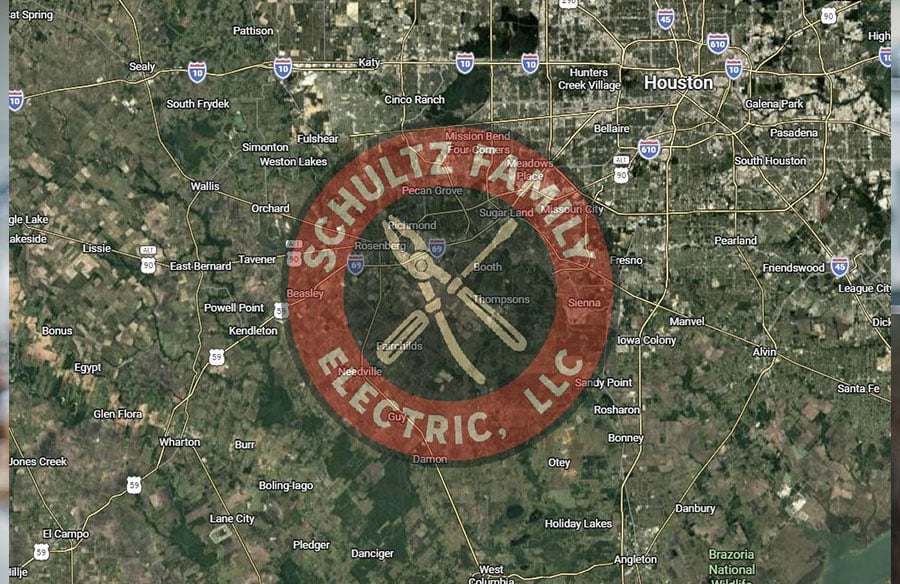
The stated service area covers Angleton and the surrounding Brazoria County communities, including Alvin, Bonney, Brazoria, Clute, Freeport, Fresno, Friendswood, Hitchcock, Iowa Colony, Lake Jackson, Manvel, Pearland, Santa Fe, Sienna, Sweeny, and West Columbia. For homeowners anywhere in that footprint noticing the signs described above, whether random tripping, a reset that feels wrong, warmth or sound at the panel, or a notorious brand name on the door, a professional evaluation is the logical next step. An inspection settles the breaker versus panel question with evidence, and scheduling it in calm weather keeps the fix on the household’s timeline rather than the failure’s.
Mekala Schultz
400 County Road 243, Angleton, TX 77515
Schultz Family Electric
(979) 264-9024
https://schultzfamilyelectricllc.com/
[email protected]