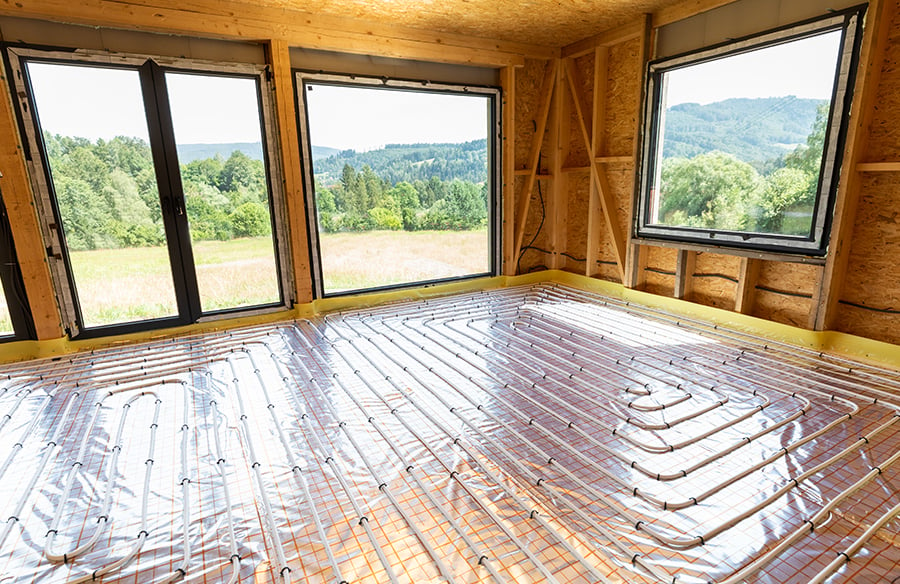
Underfloor heating can provide consistent warmth and comfort, but can it damage wooden floors? The answer depends on the flooring material, temperature control, and quality of the radiant floor heating installation. Understanding the potential risks and proper installation requirements can help prevent warping, cracking, gaps, and other common problems while protecting your wood flooring.
Can You Put Radiant Heat Under Wood Floors?
Radiant heating can be installed beneath wood floors, including many engineered hardwood products and certain solid hardwood floors. Some existing wood floors can also be retrofitted with heating without removing the boards.
The key is choosing a flooring product approved for radiant heating and keeping the system within its specified temperature limits.
Depending on the floor construction, radiant heat under wood floor boards may be supplied by heating elements installed above the subfloor, embedded in a suitable underlayment, or fitted beneath an existing floor between the joists.
A useful first step is to identify the floor assembly, including the subfloor and access beneath it. This helps establish whether radiant heating is practical, how much work is involved, and whether the original flooring can remain in place.
For example, when planning underfloor heating under wooden floor boards in a house with an accessible basement or crawl space, certain radiant heating systems can be installed between the floor joists from below. This approach may preserve the original hardwood flooring and avoid the disruption of lifting and reinstalling boards.
For floors over concrete, heating is typically incorporated into an approved floor assembly above or within the slab. This usually requires more extensive renovation and may raise the finished floor level.
Before selecting a system, check whether the existing wood floor is suitable for radiant heating. Its thickness, installation method, condition, and moisture content all influence the result. Older floors can be particularly challenging when their adhesives, underlayments, or construction details are unknown.
Underfloor Heating And Wooden Floors: How It Works
Underfloor heating warms wooden floors from below using either electric heating elements or a network of pipes carrying heated water. Heat travels through the subfloor and flooring material before gradually transferring into the room.
Electric underfloor heating uses heating cables, mats, or foil elements installed in a floor assembly approved for the selected wood flooring.
Hydronic underfloor heating circulates warm water through pipes positioned within or beneath the floor structure. The water temperature is regulated to maintain controlled heating.
Wood naturally resists heat transfer more than materials such as ceramic tile. Its thickness, density, and construction therefore influence how quickly the floor warms up and how much heat reaches the room. A thicker wooden floor slows heat transfer and may increase warm-up time. An insulating underlay can further restrict heat movement. This is particularly relevant to underfloor heating under wooden floor boards, where every layer affects heat transfer.
A properly designed system accounts for this thermal resistance, with insulation beneath the heating elements helping direct warmth upward. For radiant floor heat under wood floor boards, properly designed heat-distribution plates can spread warmth across a wider surface and reduce temperature variations between heating pipes.
An important detail is that a properly functioning heated wooden floor may never feel particularly hot to the touch.
In a radiant heat wood floor, wood has insulating properties, and the temperature difference needed to warm a well-insulated room can be relatively small. The system may provide comfortable, steady heating while the floor feels only mildly warm.
Radiant Heat Wood Floor: Causes Of Damage
Underfloor heating can damage wooden floors when excessive temperatures, moisture imbalances, or unsuitable installation methods place stress on the wood. In a radiant heat wood floor, these risks are strongly influenced by surface temperature and moisture control.
Wood continuously absorbs and releases moisture in response to its environment. During the heating season, warm flooring combined with low indoor humidity can cause boards to lose moisture and shrink. This may result in gaps between planks, surface cracks, or splitting.
Sustained overheating accelerates moisture loss and can affect flooring finishes and adhesives. Frequent heating fluctuations create repeated expansion and contraction, increasing stress on the floor.
Damp concrete, leaks, or inadequate moisture protection can cause swelling, cupping, and distortion. For example, moisture rising from a damp concrete subfloor may cause the underside of the board to expand more than the surface. The edges can then lift, producing a condition known as cupping.
Flooring installed at an unsuitable moisture content may change dimensions significantly after the heating system begins operating.
Another potential problem is concentrated heating. Hydronic pipes grouped closely together near a manifold, or heating elements positioned beneath rugs, thick mats, or other insulating objects, can produce localized temperatures higher than those across the surrounding floor.
The damage may take weeks or months to become visible because wood responds gradually to environmental changes.
Common Underfloor Heating Wooden Floors Problems
The first signs of underfloor heating wooden floors problems are usually visible changes in the boards, unusual noises, or inconsistent heating performance. The location and timing of the symptoms often provide useful clues about their cause.
One important distinction is that visible movement does not automatically mean permanent damage.
Gaps between floorboards frequently become more noticeable during winter when indoor humidity drops. Small seasonal gaps may close naturally when humidity increases, while persistent or widening gaps warrant investigation. Gaps appearing evenly across the room may indicate low indoor humidity or excessive drying, while unusually wide gaps in one area may suggest a localized hot spot or uneven heating.
Cupping and crowning cause boards to develop uneven surfaces. Cupping occurs when the edges rise above the center; crowning describes the opposite shape. Moisture differences between the top and bottom of the flooring are common contributors.
Cracking and surface checking can develop when wood loses moisture too quickly, especially under excessive heat or very dry indoor conditions.
Squeaking and movement may occur when boards shrink, loosen, or experience friction against adjacent materials. Hollow sounds in glued-down flooring may indicate adhesive bond failure.
Uneven heating and cold spots can result from poor heating-element spacing, inadequate insulation, air trapped in hydronic circuits, or control problems.
Engineered floors may also experience lifting or layer separation when moisture, temperature, or adhesive conditions exceed product specifications. Boards lifting or buckling may indicate excess moisture, restricted expansion, or installation-related stress.
If an isolated section begins lifting shortly after a heating system is commissioned, the installation conditions and temperature distribution deserve attention.
Choosing The Best Wood For Underfloor Heating
Engineered hardwood flooring is generally the most dependable choice for underfloor heating, particularly products with a stable plywood or multilayer core and explicit manufacturer approval for radiant heating. The best wood for underfloor heating is therefore a manufacturer-approved product with a construction suited to the selected system.
The layers help limit dimensional movement as temperature and humidity change. However, for a radiant heat wood floor, the specific board construction matters more than the broad label of engineered or solid wood.
When evaluating the best wood for underfloor heating, engineered oak is a popular choice because it combines an attractive natural appearance with a broad selection of suitable flooring products. Engineered walnut and cherry can also perform well when their construction and installation requirements are appropriate.
Consider two engineered oak products. One might have a carefully designed multilayer core and a thin, stable hardwood surface. Another may use a different core construction or a thicker wear layer with different dimensional behavior. Both are sold as engineered oak, yet their suitability for radiant heat can differ.
For homeowners who prefer solid hardwood, narrower boards made from relatively stable species are worth considering. Quarter-sawn and rift-sawn boards tend to experience less widthwise movement than comparable plain-sawn boards. Some manufacturers offer solid wood floors specifically approved for underfloor heating, provided the installation and environmental requirements are met.
Hickory, beech, and hard maple generally require greater care because their dimensional movement can make them less forgiving under fluctuating conditions. Manufacturer-approved products made from these species may still be suitable.
Board thickness deserves attention as well. Thicker wood creates greater resistance to heat transfer. Some electric heating manufacturers, for example, recommend flooring no thicker than approximately 18 mm (0.7 inches) for particular systems.
To choose the best wood for underfloor heating, always obtain the technical data sheet for the exact flooring product. Check whether it is approved for your heating system and whether installation must be glued, floated, or mechanically fastened. Approval for one collection or construction should not be assumed to apply to every floor sold by the same manufacturer.
Underfloor Heating Under Wooden Floor: Key Considerations
Before installing underfloor heating under wooden floor boards, evaluate how the heating system will interact with the flooring, subfloor, insulation, and overall heating requirements of the room.
Start with a room-by-room heat-loss calculation. This establishes how much heat the space needs and whether the wooden floor can deliver it while remaining within its permitted surface temperature. Rooms with large windows or poor insulation may require supplementary heating.
Next, examine the existing floor structure. Concrete substrates need appropriate moisture testing, while timber subfloors must be dry, stable, and structurally sound. Any moisture or ventilation problems should be corrected before installation.
Other important considerations include the thermal resistance of the complete flooring assembly, additional floor height, insulation placement, and whether the flooring will be glued, floated, or mechanically fastened. Additional layers can interfere with doors, built-in cabinetry, and stair dimensions.
When installing radiant heat under wood floor boards, the heating system should include suitable temperature controls and a floor sensor. If multiple flooring materials share a space, separate heating zones may be necessary because their temperature limits can differ.
It is also worth asking who will coordinate the flooring and heating specifications. The heating installer and flooring contractor should agree on the temperature limits, installation method, and commissioning procedure before either begins work.
Finally, review the warranties for both the heating system and the wood flooring. Obtain written confirmation that the proposed installation method is approved by both manufacturers.
Radiant Floor Heat Under Wood Floor: Safe Installation
Confirm the required subfloor preparation, moisture limits, maximum floor temperature, and permitted attachment method.
Before laying the floor, an installer should test the moisture content of the subfloor and verify that the building has reached suitable indoor temperature and humidity conditions. Newly installed screeds or concrete must be adequately cured and dry. Concrete and timber subfloors require different testing methods, and the results should be recorded before installation proceeds.
For radiant floor heat under wood floor boards, the heating system should then be installed using the specified insulation, pipe or cable spacing, and protective layers. Floor sensors must be positioned according to the heating manufacturer’s instructions.
Hydronic systems must undergo documented pressure testing, while electric systems require the specified electrical tests before the heating components are covered.
The National Wood Flooring Association recommends operating radiant systems for at least five days before wood flooring delivery, following appropriate curing and commissioning procedures.
When laying the flooring, installers must preserve the required expansion spaces and avoid driving fasteners into heating cables or pipes. Adhesives and underlayments must also be approved for heated floors.
After installation, radiant floor heat under wood floor boards should be brought to operating temperature gradually, following the applicable commissioning schedule. NWFA guidance recommends limiting floor-temperature changes to approximately 5°F per day.
Professional installation is particularly important when electrical connections, water circuits, or alterations to the existing floor structure are involved.
Ask the installer for a handover record containing the heating layout, test results, sensor locations, approved temperature settings, and relevant product warranties.
These details can be valuable years later when replacing a thermostat, repairing a floorboard, or investigating a heating problem. They also help future contractors avoid accidentally damaging concealed heating elements.
Radiant Heat Under Wood Floor: Ideal Temperature And Humidity
For most radiant-heated wooden floors, maintaining 30–50% indoor relative humidity provides a practical starting point. Some flooring manufacturers specify a different range, so the product warranty and installation instructions should take priority.
The National Wood Flooring Association generally recommends indoor air temperatures of 60–80°F for wood flooring.
Floor surface temperature requires separate control. Unless the flooring manufacturer specifies otherwise, current NWFA guidance recommends keeping the finished wood surface at or below 80°F. Some products and systems have different approved limits, often around 81°F.
For radiant heat under wood floor boards, these figures refer to different measurements: the room thermostat measures indoor air temperature, while a properly positioned floor sensor helps prevent the wood itself from overheating. A wall thermostat set to 21°C (70°F) does not guarantee that the wood surface is at the same temperature.
Also pay attention to thick rugs, foam-backed mats, and furniture with enclosed bases. These can restrict heat dissipation and create localized temperatures higher than those measured elsewhere on the floor.
Preventing underfloor heating wooden floors problems also requires consistency. Avoid sudden temperature increases, large overnight thermostat setbacks, and prolonged periods of very low humidity.
Humidity should be monitored throughout the heating season. A room that stays within its target humidity range in autumn may become considerably drier during winter, leading to wider gaps between boards. A digital hygrometer can help monitor indoor moisture levels. In dry winter conditions, controlled humidification may be necessary to maintain the flooring manufacturer’s recommended range.
Underfloor Heating Wooden Floors Problems: Repairs And Prevention
If you encounter underfloor heating wooden floors problems such as unusual gaps, cracks, cupping, or lifting, begin by checking the environmental conditions and heating system settings.
Start by documenting the damage before attempting cosmetic repairs. The appearance and location of a problem can change as indoor conditions change, so early observations are useful. Photograph the affected boards and note whether gaps, cracks, or raised edges are concentrated in one area or spread across the room. Record the indoor humidity, room temperature, thermostat settings, and any available floor-temperature readings. Note when symptoms appeared.
Next, look for recent changes that may explain the problem. These could include a newly installed rug, a thermostat replacement, a prolonged cold spell, or the first operation of the heating system after installation.
If the floor is excessively hot, reduce or shut off the affected heating zone until it can be inspected safely. Suspected leaks or electrical faults require prompt attention from an appropriately qualified professional.
Avoid filling gaps, sanding distorted boards, or applying moisture directly to the wood before the cause has been established. These measures can conceal symptoms or create additional damage.
A flooring specialist can assess moisture levels within the boards and subfloor, inspect the installation, assess heat distribution, and determine whether the problem involves overheating, excess moisture, inadequate expansion space, or a product defect.
Minor seasonal gaps may improve once indoor humidity stabilizes. More serious distortion, splitting, or engineered-floor delamination may require individual board replacement or wider repairs.
The most effective repair addresses the source of the problem first, then allows the flooring to reach stable moisture conditions before cosmetic or structural restoration begins. Otherwise, the replacement boards may develop the same problem after the heating system resumes normal operation.