A security seal that simply indicates tampering is only doing half the job in many regulated industries today. When a product or container changes hands multiple times before reaching its final destination, the question is rarely just whether a seal was broken. It is whether anyone can prove, with a verifiable record, exactly which seal was applied, when, and by whom, at every point along the way.
That distinction separates a basic tamper indicator from a true chain-of-custody tool, and it explains why serialized and custom-branded seals have become standard practice across sectors where traceability carries real compliance or liability weight rather than just operational convenience. The seal itself is only half the system; the record behind it is just as important as the other half.
How Do Security Seals Ensure Product Safety?
Security seals support product safety primarily by creating verifiable evidence of unauthorized access, not by physically preventing it in every case. American Casting and Manufacturing, founded in 1910 and now in its fourth generation of family ownership, has built its reputation producing tamper evident seals that document the chain of custody as reliably as they signal tampering itself.
American Casting and Manufacturing holds ISO 9001:2015 certification and is a founding member of the International Seal Manufacturers Association (ISMA), and its product line reflects that standards-driven approach. Custom sequential numbering, barcoding, and logo printing are available across most seal models, turning each seal into a traceable record rather than an anonymous piece of plastic or metal with no documented history.
For organizations evaluating how to strengthen product safety through sealing, AC&M works as a manufacturing partner that helps match serialization and customization options to the specific liability or compliance need involved, rather than treating every seal order as identical. That guidance draws on more than a century of direct experience supplying regulated industries with similar documentation requirements.
Serialized Seals Strengthen Chain of Custody Tracking
A serialized seal assigns each individual unit a unique, sequential number, which means a seal applied at one point in a supply chain can be matched against a specific record at every later checkpoint along the route. That distinction matters in a dispute, since a generic unmarked seal offers no way to confirm whether the seal currently in place is the original one.
Chain-of-custody failures rarely involve dramatic security breaches in practice. More often, they involve a missing or ambiguous record that makes it impossible to say with confidence what happened between two points in a process. A sequential number closes that gap by creating a documented link between the physical seal and a specific shipment, inspection, or transfer event at any stage.
American Casting and Manufacturing’s barcoded seal options extend this further by allowing serialized data to be captured through scanning rather than manual entry at every checkpoint. Eliminating manual data entry removes a meaningful source of recordkeeping error, since transposed digits and illegible handwriting are common causes of broken chain-of-custody documentation in high-volume operations across many regulated industries.
Custom Branding and Barcoding Together Reduce Seal Risk
Custom branding on a security seal does more than reinforce a company’s identity, though that benefit matters too. A seal printed with a company name, logo, or product code makes substitution far more obvious to anyone inspecting it, since a generic seal can be replaced with another of the same type without immediate evidence of the swap. Liability exposure often centers on exactly this kind of ambiguity.
If a product is later found defective, contaminated, or altered, the organization responsible needs to demonstrate that its own seal or tamper evident tape, not a substitute, was in place throughout the relevant period. A custom-printed, sequentially numbered seal supports that demonstration in a way a generic seal cannot, particularly when paired with a visible custom design.
Barcoding compounds that advantage by removing manual data entry from the equation. AC&M’s barcoded product lines, including its barcoded steel and plastic truck seal options, use standard Code 128 barcoding that scans reliably into existing systems. As a security seals manufacturer producing both standard and custom barcoded options, American Casting and Manufacturing has seen this combination accelerate across high-volume industries.
Which Industries Depend Most on Seal Serialization
Pharmaceutical and food and beverage companies rely on serialized tamper evident seals to support recall readiness, since a documented seal record narrows down which shipments or production runs were actually affected when a safety issue arises. Without that traceability, a recall often has to be broader and more costly than the actual scope of the underlying problem.
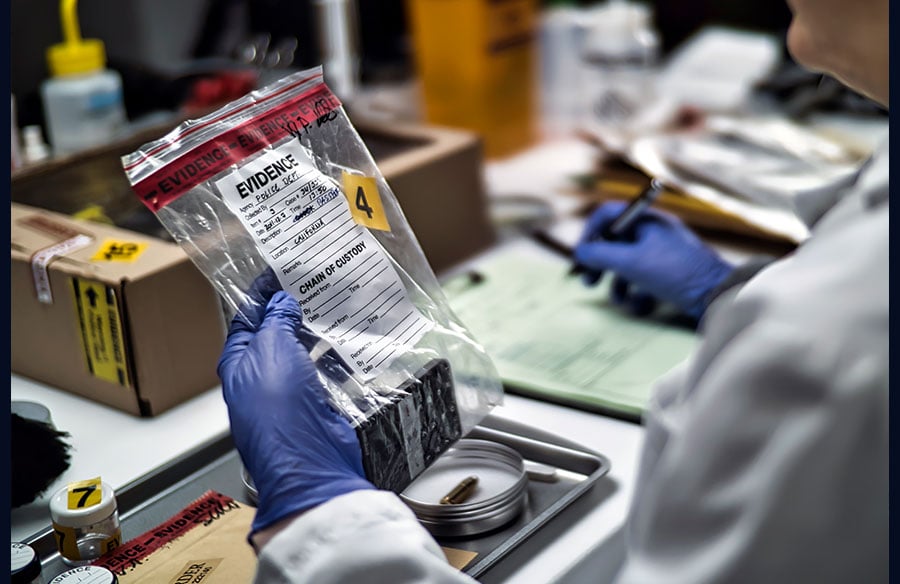
Cargo and logistics operations use serialization to satisfy customs and security program requirements, where a documented chain of custody is often a condition of participation rather than an optional best practice. Election equipment, laboratory samples, sensitive document packaging secured with tamper evident tape, and evidence handling represent additional categories where a broken or unaccounted-for seal can have consequences well beyond a single shipment.
Utilities and industrial operations increasingly request serialized and barcoded options as well, extending a practice that began in highly regulated sectors into much broader use wherever documented accountability has measurable, demonstrable value. American Casting and Manufacturing’s product range across these categories, built around its decades of experience as a security seals manufacturer, reflects how widely this requirement has spread across the economy.
Serialized Seal Adoption Will Keep Expanding Across Sectors
The case for serialized and custom-branded seals continues to strengthen as supply chains grow more complex and regulatory scrutiny over traceability increases steadily across nearly every sector. What once distinguished only the most tightly regulated industries is becoming a more standard expectation among organizations of all kinds and sizes, regardless of their primary line of business or geography.
American Casting and Manufacturing has supplied custom and serialized seals across these industries for more than a century, and that depth of experience continues to shape a product range built around the reality that a seal’s documentation often matters every bit as much as the physical seal itself, particularly as scrutiny over traceability continues to grow across the broader economy.
About American Casting & Manufacturing
American Casting and Manufacturing is a U.S.-based manufacturer of tamper-evident security seals serving transportation, cargo, utilities, food and beverage, military and defense, and industrial sectors with ISO 17712-certified and custom-branded sealing solutions. Founded in 1910, AC&M is a fourth-generation family-owned business and a founding member of the International Seal Manufacturers Association (ISMA). The company holds ISO 9001:2015 certification and operates manufacturing, warehousing, and customer service from one facility at 51 Commercial Street, Plainview, New York 11803. AC&M can be reached toll-free at (800) 342-0333 or by email at [email protected].