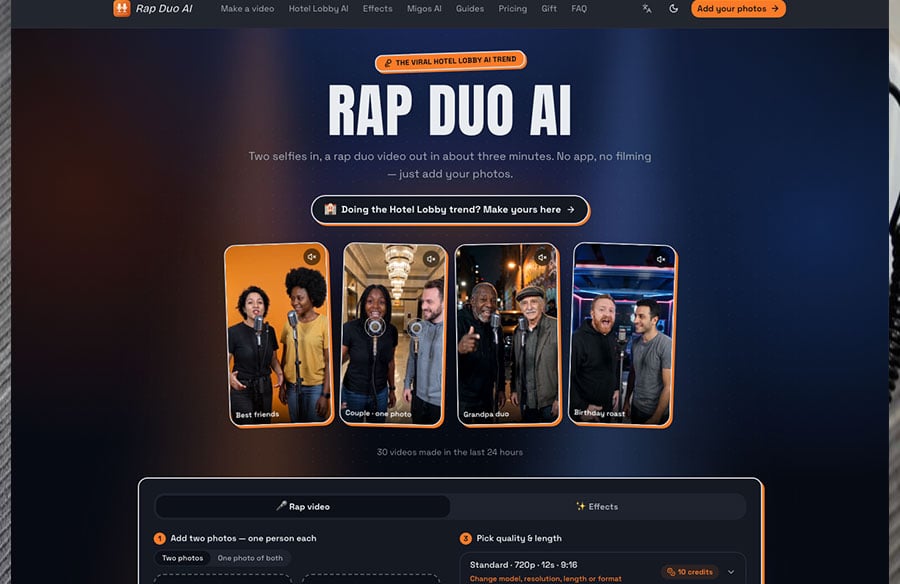
The orange booth is a set, not a sticker you drop on a timeline. Two faces can be sharp and the clip can still feel like the wrong room. AI Rap Duo Video Maker asks you to pick the stage before the render, and that pick is the design decision the rest of the twelve seconds have to live inside.
On the page, Rap Duo AI lists four stages, and people still treat those names as flavors of the same effect. They are not. A hotel lobby, a louder luxury lobby, a studio booth, and a street cypher put the bodies in different distances from the camera and different kinds of light. If the joke is intimate, the street frame will shout over it. If the joke is a public dare, the booth will look like a private rehearsal that escaped.
Four Stages And What They Frame
The default stage is the orange Hotel Lobby, the look associated with the Quavo and Takeoff COLORS booth. Luxury Lobby, Studio Booth, and Street Cypher sit beside it. You are not writing a prompt that hopes the model invents a room. You are choosing a room the product already built.
That is closer to picking a cyclorama than to typing a mood. The faces still come from your photos. The bars still come from the optional topic. The stage does not rewrite the names. It decides whether those names are performed in a tight colored box or out on a curb.
The Orange Booth Is The Default
Leave the choice alone and you get the orange booth. That is deliberate. The page treats the Hotel Lobby look as the one people already recognize from the short-video trend, so the first render starts there. Recognition is useful when the clip has to read in a feed without a caption. It is less useful when your series already has a room and the orange box fights it.
Street Cypher Changes The Camera Distance
Street Cypher pulls the performance out of the booth. The bodies read as a public moment instead of a studio appointment. Use it when the pairing is a dare between friends who would never book a booth. Do not use it when you need the face to fill the frame. A wider set spends pixels on the street, and a soft selfie has less face left to survive that width.
The Topic Still Owns The Words
Stage and lyric are separate controls. You can type who the song is for: a birthday, an anniversary, best friends, or a small business. The lyrics are written around that line. Leave it empty and the track becomes a general hype song about being a great duo. A beautiful stage will not rescue an empty topic. The booth will just host a generic boast.
One Name And One Concrete Detail
Write one name and one detail. “Jake’s 30th, friends since second grade” gives the bars a place to land. A paragraph of art direction does not. The field is a lyric brief, not a shot list. Put the shot in the stage menu. Put the sentence in the topic.
- Pick the stage that matches the series, not the one that looks loudest.
- Write a name and one detail in the topic line.
- Confirm both faces are front-facing before you spend the credits.
Photos Set The Likeness Not The Room
Each photo should hold one face, front-facing, well lit, without sunglasses, a mask, or a heavy filter. The two pictures do not have to be taken together. A couple can also start from one photo of both people. The room in the selfie is discarded by the stage. A kitchen behind one friend and a car behind the other do not become the set.
 Check The Face Before The Stage
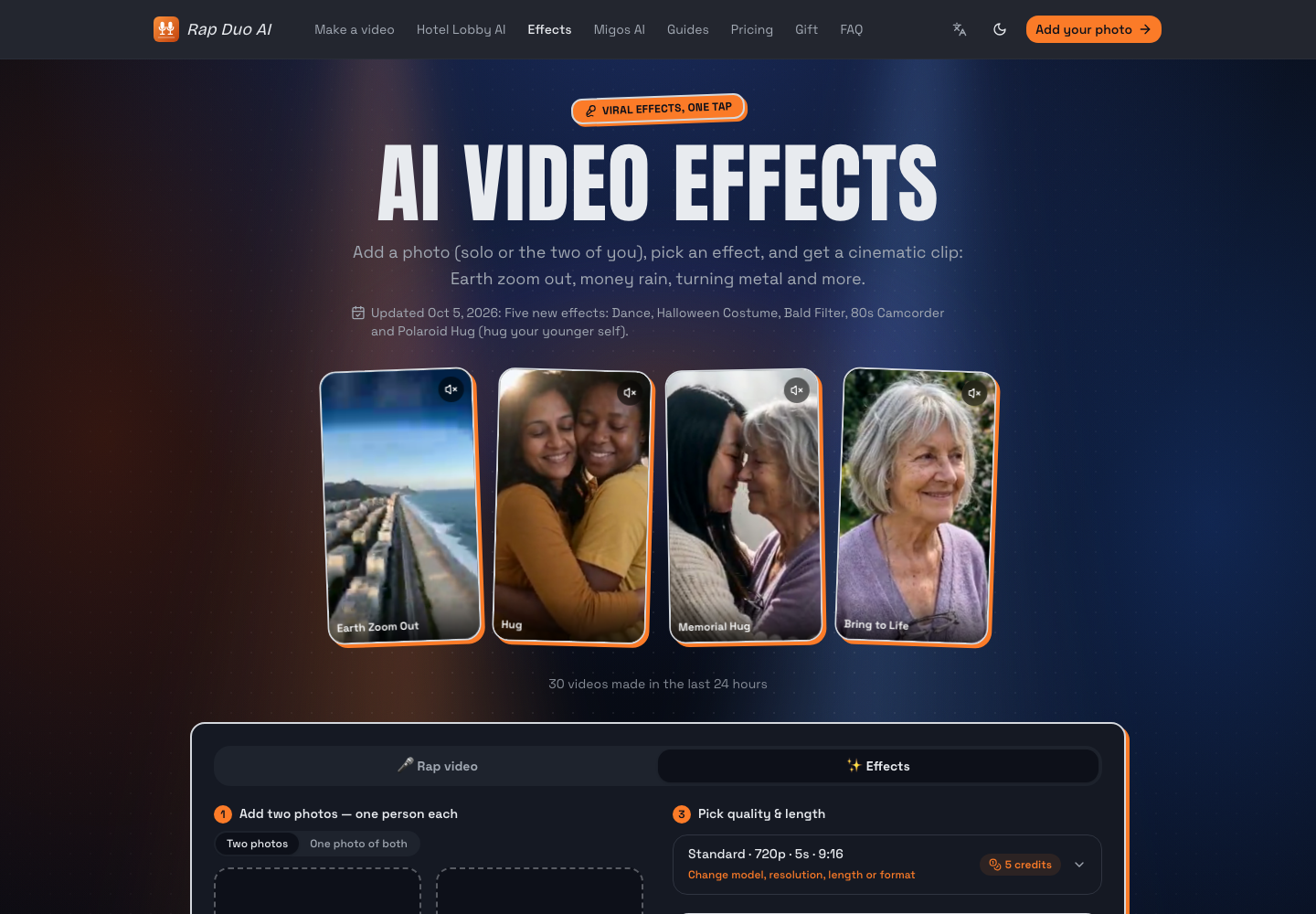
Check the face before you fall in love with a stage. If the eyes are hidden, every set will inherit a stranger. Rap Duo AI cannot invent a likeness the photo refused to show. Swap the still, then worry about orange versus street.
Resolution Is Not A Set Dressing
On Rap Duo AI, before the render you also pick model, resolution, length, and format. A standard song is about 12 seconds at 720p and costs 10 credits. Length changes the price. Format does not. That split matters for a designer who is tempted to “fix” a weak stage by buying a heavier model. A sharper street is still a street. It will not become the orange booth.
Most finished clips are ready in about two or three minutes. There is no separate app. If a render fails, times out, or a safety filter blocks it, the credits come back. A finished clip you simply dislike is a spent credit, not a failed job. Reject the stage in the menu, not after you have paid for a room you already knew was wrong.
Match The Set To The Series
A design series that already uses a calm interior should not jump to Street Cypher for one birthday. The cut will look like an ad that wandered into the essay. A series that lives on sidewalks should not suddenly sit in a luxury lobby unless the contrast is the point. Pick the stage the way you pick a recurring background, then keep it for the pair of clips that belong together.
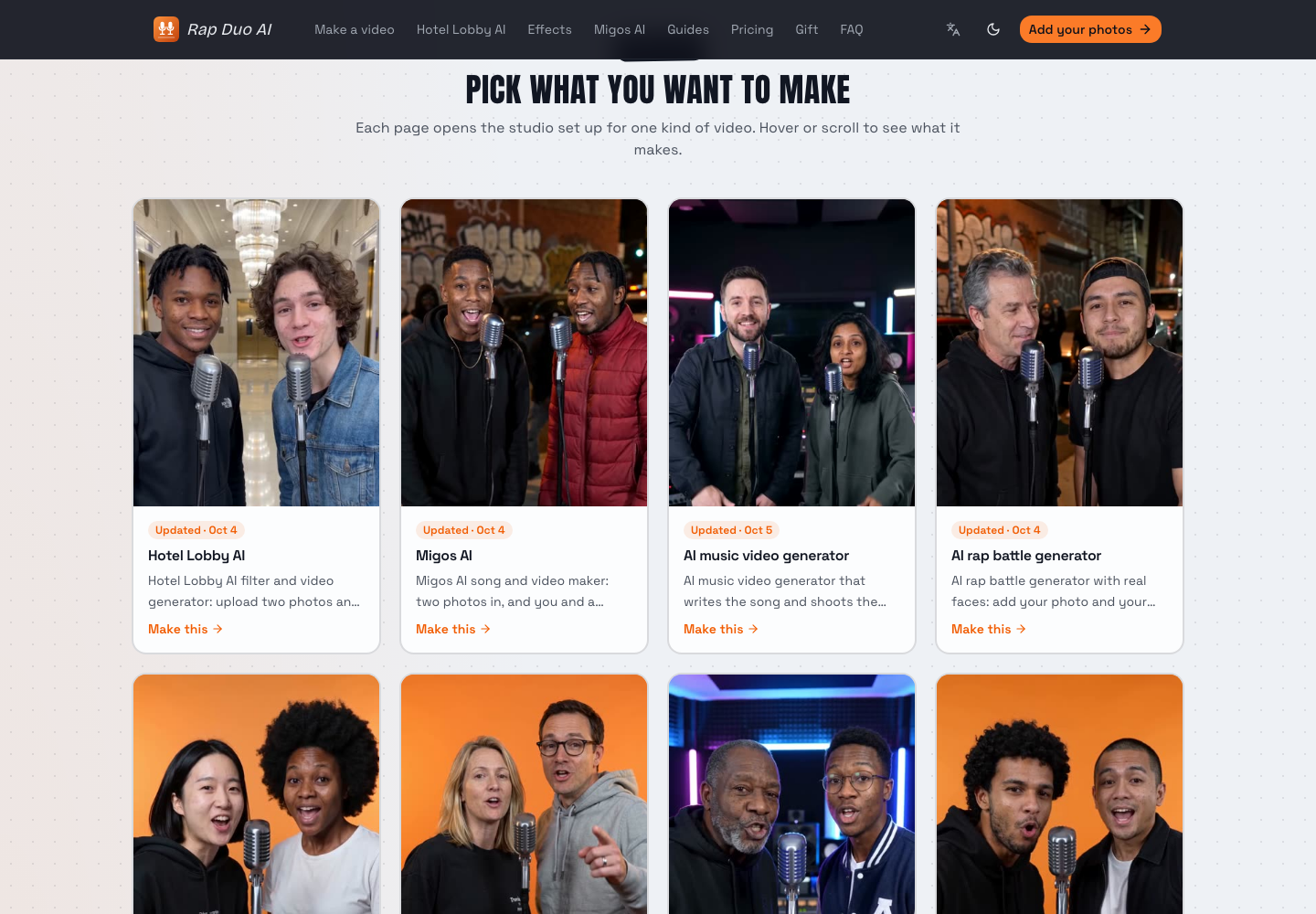 Look at the frame the way you would look at a plan drawing. Where is the face relative to the edge. Does the orange wall eat the cheek. Does the street leave the eyes too small to recognize. Those are set problems. They show up in the first twelve seconds, and they do not get kinder if you only change the caption. If the face fails that check, the stage was the wrong container, or the still was too soft to survive it. Either way you have a specific fix, not a vague note that the clip feels off.
Keep a note of which stage you used, the way you would keep a finish schedule. The next clip for the same pair should not accidentally move from booth to curb. Readers of a series notice the room before they notice the rhyme. Consistency here is cheap. You select it once in the menu. Inconsistency is what makes two related posts look like they came from different products.
The orange default is the right first check when you have no series yet. It is the room people already know how to read. After that first clip, change stage only when the joke needs a different distance. Do not cycle all four to see which one is “more cinematic.” You will spend credits comparing furniture.
Choose The Room Before The Render
Reach for Rap Duo Video AI when the missing piece is a shared room, not a shared afternoon. Rap Duo AI gives you four stages and a topic line. The stage is the set. The topic is the lyric. The photos are only the faces.
If the two people can stand in a real lobby this week, film them. The generated booth is a stand-in, and it should look like one. If they cannot, pick the stage on purpose, write one concrete line, and look at the faces at 720p before you buy a heavier model. A wrong room at higher resolution is still the wrong room.