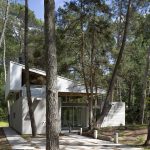
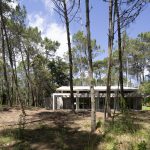
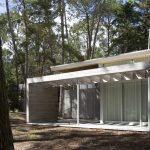
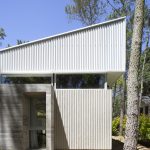
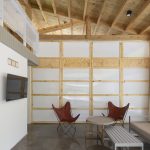
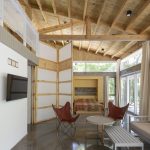
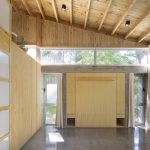
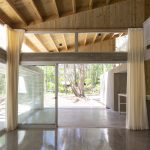
“Pingüino House is a vacation home designed to offer a variety of leisure activities in the tourist town of Cariló, Buenos Aires, Argentina.
Project Name: Estudio Galera Arquitectura.
Location: Cariló, Pinamar County, Bs As., Argentina.
Lot Area: 1050 m2
Construction Area: 155 m2
Project: 2021
Project Construction: 2021 – 2022
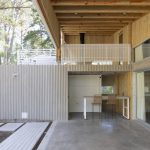
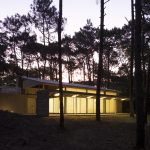
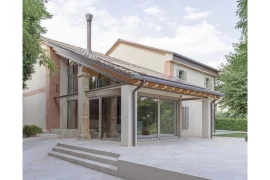
The terrain had no significant topographical features, allowing the house to seamlessly connect with the lot through a partially covered gallery. Pingüino House is linearly oriented in three layers parallel to the central axis. The less favorable orientation was reserved for the service area, while the main rooms and the gallery open up to the north.
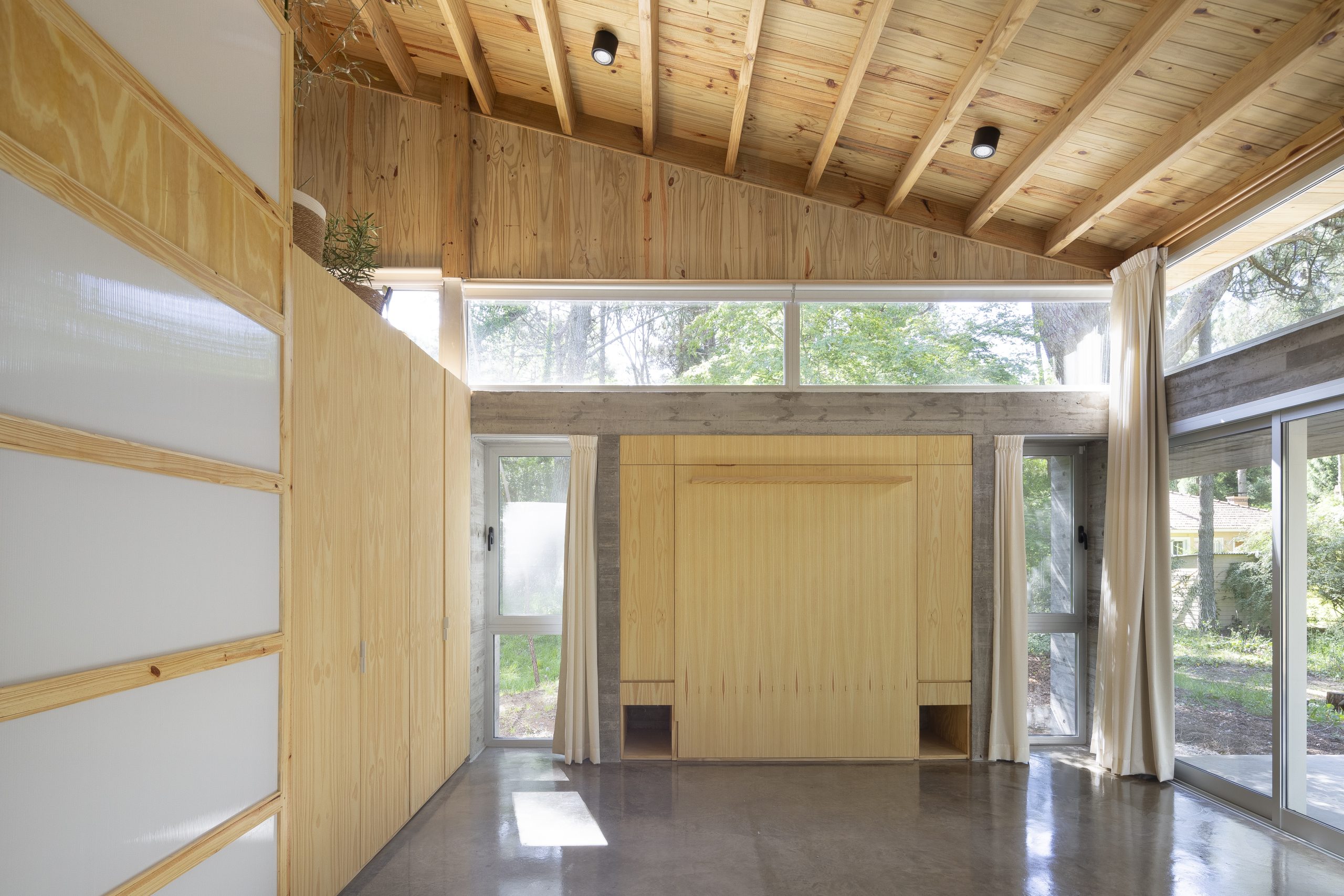
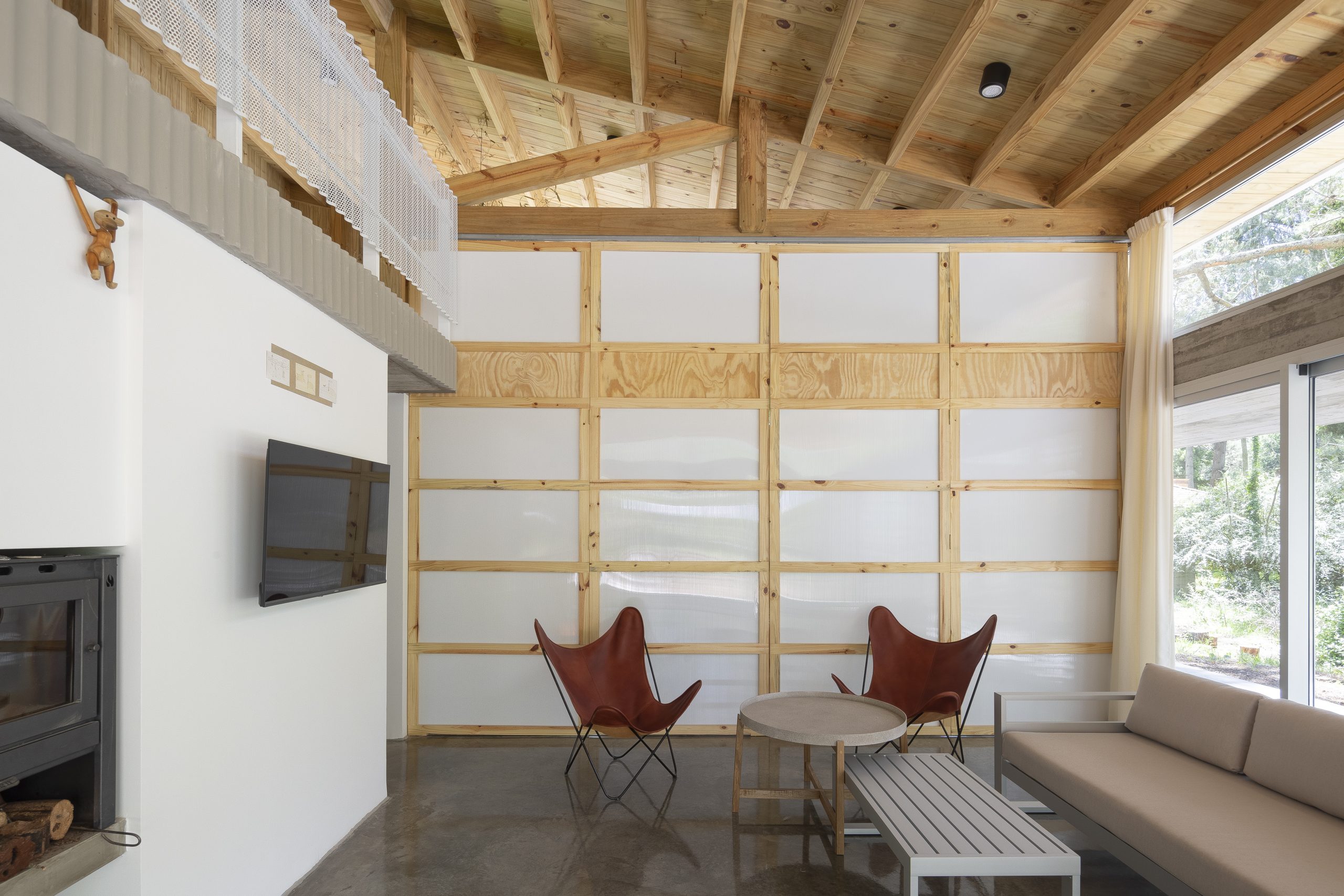
The relaxed approach to dwelling usage allowed us to think about spaces and their adaptability in a less rigid manner, offering flexibility both in space and time. In this sense, the layout can transform due to the versatility of the rooms and movable elements, evolving from a spacious gathering area to a living/dining room with an enclosed bedroom. Aluminum and wood craftsmanship facilitate quick modifications of the space, linking the covered modules with the semi-covered one. The usable space and kitchen area are doubled by connecting this area with the grill zone. Thus, the house transforms, and its potential uses thrive during the summer.
Numerous possibilities for expansion also ensure adaptability over time. Pingüino is based on a regular and modular plan, allowing for the addition of new bathrooms and bedrooms in continuity with the layers of use. In this regard, it is an informal and flexible dwelling for temporary use, with the possibility of growing and transforming into a house with a traditional layout if the demand arises. The residence accommodates adaptations to current and future demands, as contemporary ways of living necessitate versatility in defining housing forms.
The dwelling encompasses three fundamental components: the service area, the gallery, and the roof. The roof component becomes volumetric, connecting the main section with a mezzanine of flexible uses—currently serving as a children’s bedroom—that leads to a terrace overlooking the semi-covered barbecue area.
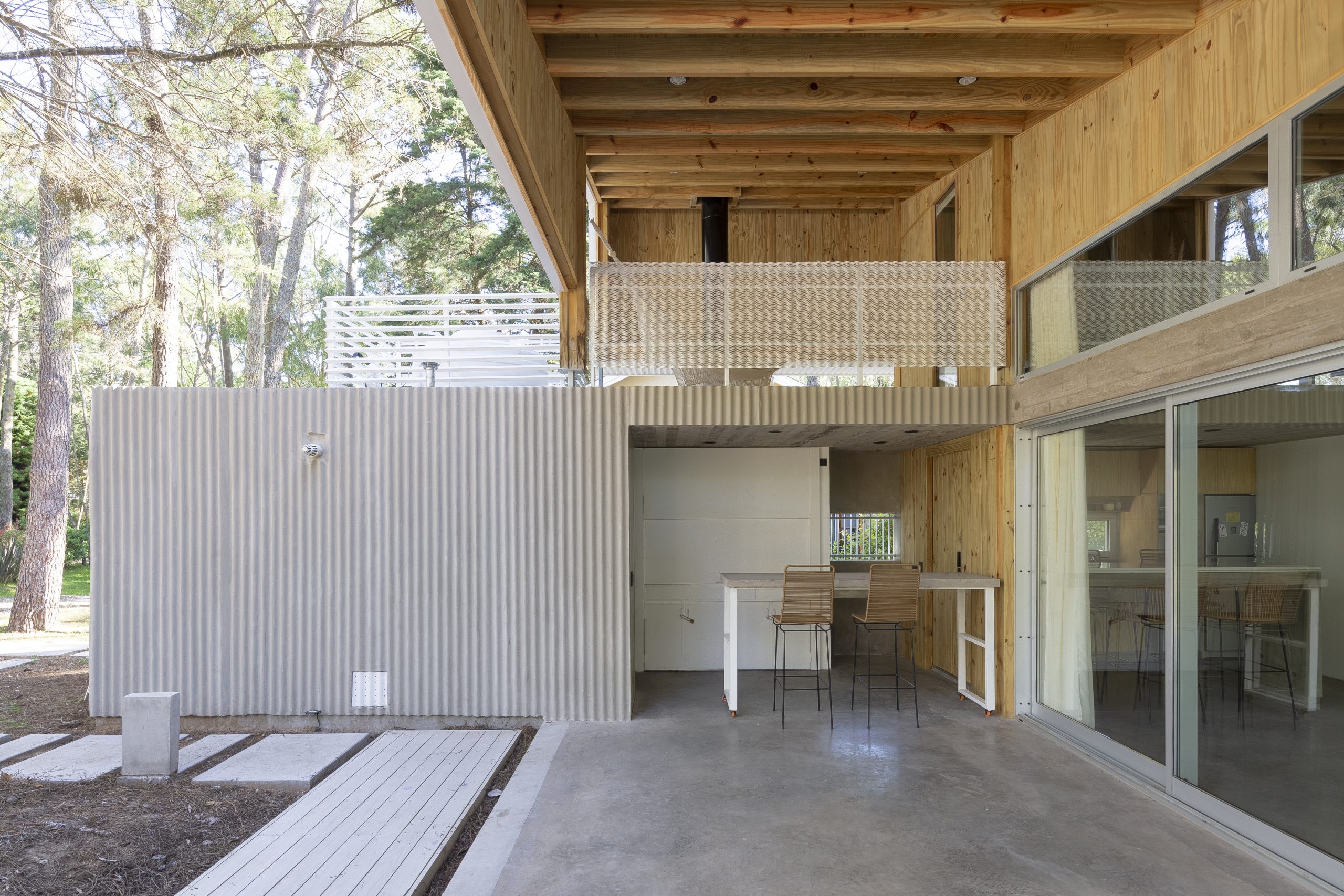
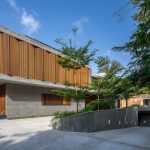
Various factors influenced the choice of materials and technologies used. Pinamar city has a rich history of wood-crafted roofs, so Pingüino House allowed us to re-imagine the typical sloping roof, simplifying construction complexities. In this regard, we sought to introduce a new approach to roofing technologies while preserving local heritage. As a result, various materials and technologies were adopted: the omnipresent wood on the interior gives way to concrete, glass, and sheet metal on the exterior to ensure low maintenance. A sheet metal formwork system was employed for the concrete pouring in the service area. Different elements interact with each other through relationships of form, geometry, color, and materiality.
Estudio Galera. Architecture.
Ariel Galera. Achitect.-
Cesar Amarante. Achitect.-
Francisco Villamil. Achitect.-
Luisina Noya. Achitect.-
Collaborators.
Soledad Van Schaik, Juan Cruz Ance, Facundo Casales, Juan Cardoso Lopes, Tomas Molinaro.
Project supervisor: Pablo Ahumada. MMO
Administration management: Verónica Coleman.
Texts and translation: Soledad Pereyra.
Consultants.
Structural Engineer: Juan Pablo Busti
Surveyor: Claudio y Juan Pablo D eramo
Photography: Javier Agustín Rojas
Project Construction.
Contractor: Hugo Marín
Roof: Bauer Hermanos.
Electricity: Gabriel Jaimón
Sanitation / Heating: Cristian Carrizo
Ducts and sheet metal: Rubén Calvo
Custom metal working: Hernan / Juan Rascione
Decks: Gwez Obras
Suppliers.
Wood millwork: El Holandés
Aluminum millwork: Alumia
Concrete supplier: Pasalto
Iron: Acindar / Casa Caligari
Iron Sheets: Plastigas
Wood Supplier: SAB
Coarse agregate: Casa Caligari
Sanitary material: Mastergas
Paint: Sagitario
Marble: LAVIGE