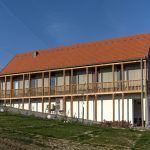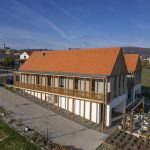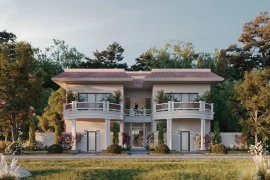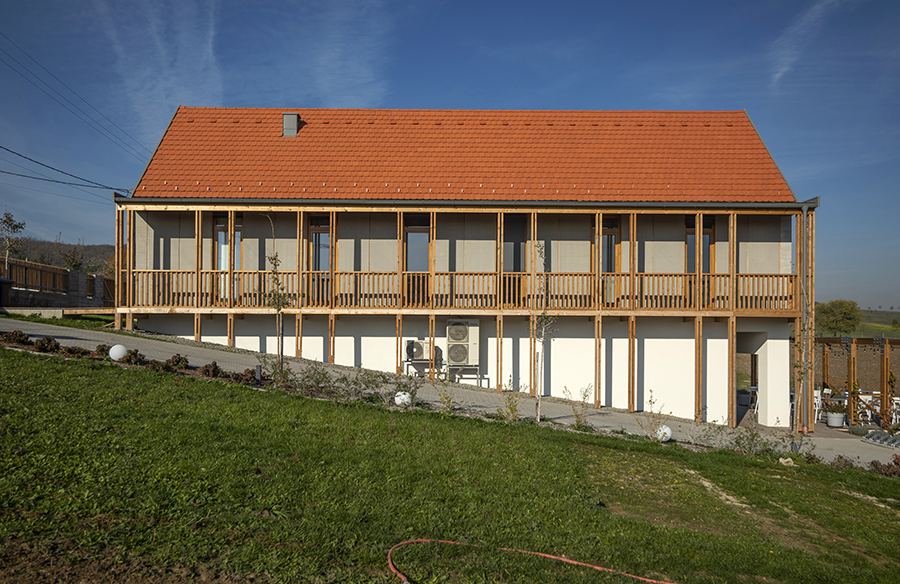
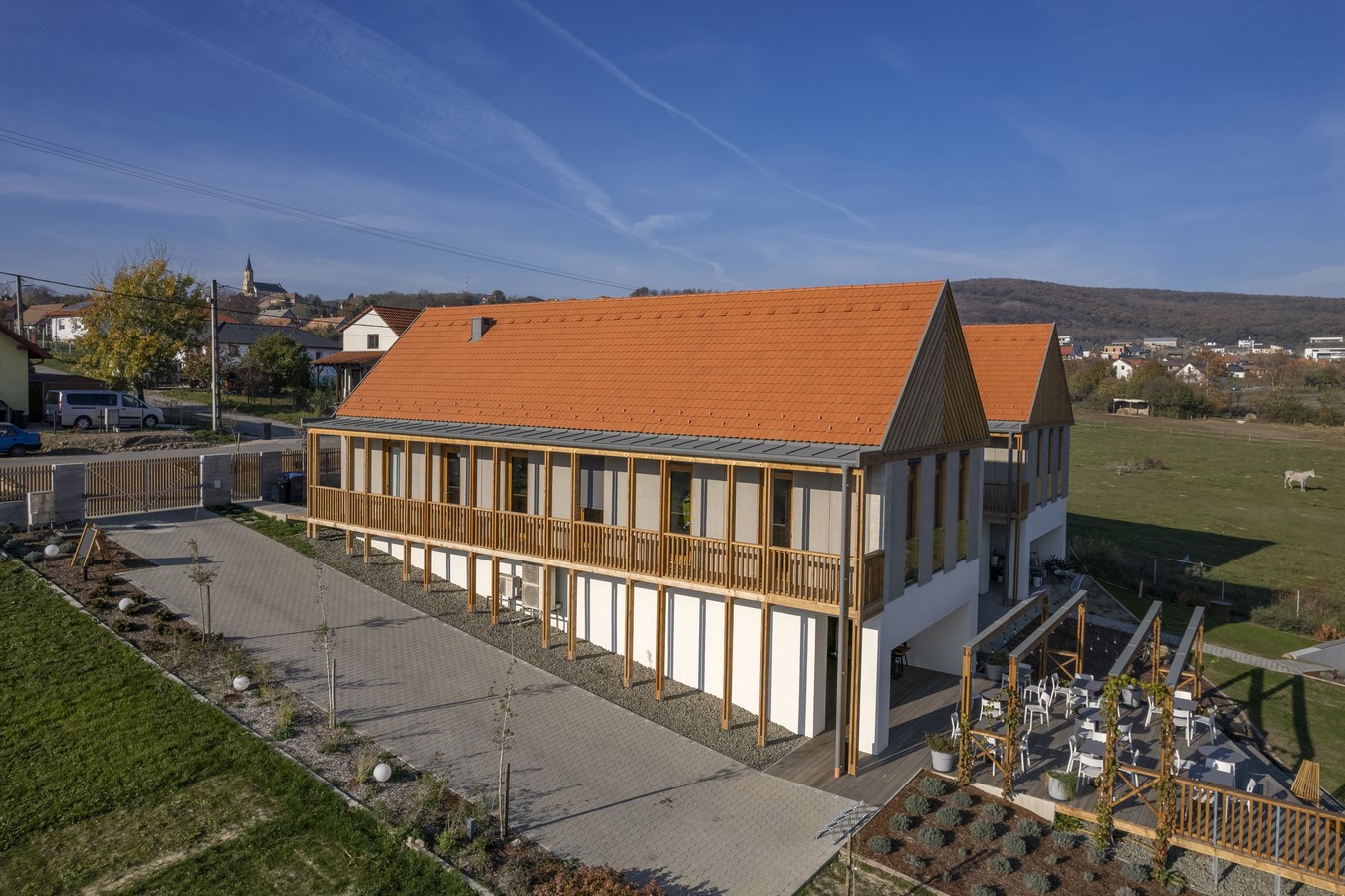
Two buildings with identical designs are located on the edge of a settlement on the shores of Lake Velence, Hungary. The village of Nadap is aware of the advantages and disadvantages of the popularity caused by its favorable location. They have opened a few new streets for the new residents, but they are trying to keep the growth on a human scale.
Project Name: Rural Tourism, Nadap, Hungary
Studio Name: Triskell
Site Area: 800 Sq. m
Built Up Area: 153 Sq. m.
Status: Built
Image Credits: Szanto Tamas
The new street runs in a picturesque environment, in the immediate vicinity of vineyards, near the bicycle path connecting Budapest with Lake Balaton. It was not by chance that the developer noticed the area and bought several plots of land here. He planned to carry out the construction with his own company, precisely in times when skilled workers were in the most dire need. Trying to forge a virtue from a disadvantage, the great innovation arose: the story-high prefabricated element construction – a thought-provoking, lovable, forward-looking experiment.
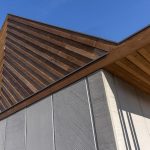
The test elements were made with a concrete load-bearing core, thermal insulation and a concrete outer shell, in grey for simplicity, but with an external surface that could be shaped by hand. The walls and roof structure was built on the traditionally built concrete base in as little time as a week.
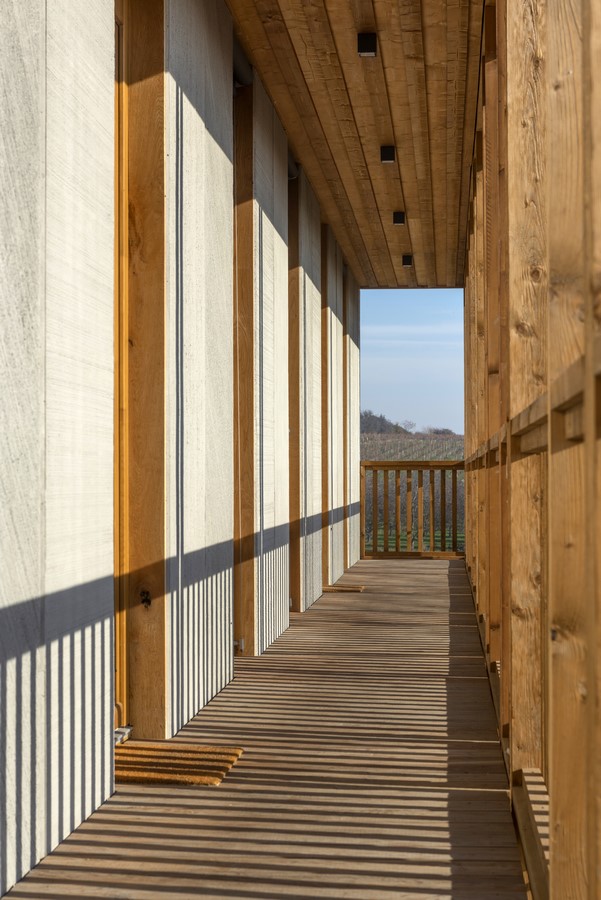
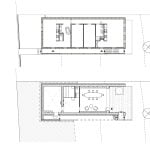
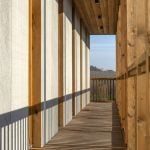
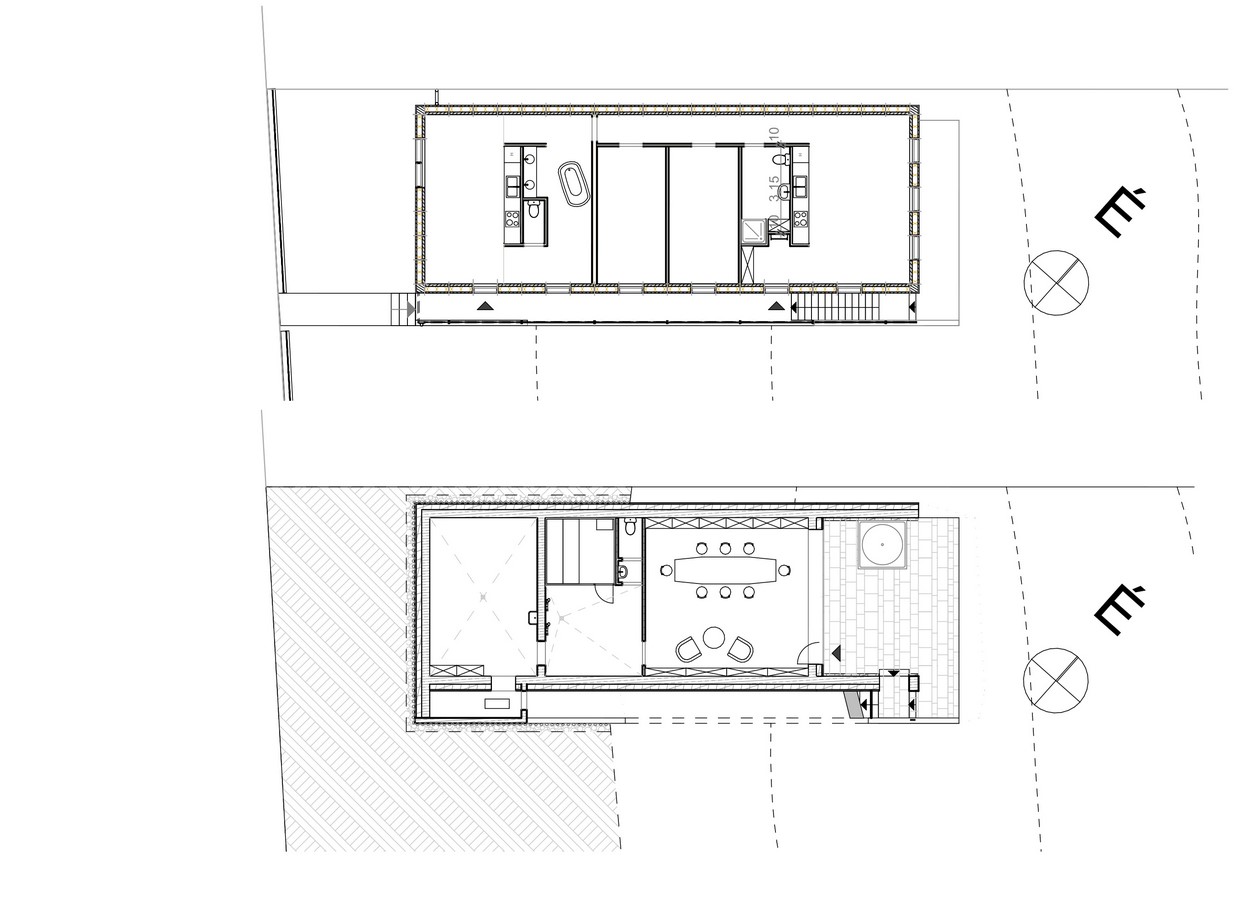
The buildings – due to their relative rigidity caused by the prefabricated elements – became flimsy. The hardness of the concrete suits the elementary house form well, but the wooden porch makes it friendly. This “applied” wooden structure – despite being an independent structure – follows the logic of the floor plan and the opening layout of the facade. The material of wood serves a good purpose in the interior, softening the overall look. A similar effect is created by the mounted, spatially delimiting “box” placed in the space, which absorbed the functions (kitchen, bathroom, mechanical engineering, etc.) that would fragment the floor plan of the building based on the elemental effect.
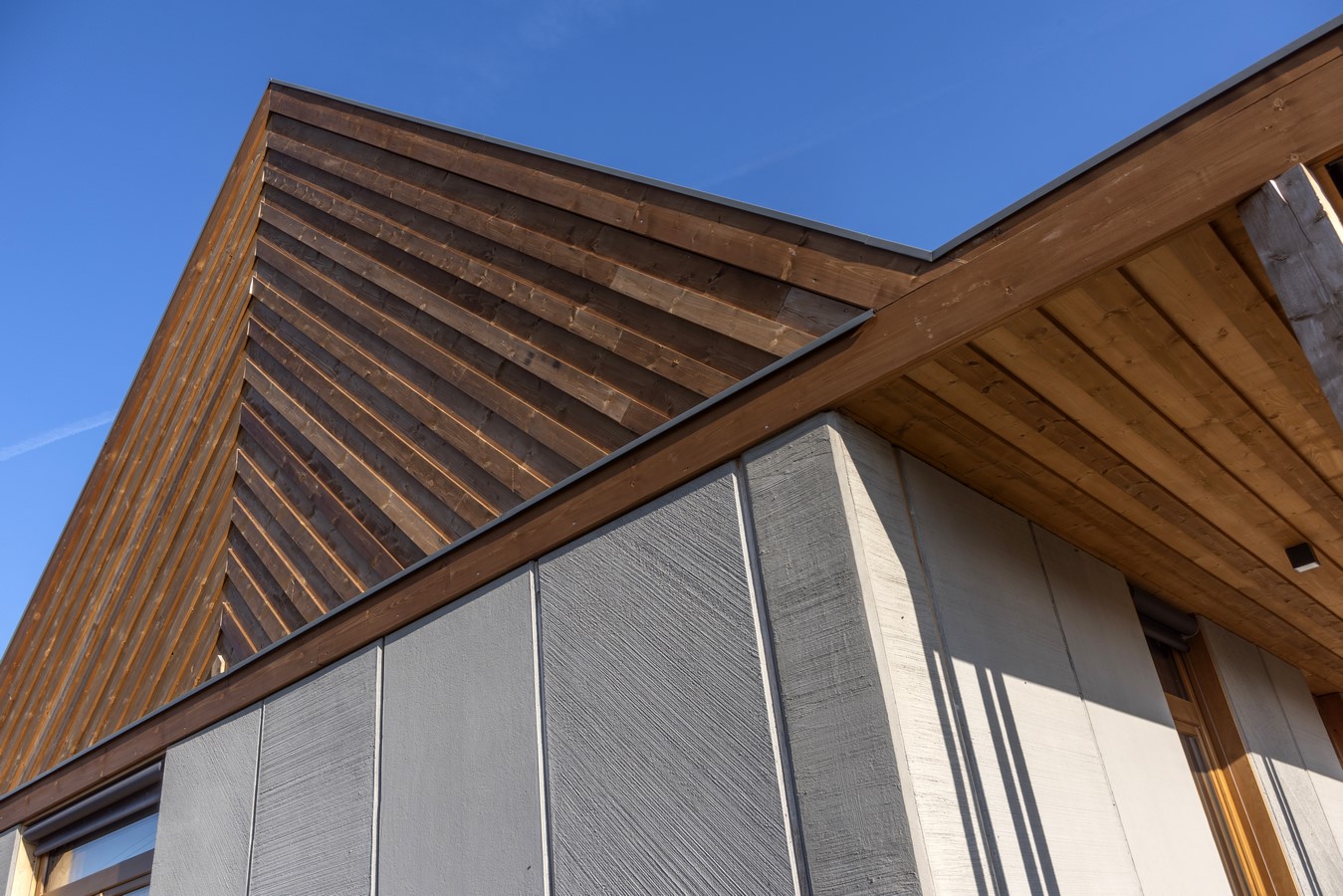
According to some opinions, experiments like this serve sustainability, both from an ecological and economic perspective. Thanks to prefabrication, there is practically no on-site waste, and at the same time, in the case of small element variations, element production can be incredibly economical, both financially and in terms of (human and energy) resource management.
The system proved to be worth thinking about further: the client also plans to build the new winery building on the neighboring hill from this material. Innovation also remains: we are trying to make the material of the outer shell unique and at the same time connected to the place by mixing clay or local stone. Hopefully, our attempts will be crowned with success and will be able to help the manifestation of genius loci through a medium that no one expected: with prefabricated elements….